
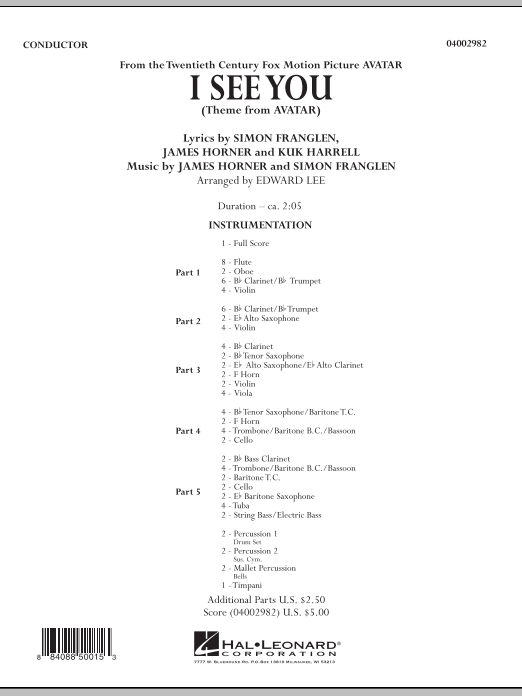

I See You (Theme from Avatar): Flex Ensemble Conductor Score & Parts
By James Horner / By Simon Franglen / By Kuk Harrell / As performed by Leona Lewis / Arranged by Edward Lee
Grade: 2-3
Item: 35-PK00156495
$55.00
Pickup currently not available
Buy Extra Parts (Digital PDF Download)
Parts Added to Cart!
Description
This distinctive main theme from the blockbuster movie "Avatar" is skillfully captured here in a version for flexible instrumentation. Dur: 2:05


I See You (Theme from Avatar): Flex Ensemble Conductor Score & Parts isn't in MakeMusic Cloud just yet...but it could be. Let us know you'd like to see it, and you'll help shape what comes next. In the meantime, start a free trial and dive into thousands of interactive titles your students can play along with today.
Request This Title
Tell us you want it.
Start Your Free Trial
Explore everything that's ready to play right now.
Sample Audio
No sample audio found.
Sample Video
No sample videos found.
Additional Details
Publisher:
Hal Leonard
SKU:
35-PK00156495
More about this title
About the Composer: James Horner
James Horner spent four decades composing for film, earning an Oscar and multiple Grammy nominations for his work across Avatar, Titanic, Braveheart, and dozens of other major productions. His gift for writing themes that lodge themselves in listeners' ears while serving the emotional architecture of a story made him one of the most sought-after composers in Hollywood. Horner's scores consistently demonstrate sophisticated orchestration paired with memorable melodic writing, qualities that translate exceptionally well to educational arrangements.
For music educators, Horner's catalog offers accessible entry points into film scoring techniques. His themes reward careful ensemble work; they rely on balance, phrasing, and attention to texture rather than technical pyrotechnics. Student musicians benefit from playing music written by someone who understood how to support a narrative while maintaining musical integrity.
Why we love this
Edward Lee's arrangement captures the signature ethereal quality of this theme without losing the emotional depth that made it resonate across global audiences. The flexible instrumentation means you aren't locked into a specific ensemble configuration, so you can use what you have while maintaining musical coherence. At grades 2-3, students get to perform a recognizable, genuinely moving film theme that feels substantial rather than diminished.
What to expect
This theme evokes wonder and connection. The melodic line carries a gentle, almost vocal quality that encourages expressive phrasing and careful ensemble listening. Playing it leaves performers with a sense of having accomplished something meaningful, not just technically competent.
Who it's for
Bands and orchestras at the early intermediate level looking for repertoire with immediate appeal and genuine musical substance. Directors seeking film music that doesn't rely on arrangement tricks to land emotionally. Ensembles wanting to program something their audiences will recognize and appreciate.
How to get the most out of it
- Balance the melodic line carefully so the theme emerges clearly even when fuller sections enter. This piece relies on transparent orchestration rather than density.
- Let the longer note values breathe. Resist the urge to rush through sustained passages; the theme's power comes from its spaciousness.
- Pay attention to dynamics in the accompaniment parts. Secondary voices that sit underneath the melody need to support without overshadowing.
- Approach the 2:05 duration as an opportunity for genuine control. There's no filler here; every moment should feel intentional.
How to use it
Pair this with other film themes or contemporary music to create a concert that bridges popular and artistic worlds. It works equally well as a concert opener or as part of a themed program exploring music and cinema. Schools have found strong audience engagement when programming recognizable film scores alongside traditional concert music.
Skills your students will build
- Balancing transparent ensemble texture with clear melodic focus
- Shaping phrase lines with sustained dynamics rather than rapid changes
- Adapting to flexible instrumentation and reading multiple clef combinations
- Interpreting film music notation and understanding emotional phrasing in contemporary contexts