
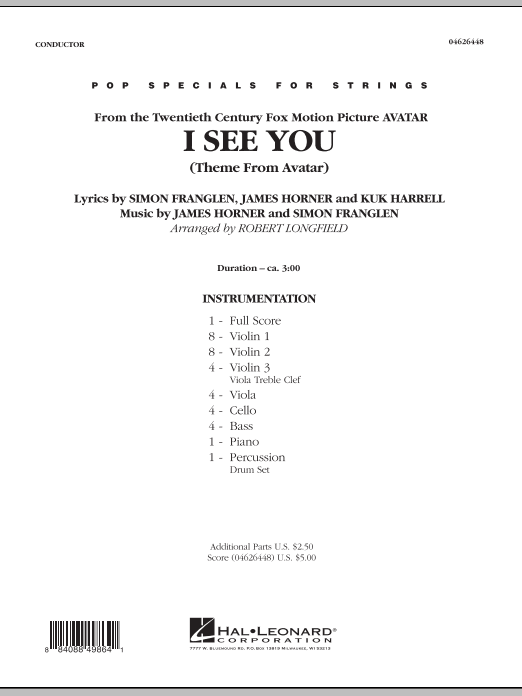

I See You (Theme from Avatar): String Orchestra Conductor Score & Parts
By James Horner / By Simon Franglen / Arranged by Robert Longfield
Grade: 3-4
Item: 35-PK00154865
$45.00
Pickup currently not available
Buy Extra Parts (Digital PDF Download)
Parts Added to Cart!
Description
Pop Specials for Strings arrangement of the theme from Avatar. Duration: 3:00.


I See You (Theme from Avatar): String Orchestra Conductor Score & Parts isn't in MakeMusic Cloud just yet...but it could be. Let us know you'd like to see it, and you'll help shape what comes next. In the meantime, start a free trial and dive into thousands of interactive titles your students can play along with today.
Request This Title
Tell us you want it.
Start Your Free Trial
Explore everything that's ready to play right now.
Sample Audio
No sample audio found.
Sample Video
No sample videos found.
Additional Details
Publisher:
Hal Leonard
SKU:
35-PK00154865
More about this title
About the Composer: James Horner
James Horner composed some of the most recognizable film scores of the last four decades, with a gift for memorable melodies that resonate across decades. His work on Avatar established a sonic world that felt both otherworldly and deeply human, blending orchestral traditions with innovative approaches to timbre and harmony.
Why we love this
This arrangement captures the sweeping, emotional core of Horner's theme without requiring the full orchestra, making it genuinely accessible to developing string ensembles. Robert Longfield's scoring maintains the progression that makes the original so effective while keeping the technical demands manageable for Grade 3-4 players.
What to expect
Majestic and contemplative, with an underlying sense of wonder. The theme unfolds gradually, building from quieter introspection into fuller sonority while maintaining a lyrical quality throughout. You'll find moments of genuine lift alongside passages that invite a quieter, more introspective touch.
Who it's for
String orchestras working at early Grade 3-4 level who want to program something contemporary and emotionally resonant. Students appreciate playing a theme they actually know, and the arrangement gives every section meaningful material rather than relegating anyone to purely supportive roles.
How to get the most out of it
- Shape the opening melody with a long, sustained arch from the entrance through the first phrase; resist the urge to break the line at bar divisions.
- Balance your violin sections carefully during the main theme so the counter-melody in lower strings emerges without overpowering the top voice.
- Control the tempo through the climactic section to build momentum naturally rather than rushing; let the harmonic movement carry the shape.
- Find the sweet spot in the final resolution where the texture settles; a touch of ritardando here pays off the emotional arc.
How to use it
Pair this with other film or contemporary music to create a thematic program that appeals to students and audiences alike. It works especially well as a bridge between traditional classical repertoire and pieces that speak to student interests, or as an opener that immediately engages listeners with familiar material.
Skills your students will build
- Sustaining long melodic phrases with consistent tone quality
- Balancing melody and accompaniment roles within the same section
- Reading across full three-octave string ranges
- Responding to subtle dynamic and tempo shaping
- Connecting with emotional content through phrasing rather than technical display