I See Fire (arr. Carol Canning) Sheet Music Preview

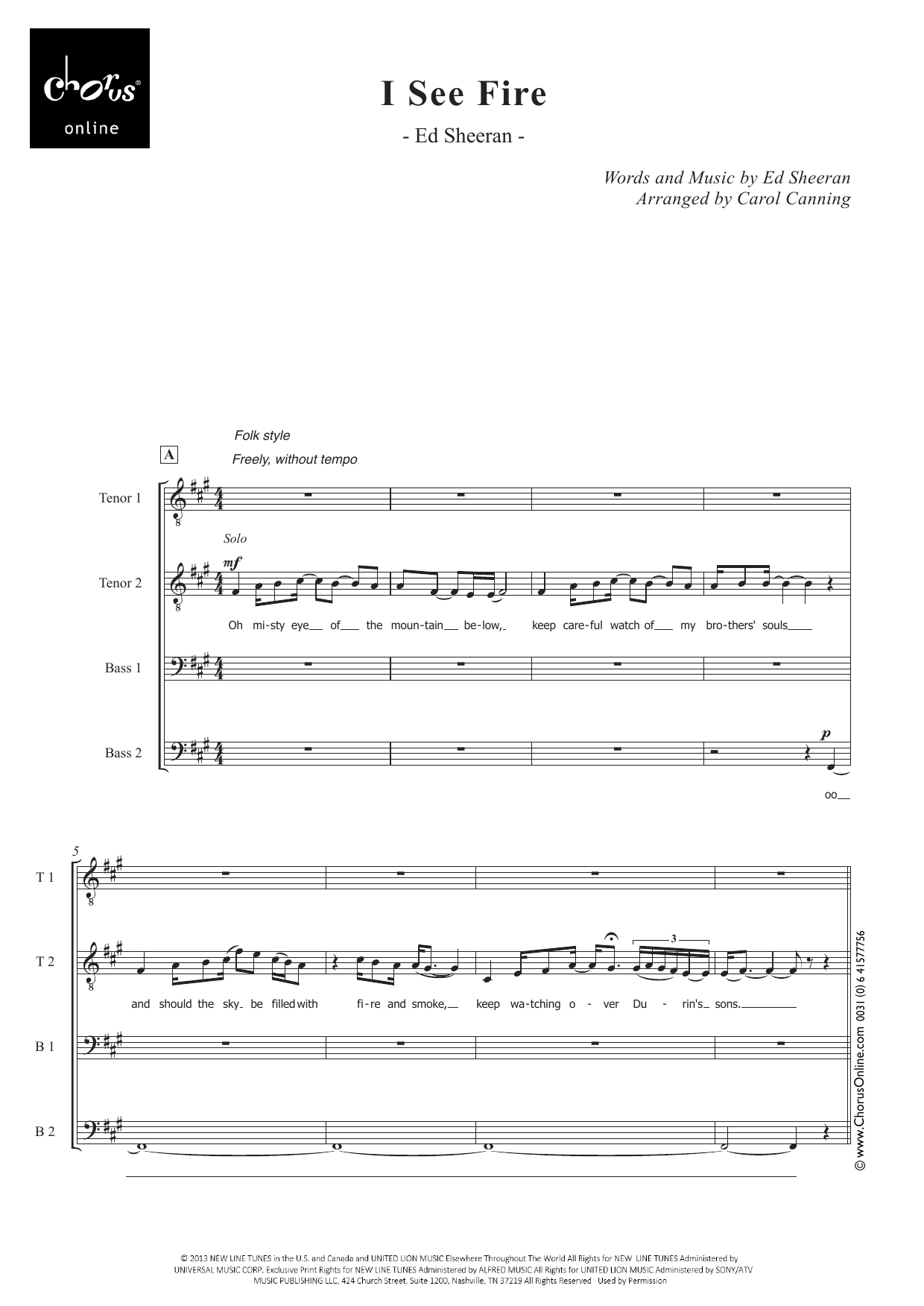
I See Fire (arr. Carol Canning): TTBB Choral Octavo

As performed by Ed Sheeran / Arranged by Carol Canning

Item: 35-DS00490666

Digital Download
$2.99

One moment…

Description

I See Fire (arr. Carol Canning): TTBB Choral Octavo isn't in MakeMusic Cloud just yet...but it could be. Let us know you'd like to see it, and you'll help shape what comes next. In the meantime, start a free trial and dive into thousands of interactive titles your students can play along with today.

Sample Audio
No sample audio found.
Sample Video
Additional Details
Publisher: Hal Leonard
Page Count: 9
SKU: 35-DS00490666

More about this title

About the Artist: Ed Sheeran

Ed Sheeran rose to prominence in the early 2010s as a singer-songwriter whose blend of folk, hip-hop, and pop sensibilities reached audiences across genres. His distinctive approach to melody and lyrical storytelling has made his work appealing for educational arrangements, particularly for ensembles seeking contemporary material that engages students without sacrificing musical substance.

Why we love this

Carol Canning's arrangement captures the haunting, introspective quality of this song while making it accessible for mixed male voices. The writing respects the original's emotional arc, allowing your singers to connect with material they recognize while building genuine four-part harmony skills in a context that feels immediate and relevant.

What to expect

Intimate and reflective, with the vulnerability of a single voice gradually joined by others. The arrangement unfolds with restraint, allowing silence and space to matter as much as the sung material, creating an atmosphere that feels both modern and timeless.

Who it's for

Male choirs and mixed ensembles looking to program contemporary music that resonates with singers and audiences alike. This arrangement works equally well for groups seeking a cappella showpieces or directors who want to build contemporary repertoire alongside traditional classical works.

How to get the most out of it

  • Balance the harmonic layers carefully in the middle section; the inner voices carry important melodic fragments that shouldn't disappear beneath the top line.
  • Shape phrases as though you're telling a story rather than hitting moments. Let dynamics emerge from the text and emotional arc rather than imposing them mechanically.
  • Work out the staggered entries slowly to ensure singers don't rush their cues when entering after longer rests.

How to use it

This piece fits naturally into a concert exploring vulnerability in music, a set of contemporary arrangements, or an evening that mixes classical and pop repertoire. Its emotional directness makes it particularly effective as a closing number or a moment of contrast within a larger program.

Skills your students will build

  • Balancing harmony lines that share melodic responsibility
  • Maintaining steady pitch and blend across multiple sustained notes
  • Interpreting contemporary popular music through an a cappella lens
  • Responding to textual and emotional nuance in arrangement choices
  • Managing longer rests and re-entry points with confidence

You May Also Like