
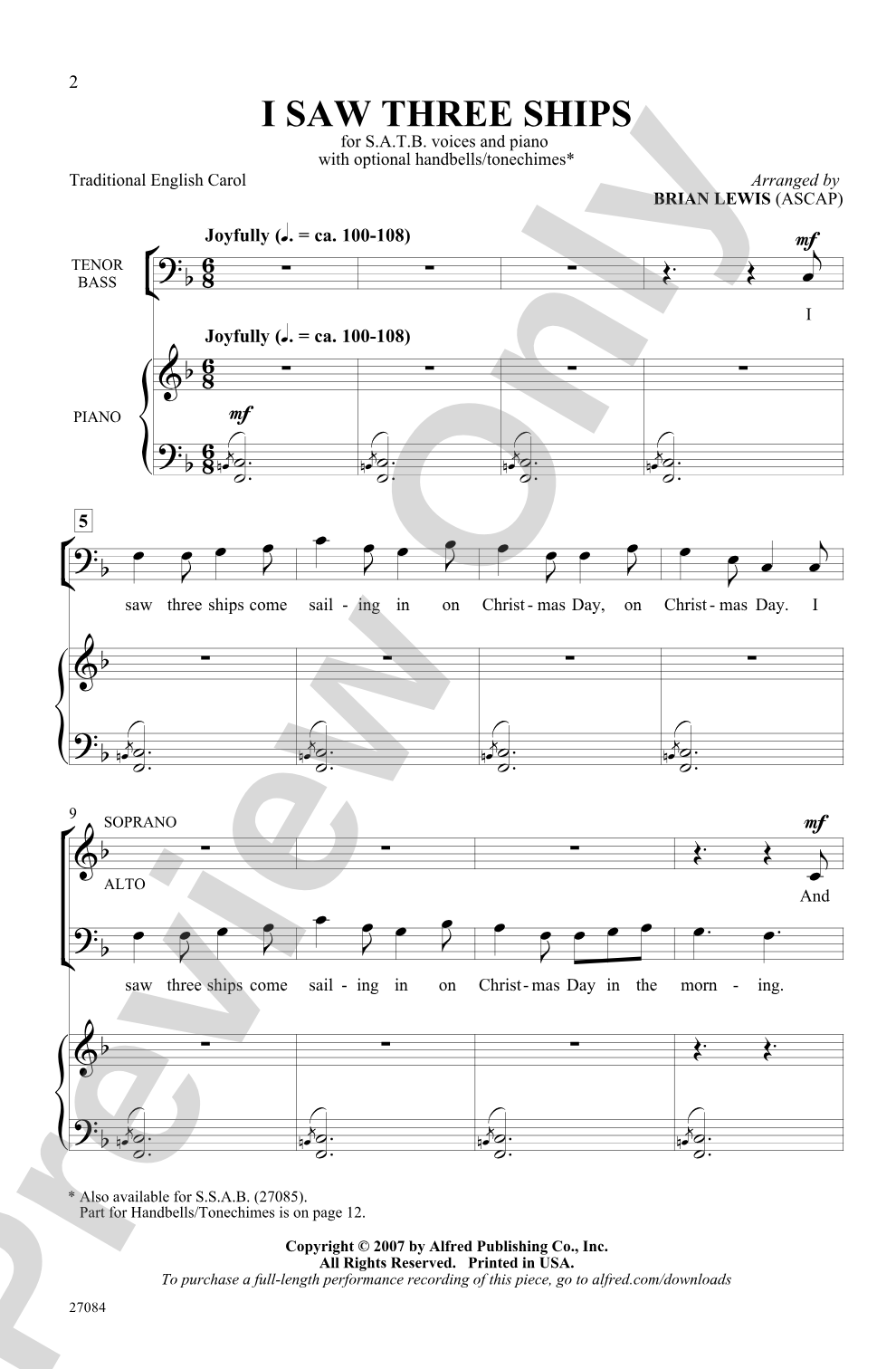

I Saw Three Ships: SATB Choral Octavo
Traditional English Carol / arr. Brian Lewis
Item: 00-PO-0000293
$1.75
Minimum order quantity: 20 copies
Pickup currently not available
Related Items
I Saw Three Ships: SATB Choral Octavo |
$1.75
|
View |
Description
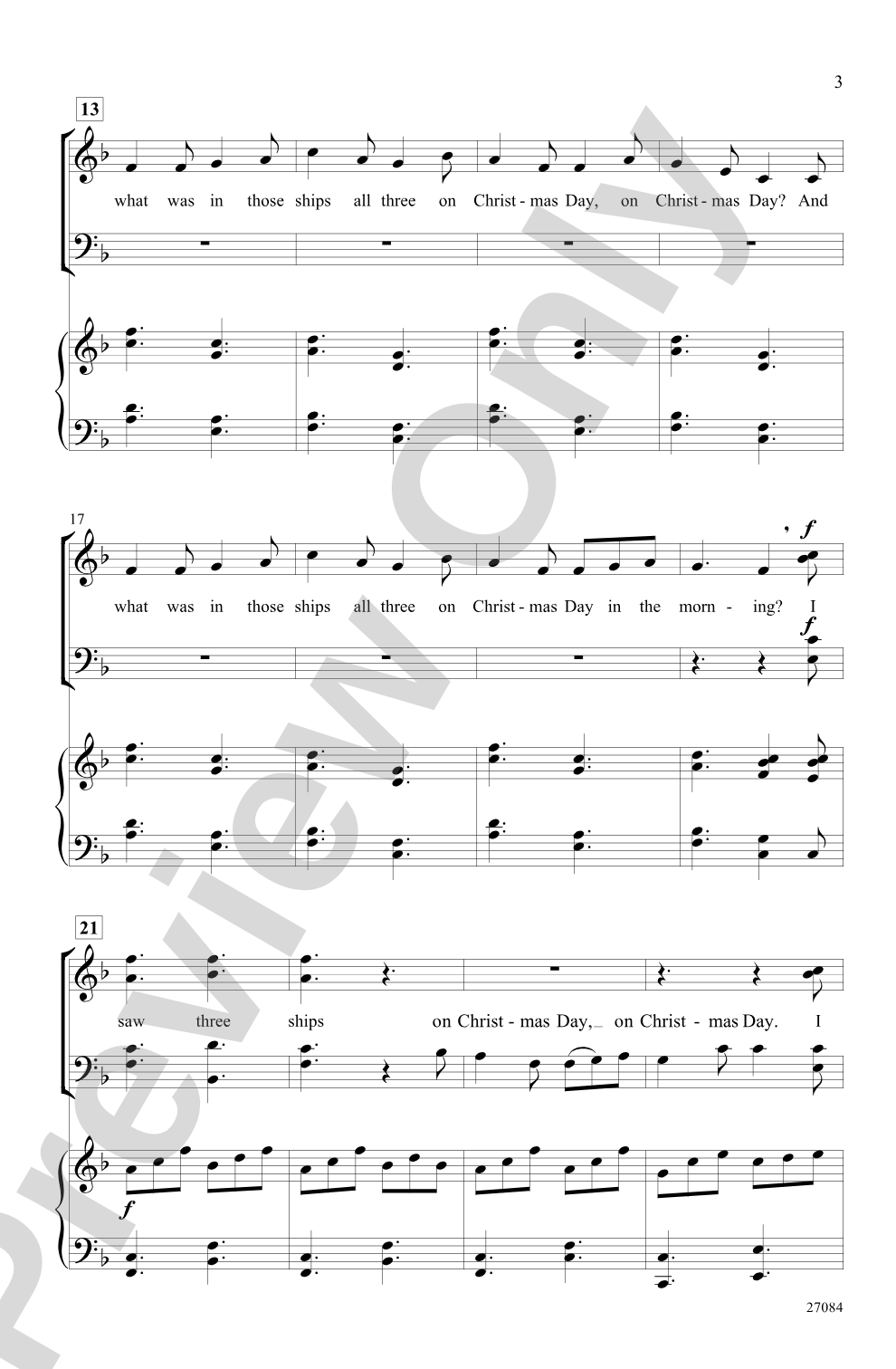
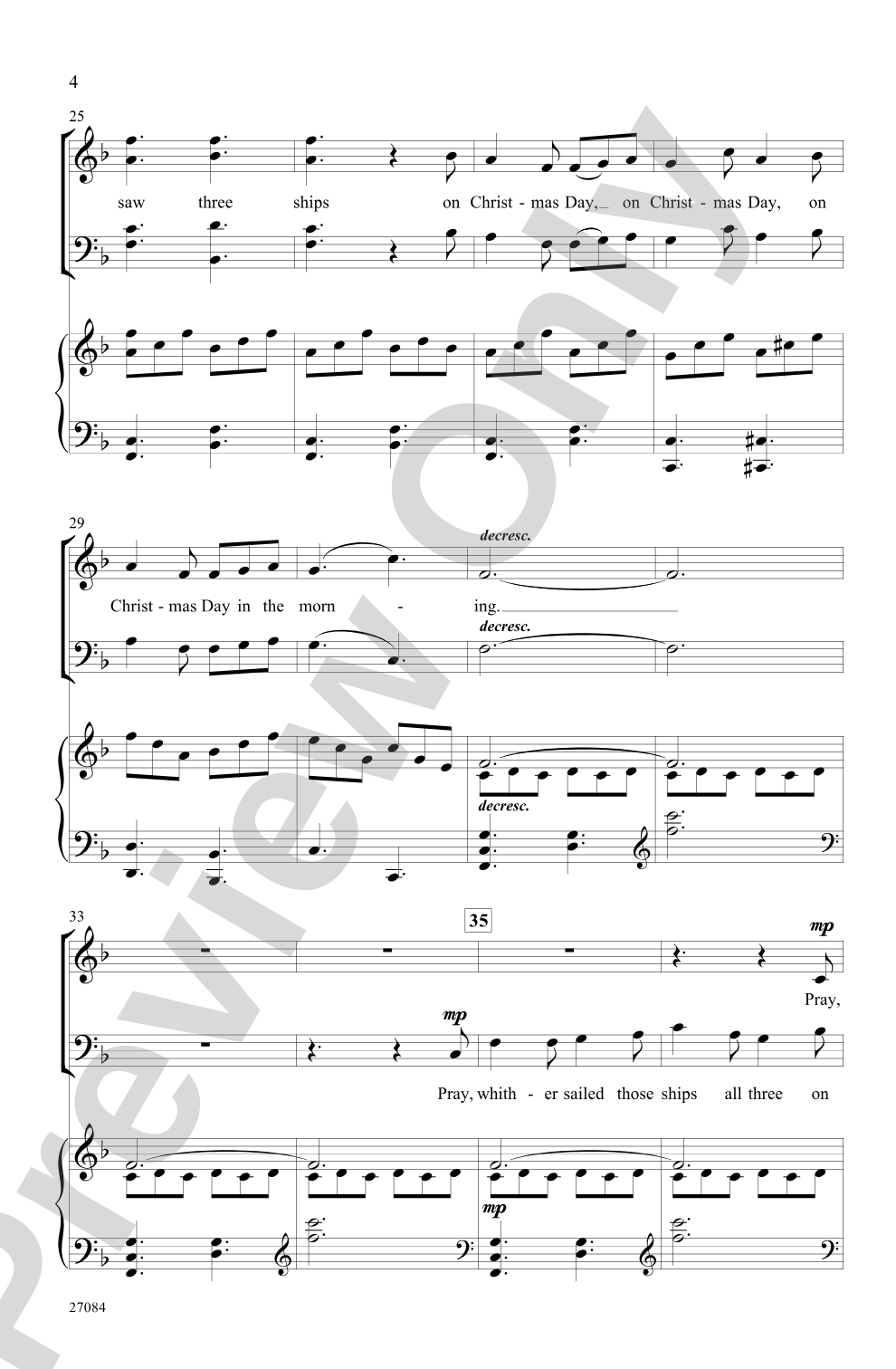
In this new arrangement of the time-honored English carol, the men are the first to be heard singing the familiar melody over the piano's methodical drone. The women's lilting voices follow, accompanied by what sounds like distant chapel bells. An original chorus is a joyful addition, as are the canonic treatment of the second verse, the fresh harmonies of the a cappella third, and an optional bell choir at the end.


I Saw Three Ships: SATB Choral Octavo isn't in MakeMusic Cloud just yet...but it could be. Let us know you'd like to see it, and you'll help shape what comes next. In the meantime, start a free trial and dive into thousands of interactive titles your students can play along with today.
Request This Title
Tell us you want it.
Start Your Free Trial
Explore everything that's ready to play right now.
Sample Audio
1
Audio File
--:--
0:00
0:00
Sample Video
No sample videos found.
Additional Details
Series:
Alfred Choral Designs
Publisher:
Alfred Music
Page Count:
12
SKU:
00-PO-0000293
Instrumentation:
Opt. Bells
More about this title
About the Arranger: Brian Lewis

Brian Lewis holds degrees in composition from Baldwin-Wallace Conservatory and in conducting from Western Michigan University, where he also completed his teaching certification. His career has spanned public school music education in Michigan, film and television scoring at USC, and collaborative work with high school choirs, including a residency at Portage Northern High School where ensembles premiered his commissioned choral work Sanctus.
Why we love this
Lewis strips away the overly sentimental treatment this carol often receives, building the piece thoughtfully from lower voices up through a series of genuine musical surprises: a canonic second verse, an unaccompanied third, an original chorus that feels earned rather than tacked on. The optional bell choir ending gives directors real flexibility while maintaining the carol's luminous quality throughout.
What to expect
The piece opens with quiet dignity, the men's voices grounded in the piano's steady pulse like an ancient bell tolling steadily beneath the night sky. As women enter with their lighter tone and the imagined chapel bells shimmer in the accompaniment, the arrangement becomes increasingly luminous, culminating in an original chorus that feels both fresh and inevitable.
Who it's for
Directors seeking a Christmas offering that honors the carol's origins while offering genuine musical substance and variety. This works well for choirs with developing ensemble skills who benefit from the clear structural scaffolding Lewis provides through his instrumental and textural choices.
How to get the most out of it
- Shape the men's opening melody over the piano drone with clear phrase direction; the methodical accompaniment should anchor without dragging the vocal line forward.
- Balance the women's entrance carefully so their lilting quality registers distinctly against the chapel bell imagery in the piano part; this section thrives on textural contrast.
- Approach the canonic treatment of the second verse as a conversation rather than a race; slight rubato between voice parts will clarify the imitative writing without disrupting the overall pulse.
- In the a cappella third verse, lock ensemble pitch before the section begins and prepare singers for the freedom that unaccompanied singing demands; even small breath timing matters here.
How to use it
Program this as the centerpiece of a Christmas concert's quieter half, where it can breathe without competing with faster or louder selections. Its 12-page length and varied textures make it substantial enough to anchor a set of winter carols, and the optional bells allow you to scale the finale up or down depending on your resources and programming needs.
Skills your students will build
- Singing maintained melodic clarity over a sustained accompaniment figure
- Performing canonic passages with rhythmic independence and ensemble precision
- Executing unaccompanied singing with secure intonation and blend
- Balancing multiple vocal lines at different dynamic levels
- Interpreting textural variety and sectional contrasts across a multi-verse carol