
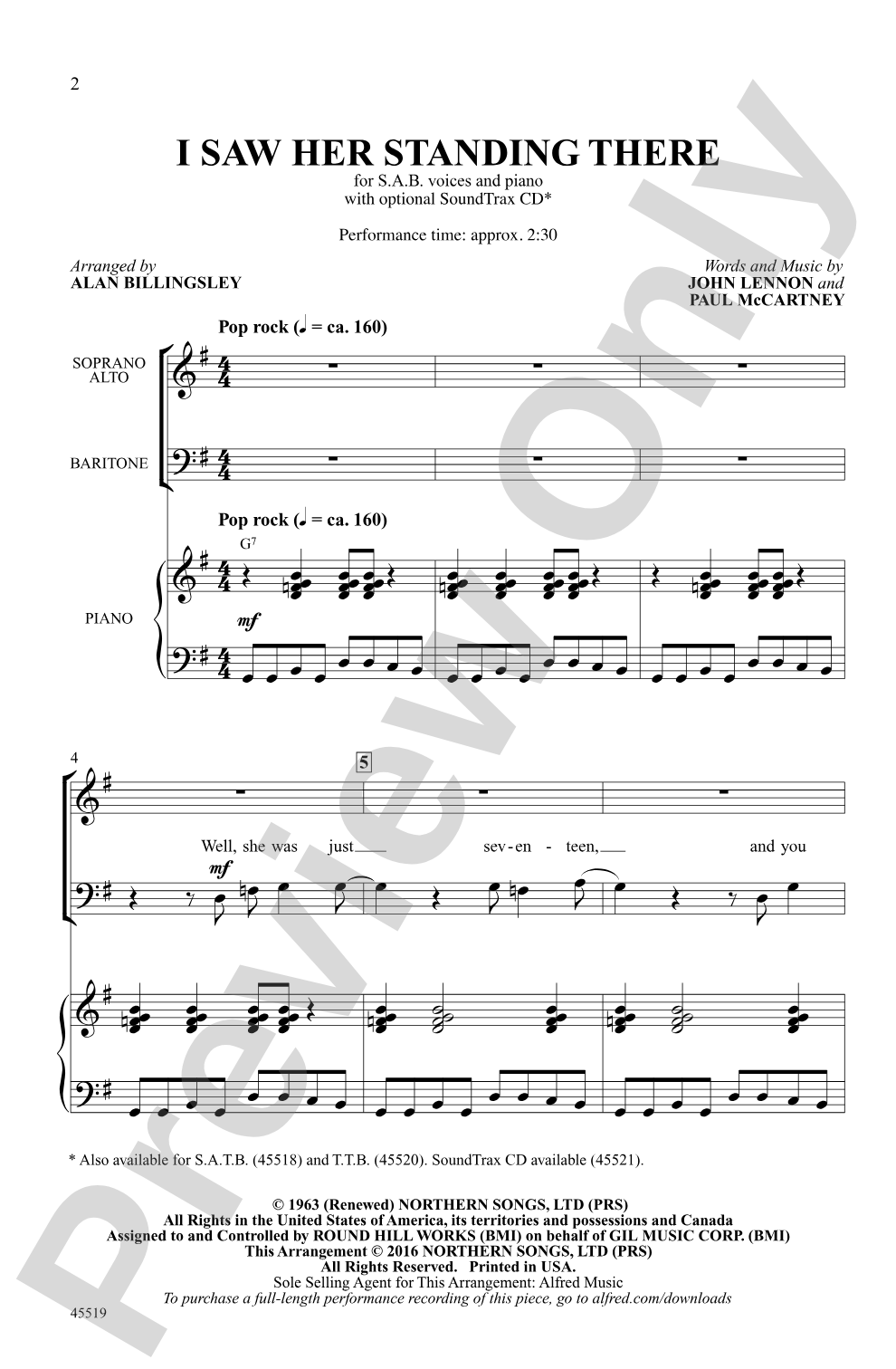
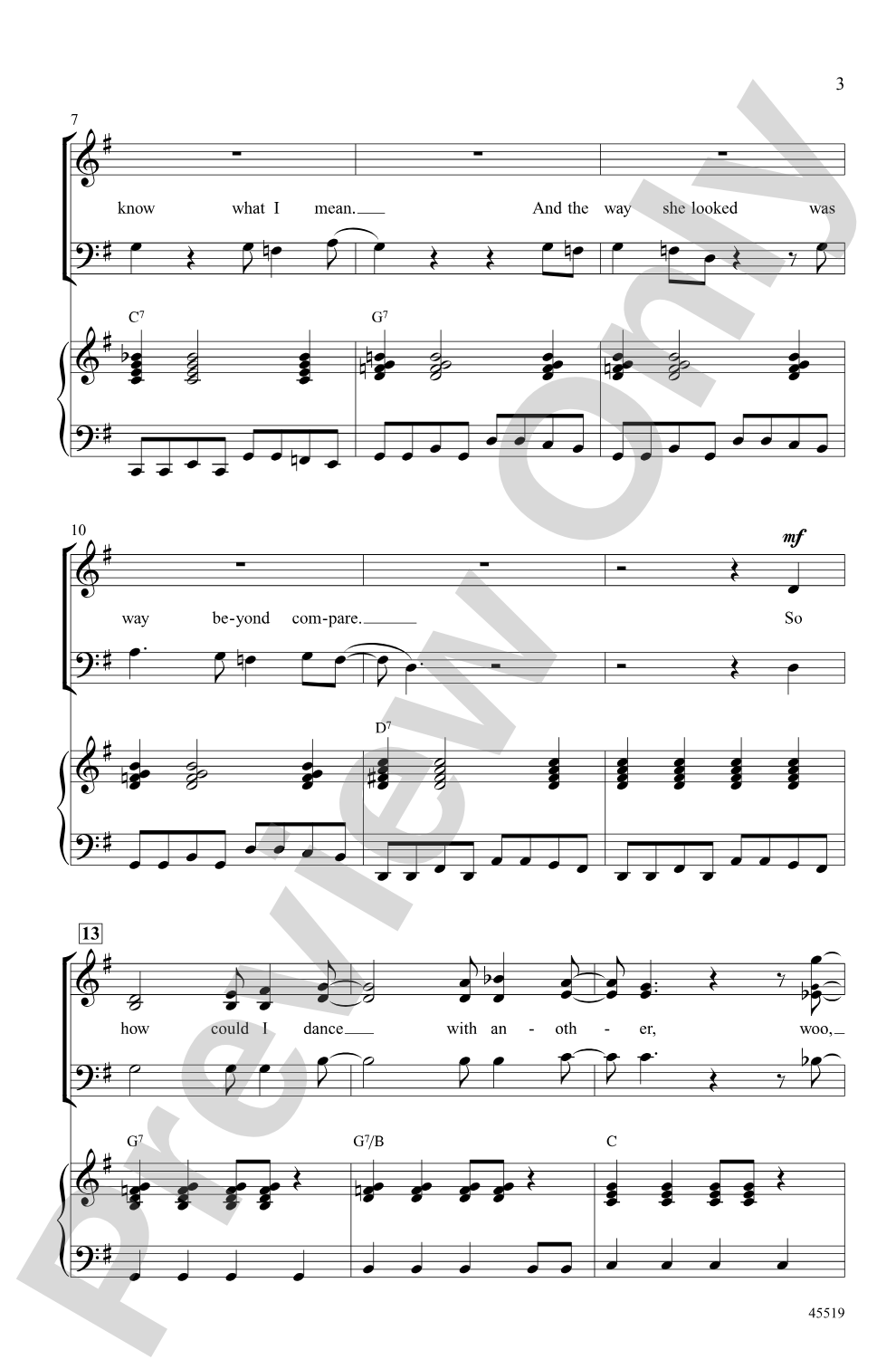
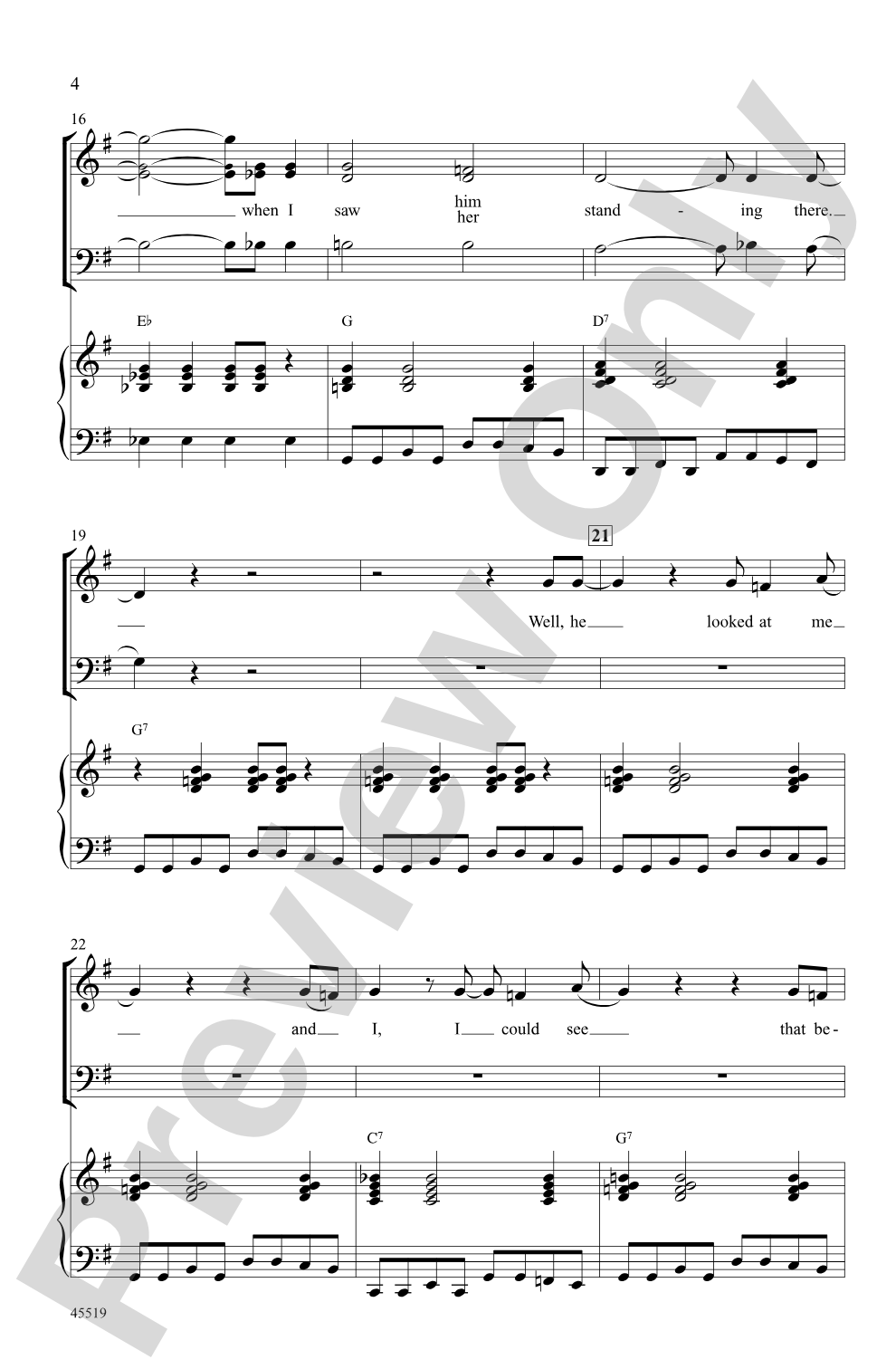

I Saw Her Standing There: SAB Choral Octavo
Words and music by John Lennon and Paul McCartney / arr. Alan Billingsley
Item: 00-PO-0003736

$2.00
Minimum order quantity: 20 copies
One moment…
Related Items
I Saw Her Standing There: SoundTrax Digital Audio Download |
$29.99
|
View | |
I Saw Her Standing There: SATB Choral Octavo |
$2.00
|
View | |
I Saw Her Standing There: TB Choral Octavo |
$2.00
|
View | |
I Saw Her Standing There: SATB Choral Octavo |
$2.00
|
View | |
I Saw Her Standing There: SAB Choral Octavo |
$2.00
|
View | |
I Saw Her Standing There: TB Choral Octavo |
$2.00
|
View | |
I Saw Her Standing There: Choral Octavo SoundTrax CD |
$29.99
|
View |
Description
Now part of the Rolling Stone Magazine's Top 500 Greatest Songs of All Time, this opening track on the Beatles' debut album was released in the U.S. in December of 1963. Fun harmonies and familiar lyrics make this a real crowd pleaser!


Don't just read it, hear it, play along with it, and watch your students grow with it. In MakeMusic Cloud, I Saw Her Standing There: SAB Choral Octavo comes alive with professional accompaniment, adjustable tempo, and built-in practice tools that turn solo practice into real progress.
Open in the Player
Jump straight in and assign it today.
Start Your Free Trial
Open this title and explore the full library in minutes.
Sample Audio
1
Audio File
--:--
0:00
0:00
Sample Video
No sample videos found.
Additional Details
Series:
Alfred Pop Choral Series
Publisher:
Alfred Music
Page Count:
12
SKU:
00-PO-0003736
More about this title
About the Composer: John Lennon
John Lennon (1940–1980) was a founding member of The Beatles and one of the most influential songwriters of the 20th century. His work with the band, written in collaboration with Paul McCartney, fundamentally shaped popular music and continues to serve as a cornerstone of contemporary choral repertoire. Lennon's ability to craft memorable melodies and accessible lyrics makes his compositions especially valuable for choral educators seeking material that engages students and audiences alike.
Why we love this
Alan Billingsley's arrangement captures the youthful energy and infectious joy of the original while keeping the voicing approachable for developing mixed choirs. The three-part texture sits comfortably across SAB ranges, and the familiar melody ensures your singers stay connected to the material rather than struggling with unfamiliar intervals. Programming a Beatles standard signals to your audience that choral music exists in the world they actually inhabit.
What to expect
This piece radiates the optimism and energy of early British Invasion pop. The harmonies are bright and clean, the text bounces along with conversational warmth, and the overall effect is joyful rather than sentimental or complex. Singers and audiences both feel the lift of a song that has genuinely stood the test of time.
Who it's for
This arrangement works well for middle school, high school, and community choirs with mixed voices at any level of experience. The straightforward part-writing and recognizable melody make it accessible to developing singers while still offering enough harmonic interest to keep accomplished ensembles engaged.
How to get the most out of it
- Keep the tempo brisk and energetic. This song thrives on forward momentum; a sluggish pace dulls the infectious quality that makes it memorable.
- Balance the divisi sections carefully so that inner harmony parts don't disappear. Listener recognition depends on hearing the melody clearly, but the supporting voices need to land with definition.
- Shape the phrasing in conversational units rather than always sustaining through bar lines. The original recording has rhythmic snap and natural speech patterns that bring authenticity to the arrangement.
- If using the recorded accompaniment, rehearse with it frequently so singers lock into the groove. The backing track will carry harmonic and rhythmic information that needs to feel natural, not fought against.
How to use it
Program this as a showstopper in a concert celebrating popular music or the evolution of rock and roll. It pairs beautifully alongside other classic pop standards and creates a bridge between classical and contemporary choral worlds. The familiarity and accessibility also make it an excellent choice for engaging reluctant singers or building confidence in younger ensembles.
Skills your students will build
- Singing pop and rock idioms with appropriate style and phrasing
- Reading and performing SAB voicing with clear part independence
- Balancing melody and harmony in three-part textures
- Maintaining rhythmic precision and groove in a contemporary setting
- Connecting lyrics to musical meaning in a secular, non-classical context