
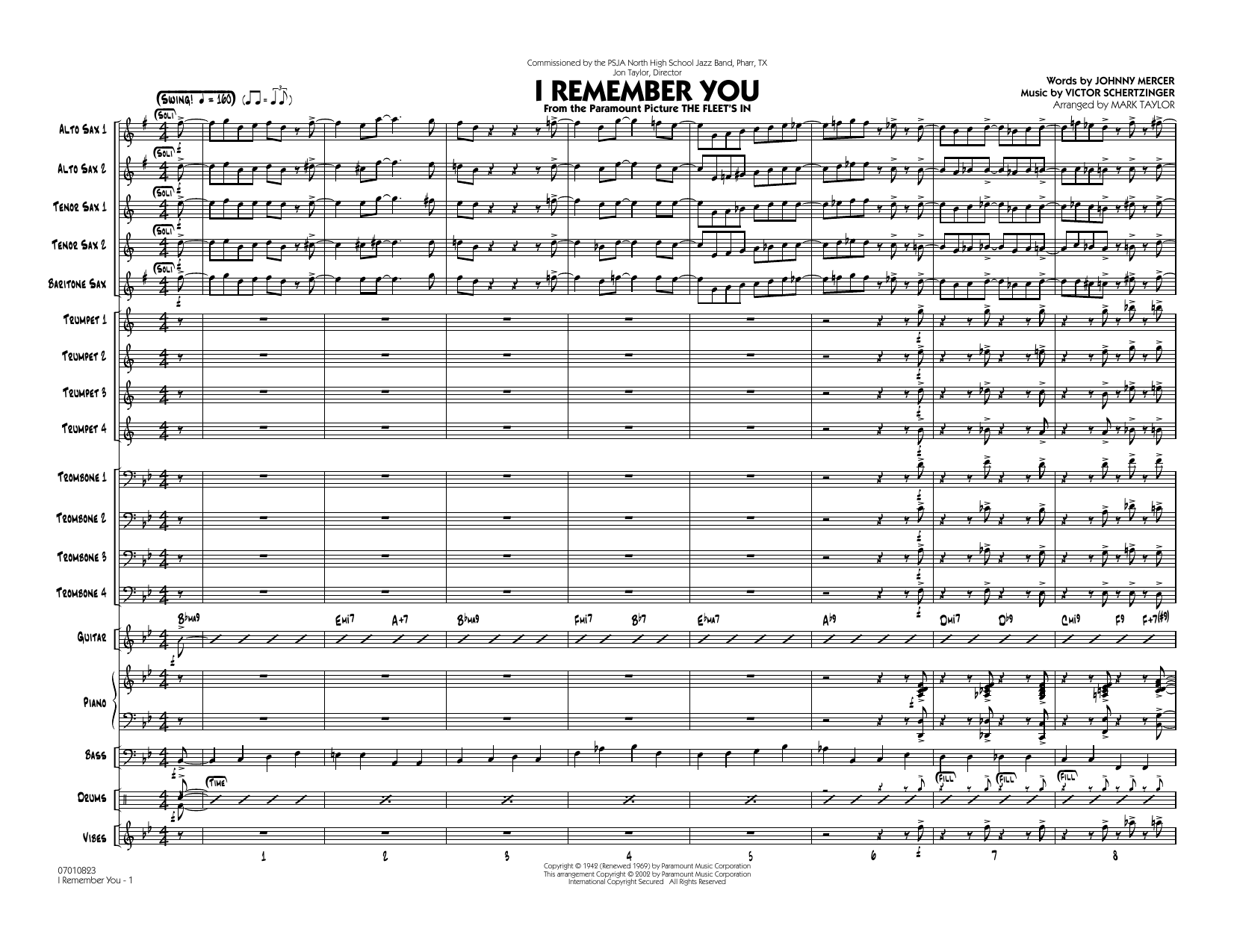

I Remember You (arr. Mark Taylor): Jazz Ensemble Conductor Score & Parts
As performed by Jo Stafford / Arranged by Mark Taylor
Grade: 4
Item: 35-PK00467932
$55.00
Pickup currently not available
Buy Extra Parts (Digital PDF Download)
Parts Added to Cart!
Description
Here's a swingin' chart in a medium fast tempo featuring the entire sax section! Mark very effectively uses the brass to compliment the sax soli sections, and there are also solos for alto and tenor. Written in such a smooth style, this one almost plays itself!


I Remember You (arr. Mark Taylor): Jazz Ensemble Conductor Score & Parts isn't in MakeMusic Cloud just yet...but it could be. Let us know you'd like to see it, and you'll help shape what comes next. In the meantime, start a free trial and dive into thousands of interactive titles your students can play along with today.
Request This Title
Tell us you want it.
Start Your Free Trial
Explore everything that's ready to play right now.
Sample Audio
No sample audio found.
Sample Video
No sample videos found.
Additional Details
Publisher:
Hal Leonard
SKU:
35-PK00467932
More about this title
About the Artist: Jo Stafford
Jo Stafford (1917-2008) was one of the most accomplished vocalists of the mid-20th century, known for her crystalline tone and impeccable phrasing across jazz, pop, and standards. Her recordings from the 1940s and 1950s set the gold standard for interpreting Great American Songbook material, and her influence on vocal jazz interpretation remains significant for singers and arrangers today.
Stafford's work continues to inspire jazz educators and performers because of her sophisticated musicality and unflinching commitment to lyrical storytelling. Arrangers like Mark Taylor return to her classic recordings as models for how to construct charts that honor the original melody while giving ensemble players meaningful solo opportunities.
Why we love this
Mark Taylor's arrangement captures what makes this standard endure: a melody that sits beautifully in the saxophone section, surrounded by brass voicings that sparkle without overshadowing. The built-in alto and tenor solo spots give your section leaders room to shine, and the entire piece has the quality of sounding more polished than the rehearsal hours required suggest.
What to expect
Elegant and conversational, this chart feels like a well-dressed ensemble standing around the piano, trading observations over drinks. The swing flows naturally, and the writing sits in a sweet spot where technical demands stay reasonable while the musical payoff feels generous.
Who it's for
Jazz ensembles at the intermediate level who want a piece that sounds sophisticated without requiring advanced soloing chops or complex harmonic navigation. This works equally well for groups building confidence in section playing and those ready to highlight emerging soloists.
How to get the most out of it
- Balance the sax soli carefully so the melody sings through the ensemble; these moments should feel conversational, not desperate for the solo spots that follow.
- Establish a relaxed swing feel early in sectionals. The medium fast tempo can tighten if players aren't confident in their pocket, so lock the quarter-note pulse before worrying about articulation.
- Shape the brass responses to the sax passages like commentary on a story. They're not accompanying; they're adding their own voice to the conversation.
- Give alto and tenor soloists clear space to breathe. Cue them well and keep the rhythm section patient, letting the solo breathe rather than pushing it forward.
How to use it
Consider this a centerpiece for a standards-focused set or as the opening number for a concert celebrating American songbook jazz. Its approachable difficulty and instantly recognizable melody make it an excellent choice for early-season programming when you need something that builds ensemble confidence and delivers musical satisfaction quickly.
Skills your students will build
- Swing articulation and phrasing in section passages
- Listening and responding to ensemble members during ensemble soli
- Solo construction over jazz changes (alto and tenor)
- Balance and blend across two or more sections playing simultaneously
- Jazz rhythm section foundation and pocket awareness