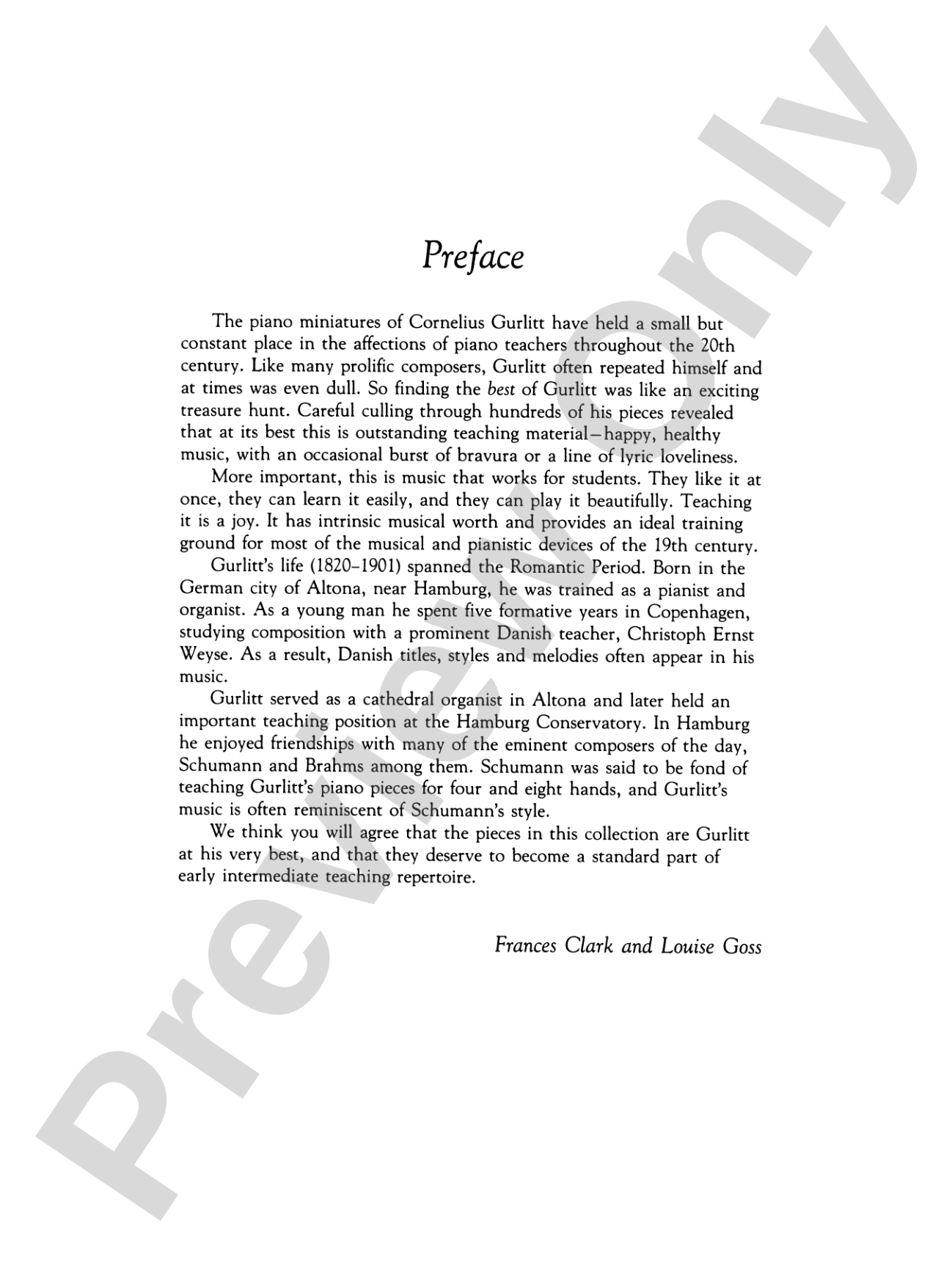
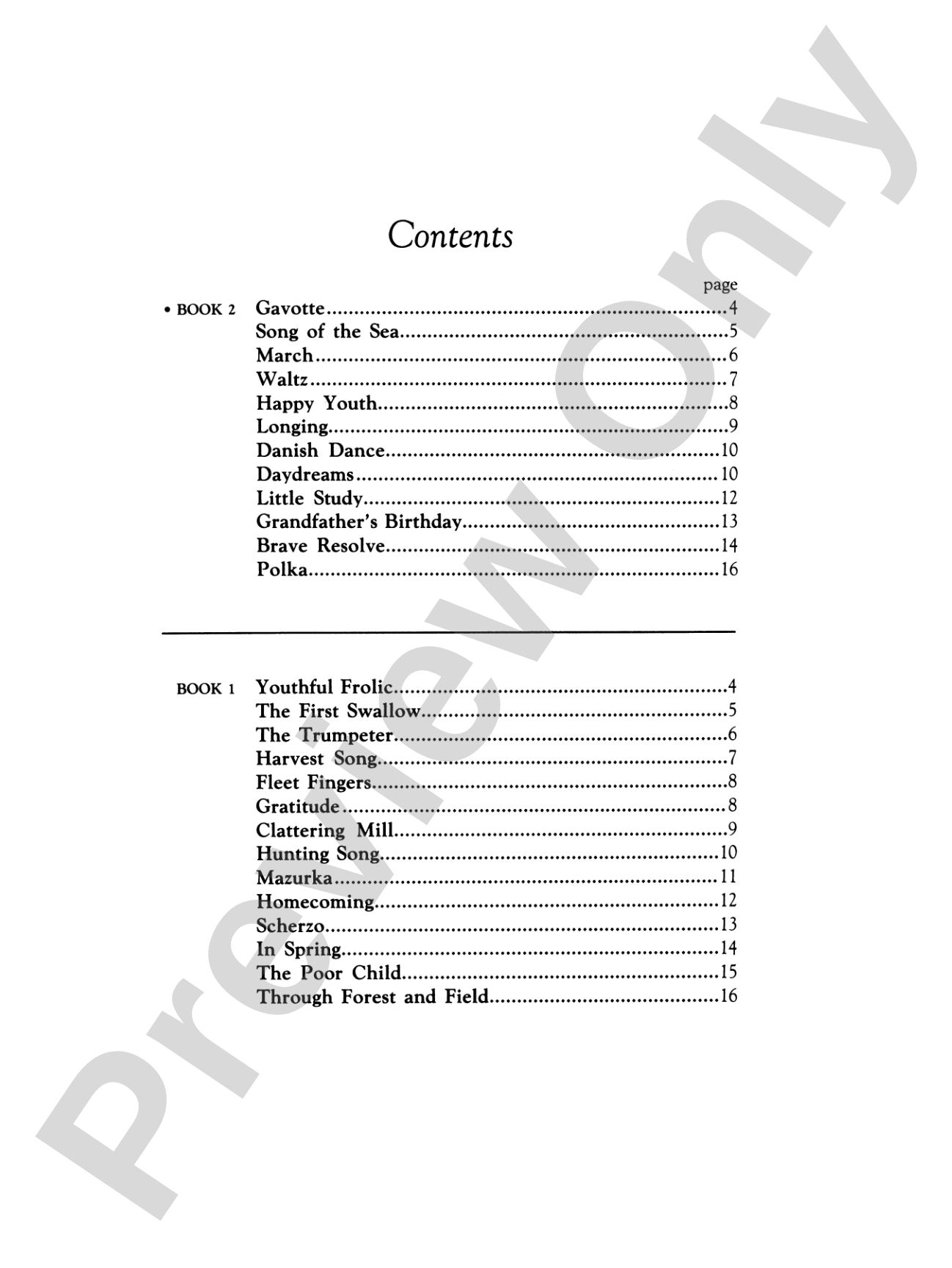
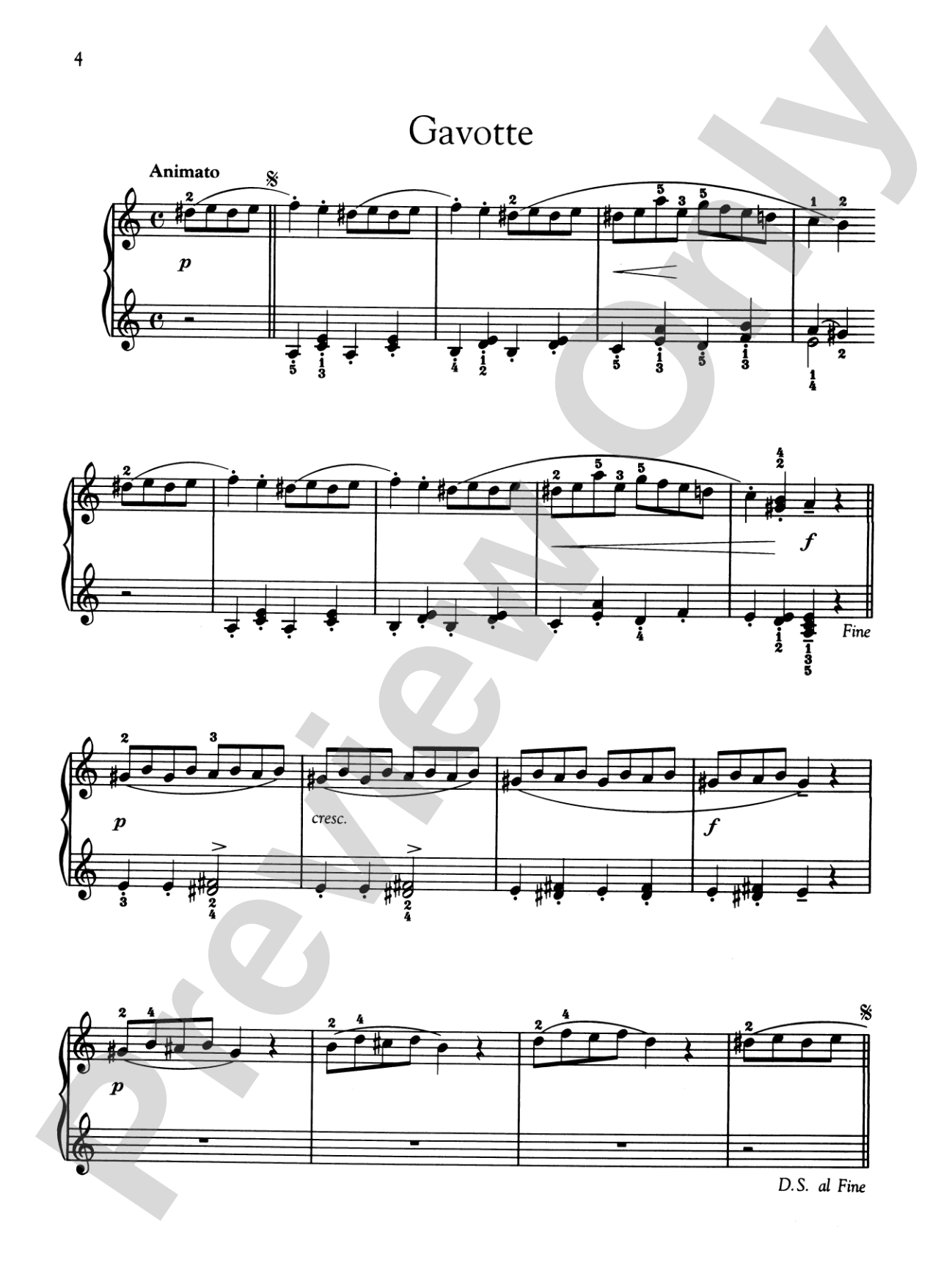
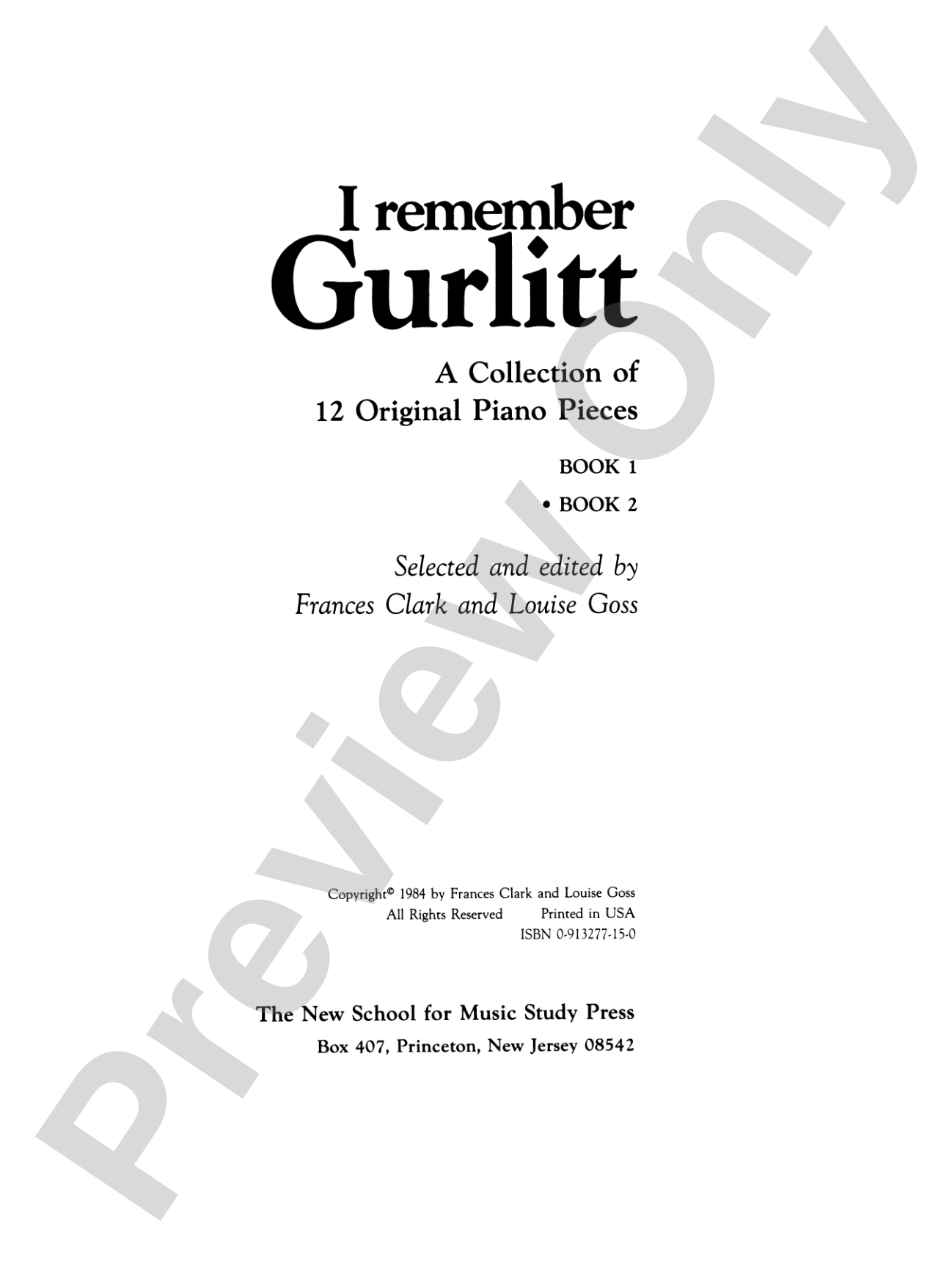
I Remember Gurlitt, Book 2: A Collection of 12 Original Piano Pieces Sheet Music Preview

I Remember Gurlitt, Book 2: A Collection of 12 Original Piano Pieces: Piano

A Collection of 12 Original Piano Pieces

Level: Intermediate

Item: 00-PB-0002633

Digital Download
$5.95
Description
Twelve delightful pieces in the Romantic style that are instant favorites with intermediate students. In these pieces, carefully culled from Gurlitt's vast output, the student can explore all the technical and stylistic hallmarks of the entire Romantic period in music that is easy, accessible and appealing. Contents: Brave Resolve * Danish Dance * Daydreams * Gavotte * Grandfather's Birthday * Happy Youth * Little Study * Longing * March * Polka * Song of the Sea * Waltz.

Discover MakeMusic Cloud: thousands of interactive titles your students can play along with today.

Sample Audio
No sample audio found.
Sample Video
Additional Details
Series: Frances Clark Library for Piano Students
Publisher: Alfred Music
Page Count: 16
SKU: 00-PB-0002633

More about this title

About the Creator: Cornelius Gurlitt

Cornelius Gurlitt (1820–1901) was a prolific German composer whose output spanned over a thousand works, yet his name remains most familiar to pianists through his pedagogical collections. Rather than chase the concert hall spotlight, Gurlitt devoted himself to understanding what students actually needed: music that felt genuine without overwhelming technical demands, pieces that taught Romantic style through direct experience rather than abstraction.

His gift was an unflinching ear for melody and proportion. Every Gurlitt piece does exactly what it sets out to do, no more and no less. This clarity and purposefulness made his work invaluable to generations of teachers seeking repertoire that respected both the student's capability and their musical intelligence.

Why we love this

This collection captures what makes Gurlitt enduringly useful: each piece stands alone as a satisfying musical experience while building competence in specific Romantic conventions. Rather than generic etudes disguised as compositions, you get character pieces with genuine melodic appeal and harmonic substance, so students remain engaged while mastering essential skills.

What to expect

These pieces evoke the gentler side of Romanticism: intimate, conversational, sometimes wistful, occasionally buoyant. There's a consistency of voice across the collection that makes it feel like genuine musical expression rather than a textbook progression, with just enough harmonic color and formal variety to stay fresh across all twelve pieces.

Who it's for

Intermediate pianists ready to engage with the Romantic era through accessible, rewarding repertoire. Students who thrive when pieces have clear character and genuine melodic interest rather than abstract technical exercises will find these pieces instantly compelling.

How to get the most out of it

  • Listen closely to how rubato shapes the phrasing in "Longing" and "Daydreams." Have students practice with a metronome first, then gradually introduce subtle tempo flexibility in the melody line while keeping the accompaniment steady.
  • Pedal becomes a voice in pieces like "Song of the Sea." Work through the harmonic changes without pedal to hear the voice leading clearly, then add pedal mindfully to avoid muddying the texture.
  • The dances ("Danish Dance," "Gavotte," "Polka," "Waltz") benefit from rhythmic precision and character. Identify the natural pulse of each dance form and let that rhythm live in the student's body before sitting down to play.

How to use it

Book 2 works beautifully as a primary source for intermediate recitals, offering enough character variety that two or three pieces from the same collection can feel well-paired on a program without repetition of mood. Use it as the backbone of a unit on Romantic piano style, allowing students to explore different compositional approaches within a single, cohesive aesthetic.

Skills your students will build

  • Singing phrasing with attention to Romantic-era melodic shapes
  • Playing lyrical passages with natural breath and direction
  • Applying appropriate rubato within metric boundaries
  • Voice leading in simple harmonic progressions
  • Character differentiation between dances and character pieces
  • Pedal application for harmonic color and resonance
  • Reading and interpreting 19th-century musical style markings

You May Also Like