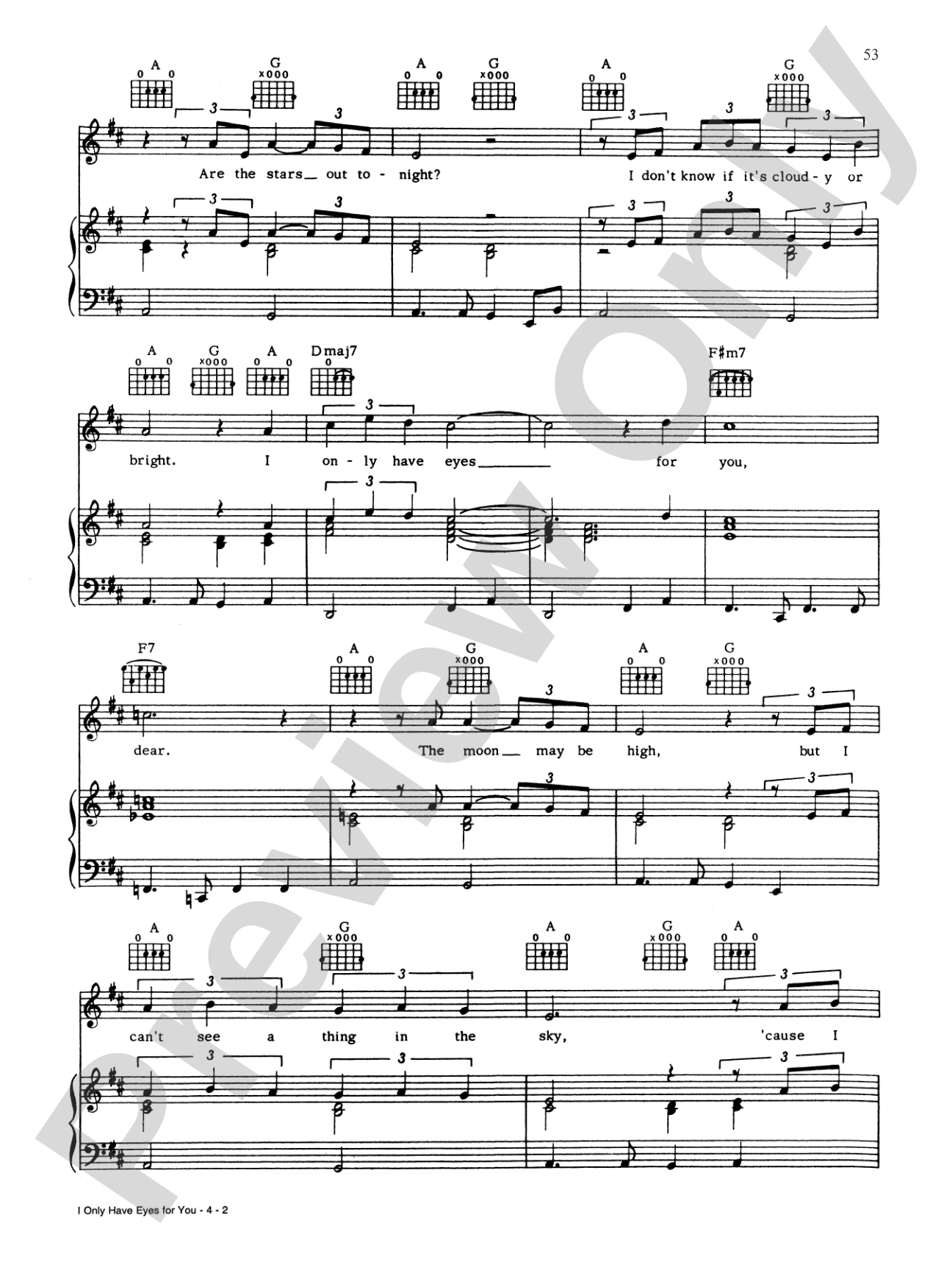
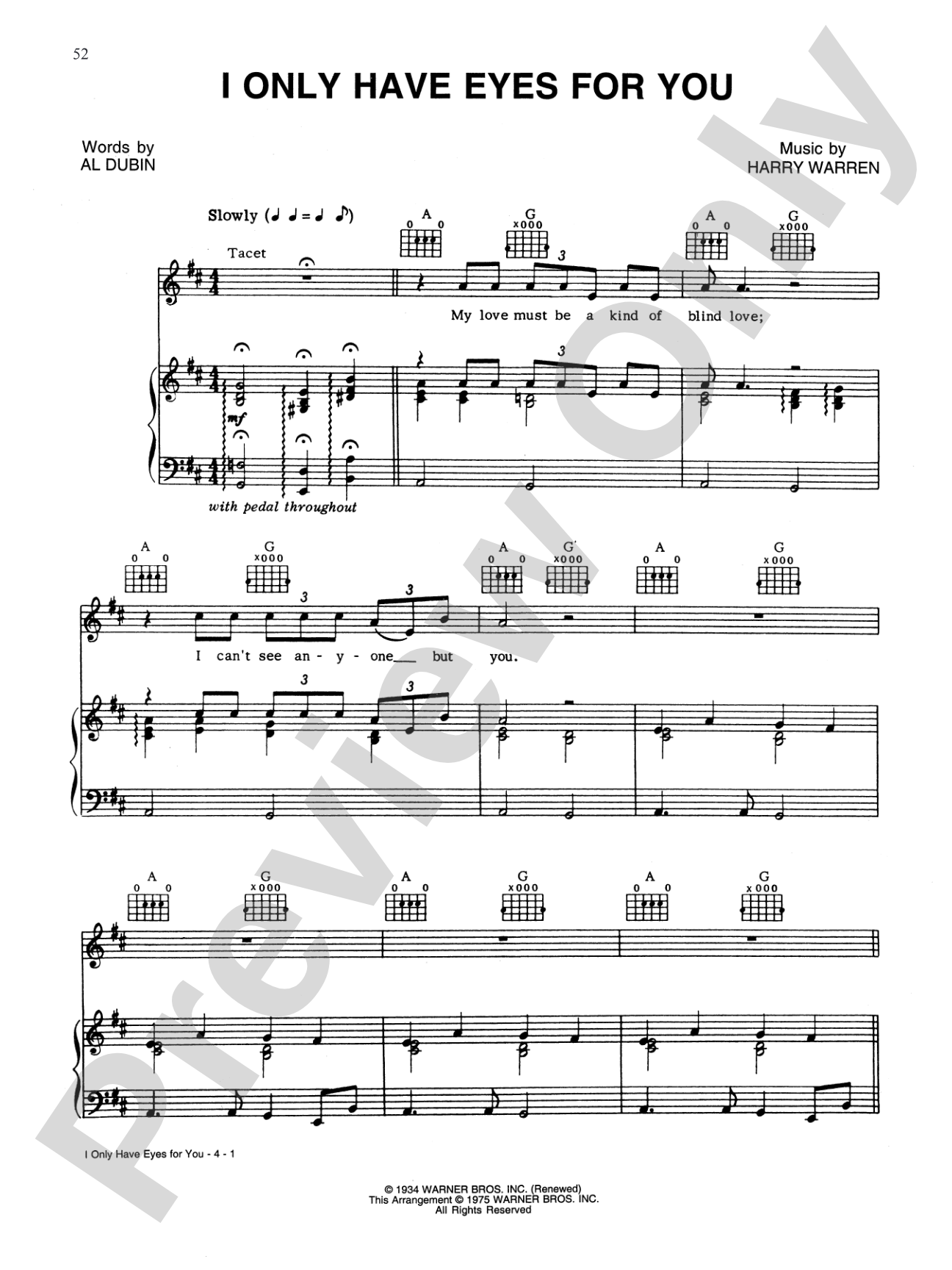
I Only Have Eyes for You (from "42nd Street") Sheet Music Preview

I Only Have Eyes for You (from "42nd Street"): Piano/Vocal/Chords

Words by Al Dubin, music by Harry Warren

Item: 00-PIP-000096

Digital Download
$3.99

One moment…

Description

I Only Have Eyes for You (from "42nd Street"): Piano/Vocal/Chords isn't in MakeMusic Cloud just yet...but it could be. Let us know you'd like to see it, and you'll help shape what comes next. In the meantime, start a free trial and dive into thousands of interactive titles your students can play along with today.

Sample Audio
No sample audio found.
Sample Video
Additional Details
Publisher: Alfred Music
Page Count: 6
SKU: 00-PIP-000096

More about this title

About the Composer: Al Dubin

Al Dubin (1891-1945) was a prolific lyricist and composer whose work defined the Golden Age of Broadway and Hollywood musicals. Collaborating frequently with composer Harry Warren, Dubin crafted some of the era's most enduring standards, including "42nd Street," "Dames," and "I've Got to Be Me." His lyrics combined wit, directness, and romantic sentiment in equal measure, making them natural fits for both stage and screen.

Dubin's contributions to American popular song remain central to the jazz standards repertoire and offer singers rich material for exploring song interpretation. His melodic sensibility and understanding of vocal phrasing shaped how generations of musicians approach the Great American Songbook.

Why we love this

This standard's accessibility and warmth make it a natural choice for students building interpretive skills. The piano/vocal/chords format supports both singers exploring jazz phrasing and pianists developing accompaniment sensitivity, and the six pages contain enough musical substance to justify serious rehearsal time without overwhelming early-intermediate performers.

What to expect

Tender and straightforward, with a melody that sits naturally in the voice and invites genuine emotional delivery. The harmonic language is warm and unpretentious; there's no showiness here, just a sincere declaration expressed through music that serves the sentiment.

Who it's for

Singers at the early-intermediate level who are developing comfort with jazz standards and lyrical phrasing, as well as pianist-accompanists building their skills in supporting vocal performance. This piece works equally well for recital study or ensemble programming.

How to get the most out of it

  • Balance the vocal line above the piano; the accompaniment should support rather than compete with the singer's melodic expression.
  • Notice the harmonic movement in the chord changes and let those guide subtle tempo flexibility, especially in the bridge section.
  • Explore rubato in the verse to capture the vulnerability of the lyric; lock into steady time during the chorus for clarity.

How to use it

Pair this with other standards from the same era to build a program exploring Golden Age Broadway songwriting. It also works beautifully as a solo piece in a student recital or as part of a jazz vocal ensemble concert.

Skills your students will build

  • Interpreting jazz ballad phrasing and rubato
  • Reading and executing chord symbols for accompaniment
  • Managing lyrical vocal line with legit and stylized singing techniques
  • Coordinating singer and accompanist entrances and tempo changes
  • Understanding harmonic function in common-practice jazz standards

You May Also Like