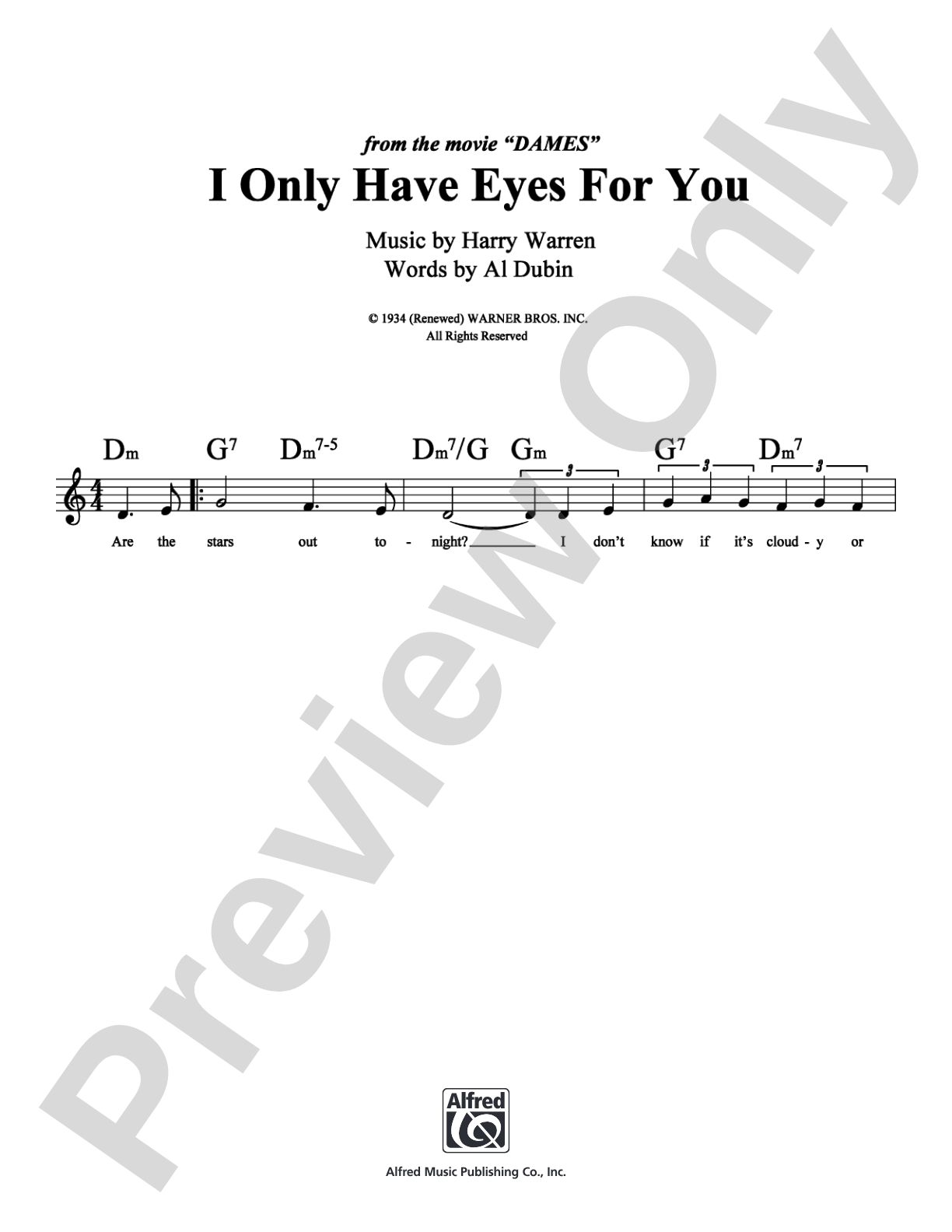
I Only Have Eyes For You: Lead Sheet Digital Sheet Music

I Only Have Eyes For You: Lead Sheet Digital Sheet Music

Harry Warren, The Lettermen, Eddie Duchin

Item: 00-PS-0008497

Digital Download
$1.99
Description

I Only Have Eyes For You: Lead Sheet Digital Sheet Music isn't in MakeMusic Cloud just yet...but it could be. Let us know you'd like to see it, and you'll help shape what comes next. In the meantime, start a free trial and dive into thousands of interactive titles your students can play along with today.

Sample Audio
No sample audio found.
Sample Video
Additional Details
SKU: 00-PS-0008497

More about this title

About the Artist: The Lettermen

The Lettermen emerged in the 1960s as one of America's premier vocal groups, known for their polished harmonies and sophisticated interpretations of popular standards. Their recording of "I Only Have Eyes For You" became iconic, showcasing the tight blend and tasteful arrangement sensibilities that made them favorites on radio and in live performance throughout their career.

Why we love this

This lead sheet captures a standard that sits perfectly at the intersection of jazz harmony and pop accessibility. Directors appreciate how the melody's singability and the changes' harmonic richness create natural opportunities for students to explore voice leading while staying connected to a song they can actually enjoy performing.

What to expect

Warm and unhurried, with the gentle melancholy of someone expressing devotion with complete sincerity. The song floats on a bed of lush harmony, and the lead sheet invites you to discover how much emotional weight a quiet moment can hold.

Who it's for

Pianists, guitarists, and small jazz or pop ensembles looking for a lead sheet that offers genuine musical depth without excessive technical demands. This works equally well for aspiring jazz arrangers seeking to understand how a simple, elegant melody supports rich harmonic exploration.

How to get the most out of it

  • Shape the melody with subtle dynamic shaping rather than dramatic swells; the song's power comes from intimate phrasing, not volume.
  • Let the harmonic sophistication breathe by giving adequate space to chord changes, especially in the bridge where the harmony shifts character.
  • Use the lead sheet as a springboard for reharmonization work; try substitutions in the rhythm section to deepen harmonic awareness.
  • Balance vocal prominence with instrumental accompaniment so the song's romantic quality comes through without oversinging.

How to use it

Include this in a jazz standards unit or a pop-meets-jazz showcase concert where students explore the harmonic language beneath familiar melodies. It works especially well as a learning tool for small combo work or as a featured piece in a recital program that celebrates American popular song.

Skills your students will build

  • Reading and interpreting lead sheet notation
  • Understanding jazz chord symbols and their harmonic function
  • Phrasing and shaping a simple melody over complex harmony
  • Recognizing and performing characteristic harmonic progressions of the Great American Songbook

You May Also Like