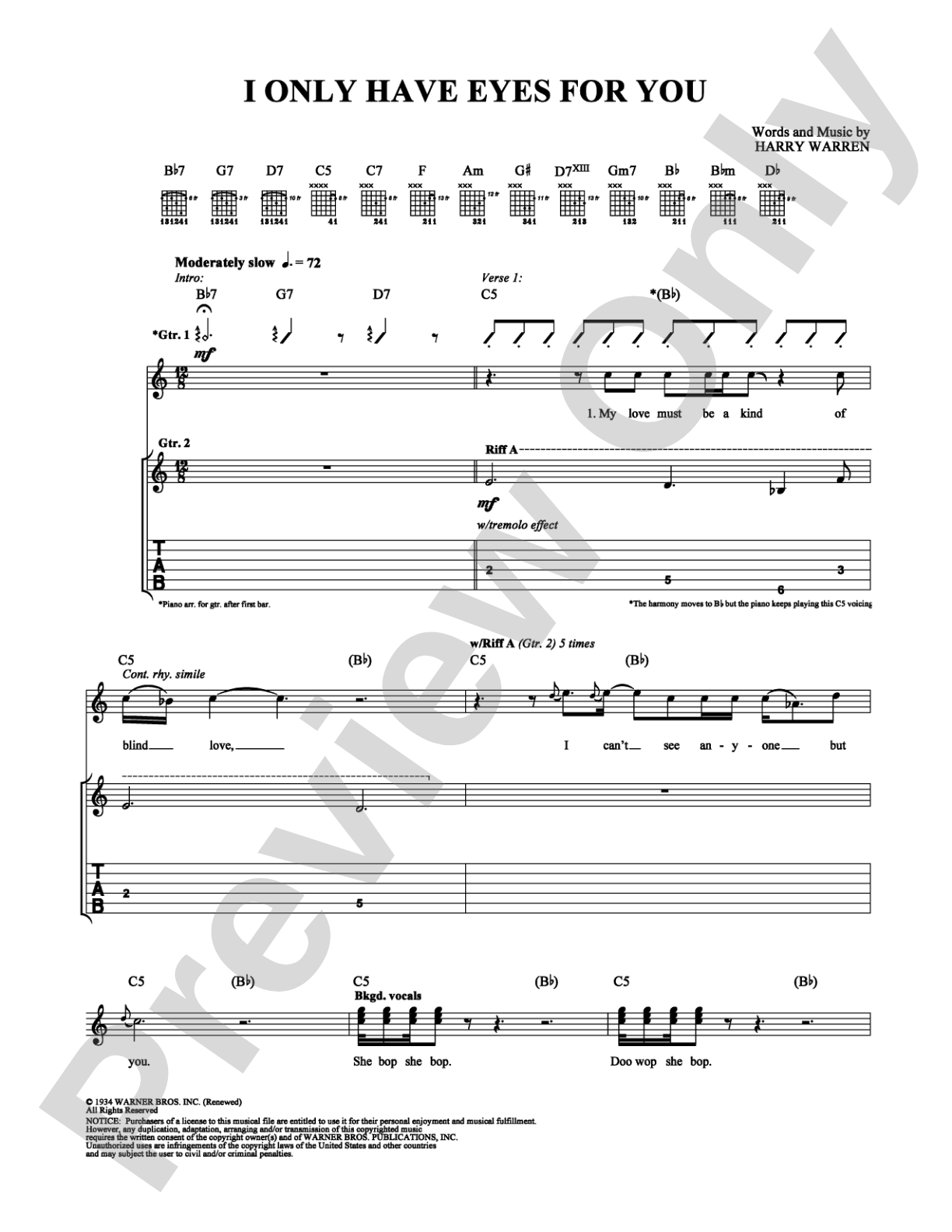
I Only Have Eyes for You: Guitar TAB Digital Sheet Music

I Only Have Eyes for You: Guitar TAB Digital Sheet Music

Harry Warren, The Flamingos

Item: 00-PS-0008496

Digital Download
$2.99
Description

I Only Have Eyes for You: Guitar TAB Digital Sheet Music isn't in MakeMusic Cloud just yet...but it could be. Let us know you'd like to see it, and you'll help shape what comes next. In the meantime, start a free trial and dive into thousands of interactive titles your students can play along with today.

Sample Audio
No sample audio found.
Sample Video
Additional Details
SKU: 00-PS-0008496

More about this title

About the Artist: The Flamingos

The Flamingos were an influential R&B and doo-wop group who rose to prominence in the 1950s, known for their smooth vocal harmonies and romantic ballads. Their 1959 recording of "I Only Have Eyes for You" became a standard, showcasing the group's ability to deliver emotionally rich arrangements that have been covered and adapted across genres for decades.

Why we love this

This TAB arrangement gives guitarists access to a beloved standard in a format that rewards both careful listening and creative interpretation. The song's sophisticated harmonic movement and conversational phrasing translate beautifully to guitar, offering intermediate players a chance to work through jazz-influenced voicings and learn how to shape melody with dynamics rather than relying on vocal texture.

What to expect

Nostalgic and intimate, with a gently swaying quality that draws from 1950s doo-wop warmth. The arrangement invites a conversational approach to melody, where each phrase feels like it's being shared rather than performed.

Who it's for

Intermediate guitarists seeking repertoire beyond typical rock and pop standards will find this a rewarding study in classic song structure and jazz harmony. It works equally well for classical guitar students exploring American songbook arrangements or electric players looking to develop their comping skills.

How to get the most out of it

  • Prioritize clarity in the chord voicings over speed; the song's appeal lies in how each harmonic change lands, not in rushing through the progression.
  • Study the original recording to understand where the melody breathes and where it pushes forward; this will guide your phrasing and tempo flexibility.
  • Experiment with pick dynamics and muting to create separation between the bass notes and higher-register melody, mimicking the layered quality of the vocal arrangement.

How to use it

Pair this with other American standards or classic rock covers to build a recital that bridges generations and styles. It also serves as an excellent solo break piece in an ensemble concert or as a featured selection in a guitar-focused program that celebrates vocal traditions adapted for instruments.

Skills your students will build

  • Reading and executing jazz-influenced chord voicings
  • Shaping melody through dynamics and phrasing rather than ornamentation
  • Understanding harmonic movement in classic song structure
  • Translating vocal phrasing to an instrumental context

You May Also Like