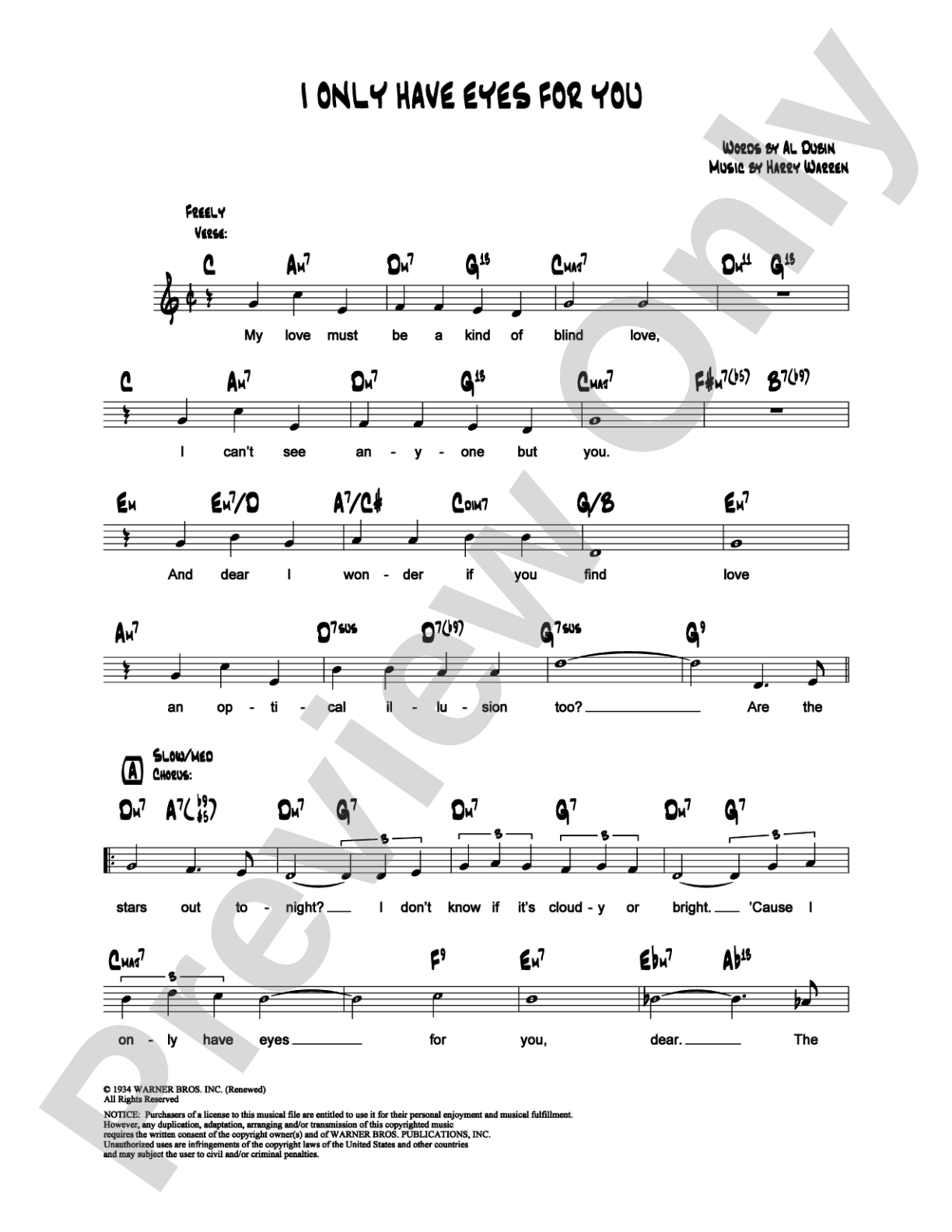
I Only Have Eyes for You: Lead Sheet Digital Sheet Music

I Only Have Eyes for You: Lead Sheet Digital Sheet Music

Harry Warren, The Lettermen, Eddie Duchin

Item: 00-PS-0002054

Digital Download
$1.99
Description

I Only Have Eyes for You: Lead Sheet Digital Sheet Music isn't in MakeMusic Cloud just yet...but it could be. Let us know you'd like to see it, and you'll help shape what comes next. In the meantime, start a free trial and dive into thousands of interactive titles your students can play along with today.

Sample Audio
No sample audio found.
Sample Video
Additional Details
SKU: 00-PS-0002054

More about this title

About the Artist: The Lettermen

The Lettermen emerged in the early 1960s as one of America's most successful vocal groups, known for their polished three-part harmony arrangements of pop standards and contemporary hits. Their interpretations of songs like "I Only Have Eyes for You" exemplified the sophisticated, radio-friendly sound that made them mainstays on charts and variety shows throughout the decade.

Why we love this

This lead sheet captures a timeless standard that works equally well in jazz combos, pop ensembles, or as a solo vehicle for singers exploring the Great American Songbook. The melody sits comfortably for most vocalists, and the harmonic framework invites both straight-ahead interpretation and creative reharmonization.

What to expect

Intimate and wistful, with a melody that unfolds like a confession spoken softly across a crowded room. The harmonic language is warm and sophisticated, creating space for both vulnerability and swing.

Who it's for

Vocalists working in jazz, pop, or standards repertoire will find this lead sheet essential. Piano and guitar players arranging for singers or small ensembles can use it as a springboard for accompanying or improvising around the changes.

How to get the most out of it

  • Shape the melody with intentional phrasing rather than mechanical articulation; this song lives in the space between words and demands legato storytelling.
  • Use the lead sheet as a starting point for harmonic exploration, especially if you're working with piano or guitar accompaniment that can voice the changes creatively.
  • Balance the vocal line with sensitive accompaniment so the lyrical intimacy of the melody remains the focal point throughout.

How to use it

Include this in a concert exploring standards from the 1930s-1950s, or pair it with other romantic ballads for a set that showcases vocal artistry. It works beautifully as a solo feature or as the opening number for an evening that celebrates American songwriting.

Skills your students will build

  • Interpreting jazz and pop melody with stylistic phrasing
  • Reading and navigating lead sheet chord symbols
  • Understanding harmonic movement in standards-based arrangements
  • Collaborating with accompanists on balance and rhythmic feel

You May Also Like