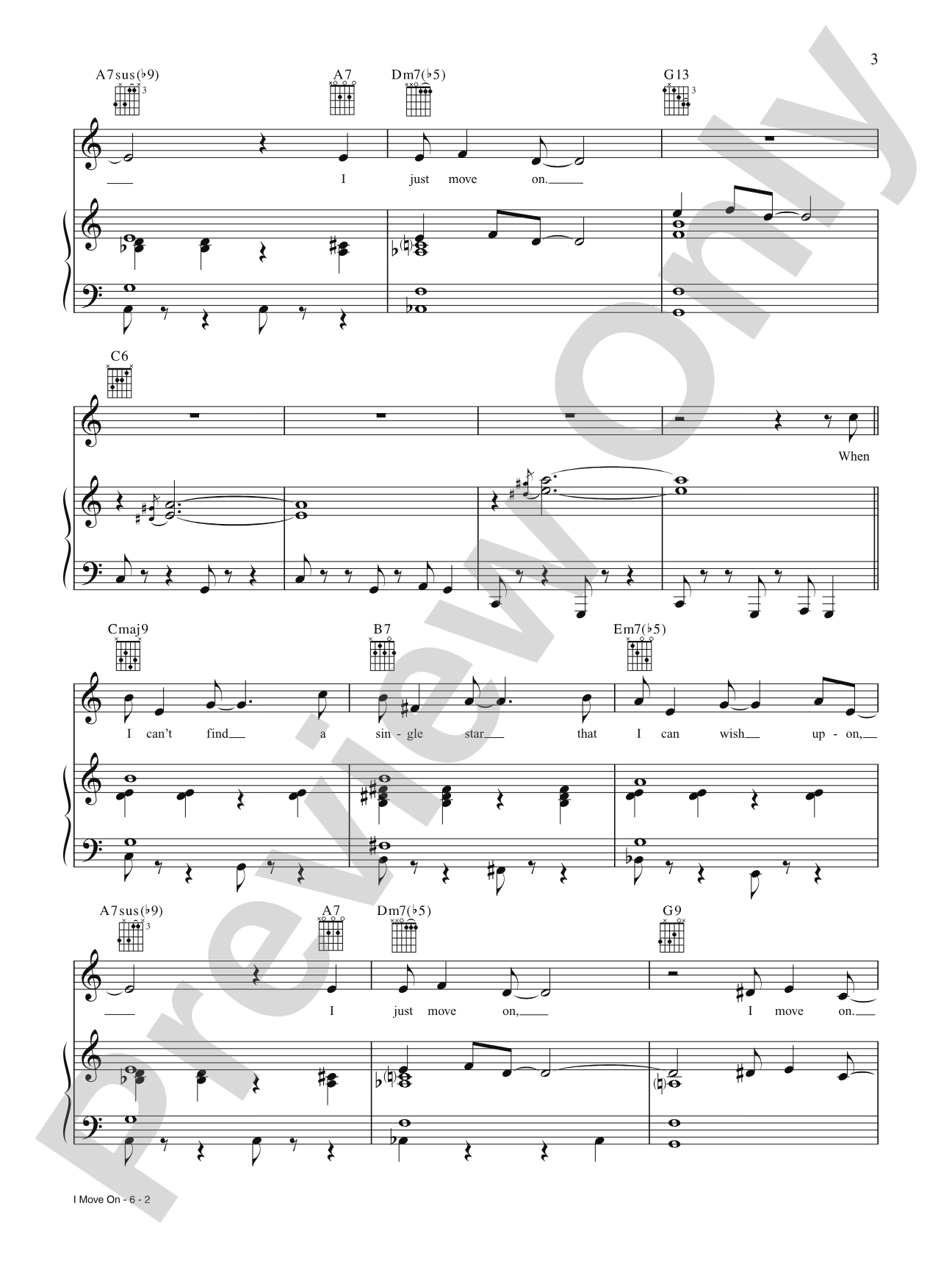
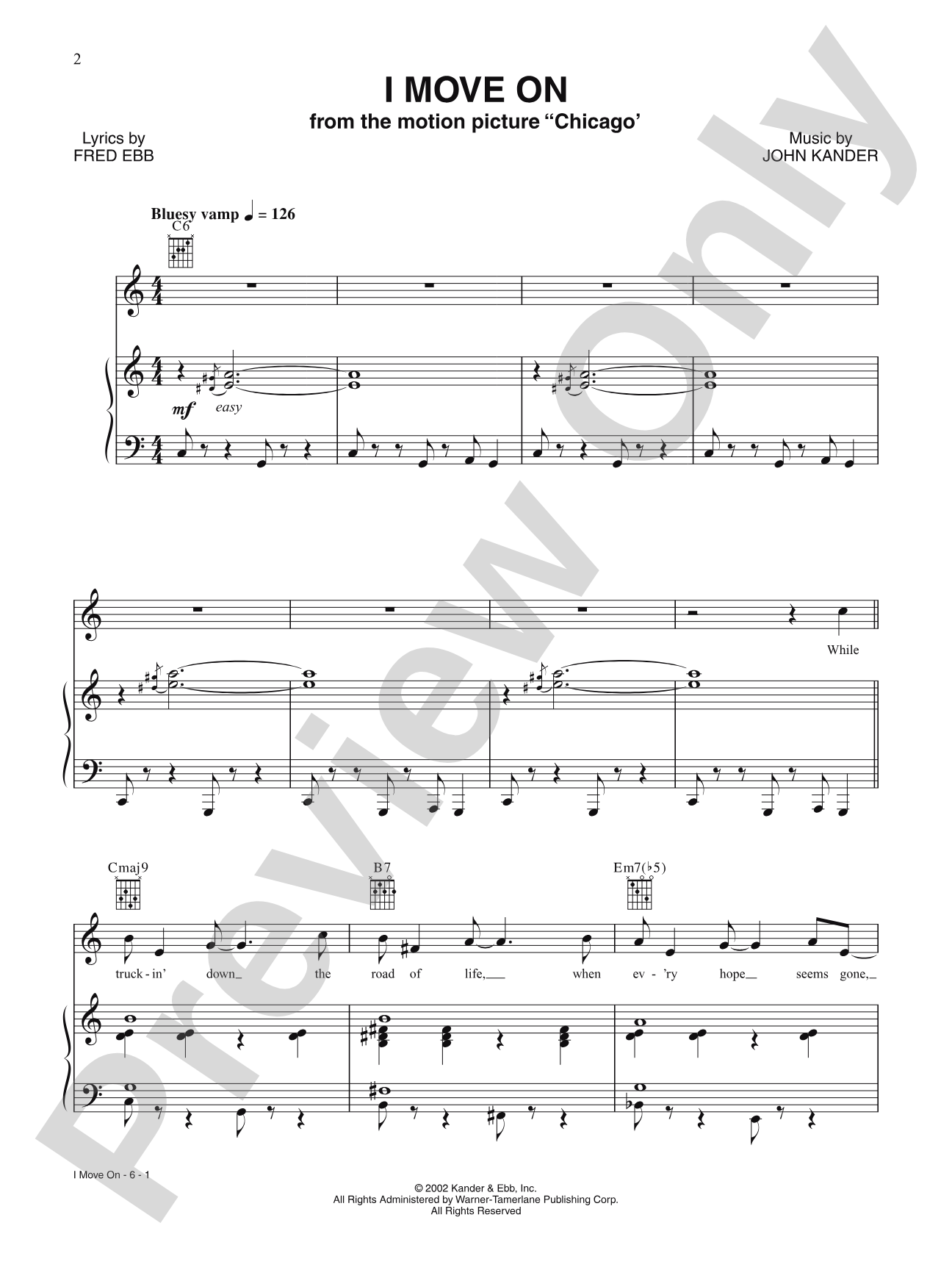
I Move On (from Chicago) Sheet Music Preview

I Move On (from Chicago): Piano/Vocal/Chords

As performed by Catherine Zeta-Jones and Renée Zellweger; music by John Kander, lyrics by Fred Ebb

Item: 00-PIP-000538

Digital Download
$3.99

One moment…

Description

I Move On (from Chicago): Piano/Vocal/Chords isn't in MakeMusic Cloud just yet...but it could be. Let us know you'd like to see it, and you'll help shape what comes next. In the meantime, start a free trial and dive into thousands of interactive titles your students can play along with today.

Sample Audio
No sample audio found.
Sample Video
Additional Details
Publisher: Alfred Music
SKU: 00-PIP-000538

More about this title

About the Composer: John Kander

John Kander has composed the scores for some of Broadway's most enduring musicals, including Cabaret, Chicago, and Kiss of the Spider Woman. His work spans five decades of theater and film, earning him two Academy Awards, two Tony Awards, and a Grammy. Kander's gift for writing melody that serves character and narrative has made him essential to music education repertoire, particularly for singers exploring contemporary musical theater with sophisticated harmonic language.

Why we love this

This anthem gives singers a chance to perform a song that demands both vulnerability and showmanship. The piano part is substantial enough to keep an accompanist engaged without overshadowing the vocal line, and the chords provide flexibility for different interpretations and tempos. It's the kind of contemporary musical theater song that students actually want to sing.

What to expect

The song radiates determination mixed with hard-won wisdom. There's forward momentum in the accompaniment and a conversational quality to the melody that makes the character feel present and real, not distant or performed. Beneath its upbeat surface runs an undercurrent of resilience.

Who it's for

This arrangement suits solo singers and accompanists preparing audition material, recital repertoire, or concert programming. High school and college vocalists working with contemporary musical theater will find the vocal range and dramatic content accessible while the harmonic content remains rich enough for serious study.

How to get the most out of it

  • Balance the rhythmic energy of the accompaniment with the lyrical phrasing of the melody; the piano shouldn't rush the vocalist's storytelling moments.
  • Pay attention to the dynamic arc across the full song rather than treating each section in isolation; this number builds momentum toward its conclusion.
  • Shape the vocal line around the text, allowing natural speech rhythms to coexist with the written melodic contour.
  • Explore the emotional subtext beneath the surface optimism; Kander's harmonies often suggest complexity that enriches a straightforward lyric.

How to use it

Include this in a recital program featuring contemporary musical theater or in a solo concert exploring themes of perseverance and reinvention. It pairs well alongside other songs from Chicago or within a broader program examining Kander and Ebb's theatrical sensibility. Consider programming it where a moment of directness and optimism serves the arc of your concert.

Skills your students will build

  • Sustaining legit soprano or mezzo-soprano placement while maintaining rhythmic precision
  • Reading and interpreting chord symbols for expressive accompaniment voicing
  • Balancing lyrical phrasing with contemporary musical theater diction
  • Understanding character motivation within a song's dramatic arc

You May Also Like