I'm Seventeen Come Sunday: 2nd B-flat Trumpet Sheet Music Preview

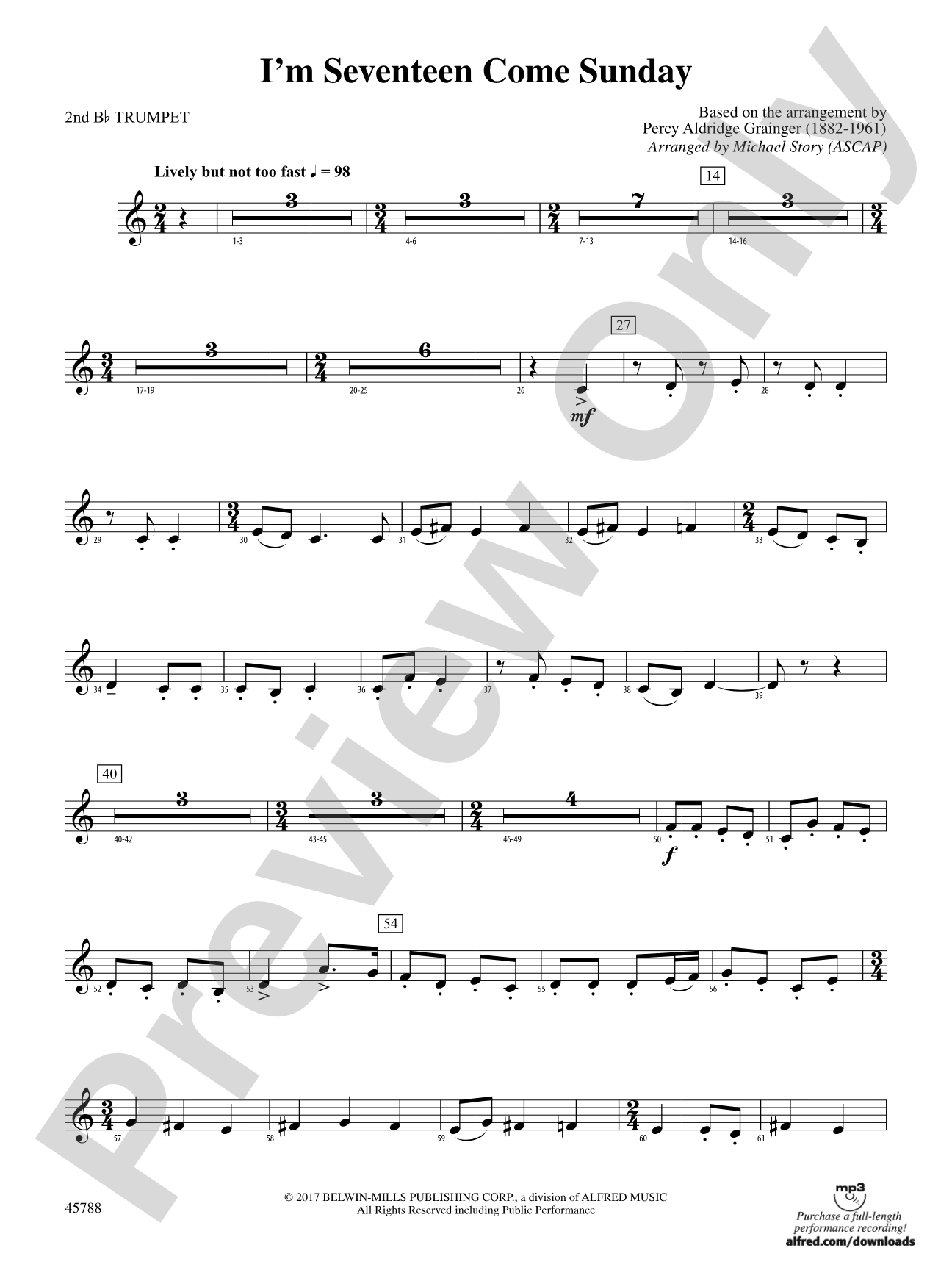
I'm Seventeen Come Sunday: 2nd B-flat Trumpet

Based on the arrangement by Percy Aldridge Grainger / arr. Michael Story

Grade: 2 (Easy)

Item: 00-PC-0017597_T2

Digital Download
$3.00
Description
Based on Percy Granger's choral and brass setting, this British folk song is cast for developing band by Michael Story. The delicate clarinet introduction grows in intensity with the addition of the entire woodwind family and finally the entire ensemble. Teaching opportunities are presented with introductory multi-meter. Careful attention to all articulations will guarantee a musical performance. This compelling addition to the young band repertoire allows this cherished composition to be enjoyed by a wider array of ensembles. (2:15)

Don't just read it, hear it, play along with it, and watch your students grow with it. In MakeMusic Cloud, I'm Seventeen Come Sunday: 2nd B-flat Trumpet comes alive with professional accompaniment, adjustable tempo, and built-in practice tools that turn solo practice into real progress.

Sample Audio
0:00
0:00
Sample Video
Additional Details
Series: Belwin Young Band
Publisher: Alfred Music
Page Count: 240
SKU: 00-PC-0017597_T2

More about this title

About the Arranger: Percy Aldridge Grainger

Percy Aldridge Grainger (1882-1961) was an Australian-born composer and pianist who became a champion of folk music preservation and imaginative orchestration. His arrangements of traditional songs demonstrated a gift for honoring the melodies while creating fresh, colorful textures that highlighted different instrumental families. Grainger's work as both a concert pianist and educator shaped his approach to composition; he believed folk materials deserved sophisticated yet accessible treatment, making his settings valuable for ensembles at all levels.

Why we love this

Michael Story's Grade 2 setting captures the emotional arc of this folk melody without overwhelming young musicians. The orchestration unfolds logically, beginning with a clean clarinet line and gradually adding color, giving students a transparent model for how ensemble texture builds dramatically. Programming this work introduces your band to Grainger's inventive voice while building musicianship through careful listening and articulation work.

What to expect

The piece unfolds like a folk tale being told around a fire, starting intimate and personal before drawing the whole community in. There's warmth and sincerity beneath the Britishness of the melody, with orchestral colors that feel earned rather than ornamental.

Who it's for

This arrangement serves developing concert bands (Grade 2) ready to explore folk song literature with compositional sophistication. It works well for groups building confidence in multi-meter contexts and seeking concert-quality repertoire that doesn't demand technical virtuosity.

How to get the most out of it

  • Shape the clarinet introduction with a singing tone and gentle phrasing; this melody sets the emotional foundation for everything that follows.
  • Mark the meter changes clearly in rehearsal so transitions feel intentional rather than disjointed. The notation may shift texture, but the pulse should remain steady.
  • Articulate every marking with precision, particularly in the woodwind doublings. The delicate quality Grainger valued depends on consistency across the section.
  • Balance the ensemble carefully as voices enter. Resist the urge to swell too early; let the intensity grow gradually from the bones outward.

How to use it

This arrangement fits naturally on a folk-themed concert or as a gentle opening work that transitions your audience into the program. The 2:15 duration makes it ideal pacing between heavier contest pieces or as a bridge between a classical opening and more contemporary selections.

Skills your students will build

  • Reading and performing in multiple meters (introductory exposure)
  • Articulation clarity across woodwind and brass sections
  • Balancing ensemble texture as instrumental families enter progressively
  • Phrasing and lyrical expression in folk song arrangements
  • Listening and blending within a growing orchestration

You May Also Like