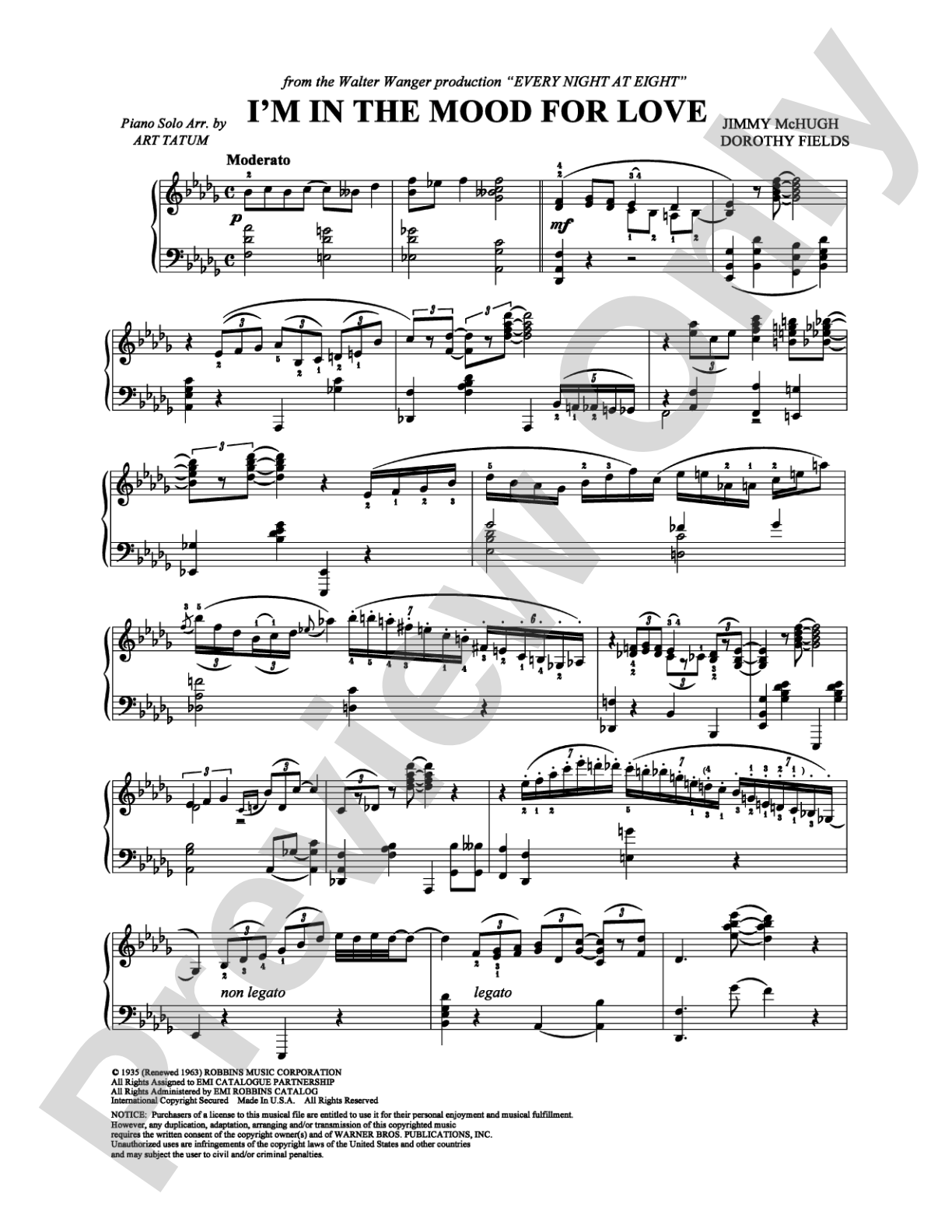
I'm in the Mood for Love: Piano Digital Sheet Music

I'm in the Mood for Love: Piano Digital Sheet Music

Jimmy McHugh, Dorothy Fields, Art Tatum

Item: 00-PS-0007247

Digital Download
$3.99
Description

I'm in the Mood for Love: Piano Digital Sheet Music isn't in MakeMusic Cloud just yet...but it could be. Let us know you'd like to see it, and you'll help shape what comes next. In the meantime, start a free trial and dive into thousands of interactive titles your students can play along with today.

Sample Audio
No sample audio found.
Sample Video
Additional Details
SKU: 00-PS-0007247

More about this title

About the Artist: Art Tatum

Art Tatum (1909-1956) redefined what the piano could do as a solo instrument. His harmonic sophistication, lightning-fast technique, and ability to reimagine standards through complex reharmonization set a new standard for jazz piano that influenced generations of musicians across genres. Tatum's recordings remain essential listening for pianists seeking to understand how deep knowledge of harmony and fearless improvisation combine to transform familiar melodies into something entirely fresh.

Why we love this

Tatum's arrangement of this standard showcases the specific magic that made him legendary: sophisticated voicings, unexpected harmonic turns, and a sense of swing that feels inevitable despite its complexity. Students and teachers encounter a masterclass in how a great pianist thinks through a song, making it an invaluable reference for understanding jazz standards at the highest level.

What to expect

Urbane and playful, with an almost conversational quality despite the technical demands. The arrangement dances through romantic sentiment without ever indulging it, maintaining a cool sophistication that makes the melody feel both intimate and performative.

Who it's for

Jazz piano students working toward independence and harmonic literacy benefit most from studying Tatum's approach to standards. Teachers introducing advanced pianists to jazz history will find this an engaging way to show how technical mastery serves musical ideas rather than existing for its own sake.

How to get the most out of it

  • Study Tatum's voicing choices closely. His use of upper extensions and chromatic reharmonization transforms basic chord progressions; understanding why each substitution lands will sharpen your own harmonic ear.
  • Don't rush the tempo in pursuit of technical cleanliness. Tatum's strength lies in his ability to swing hard while playing impossibly fast; locking into a steady pulse that breathes with the tune matters more than pristine notes.
  • Listen to multiple Tatum recordings of this tune if available. His improvisations shift each take; this teaches you that the written transcription is a snapshot, not a cage.

How to use it

Include this in a solo recital when you want to demonstrate range and fluency across musical styles, or pair it with other standards to create a themed program exploring how different eras and pianists approach the same repertoire. It also works beautifully as a teaching reference in jazz history units or harmonic analysis classes.

Skills your students will build

  • Reading and interpreting complex jazz voicings and reharmonization
  • Recognizing chromatic substitutions and their function within harmonic progressions
  • Executing fast, articulate passages without sacrificing swing and feel
  • Understanding how to maintain melodic clarity amid dense harmonic activity

You May Also Like