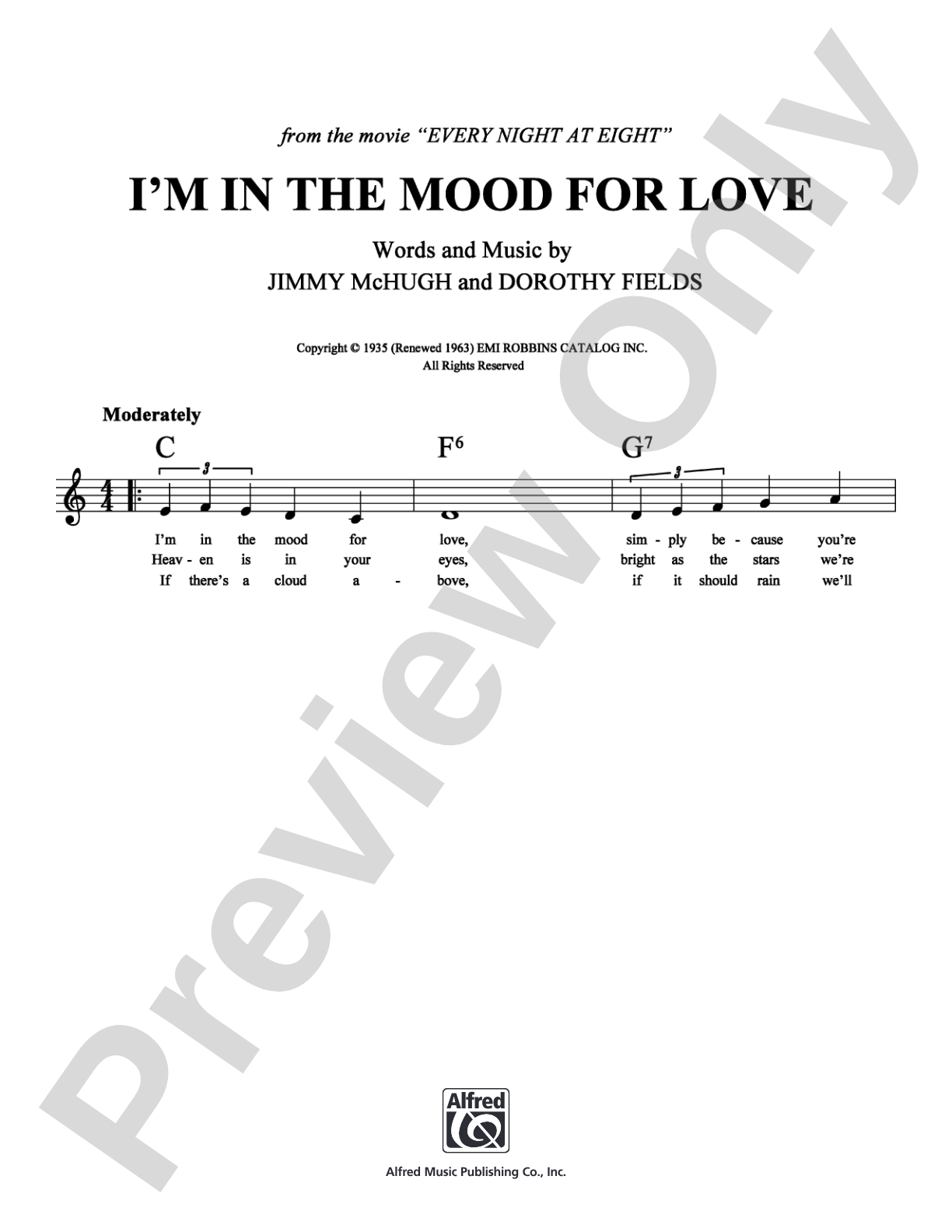
I'm in the Mood for Love: Lead Sheet Digital Sheet Music

I'm in the Mood for Love: Lead Sheet Digital Sheet Music

Jimmy McHugh, Louis Armstrong, Dorothy Fields, Billy Eckstine

Item: 00-PS-0007246

Digital Download
$1.99
Description

I'm in the Mood for Love: Lead Sheet Digital Sheet Music isn't in MakeMusic Cloud just yet...but it could be. Let us know you'd like to see it, and you'll help shape what comes next. In the meantime, start a free trial and dive into thousands of interactive titles your students can play along with today.

Sample Audio
No sample audio found.
Sample Video
Additional Details
SKU: 00-PS-0007246

More about this title

About the Artist: Louis Armstrong

Louis Armstrong (1901-1971) was a trumpeter, vocalist, and bandleader whose innovations in jazz improvisation and scat singing shaped American music for generations. His warm, distinctive voice and virtuosic trumpet playing made him one of the most recognizable musicians of the 20th century, and his interpretations of popular standards remain touchstones for jazz education and performance.

Billy Eckstine (1914-1993) was a baritone vocalist and bandleader whose smooth, sophisticated delivery and technical command influenced countless singers. He was instrumental in bridging the worlds of swing and bebop, and his work with jazz ensembles helped establish the standard vocal repertoire that music students continue to study and perform.

Why we love this

This standard gives singers and jazz ensembles direct access to one of the most recorded songs in American music history. The lead sheet format strips away arrangement decisions, letting students focus on melody, phrasing, and the particular vocal character that made Armstrong and Eckstine's versions definitive. It's an essential text for understanding jazz interpretation and vocal jazz language.

What to expect

Warm, inviting, and effortlessly swinging. The melody has an easy lilt that sits naturally in the voice, while the harmony beneath it tells a gentle romantic story. There's an unhurried confidence here, a sense that the singer has all the time in the world to convince you of the mood.

Who it's for

Jazz singers and vocalists studying standard interpretation, jazz ensembles arranging for vocal soloist, and music students exploring the foundational American jazz vocal repertoire. This is essential material for anyone developing a working knowledge of how classic standards are sung and reinterpreted.

How to get the most out of it

  • Study both the Armstrong and Eckstine recordings to hear how different singers shape the melody and phrase across the bar lines; their approaches illustrate two valid interpretive paths.
  • Work the lyric with clear diction while maintaining the relaxed swing feel; the mood lives in how naturally you deliver the words, not how perfectly you land on pitch.
  • Listen closely to how the original artists navigate the bridge; the harmonic movement there rewards thoughtful breath placement and rubato.

How to use it

Feature this in a jazz night or standards showcase alongside other well-known tunes from the same era; its familiarity makes it an excellent anchor piece for a program exploring the Great American Songbook. You can also use it as a solo vehicle for a vocalist developing interpretive skills, or as a foundation for student arrangements that explore different instrumental voicings.

Skills your students will build

  • Vocal jazz phrasing and rubato
  • Interpreting lyrics with natural inflection
  • Reading lead sheet notation and chord symbols
  • Understanding swing feel and rhythmic placement
  • Building interpretive choices from recorded models

You May Also Like