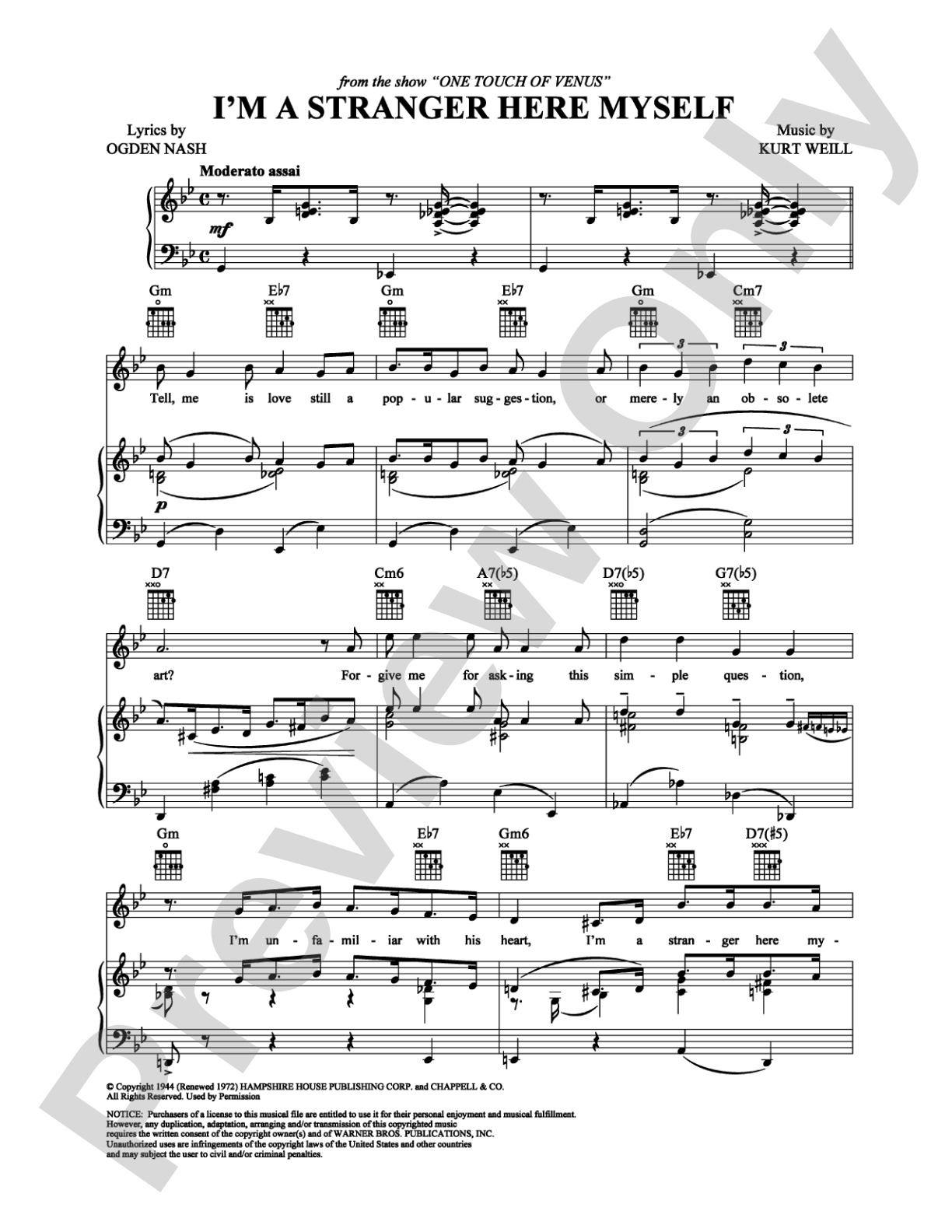
I'm a Stranger Here Myself: Piano/Vocal/Chords Digital Sheet Music

I'm a Stranger Here Myself: Piano/Vocal/Chords Digital Sheet Music

Kurt Weill

Item: 00-PS-0001664

Digital Download
$3.99
Description

I'm a Stranger Here Myself: Piano/Vocal/Chords Digital Sheet Music isn't in MakeMusic Cloud just yet...but it could be. Let us know you'd like to see it, and you'll help shape what comes next. In the meantime, start a free trial and dive into thousands of interactive titles your students can play along with today.

Sample Audio
No sample audio found.
Sample Video
Additional Details
SKU: 00-PS-0001664

More about this title

Why we love this

This standard bridges the gap between jazz sophistication and classic American songwriting in a way that works equally well in a cabaret setting or a vocal jazz class. The straightforward chord chart makes it accessible for pianists developing their comping skills while giving singers room to explore interpretive nuance.

What to expect

A reflective, quietly observant moment that sits somewhere between wistfulness and gentle humor. The melody carries a sense of displacement or gentle confusion, anchored by supportive piano voicings that invite intimacy rather than drama.

Who it's for

Vocalists developing jazz phrasing and interpretation will find this standard offers generous melodic space for personalizing phrasing. Pianists studying jazz accompaniment and chord substitution can use the chart as a foundation for expanding their harmonic vocabulary.

How to get the most out of it

  • Establish the harmonic rhythm early in rehearsal. Mark the chord changes where the voice moves between sustained notes and quicker passages so your accompanist knows exactly where the melody breathes.
  • Layer in dynamics gradually. The lyrics invite introspection, so resist playing at full volume from the start; let the emotional arc build naturally through the verse and into any recurring sections.
  • Use the chord symbols to explore different voicings on subsequent run-throughs. Comping styles can shift dramatically between a sparse, angular approach and a fuller harmonic texture depending on your accompaniment goal.

How to use it

Program this in a jazz vocal recital or as a standalone art song when you want to transition from classical or contemporary material into the American songbook. Its introspective character works beautifully in smaller venues or educational performances showcasing jazz standards.

Skills your students will build

  • Interpreting jazz phrasing and melodic rubato over written chord changes
  • Reading and voicing jazz chord symbols (sevenths, extensions, alterations)
  • Developing sophisticated vocal diction and lyrical storytelling in a conversational idiom
  • Comping and harmonic accompaniment tailored to a vocalist's phrasing choices

You May Also Like