I'm A Ding Dong Daddy (From Dumas) Sheet Music Preview

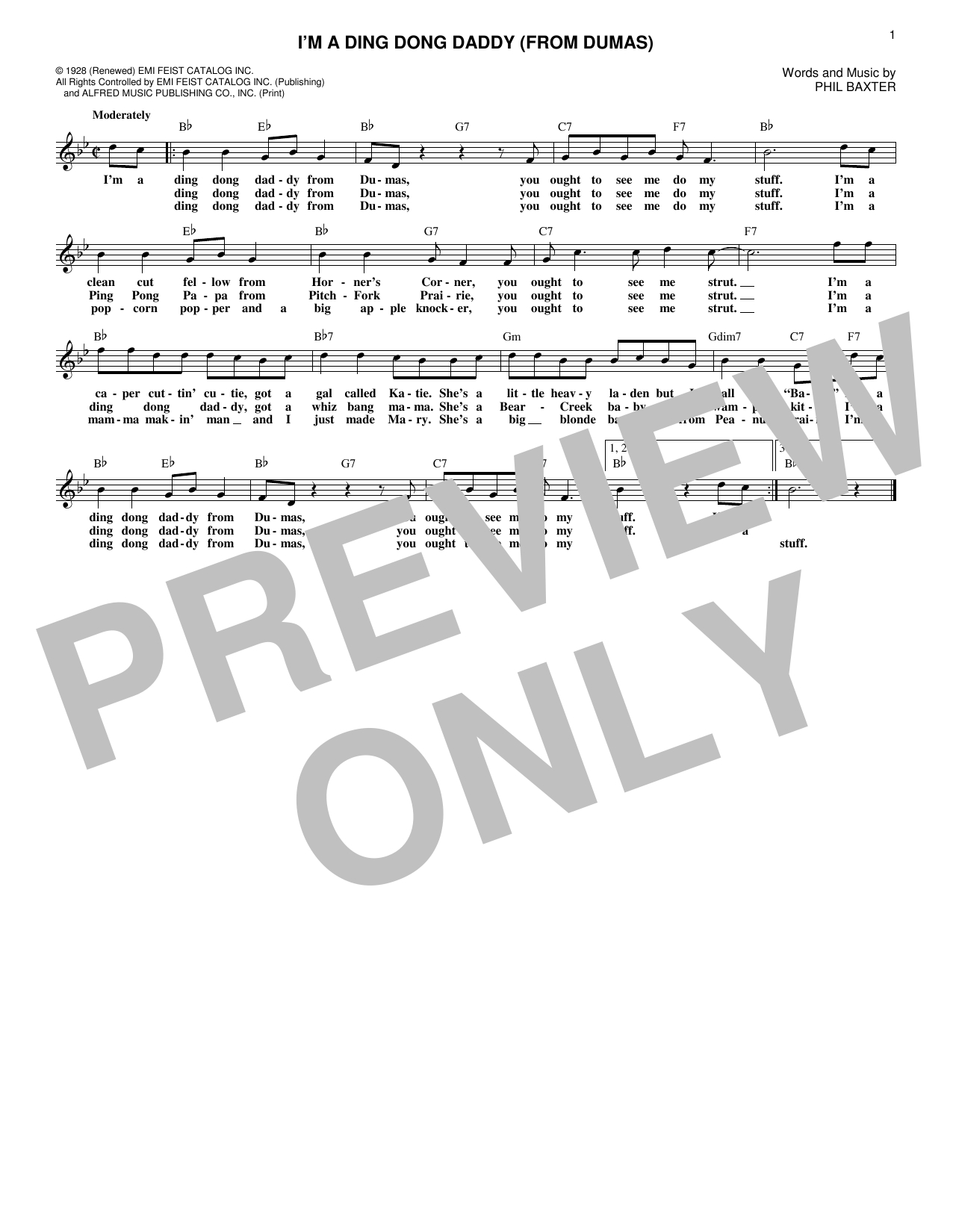
I'm A Ding Dong Daddy (From Dumas): Lead Sheet / Fake Book

As performed by Louis Armstrong

Item: 35-DS00379737

Digital Download
$3.99
Description

I'm A Ding Dong Daddy (From Dumas): Lead Sheet / Fake Book isn't in MakeMusic Cloud just yet...but it could be. Let us know you'd like to see it, and you'll help shape what comes next. In the meantime, start a free trial and dive into thousands of interactive titles your students can play along with today.

Sample Audio
No sample audio found.
Sample Video
Additional Details
Publisher: Hal Leonard
Page Count: 1
SKU: 35-DS00379737

More about this title

About the Artist: Louis Armstrong

Louis Armstrong fundamentally reshaped how jazz musicians approached melody, rhythm, and vocal expression. Born in New Orleans in 1901, Armstrong's innovations on trumpet and his distinctive vocal style became the template for jazz improvisation and swing phrasing that still shapes how musicians interpret standards today.

His recordings from the 1920s and 1930s established the language of jazz singing: behind-the-beat phrasing, rhythmic flexibility, and the integration of instrumental and vocal techniques. For educators, Armstrong's work represents an essential model of how performers balance fidelity to a song's melody with personal interpretation and swing feel.

Why we love this

Armstrong's recordings of standards like this one offer vocalists a masterclass in swing phrasing and rhythmic sophistication without requiring complex harmonic knowledge. The melody sits comfortably in a lead sheet format, making it accessible for students while the underlying changes and Armstrong's recorded interpretation reveal layers of jazz vocabulary worth exploring.

What to expect

Playful and suave, with the infectious energy of early jazz swing. The tune bounces with humor and charm while maintaining the harmonic sophistication that makes standards endure; singing or accompanying it demands rhythmic flexibility and a light touch rather than heavy dramatics.

Who it's for

Vocalists developing jazz interpretation skills, singers building a standard repertoire, and pianists working on accompaniment and comping techniques. This lead sheet works equally well for classroom exploration of Armstrong's legacy or as a foundation for performance study.

How to get the most out of it

  • Listen to Armstrong's original recording multiple times before touching the keyboard to absorb the rhythmic placement and vocal inflection that define the tune.
  • Practice singing the melody straight before adding swing feel, then gradually incorporate the triplet-based phrasing and behind-the-beat articulation Armstrong employed.
  • Use the chord changes to build simple walking bass or comping patterns rather than playing literal voicings; this keeps the feel light and authentic to how jazz pianists accompany singers.
  • Isolate the bridge section to ensure smooth voice leading and harmonic clarity, as this is where many arrangers add chromatic passing chords.

How to use it

Feature this in a unit on jazz standards and the Great American Songbook, pairing it with other Armstrong recordings to trace how his approach to a single tune evolved. It also serves as an engaging intermediate vocal repertoire piece when you want something historically grounded that won't intimidate students but still rewards careful listening and artistic choices.

Skills your students will build

  • Swing rhythmic phrasing and behind-the-beat articulation
  • Reading lead sheets and understanding chord symbols
  • Translating recorded vocal interpretation into performance choices
  • Jazz accompaniment and comping on keyboard
  • Melodic flexibility within a fixed harmonic structure

You May Also Like