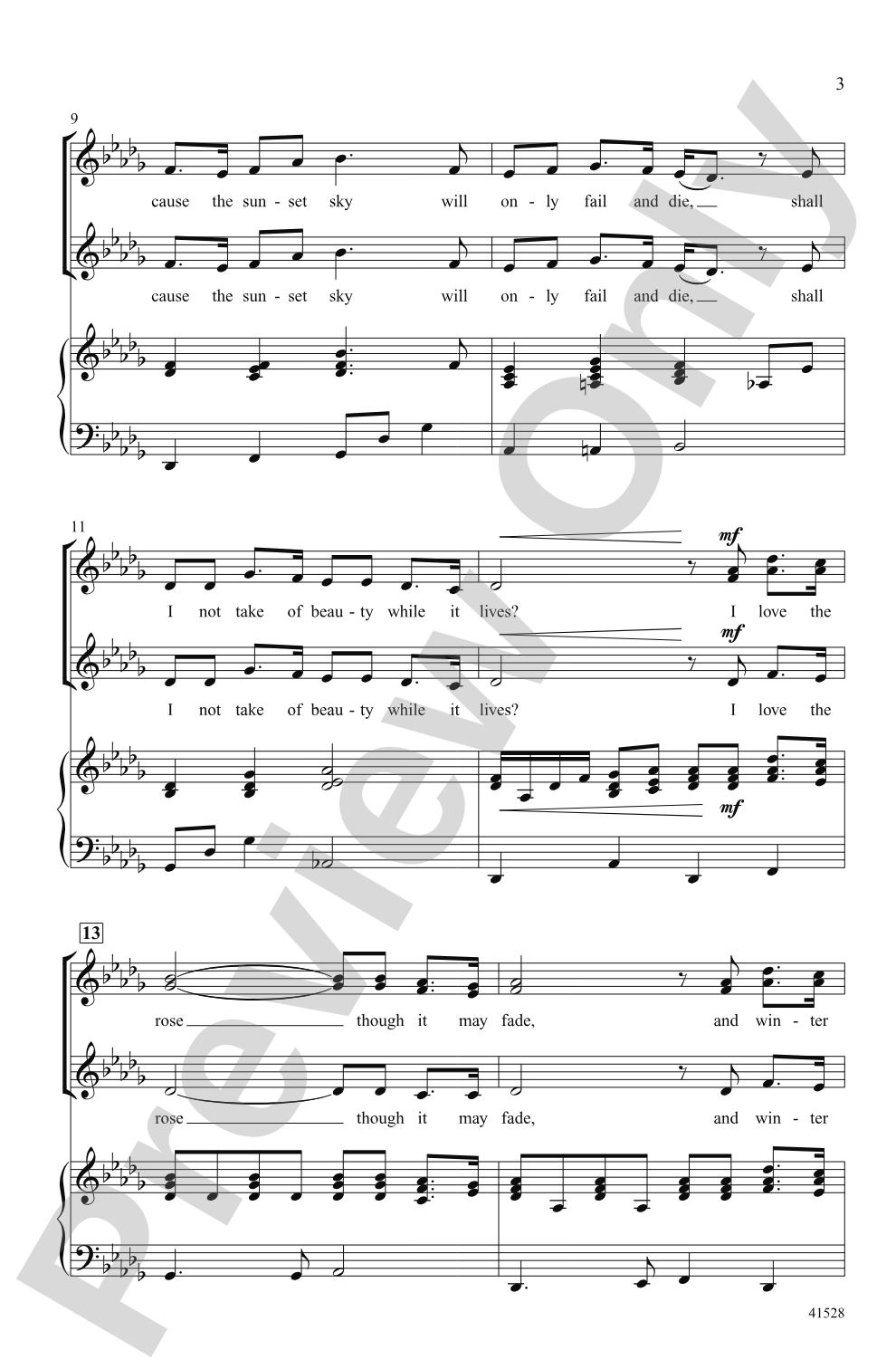
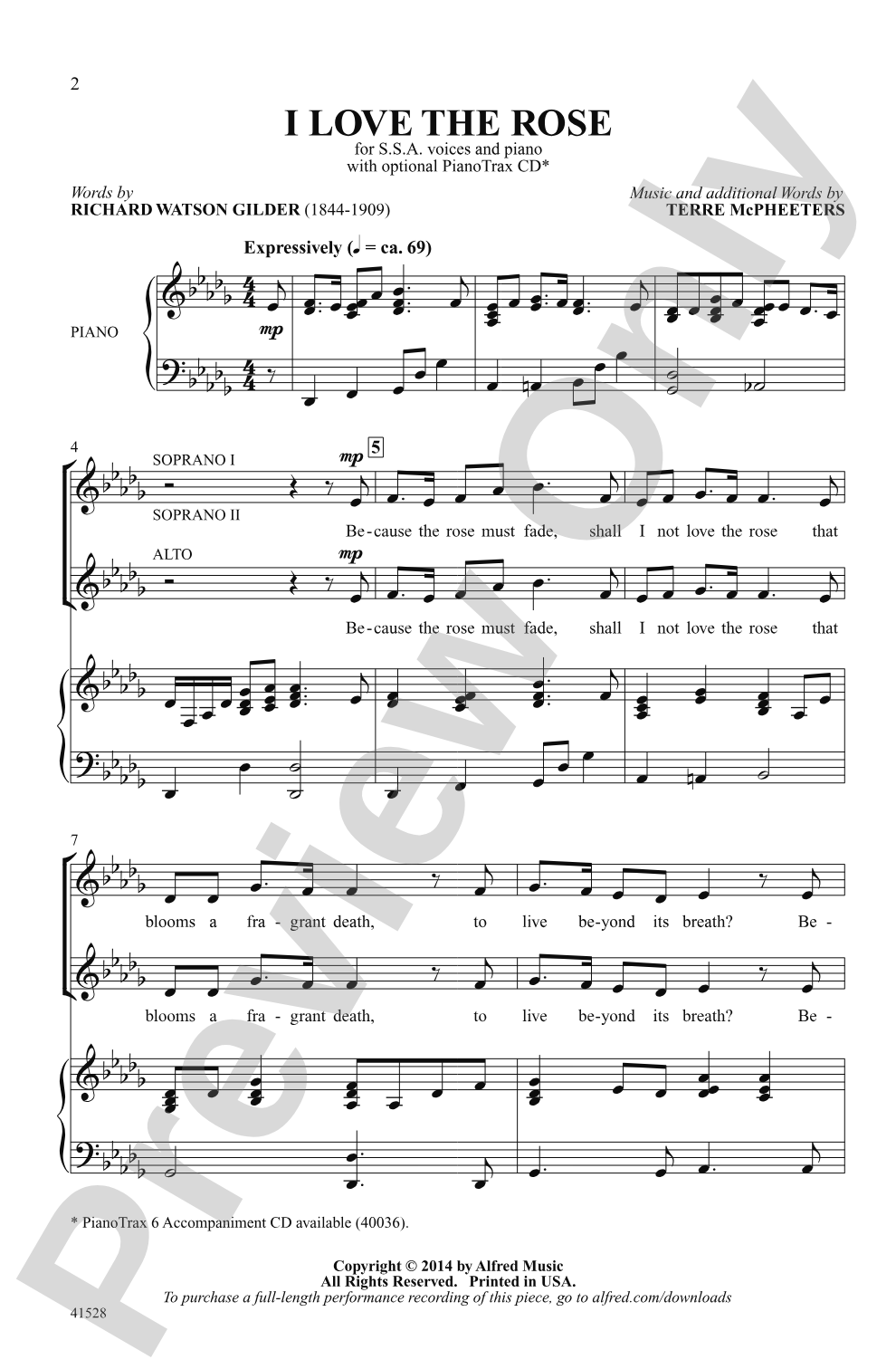
I Love the Rose Sheet Music Preview

I Love the Rose: SSA Choral Octavo

Words by Richard Watson Gilder, music and additional words by Terre McPheeters

Item: 00-PO-0001783

Digital Download
$1.85

Minimum order quantity: 20 copies

Description
"Because the rose must fade, shall I not love the rose?" This thought-provoking text by a nineteenth century American poet is beautifully elevated by the warmth of the music. Replete with enough emotional depth and rich choral sonorities to satisfy any SSA choir.

I Love the Rose: SSA Choral Octavo isn't in MakeMusic Cloud just yet...but it could be. Let us know you'd like to see it, and you'll help shape what comes next. In the meantime, start a free trial and dive into thousands of interactive titles your students can play along with today.

Sample Audio
0:00
0:00
Sample Video
Additional Details
Series: Alfred Choral Designs
Publisher: Alfred Music
Page Count: 8
SKU: 00-PO-0001783

More about this title

Why we love this

McPheeters pairs a nineteenth-century American poem with music that refuses sentimentality, instead finding quiet strength in acceptance. The choral writing achieves richness without forcing complexity, giving every SSA choir members something genuinely musical to sing rather than simply decorative.

What to expect

Contemplative yet never bleak. The piece sits with the paradox of the text, finding beauty in impermanence rather than mourning it. Warm harmonies and flowing lines create an intimate sound that feels both intimate and inevitable.

Who it's for

SSA choirs seeking programming that trusts their singers with genuine emotional material. Directors building concert or festival sets that feature literary texts and contemporary writing will find this piece both accessible and substantial.

How to get the most out of it

  • Shape the phrase arcs deliberately. The emotional weight lives in sustained lines, not rhythmic activity, so conductor clarity about where each phrase breathes transforms the performance.
  • Balance the harmonic color by listening vertically. SSA voicing can thin if upper voices dominate; McPheeters's sonorities depend on all three parts being heard.
  • Let the text inform tempo choices. This poem moves through resignation to acceptance. Rushing dulls the contemplative quality that distinguishes this setting.

How to use it

This works beautifully as a centerpiece for a concert theme exploring transience, beauty, or American poetry. Its eight pages and moderate technical demands make it sustainable alongside larger works without overwhelming rehearsal time. Consider pairing it with contrasting repertoire to highlight its reflective character.

Skills your students will build

  • Sustaining phrase integrity across changing harmonic colors
  • Balancing three-part SSA texture for harmonic clarity
  • Connecting text meaning to musical phrasing and tempo decisions
  • Building interpretive choices from poetic rather than purely musical cues

You May Also Like