

I'll Remember You: 2-Part Choral Octavo
Words and music by John Florio / arr. Andy Beck
Item: 00-PO-0006626
$2.05
Minimum order quantity: 20 copies
Pickup currently not available
Description
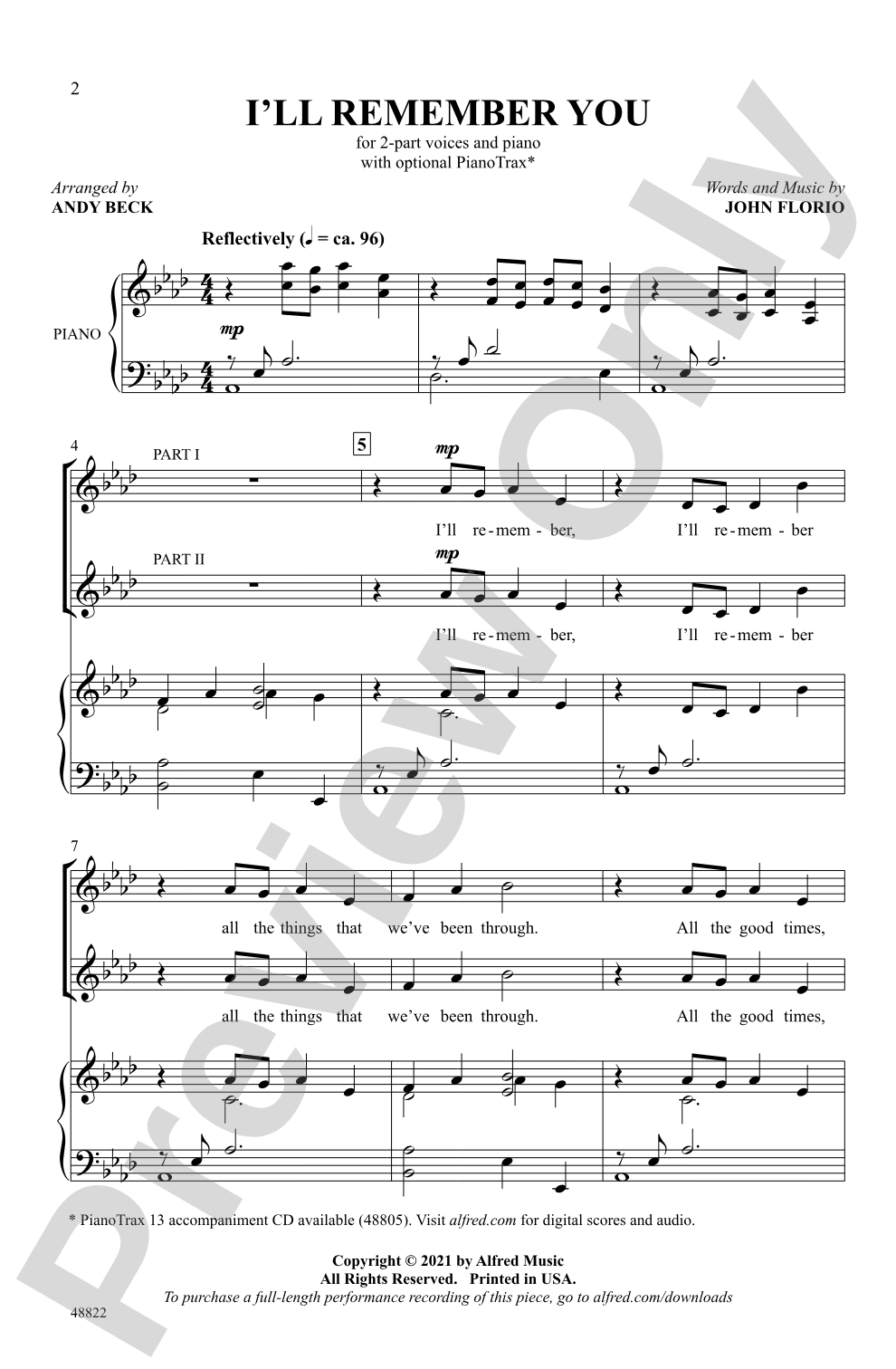
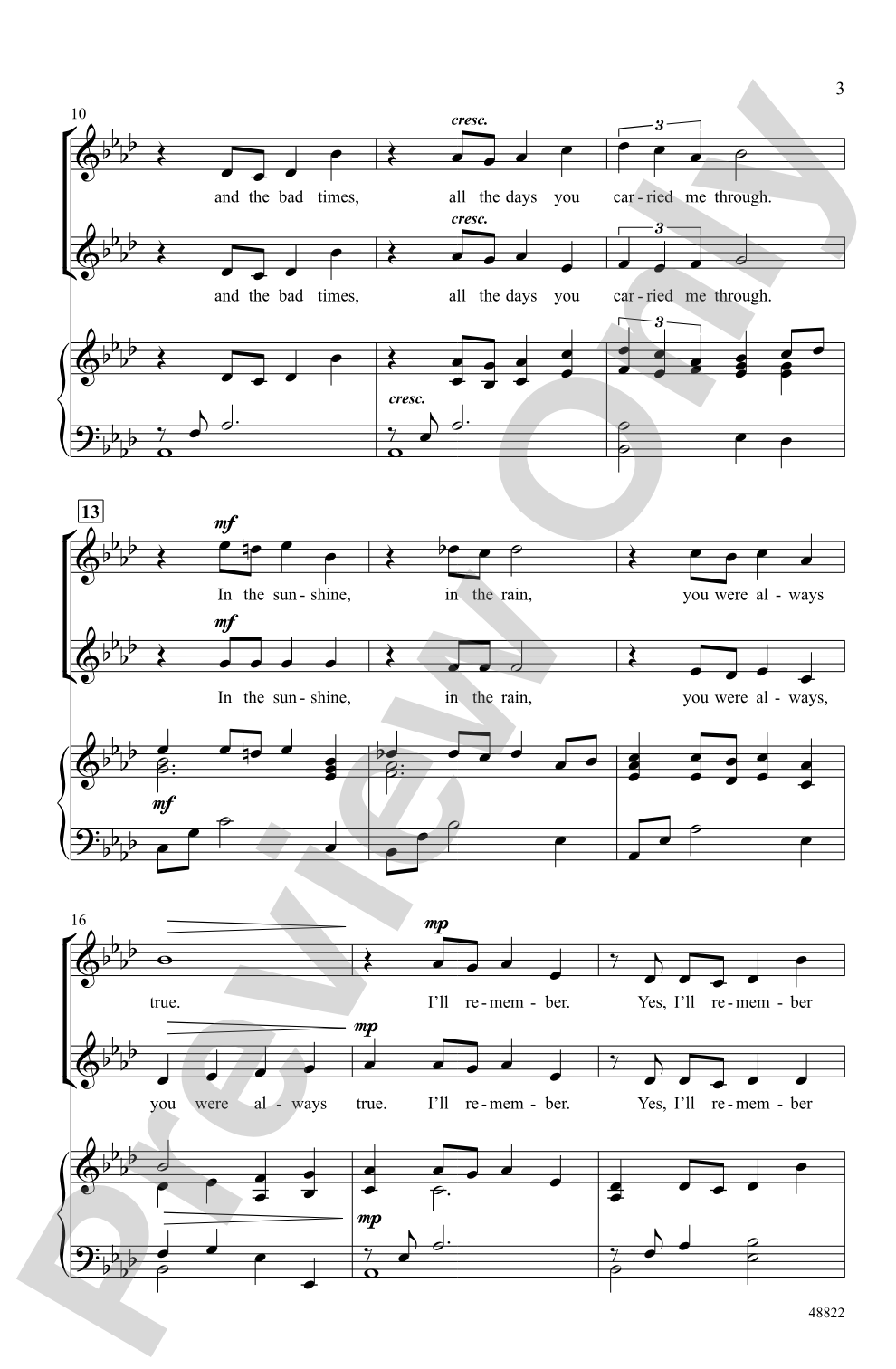
This sincere goodbye song is especially well conceived for developing 2-part singers. The tuneful, memorable melody is so easy to learn, and harmonies are smartly achieved with independent counterlines or a comfortable distance between notes for those just learning to sing in parts. A delicate piano part provides consistent support throughout. "In the sunshine, in the rain, you were always true." A perfect choice at the end of a year.


I'll Remember You: 2-Part Choral Octavo isn't in MakeMusic Cloud just yet...but it could be. Let us know you'd like to see it, and you'll help shape what comes next. In the meantime, start a free trial and dive into thousands of interactive titles your students can play along with today.
Request This Title
Tell us you want it.
Start Your Free Trial
Explore everything that's ready to play right now.
Sample Audio
1
Audio File
--:--
0:00
0:00
Sample Video
Additional Details
Series:
Alfred Choral Designs
Publisher:
Alfred Music
Page Count:
8
SKU:
00-PO-0006626
More about this title
Why we love this
This piece respects where developing 2-part singers actually are. Rather than forcing independence between parts through awkward leaps or rhythmic complexity, Florio and arranger Andy Beck use a comfortable range and intuitive countermotion to build confidence in part singing. The melody is genuinely memorable, which means students will carry it with them long after rehearsals end, and the piano part anchors without overwhelming.
What to expect
Honest and warm without being cloying. The text "in the sunshine, in the rain, you were always true" carries weight because the music doesn't oversell the emotion. There's a quiet dignity here, the kind you feel at a genuine goodbye rather than a theatrical one.
Who it's for
Choirs working with 2-part treble or mixed voicing where singers are still building secure part independence. This piece works equally well in middle school choirs, beginning high school groups, or community ensembles adding their first part-singing repertoire.
How to get the most out of it
- Balance the parts by having singers locate where their line sits against the other voice. A quick unison run-through of both parts helps singers hear their role in the overall texture before attempting independence.
- Shape the phrases through dynamic nuance rather than dramatic shifts. The lyric works best with subtle warm-and-cool coloring that mirrors the emotional arc of saying goodbye.
- Allow the piano accompaniment time to breathe in transitions. The delicate writing means every measure of support matters; rushing undercuts the sincerity.
- If blending feels uneven, try having singers listen to the melody while singing their own part. This trains ear independence without requiring constant conductor attention.
How to use it
This belongs at the closing moment of a year-end concert or graduation ceremony, where its thematic directness lands harder than something more elaborate would. It works equally well as a spring concert finale or as the emotional center of a school assembly program where singers need something they can own completely.
Skills your students will build
- Maintaining independent melodic lines while listening to another voice part
- Balancing volume between parts without blending into unison
- Following phrase shape and emotional arc across longer musical phrases
- Coordinating with a piano accompaniment that provides harmonic but not rhythmic redundancy