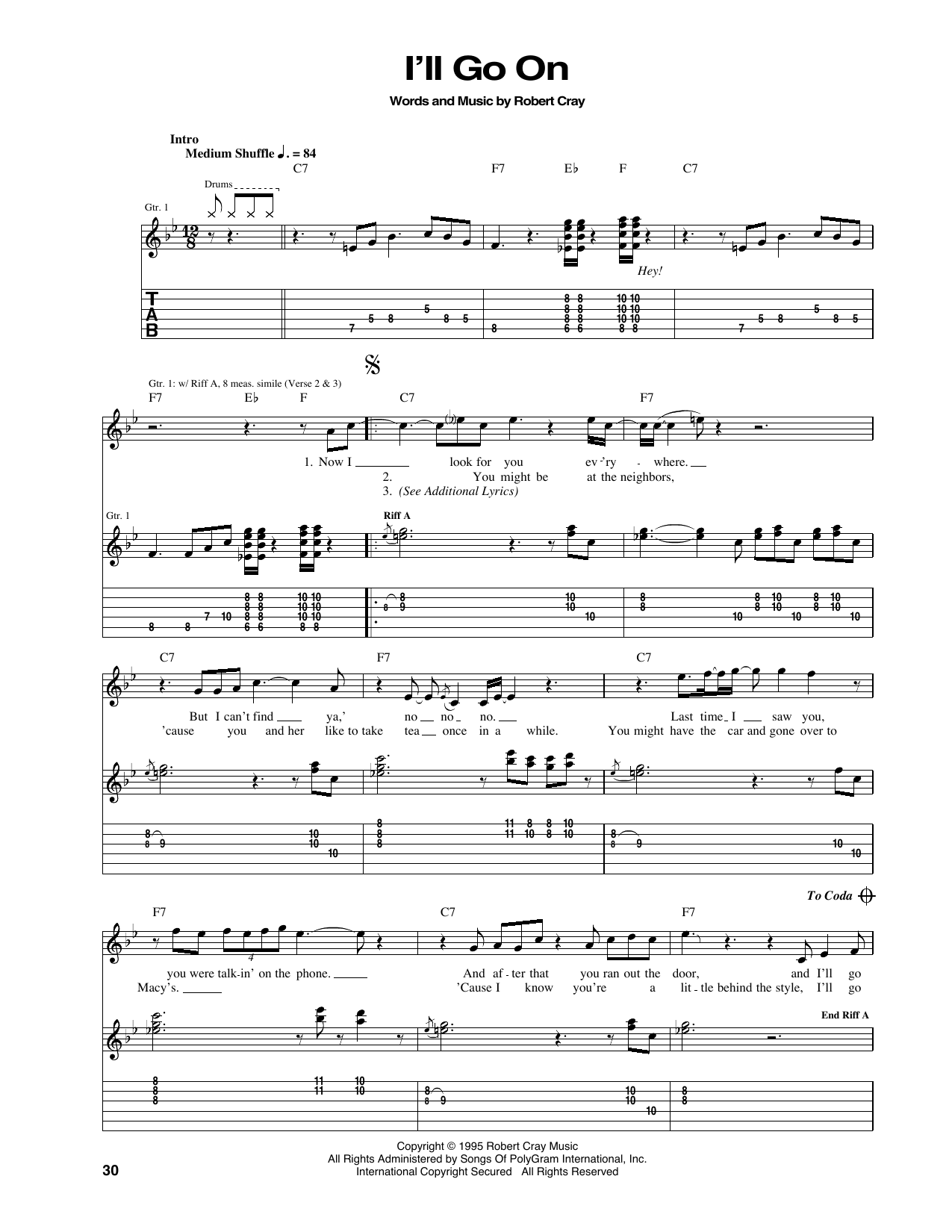
Robert Cray emerged from the Georgia blues scene in the 1980s and became one of the most influential guitarists of his generation, known for his fluid technique and emotionally direct playing style. His music bridges traditional blues language with contemporary R&B sensibilities, making him a vital figure for students learning how blues vocabulary translates across genres.
Why we love this
Cray's phrasing teaches students how to bend notes with intention and use space as a compositional tool. This tab gives guitarists access to lines built on thoughtful restraint rather than excessive technical display, showing that mature blues playing prioritizes musical communication.
What to expect
Smooth and purposeful, with the warm tone of a player who lets notes sing rather than rush. The solo breathes with confidence, built on call and response patterns that feel conversational and deeply rooted in the tradition.
Who it's for
Guitar students developing their blues vocabulary and looking to study how a master player constructs a solo. This works well for intermediate to advanced students who understand blues form and want to deepen their phrasing and bending technique.
How to get the most out of it
Pay attention to your vibrato width and speed on sustained notes. Cray's vibrato is narrow and controlled, never wavering. Match that precision to nail the emotional weight of each phrase.
Approach the rhythm section feel as a conversation, not a competition. Lock in with the drummer's pocket rather than playing ahead or behind the beat.
Study the dynamics between passages. Notice where Cray plays full volume and where he pulls back. This contrast is what makes the arrangement breathe.
How to use it
Include this in an ensemble context where the guitar leads against a rhythm section, or assign it as a solo study for students preparing for jazz or blues electives. It pairs naturally with other contemporary blues artists and shows how the genre continues to evolve.
Skills your students will build
Blues phrasing and call and response patterns
Controlled vibrato on bent notes
Dynamics and space within a solo
Reading and executing rhythm section coordination
Translating blues language across chord changes
You May Also Like
Scan to Complete Your Purchase
Use your phone's camera to scan the code below
You'll log in on your phone and the order will be added to your account