I'll Be Seeing You Sheet Music Preview

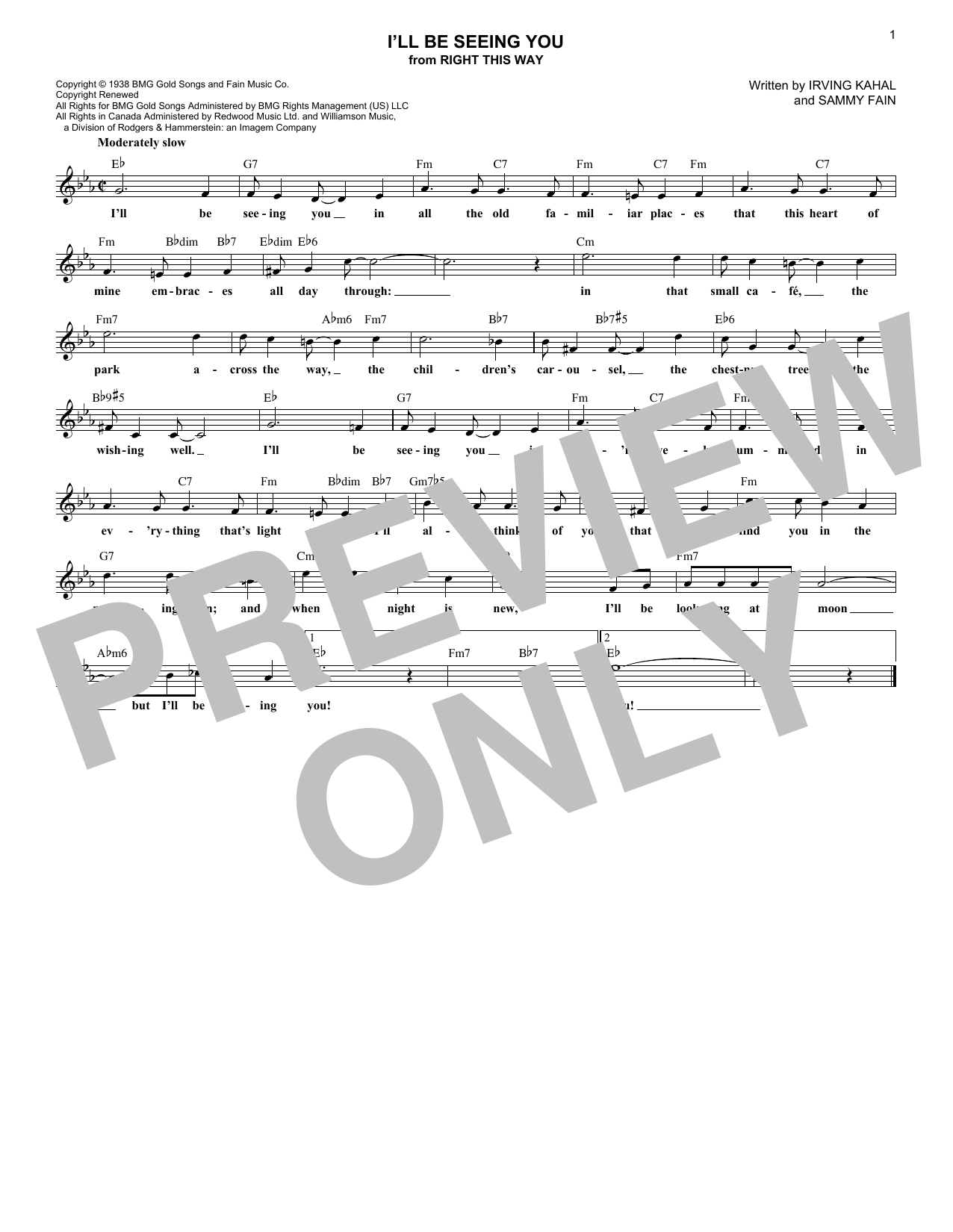
I'll Be Seeing You: Lead Sheet / Fake Book

Item: 35-DS00410619

Digital Download
$3.99
Description

I'll Be Seeing You: Lead Sheet / Fake Book isn't in MakeMusic Cloud just yet...but it could be. Let us know you'd like to see it, and you'll help shape what comes next. In the meantime, start a free trial and dive into thousands of interactive titles your students can play along with today.

Sample Audio
No sample audio found.
Sample Video
Additional Details
Publisher: Hal Leonard
Page Count: 1
SKU: 35-DS00410619

More about this title

About the Creator

"I'll Be Seeing You" was written by Sammy Fain and Irving Kahal in 1938 for the Broadway revue "Right This Way." Though it debuted on stage, the song became most famous through Bing Crosby's 1944 recording during World War II, when its bittersweet message of separation and longing resonated deeply with servicemen and their families. The melody's warm simplicity and the lyric's emotional directness have kept it a standard in the Great American Songbook ever since.

Fain's gift for memorable melody and Kahal's poignant lyrics created a piece that works equally well as a jazz standard, a vocal feature, or a tender instrumental moment. The song's enduring presence in fake books and lead sheets across generations speaks to its fundamental appeal and harmonic sophistication.

Why we love this

This lead sheet captures one of the most singable melodies in the jazz and standards repertoire. Pianists and vocalists appreciate how the tune sits naturally under the hands and voice while the chord changes reward thoughtful comping and creative reharmonization.

What to expect

"I'll Be Seeing You" unfolds with the warmth of a memory half-recalled. The melody carries a wistful elegance, each phrase shaped by the contours of longing and quiet acceptance, while the underlying harmony suggests the depth and complexity beneath the song's gentle surface.

Who it's for

Vocalists who want a standard that sits well in the voice and showcases emotional maturity. Pianists will find the lead sheet format ideal for developing comping skills and learning how to support a singer while adding their own interpretive layer.

How to get the most out of it

  • Let the melody breathe in the first chorus. Resist the urge to fill every space; the strength of the tune lies in its simplicity and lyrical quality.
  • The harmonic rhythm shifts subtly across phrases. Mark your chord changes clearly and listen for the moment the progression opens up around the bridge.
  • Experiment with rubato in the vocal line without losing the underlying harmonic pulse. The accompaniment should float with the vocalist's phrasing rather than anchor it rigidly.
  • Consider the emotional arc across the full form. The song moves from tender recollection to resigned acceptance; your touch and dynamic choices should track this journey.

How to use it

Feature this as a vocalist special or a piano solo in a concert built around standards and Great American Songbook material. The lead sheet format makes it accessible for jazz combos, small ensembles, or intimate vocal recitals. It also works beautifully as a bridge piece between classical and contemporary popular music in educational settings.

Skills your students will build

  • Reading lead sheet notation and chord symbols
  • Comping with jazz chords and upper extensions
  • Phrasing and rubato in vocal accompaniment
  • Understanding harmonic rhythm and chord progression flow
  • Improvisation and reharmonization over a standard changes

You May Also Like