
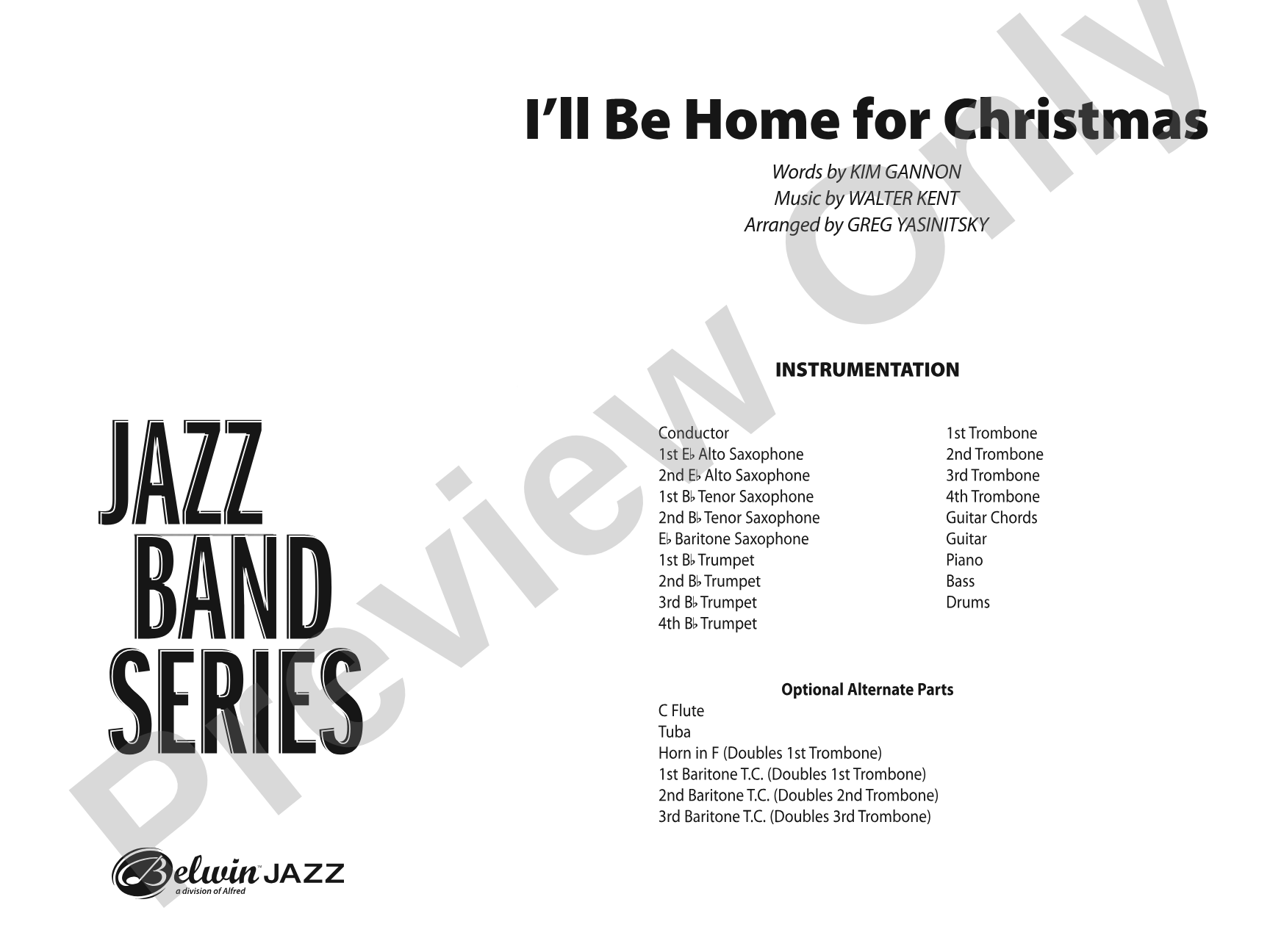

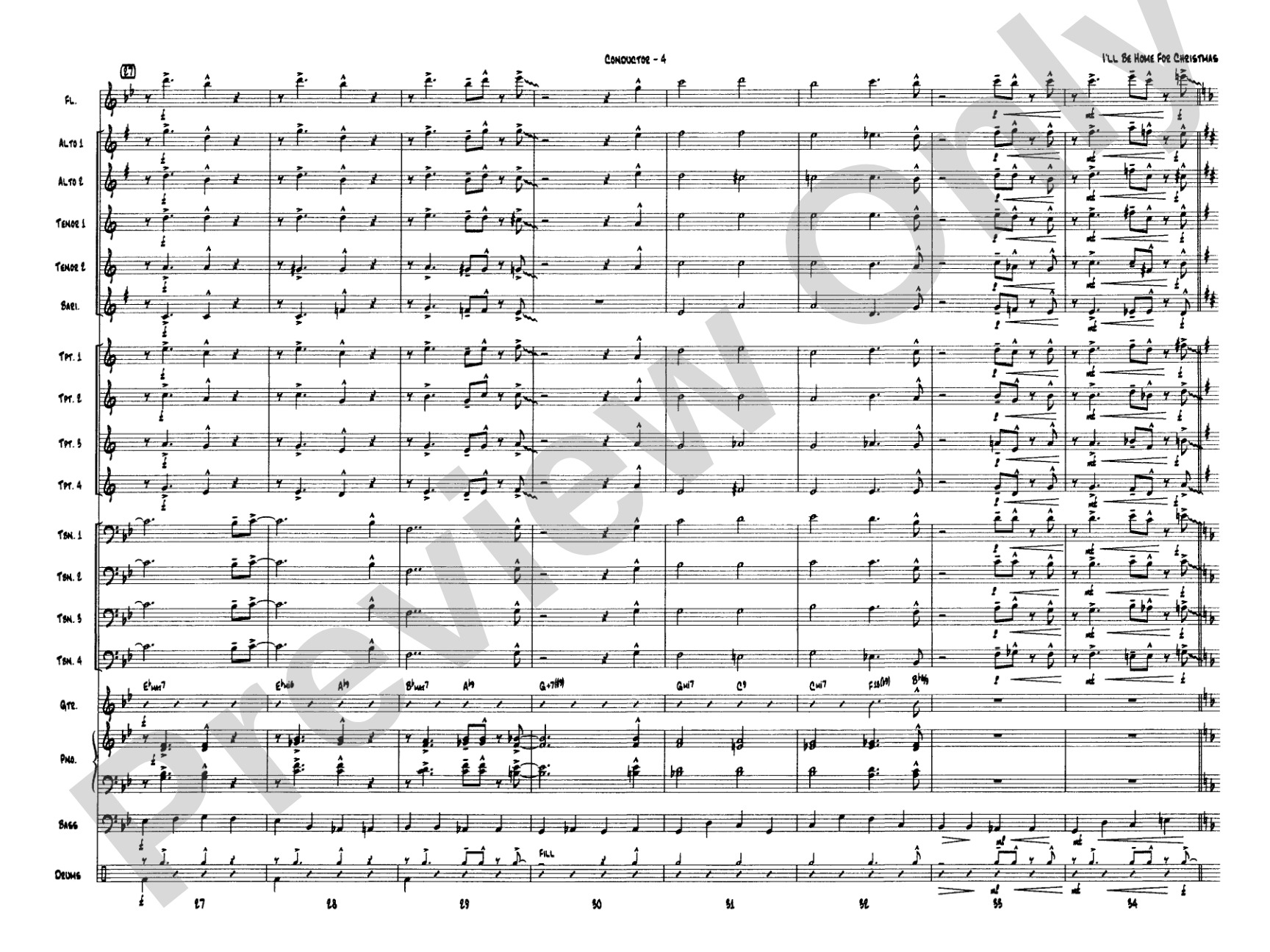
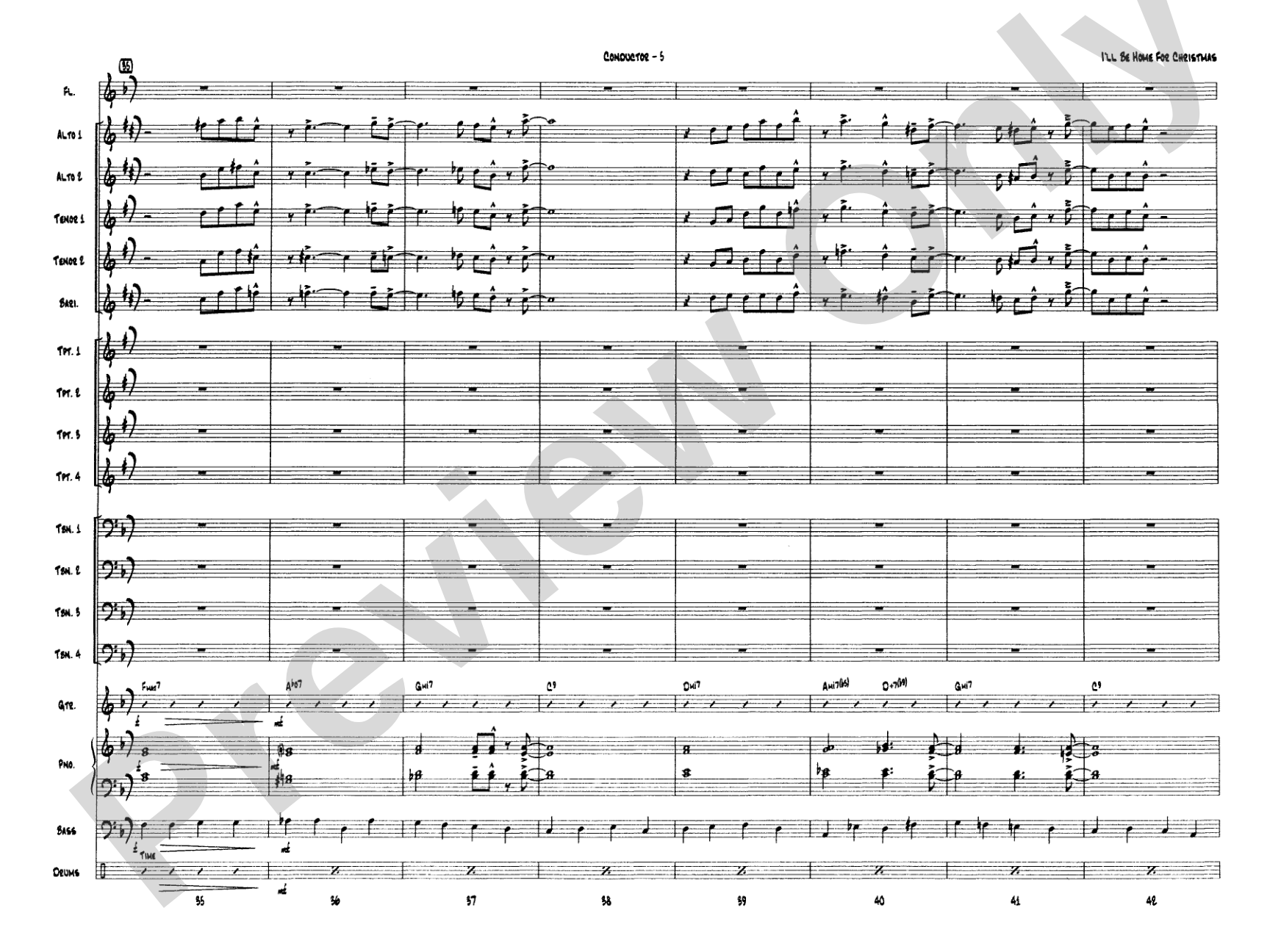
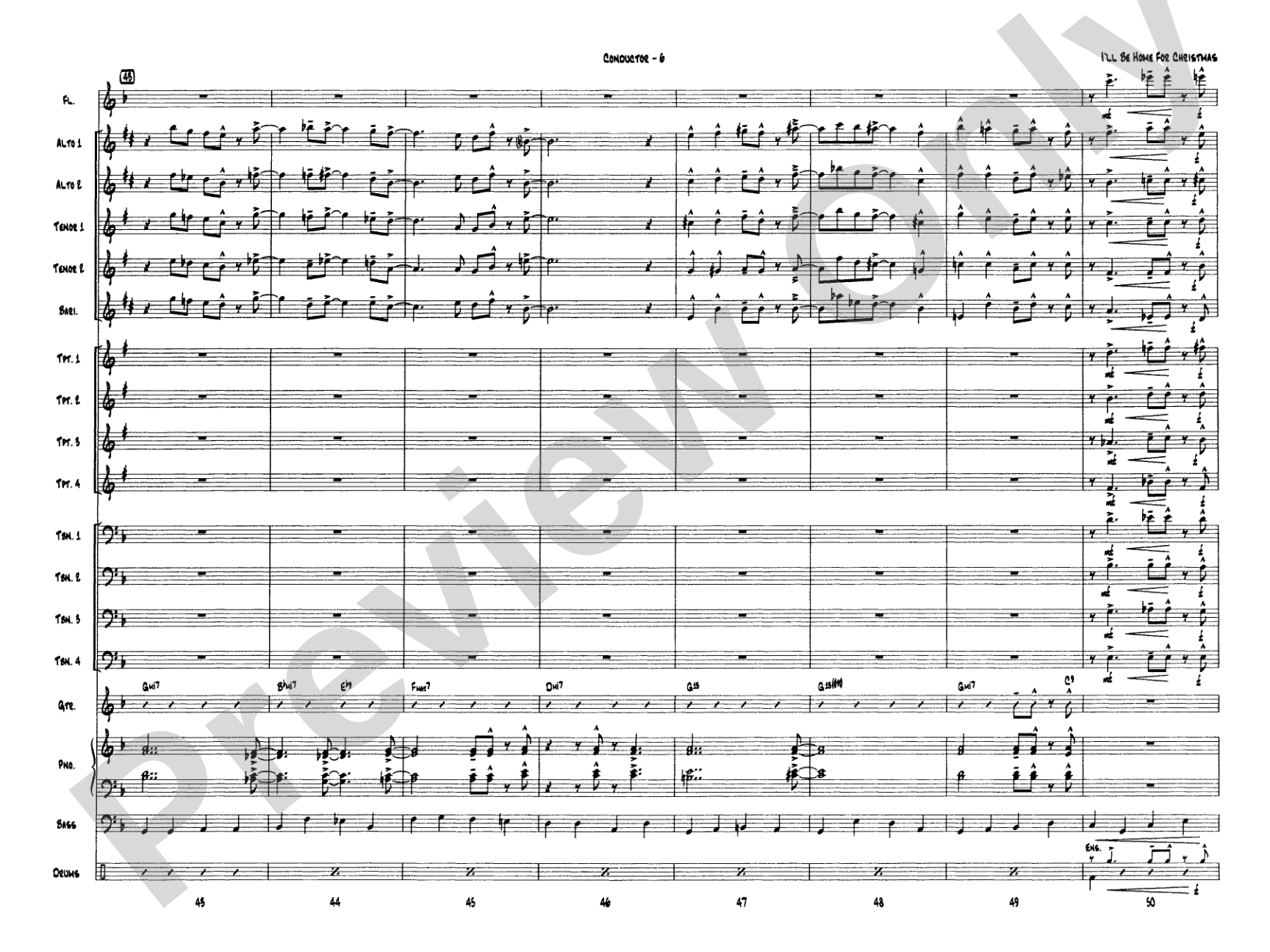
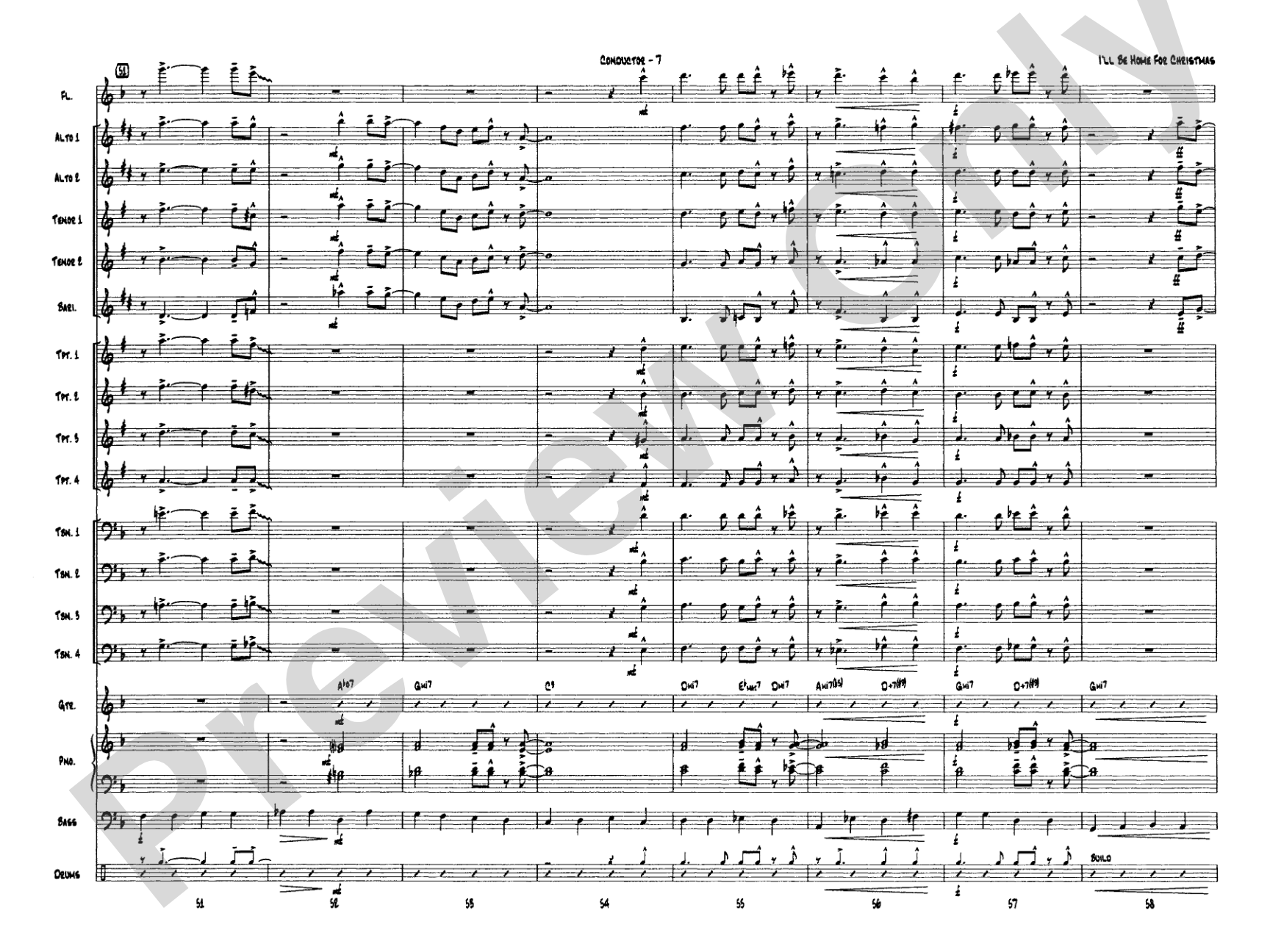
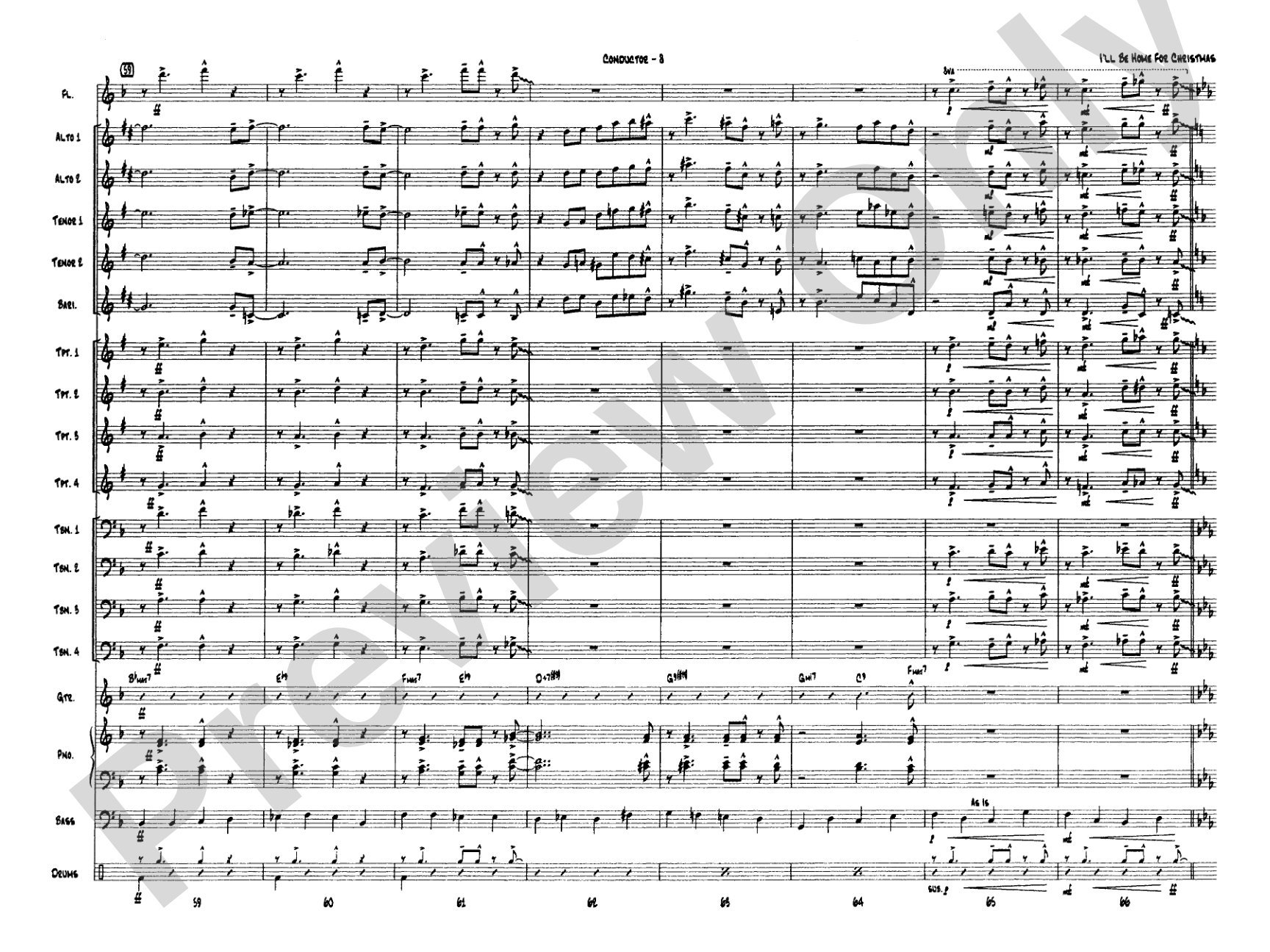
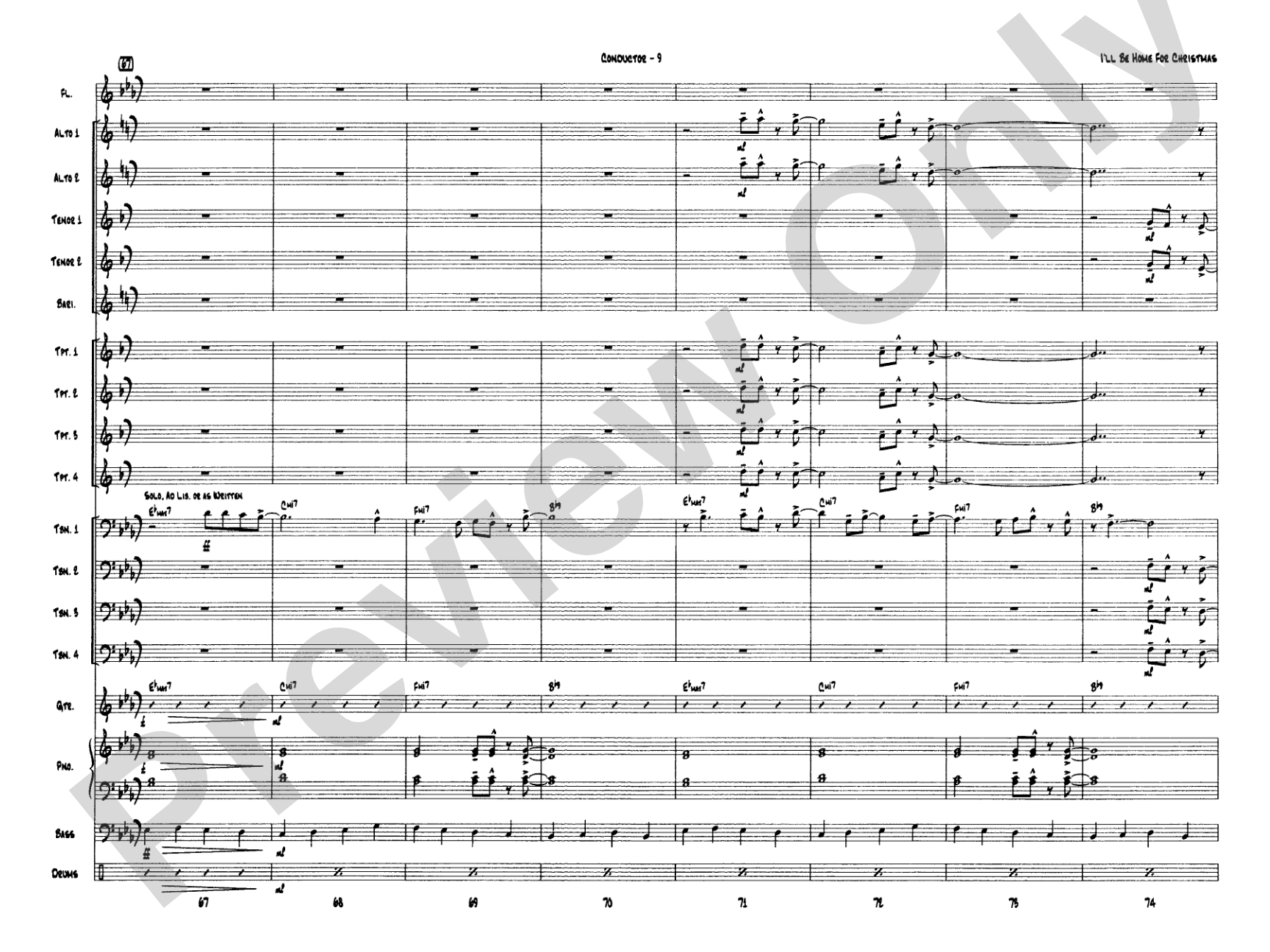
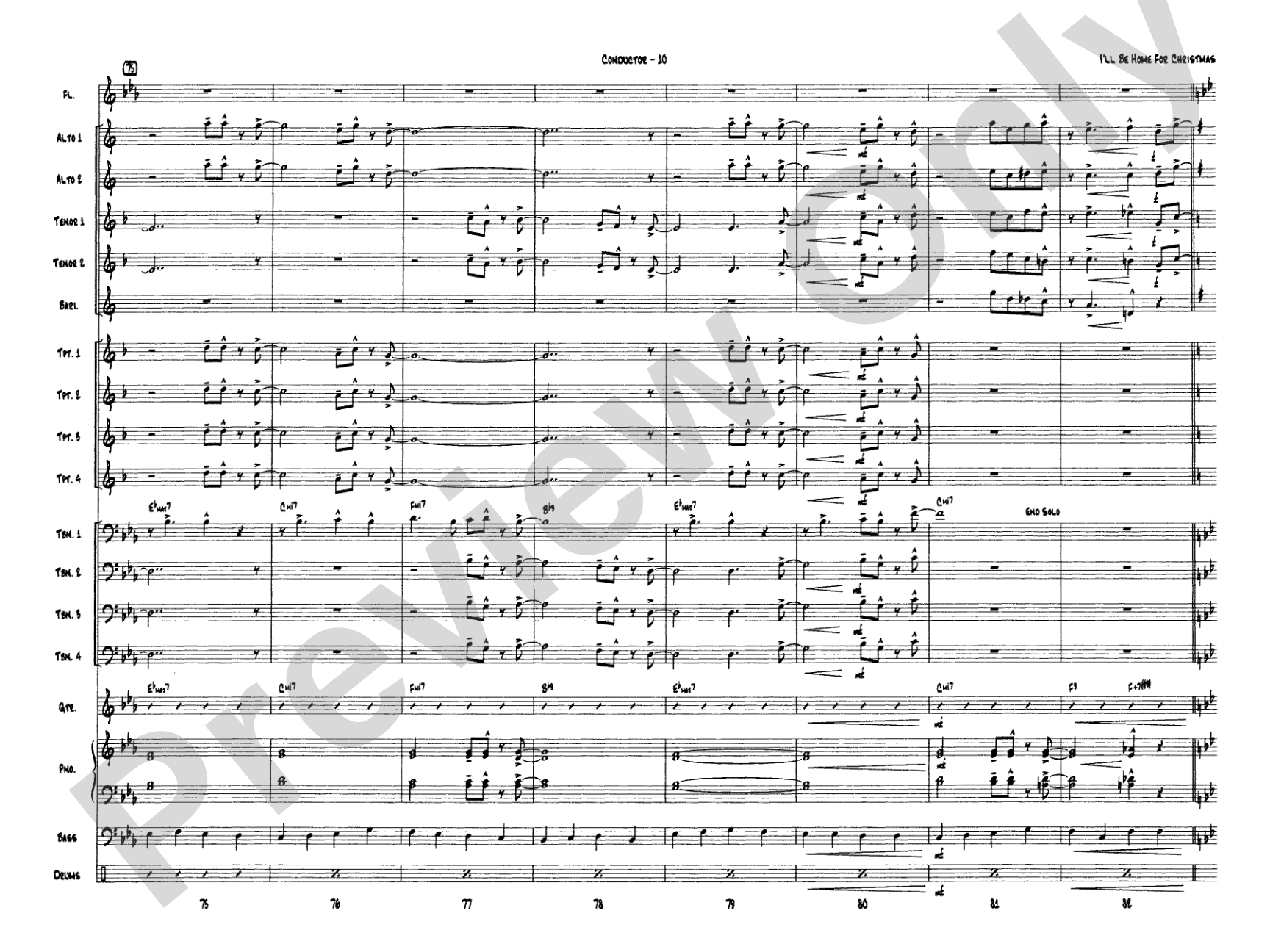
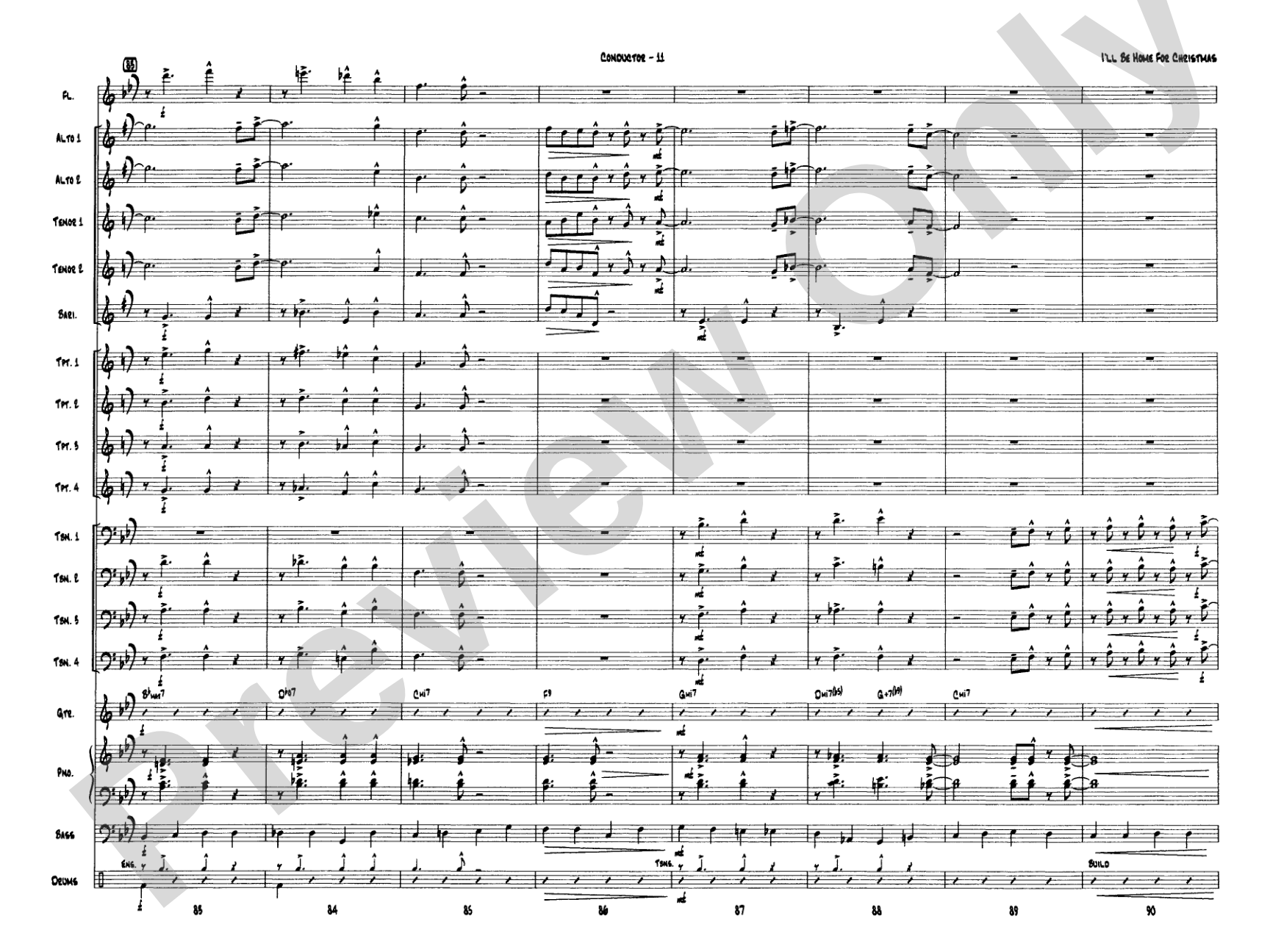
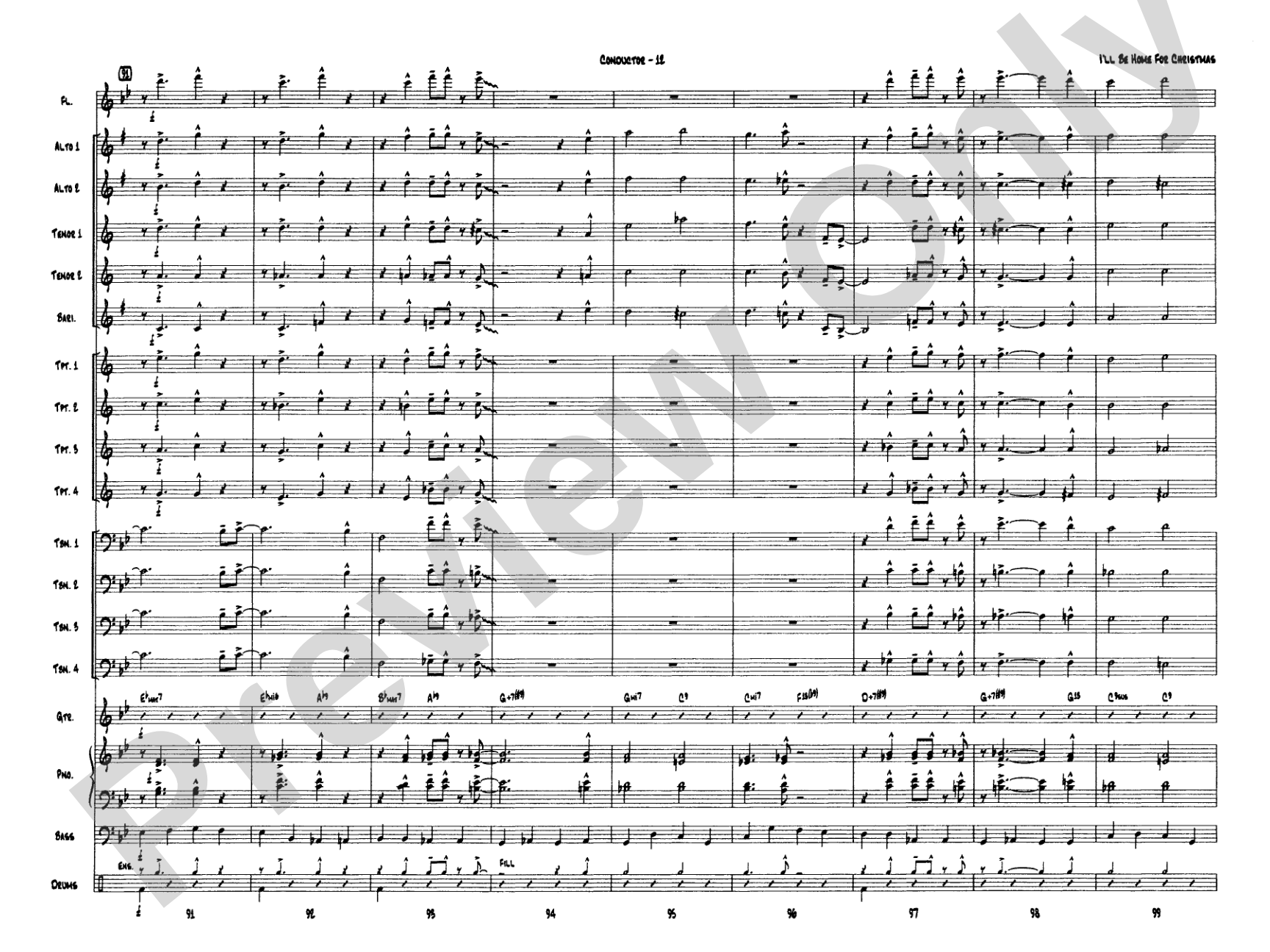
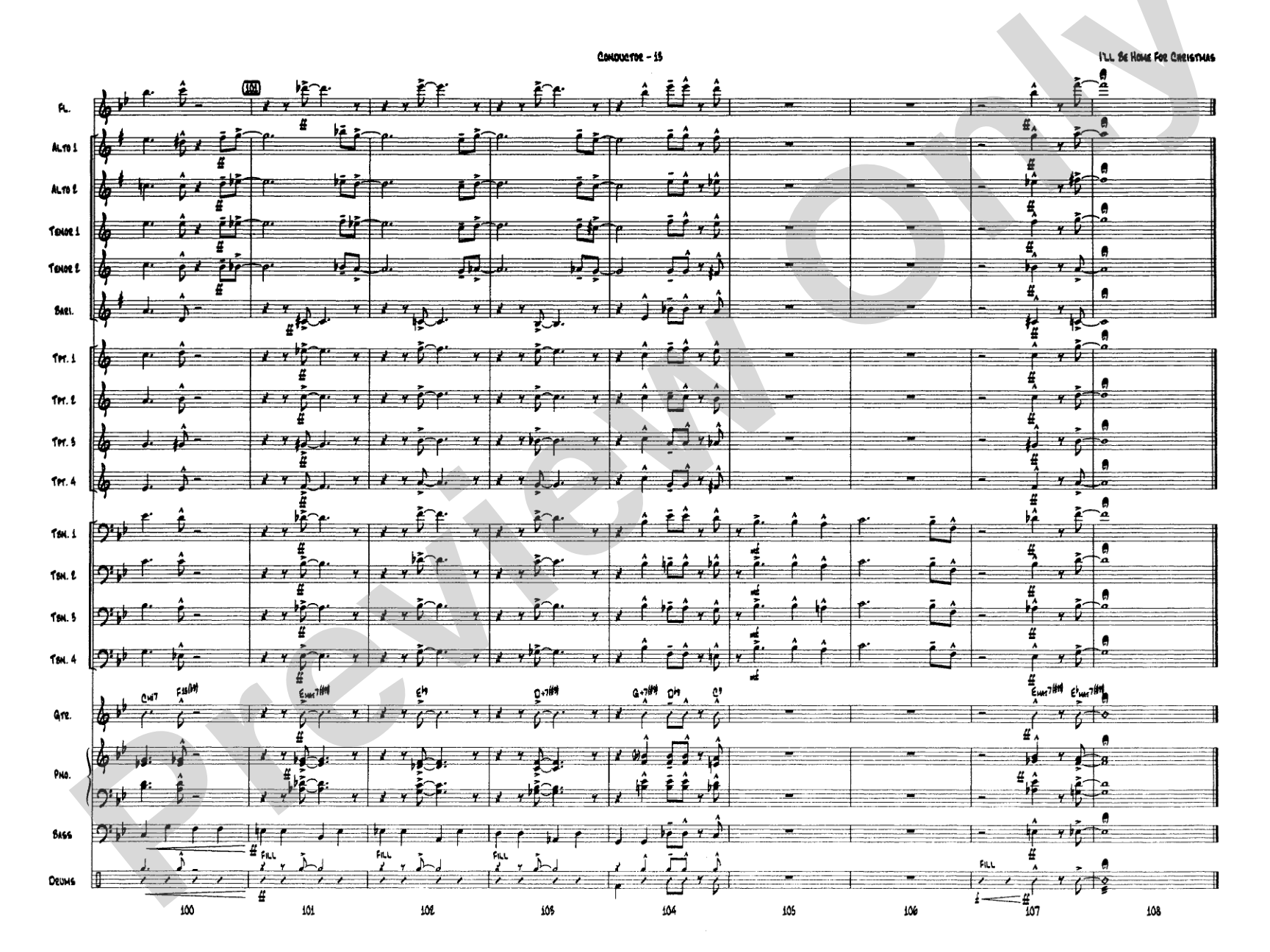


I'll Be Home for Christmas: Jazz Ensemble Conductor Score & Parts
Words by Kim Gannon, music by Walter Kent / arr. Greg Yasinitsky
Grade: 3 (Medium)
Item: 00-PK-0005362
$52.00
One moment…
Description
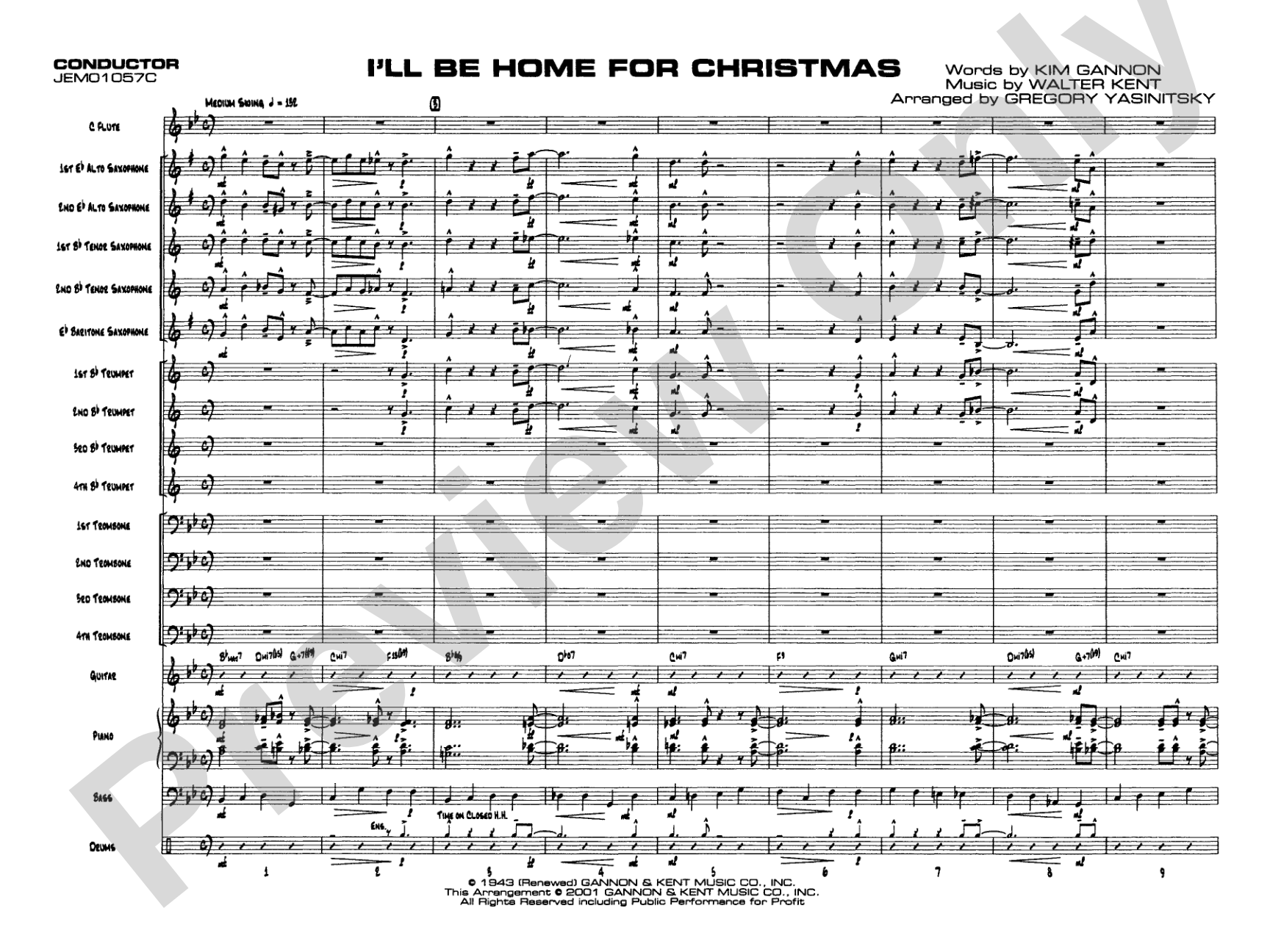
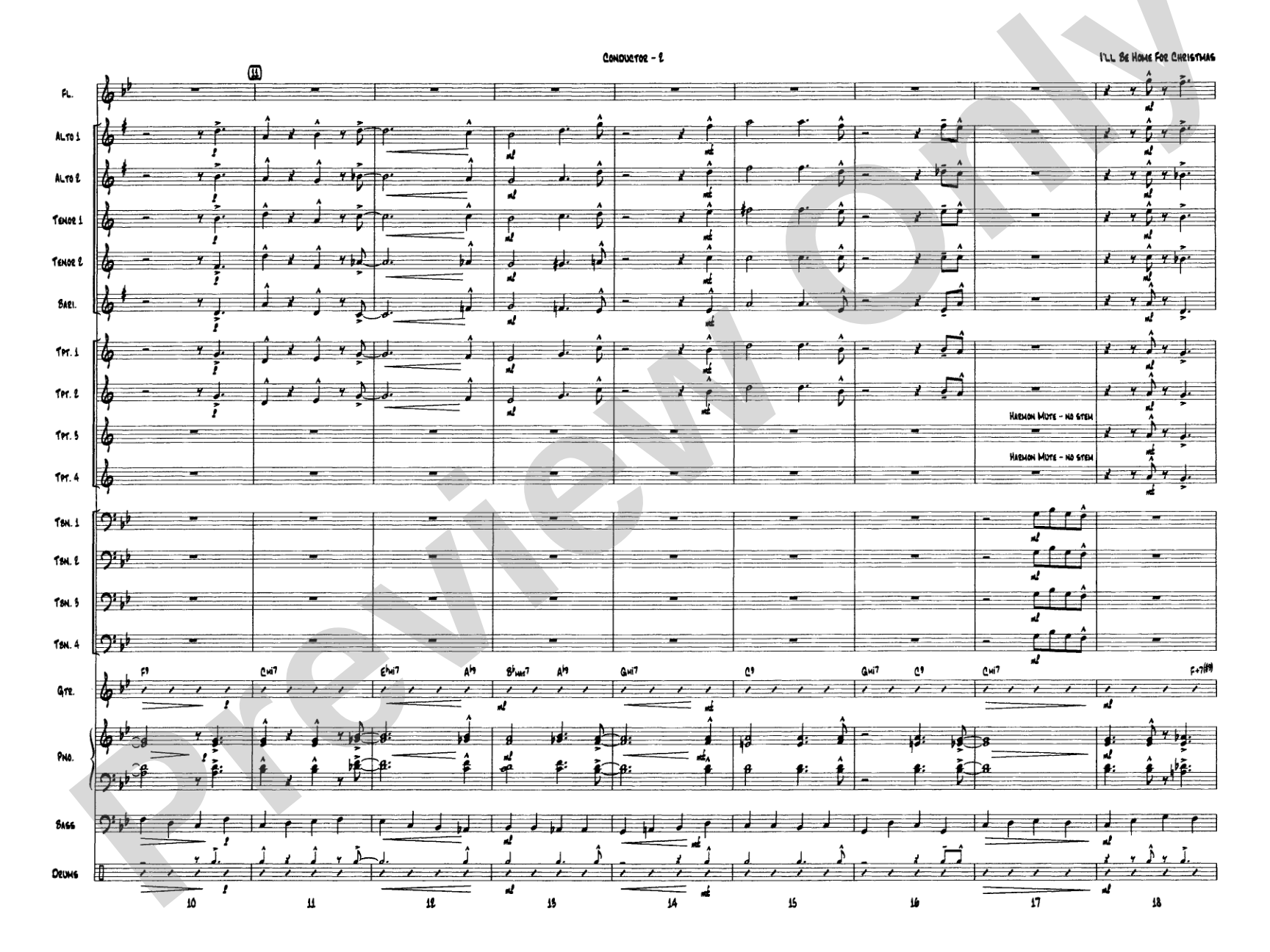
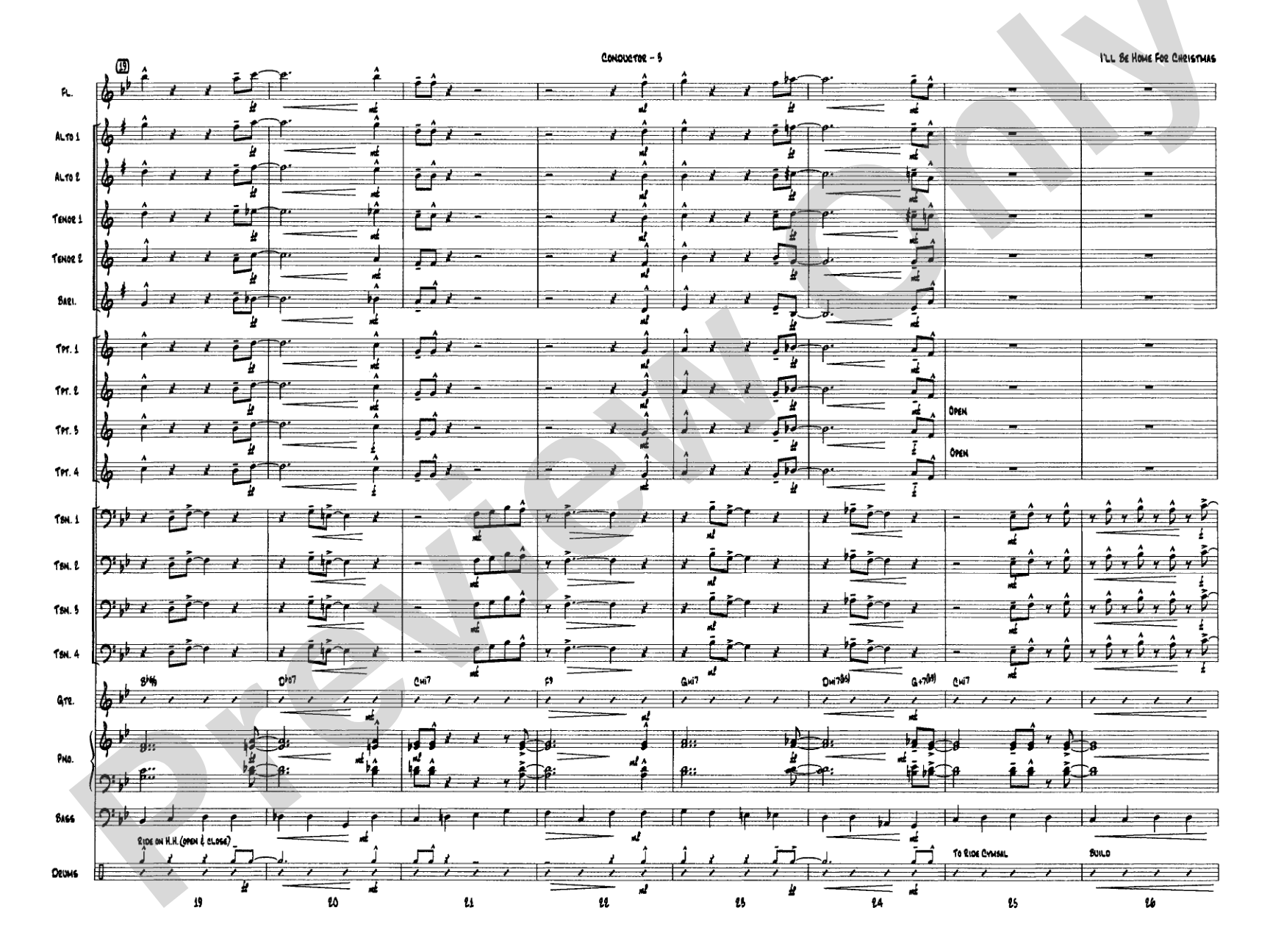
Need a holiday favorite to feature your trombone? If so, it doesn't get any better than this: a tasty, swinging chart arranged by Greg Yasinitsky. A clear example of superb writing for the Jazz Band Series, featuring a soli for the saxophone section, a trombone solo (written solo provided), smooth modulations and great ensemble writing throughout. Brass range is up to written A for lead trumpet and F for lead trombone. Articulation is clearly marked and all the swing figures are easy to play. This chart will come together quickly and sound great! An excellent choice!


I'll Be Home for Christmas: Jazz Ensemble Conductor Score & Parts isn't in MakeMusic Cloud just yet...but it could be. Let us know you'd like to see it, and you'll help shape what comes next. In the meantime, start a free trial and dive into thousands of interactive titles your students can play along with today.
Request This Title
Tell us you want it.
Start Your Free Trial
Explore everything that's ready to play right now.
Sample Audio
1
Audio File
--:--
0:00
0:00
Sample Video
Additional Details
Series:
Jazz Band Series
Publisher:
Alfred Music
Page Count:
94
SKU:
00-PK-0005362
More about this title
About the Composer: Walter Kent
Walter Kent (1911-1994) composed music for film, television, and stage throughout the mid-20th century. His gift for melody and emotional directness made his songs enduringly popular; "I'll Be Home for Christmas" remains one of the most recorded holiday standards, performed by everyone from Bing Crosby to contemporary artists across multiple genres.
For music educators, Kent's work offers accessible yet sophisticated melodic material that students recognize and connect with immediately. His compositions translate well to educational arrangements because the underlying harmonic and melodic logic is clear and singable, making them ideal vehicles for teaching phrasing, expression, and ensemble balance.
Why we love this
Yasinitsky's arrangement respects the song's lyrical heart while giving your jazz ensemble plenty to dig into: the saxophone soli and trombone feature are both idiomatic and genuinely fun to play, the modulations feel natural rather than forced, and the overall voicing sits beautifully across the section. Most importantly, this chart builds genuine musicianship without requiring college-level facility; Grade 3 ensembles can sound polished and professional on this one after just a few rehearsals.
What to expect
Warm and nostalgic but with a contemporary swing bounce that keeps things moving forward. The melody carries genuine sentiment without sliding into sentimentality, and Yasinitsky's arrangement supports that balance by letting the tune breathe while maintaining enough harmonic interest to keep seasoned listeners engaged.
Who it's for
Jazz ensemble directors working with Grade 3 groups who want a holiday feature with real substance. The trombone solo appeals to players ready for modest solo responsibility, and the saxophone soli reward section blend and intonation work. This is also a smart choice for concert programming when you need a recognizable, accessible piece that still demonstrates your band's musicianship.
How to get the most out of it
- Balance the trombone solo carefully against the rhythm section; the written solo should sit slightly forward but never overshadow the ensemble responses underneath.
- Shape the saxophone soli with forward motion and consistent articulation so the ensemble can lock in behind them without rushing.
- Attend to the marked articulations throughout, especially the distinction between legato and tongued figures in the brass, as they define the swing character.
- Use the modulations as moments to lift the ensemble's energy and re-engage your players; these transitions are smooth enough that students often glide through them without intention.
How to use it
This works beautifully as the closer on a holiday concert, especially paired with one or two other seasonal jazz standards at similar difficulty. It's also a strong festival or adjudication selection because adjudicators immediately recognize both the tune and the quality of the arranging; your band can focus entirely on execution rather than having to "sell" an unfamiliar piece. Consider programming it after something with higher technical demands so the ensemble can settle into the groove.
Skills your students will build
- Swing articulation and phrasing in ensemble contexts
- Section blend and intonation in saxophone and brass soli
- Solo responsibility and confidence in featured passages
- Following smooth harmonic modulations without losing center
- Marking and executing precise articulation patterns from a conductor score