I Know Where I'm Going Cover Image

I Know Where I'm Going: PianoTrax Digital Download

$9.99 USD
Sale price  $9.99 USD Regular price 
Skip to product information
I Know Where I'm Going Cover Image

I Know Where I'm Going: PianoTrax Digital Download

Traditional Folk Song / arr. Mark Hayes

Item: 00-A-00016523

$9.99
Digital Download
Description

I Know Where I'm Going: PianoTrax Digital Download isn't in MakeMusic Cloud just yet...but it could be. Let us know you'd like to see it, and you'll help shape what comes next. In the meantime, start a free trial and dive into thousands of interactive titles your students can play along with today.

Sample Pages

No sample pages found.

Sample Audio
0:00
0:00
Sample Video
Additional Details
Series: Alfred Choral Designs
Publisher: Alfred Music
UPC: 0
SKU: 00-A-00016523

More about this title

About the Arranger: Mark Hayes
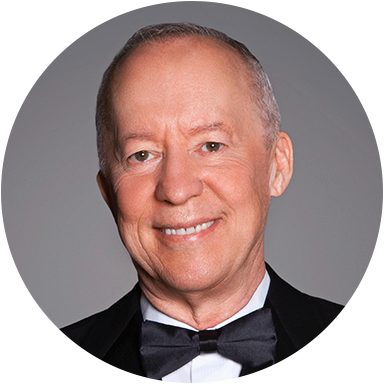
Mark Hayes

Mark Hayes brings decades of experience as a concert pianist, composer, and arranger to every work he creates. His catalog spans over 1,750 published compositions across sacred and secular genres, from choral works premiered at Lincoln Center and the Vatican to Broadway orchestrations and film scores. Hayes earned his Bachelor of Music degree summa cum laude in Piano Performance from Baylor University and has guest conducted at major venues including Carnegie Hall and the National Cathedral. In 2010, Baylor University honored him with the Award for Exemplary Leadership in Christian Music.

Beyond the concert hall, Hayes is a prolific piano composer with more than 100 books currently in print, ranging from gospel and classical to jazz and musical theatre arrangements. His work as an accomplished orchestrator and record producer has shaped his distinctive approach to choral writing—one that balances accessibility with musical depth. Based in Kansas City, Missouri, Hayes continues to compose and arrange music across multiple genres and ensemble types.

Why we love this

Mark Hayes understands what SSA and SSAA choirs need: arranging that respects voice ranges while creating genuinely interesting harmonic writing. His approach to this traditional folk song transcends simple unison singing, giving each voice part musical substance without overloading rehearsal schedules. The result is a piece that sounds more substantial than its technical demands suggest.

What to expect

The piece carries the lyrical confidence of a folk ballad confident enough to stand still and breathe. Hayes's harmonies add gentle depth beneath the melody, suggesting intimate emotional spaces without darkening the overall character. It feels both traditional and freshly arranged, like encountering an old song anew.

Who it's for

This arrangement serves treble-voice choirs seeking accessible, musically rewarding repertoire with genuine harmonic interest. It works well for high school, community, and adult choirs at the intermediate level, offering singers the chance to explore a beautiful traditional melody without extensive score complexity.

How to get the most out of it

  • Balance the melody against supporting harmonies by bringing out the primary line in whichever section carries it at any given moment, rather than treating all voices equally throughout.
  • Shape the accompaniment texture to support rather than compete with the vocal content; the PianoTrax recording demonstrates how transparent accompaniment can actually enhance choral clarity.
  • Attend to the text and its emotional arc; the folk ballad tradition behind this melody benefits from thoughtful phrasing and a sense of narrative rather than mechanical rhythmic precision.
  • Use the sustained vowels and musical phrase shapes rather than quick consonant attacks to help blend the SSA or SSAA voicing.

How to use it

Program this alongside other folk-influenced or love-song selections to build a thematic concert section, or use it as a bridge between more contemporary and classical repertoire in a mixed program. The moderate demands make it suitable for early-season rehearsal or community concert contexts where emotional directness and audience accessibility matter.

Skills your students will build

  • Blending within SSA or SSAA voicing across phrase arcs
  • Interpreting folk song text with appropriate phrasing and character
  • Listening to supporting harmonies while maintaining a clear primary line
  • Sustaining vowel shapes to enhance choral blend in traditional music

You May Also Like