
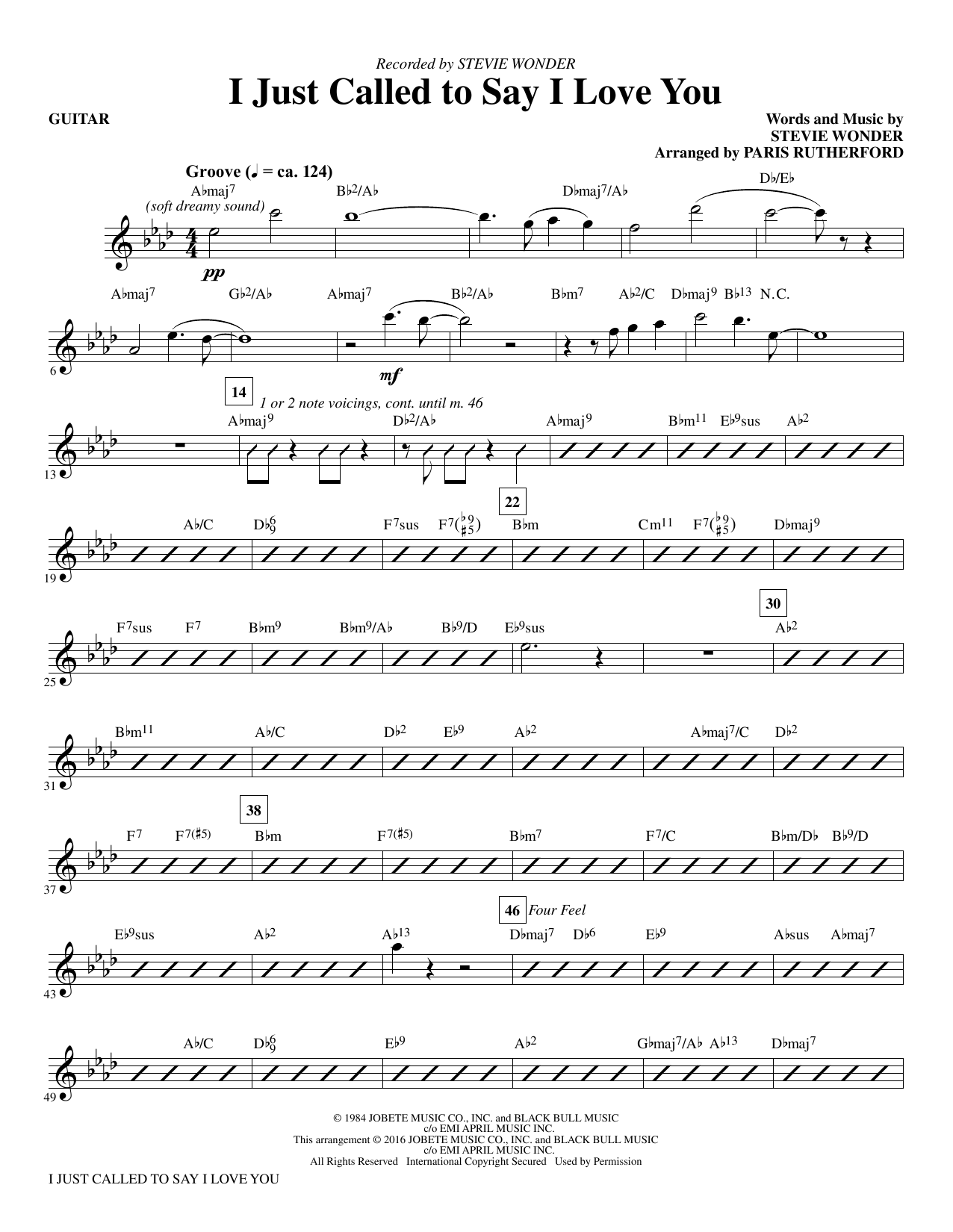

I Just Called to Say I Love You (arr. Paris Rutherford): Choral Instrumental Pak
As performed by Stevie Wonder / Arranged by Paris Rutherford
Item: 35-PK00334996
$20.00
Pickup currently not available
Buy Extra Parts (Digital PDF Download)
Parts Added to Cart!
Description
Here's a fresh take on the Stevie Wonder No. 1 hit from the '80s with a smooth vocal jazz flair! Opening with a warm male solo, it settles into an easy pop style with solid group vocals that will enhance every program!


I Just Called to Say I Love You (arr. Paris Rutherford): Choral Instrumental Pak isn't in MakeMusic Cloud just yet...but it could be. Let us know you'd like to see it, and you'll help shape what comes next. In the meantime, start a free trial and dive into thousands of interactive titles your students can play along with today.
Request This Title
Tell us you want it.
Start Your Free Trial
Explore everything that's ready to play right now.
Sample Audio
No sample audio found.
Sample Video
No sample videos found.
Additional Details
Publisher:
Hal Leonard
SKU:
35-PK00334996
More about this title
About the Artist: Stevie Wonder
Stevie Wonder stands as one of the most influential singer-songwriters and multi-instrumentalists in popular music. Blind since infancy, he mastered keyboards, harmonica, and drums while developing an ear for sophisticated harmonic language that bridged soul, funk, pop, and jazz. His work across five decades has shaped how musicians understand groove, melody, and emotional authenticity in songwriting.
For music educators, Wonder's catalog offers invaluable teaching material. His songs demonstrate strong melodic construction, rhythmic precision, and the power of accessibility without sacrificing musical depth. Arrangements of his hits give students a chance to engage with repertoire they know while building musicianship in jazz and contemporary styles.
Why we love this
Rutherford's arrangement captures what made this song a chart-topper while giving it genuine jazz credibility. The male solo opening immediately signals sophistication to your audience, and the easy pop groove that follows makes it singable for mixed-ability ensembles without ever feeling dumbed down. It's the kind of piece that feels current and fun while teaching your singers to navigate jazz phrasing and blend.
What to expect
Warm, conversational, and genuinely groovy. The arrangement breathes with the ease of two people having a real conversation about love rather than belting sentiment from a stage. There's a relaxed confidence in the voicing and harmonic movement that makes listeners feel like insiders to something special.
Who it's for
This arrangement works beautifully for jazz choirs, pop ensembles, and concert choirs looking to program something contemporary and joyful. It's accessible enough for high school groups with solid singers but sophisticated enough to respect your audience's ears.
How to get the most out of it
- Balance the opening male solo so it sits as an intimate moment rather than a full-bodied statement; the vulnerability of that moment sets the emotional tone for everything after.
- Lock the rhythmic pocket early in rehearsal. The 'easy pop style' lives or dies by how tightly your rhythm section understands the groove beneath the vocals.
- Shape the group vocal sections with light dynamics. Avoid letting the ensemble singing flatten out; each phrase should have direction and intent even in the accessible passages.
- Use the recorded accompaniment to establish feel and tempo in early rehearsals, then have your group sing with a live rhythm section at least once before performance.
How to use it
Pair this with other Stevie Wonder selections or '80s pop standards for a nostalgic set that bridges generations in your audience. It also serves as an excellent opener for a concert; the upbeat charm and immediate accessibility pull people in and set a positive energy for the evening.
Skills your students will build
- Jazz phrasing and interpretation in a pop context
- Balancing solo and ensemble textures
- Rhythmic precision in groove-based arrangements
- Blend and intonation in sustained harmonic movement
- Stylistic flexibility between lead vocal and background support