

I Have a Little Shadow: SATB Choral Octavo
By Dave Brubeck
Level: Moderate
Item: 00-PO-0005141
$2.25
Minimum order quantity: 20 copies
Pickup currently not available
Description
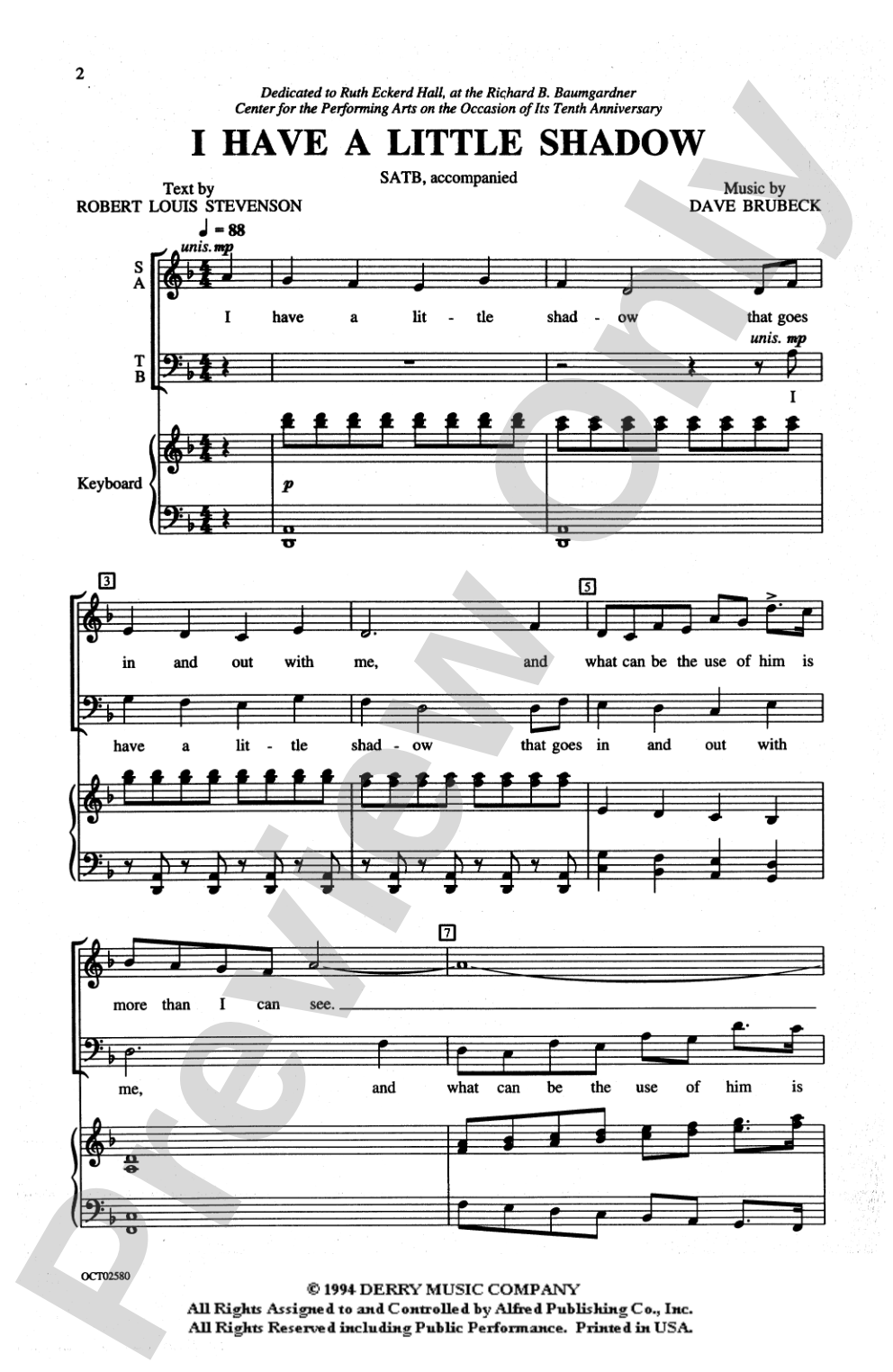
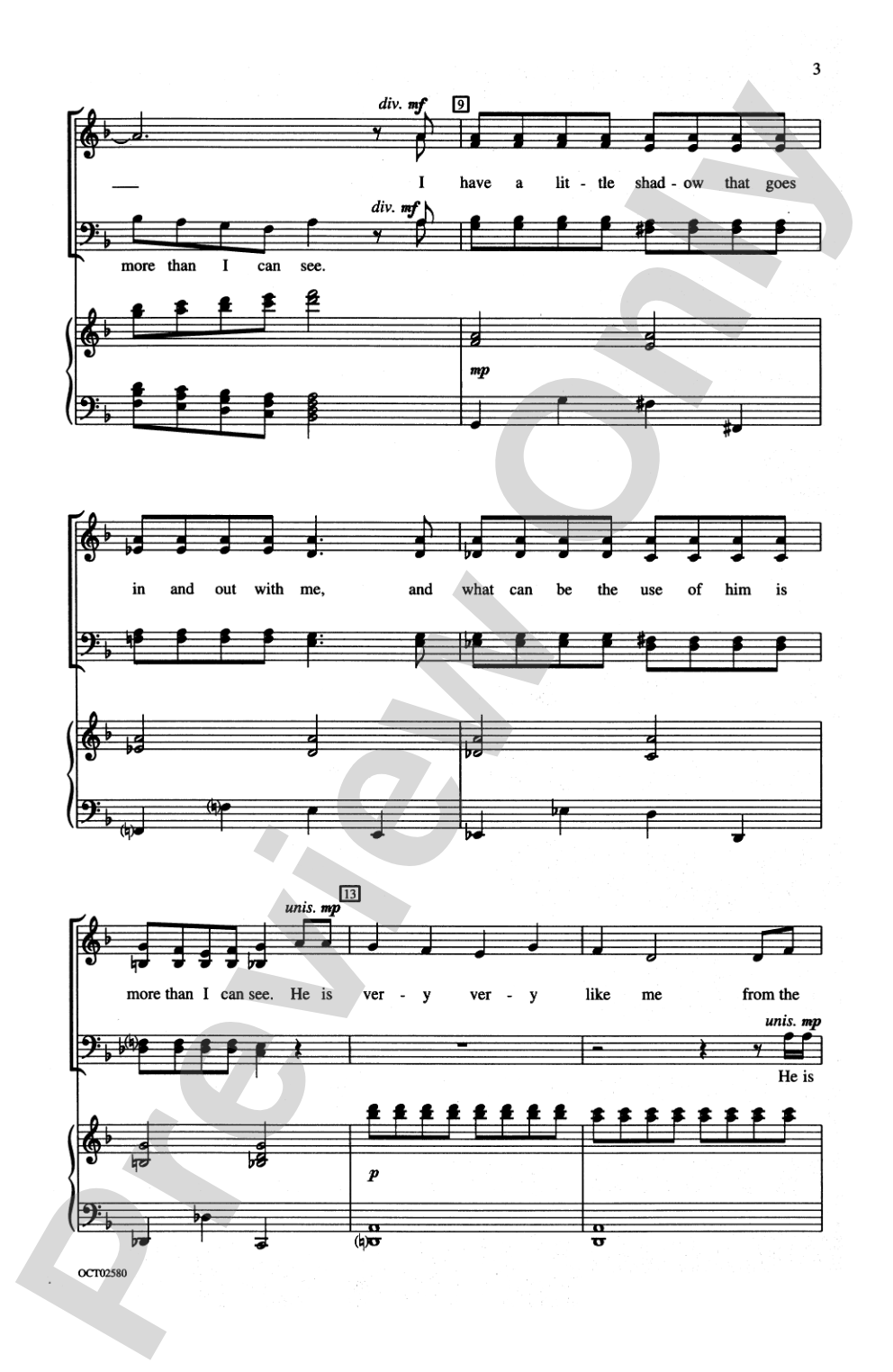
Brubeck's treatment of this simple nursery rhyme-like text by Robert Louis Stevenson is unique and accessible. No question about its jazz roots. Using shadow writing, changing meter and jazz harmonies, Brubeck creates a delightful new work.


I Have a Little Shadow: SATB Choral Octavo isn't in MakeMusic Cloud just yet...but it could be. Let us know you'd like to see it, and you'll help shape what comes next. In the meantime, start a free trial and dive into thousands of interactive titles your students can play along with today.
Request This Title
Tell us you want it.
Start Your Free Trial
Explore everything that's ready to play right now.
Sample Audio
No sample audio found.
Sample Video
No sample videos found.
Additional Details
Series:
Lawson-Gould: The Dave Brubeck Series
Publisher:
Alfred Music
Page Count:
12
SKU:
00-PO-0005141
More about this title
About the Composer: Dave Brubeck
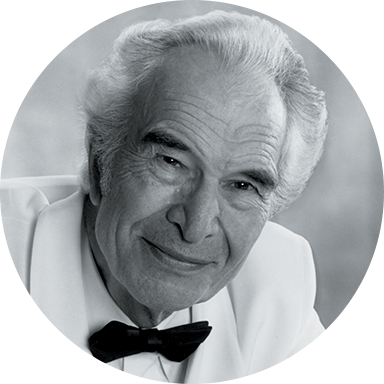
Dave Brubeck stands as one of jazz's most influential pianists and a composer who refused to compartmentalize his musical identity. His improvisational mastery at the keyboard coexisted with a prolific output of fully notated works spanning choral music, orchestral suites, chamber works, and large-scale compositions for chorus and orchestra. His 1959 album "Time Out," featuring the iconic "Take Five," became the first jazz recording to exceed one million sales, establishing him as a crossover artist decades before that term became common.
Beyond his groundbreaking recordings, Brubeck championed integration in mid-20th-century American music and became an ambassador for American culture abroad. His sacred works, including the mass "To Hope!" and oratorios such as "The Voice of the Holy Spirit" and "Beloved Son," have been performed and recorded internationally by major orchestras and choral ensembles. After studying with French composer Darius Milhaud at Mills College following World War II, Brubeck absorbed permission to synthesize jazz language with classical forms. He received the Presidential Medal of the Arts, Grammy Lifetime Achievement Award, and was elected to the American Classical Music Hall of Fame in 2003, cementing his legacy as an artist who expanded what American music could be.
Why we love this
Brubeck's setting captures the whimsy of Stevenson's poem while introducing singers to genuine jazz vocabulary and shifting meters without overwhelming them. The shadow writing technique creates textural interest that keeps all four voices engaged, and the moderate difficulty makes this accessible for middle school choirs discovering jazz idioms for the first time. This is the kind of piece that surprises students with how much musical sophistication they're handling once they realize how naturally the jazz harmonies sit in their voices.
What to expect
Light-hearted and playful, with an underlying sophistication that emerges through listening. Brubeck's jazz harmonies give the simple nursery rhyme texture and sophistication while the changing meters create gentle rhythmic surprises. The piece feels like a conversation between familiar childhood imagery and the language of modern jazz—nostalgic and adventurous at once.
Who it's for
This octavo works beautifully for middle school through early high school choirs who are ready to explore jazz music and non-traditional harmonic language. It's particularly valuable for programs seeking secular repertoire that feels contemporary and engaging without sacrificing musical substance. Directors looking to build jazz literacy in their choirs will find this piece an ideal entry point.
How to get the most out of it
- Approach the changing meter shifts as natural rhythmic gestures rather than obstacles. Let the text guide the phrasing, and the meter changes will feel inevitable.
- Balance the shadow writing carefully so both lines are heard; the interplay between them is where much of the charm lives. Rehearse divisi sections with close attention to blend and intonation.
- Lean into the jazz harmonies without oversinging them. These chords need clarity and a light touch, not dramatic weight. Think 'conversational' rather than 'grand.'
- The recorded accompaniment can anchor tricky harmonic moments, but encourage singers to listen to each other first. Build internal security in the parts before depending on the track.
How to use it
Program this alongside other secular pieces in a spring concert to showcase your choir's rhythmic flexibility and harmonic maturity. It pairs naturally with other contemporary choral works and can serve as a bridge piece for audiences new to jazz-influenced vocal music. Consider pairing it with instrumental jazz pieces or other Brubeck arrangements to create a thematic concert segment.
Skills your students will build
- Reading changing meters (including asymmetrical meter shifts within a piece)
- Singing jazz harmonies and extended chord voicings
- Part independence through shadow writing techniques
- Rhythmic precision and ensemble unity in non-traditional time signatures
- Stylistic interpretation of jazz idioms in choral context