
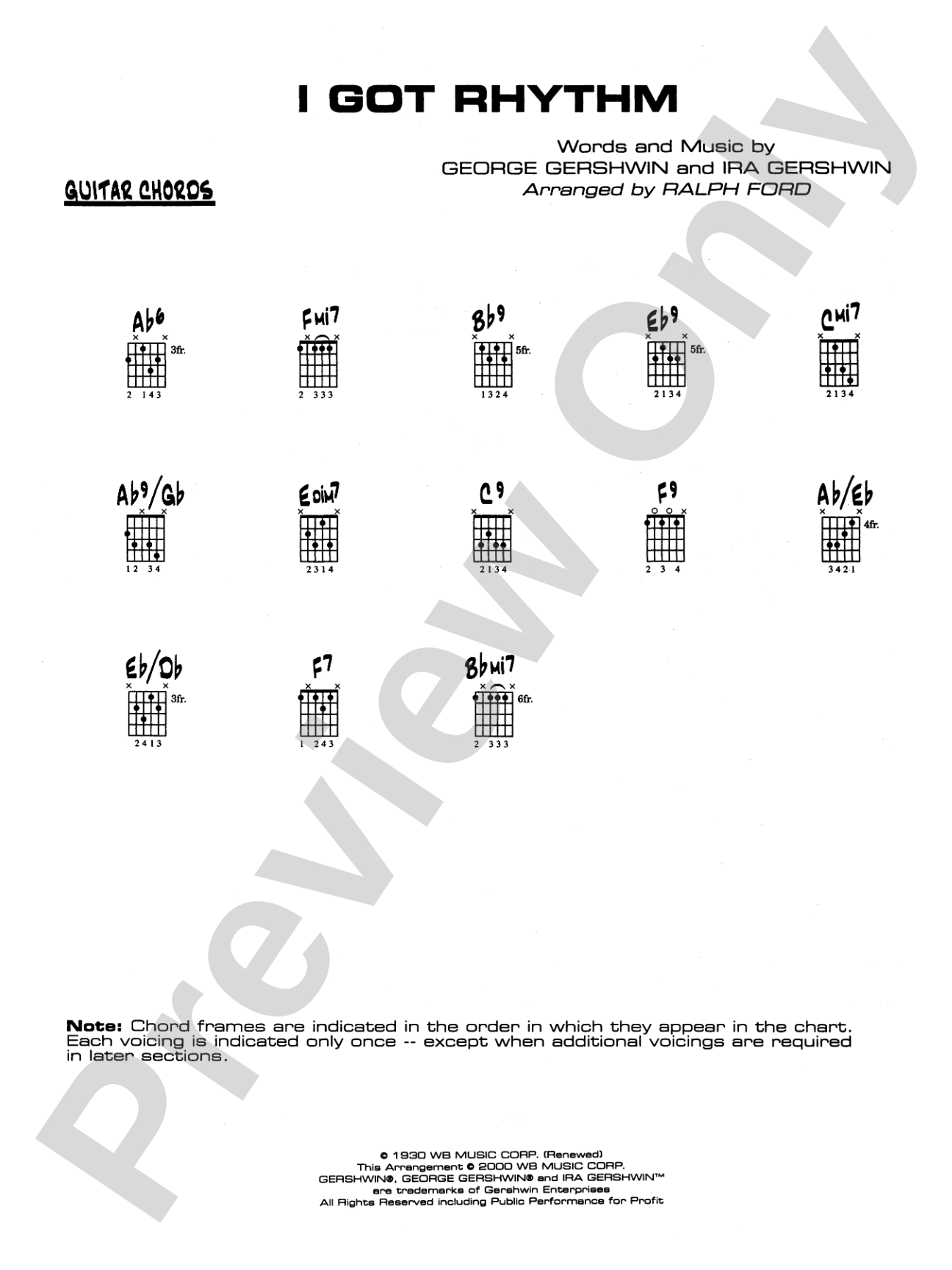

I Got Rhythm: Guitar Chords
By George Gershwin / arr. Ralph Ford
Grade: 1 (Easy)
Item: 00-PC-0016625_GC
$3.00
Pickup currently not available
Description
A jazz ensemble essential! George Gershwin's song is the foundation for hundreds of jazz tunes, with the use of the chord progression becoming known as "'Rhythm' changes." I GOT RHYTHM is the "real McCoy," arranged here for your first year jazz ensemble by Ralph Ford. Ralph has the experience and know-how to score for this level, and he makes it educational and fun to play. Modest brass ranges, written solos with ensemble backgrounds, and plenty of easy swing rhythms make a super chart that provides all you need for a great concert. With such an outstanding composer, arranger, and chart, you can't lose with this one!


Don't just read it, hear it, play along with it, and watch your students grow with it. In MakeMusic Cloud, I Got Rhythm: Guitar Chords comes alive with professional accompaniment, adjustable tempo, and built-in practice tools that turn solo practice into real progress.
Open in the Player
Jump straight in and assign it today.
Start Your Free Trial
Open this title and explore the full library in minutes.
Sample Audio
1
Audio File
--:--
0:00
0:00
Sample Video
No sample videos found.
Additional Details
Series:
First Year Charts for Jazz Ensemble
Publisher:
Alfred Music
Page Count:
78
SKU:
00-PC-0016625_GC
More about this title
About the Composer: George Gershwin
George Gershwin (1898-1937) bridged the worlds of classical music and American popular song with singular fluency. His rhythmic vitality, harmonic sophistication, and gift for melody made him one of the most performed composers in concert halls and jazz clubs alike. "I Got Rhythm," from the 1930 musical "Girl Crazy," became foundational to jazz repertoire. The song's chord progression (known as "Rhythm" changes) generated countless jazz standards and improvisations, proving Gershwin's lasting influence on both formal concert music and vernacular American styles.
For music educators, Gershwin represents a crucial bridge in the curriculum. His works validate jazz and popular idioms as serious musical study while maintaining the melodic and harmonic craft that enriches any ensemble's musicianship.
Why we love this
Ralph Ford has captured exactly what first-year ensembles need: a recognizable, energizing melody with accessible harmonic language and rhythmic clarity. The written solos and ensemble backgrounds create genuine jazz texture without overwhelming younger players, and the modest brass ranges mean your section leaders can focus on tone and phrasing rather than strain. Programming a Gershwin standard signals to your students that jazz is built on masterworks, not just play-along charts.
What to expect
Buoyant and straightforward, with the rhythmic confidence that made this song a jazz touchstone. The melody moves with ease, the groove feels natural, and the writing breathes room for young musicians to discover what swing actually feels like when they play it together.
Who it's for
First-year jazz ensemble directors who want to teach chord changes, swing rhythm, and solo-section balance using a tune students recognize. Players new to jazz will engage immediately with a Gershwin standard while building foundational jazz literacy.
How to get the most out of it
- Balance the melody line with the walking bass and comping rhythms. The tune should sit forward enough to sing through, but the rhythm section groove must anchor every phrase.
- Shape the swing eighth notes deliberately. Even in Grade 1 writing, the lift and space between beats creates the genre's character. Rehearse straight eighths first, then layer in the swing feel.
- Treat each written solo as a solo moment, not a section feature. Give soloists space to breathe and let the ensemble support without overwhelming the improvisation.
- Lock the ensemble rhythms tightly, especially in backgrounds behind the melody and solos. Precision in the hits and rhythmic punches gives the chart polish and energy.
How to use it
Open a jazz concert with this chart to establish energy and familiarity, or use it as a teaching tool early in the season when your ensemble is still settling into jazz vocabulary. The tune works equally well as a standalone feature or as an opener that leads into a more adventurous arrangement later in the program.
Skills your students will build
- Reading and executing swing rhythms in a jazz ensemble setting
- Recognizing and playing from a chord progression (Rhythm changes)
- Ensemble balance between melody, solos, and accompaniment
- Listening to and supporting an improvised solo
- Understanding jazz style and articulation through a canonical standard