I Got Rhythm: Easy Piano Digital Sheet Music

I Got Rhythm: Easy Piano Digital Sheet Music

George Gershwin, Ira Gershwin

Item: 00-PS-0008605

Digital Download
$3.99
Description

I Got Rhythm: Easy Piano Digital Sheet Music isn't in MakeMusic Cloud just yet...but it could be. Let us know you'd like to see it, and you'll help shape what comes next. In the meantime, start a free trial and dive into thousands of interactive titles your students can play along with today.

Sample Audio
No sample audio found.
Sample Video
Additional Details
SKU: 00-PS-0008605

More about this title

About the Creator: George Gershwin

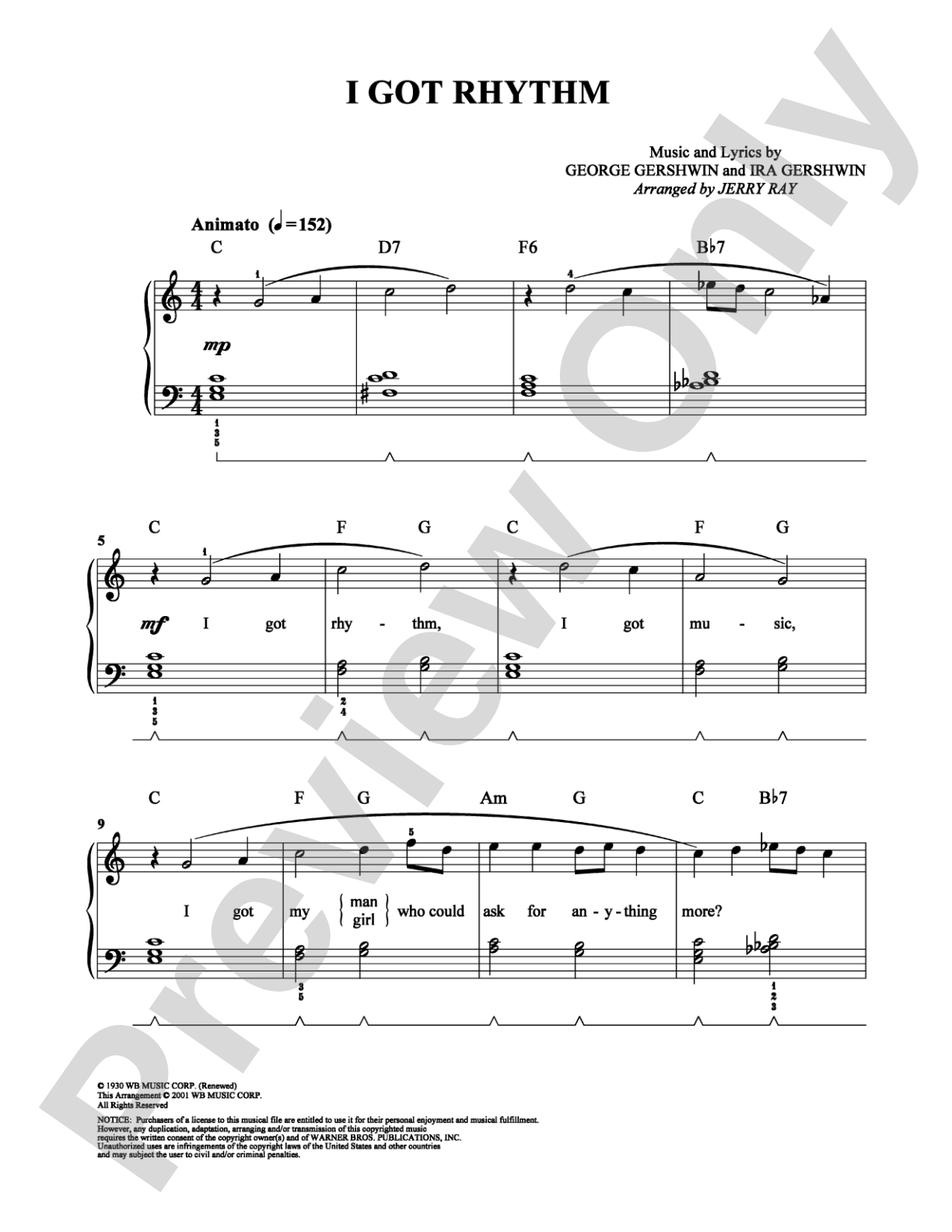
George Gershwin composed "I Got Rhythm" in 1930 for the musical "Girl Crazy," and the song became an instant standard. Its infectious melody and driving harmonic progressions have made it a cornerstone of American popular music, recorded by everyone from Ella Fitzgerald to Count Basie.

The piece exemplifies Gershwin's genius for blending jazz idioms with accessible, singable melodies. Generations of musicians have used "I Got Rhythm" as a foundation for learning improvisation, harmony, and swing style, cementing its place in both jazz and classical education.

Why we love this

This standard belongs in every easy piano student's repertoire because it combines immediate recognizability with genuine musical substance. The melody is so embedded in American musical culture that students feel the satisfaction of "playing something real" from their first run-through.

What to expect

Upbeat and playful, with the sophisticated ease of a seasoned jazz standard. The rhythm has a gentle swagger, and the harmonic movement feels smart without being complicated.

Who it's for

Early intermediate pianists ready to tackle a piece with character beyond simple melodies. Students benefit from exposure to jazz-inflected harmony and rhythm while staying well within their technical range.

How to get the most out of it

  • Keep the tempo steady and conversational rather than rushing; the charm lives in the rhythm's relaxed swing, not its speed.
  • Let the accompaniment breathe. Avoid playing it as mere filler; it supports the melody and deserves clarity and shape.
  • Lean into the syncopation without overplaying it. The surprise comes from the phrasing, not from awkward emphasis.

How to use it

Position this as a program opener or as a studio recital piece that bridges classical training and jazz repertoire. It pairs naturally with other American popular songs or works well as a contrast to more formal classical selections.

Skills your students will build

  • Reading syncopated rhythms in a jazz idiom
  • Playing swing eighth notes with proper articulation
  • Managing straightforward jazz-influenced harmonies
  • Balancing melody and accompaniment texture
  • Building confidence with a well-known, beloved standard

You May Also Like