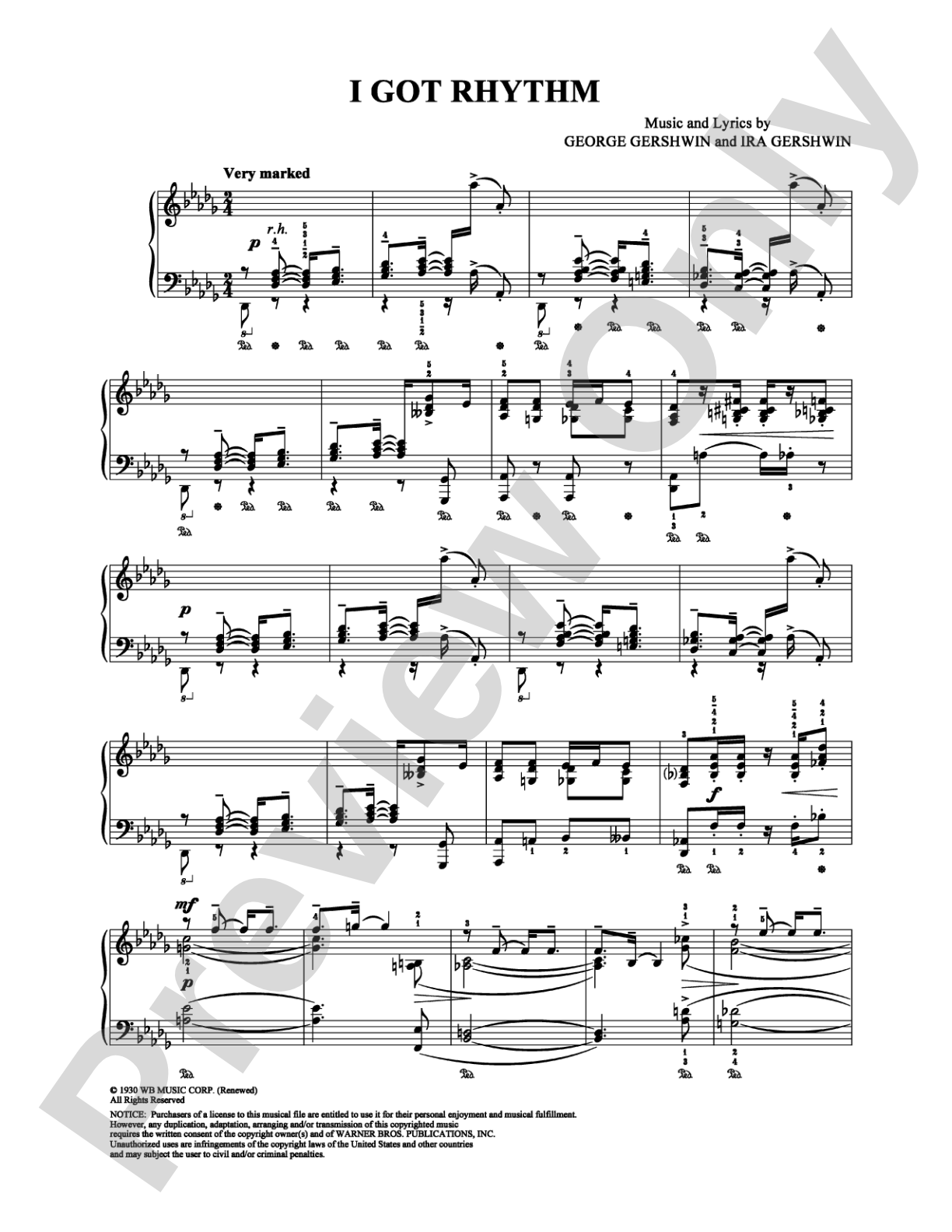
I Got Rhythm: Piano Digital Sheet Music

I Got Rhythm: Piano Digital Sheet Music

George Gershwin

Item: 00-PS-0002101

Digital Download
$3.99
Description

I Got Rhythm: Piano Digital Sheet Music isn't in MakeMusic Cloud just yet...but it could be. Let us know you'd like to see it, and you'll help shape what comes next. In the meantime, start a free trial and dive into thousands of interactive titles your students can play along with today.

Sample Audio
No sample audio found.
Sample Video
Additional Details
SKU: 00-PS-0002101

More about this title

About the Creator: George Gershwin

George Gershwin wrote "I Got Rhythm" in 1930 for the musical "Girl Crazy," and the song became one of the most recorded standards in American popular music. His gift for melody and harmonic sophistication transformed what could have been a simple novelty number into a piece with real musical substance that continues to engage performers and audiences alike.

Gershwin's ability to bridge classical training and vernacular American music made him uniquely suited to write standards that work equally well in jazz clubs, concert halls, and practice rooms. "I Got Rhythm" showcases his trademark blend of blues-influenced harmony and memorable singability, which is precisely why it remains a cornerstone of the American songbook.

Why we love this

This standard lives in the repertoire for a reason: the melody is instantly recognizable, the harmonic movement is clear enough to reveal voice leading without getting tangled, and pianists at multiple levels find something rewarding here. The straightforward stride and jazz-inflected changes make it equally useful for classical technique development and contemporary styles.

What to expect

Buoyant and confident. The tune bounces along with the ease of a seasoned performer, and the harmony sits comfortably under the fingers even as it keeps your ear engaged. There's joy in the forward motion and satisfaction in nailing the phrasing.

Who it's for

Intermediate pianists ready to work with jazz standards and popular classics. This piece rewards players who understand voice leading and can handle the rhythmic vocabulary of American songwriting without getting lost in complex harmonic substitutions.

How to get the most out of it

  • Commit to a steady tempo from the downbeat. The charm of this tune depends on rhythmic confidence, not rubato.
  • Listen closely to the harmonic rhythm so you can shape phrases by the changes, not just the melody contour.
  • Let the left hand breathe. Stride patterns can feel mechanical if you lock the hands into an unyielding grid.

How to use it

Program this solo recital or as a stylistic break in a classical recital. It also works beautifully as a duet or ensemble piece when you layer it with strings or other instruments, and it fits naturally into a jazz history or American songbook unit.

Skills your students will build

  • Sight-reading jazz chord symbols and changes
  • Stride piano technique and left-hand independence
  • Phrasing across harmonic rhythm rather than melodic contour
  • Tempo maintenance and rhythmic confidence
  • Voicing and chord substitutions characteristic of standards

You May Also Like