
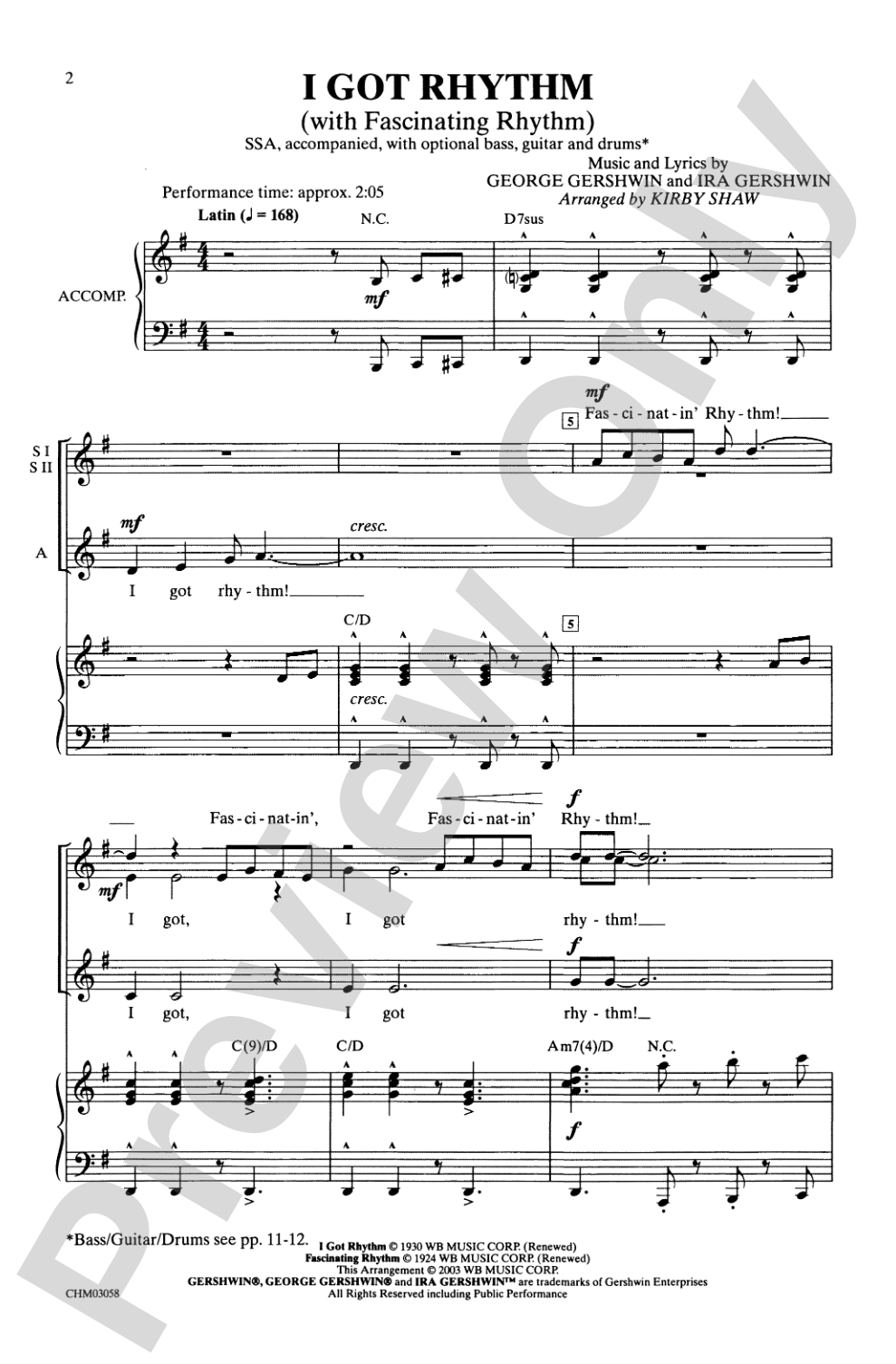
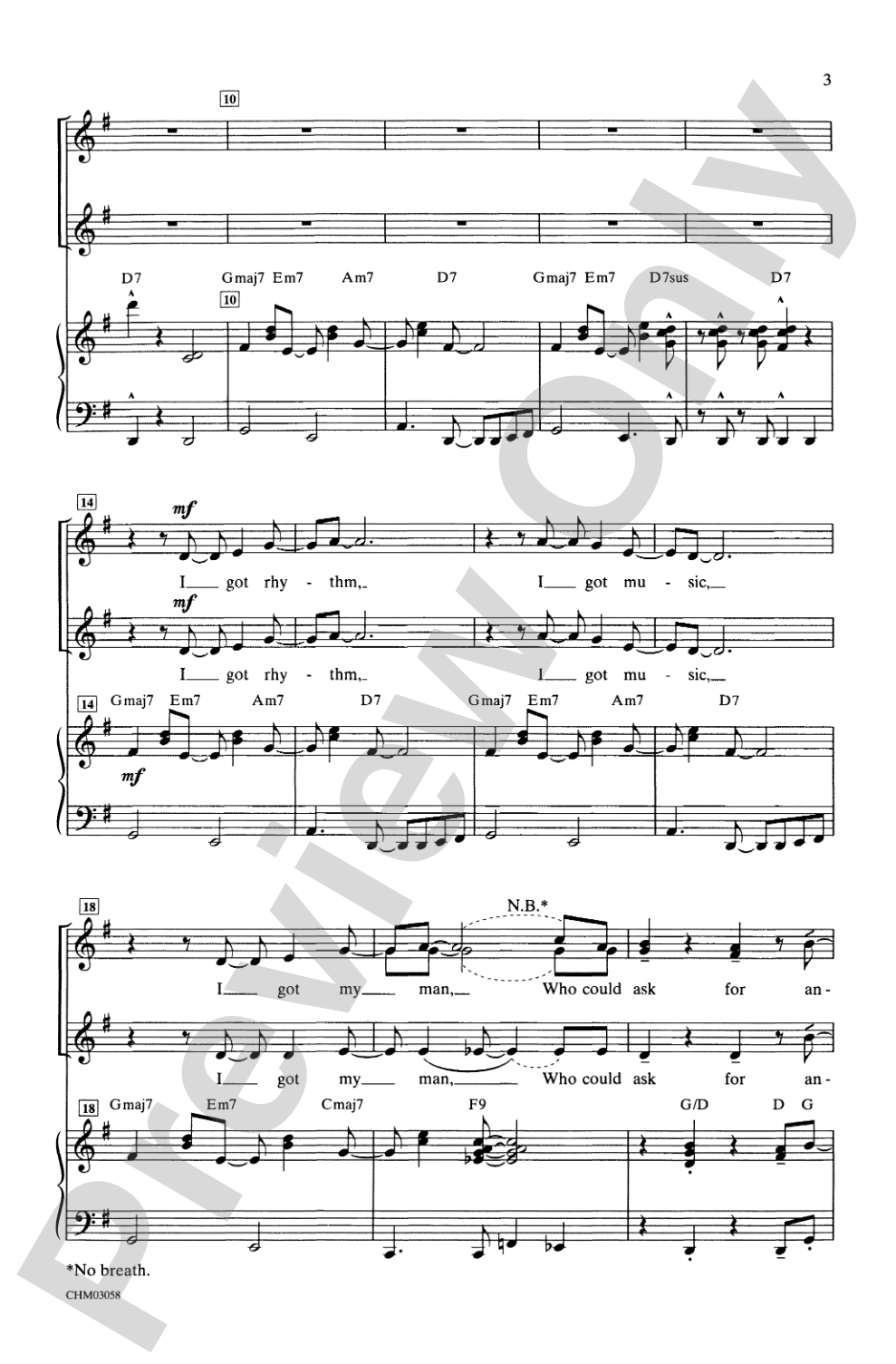
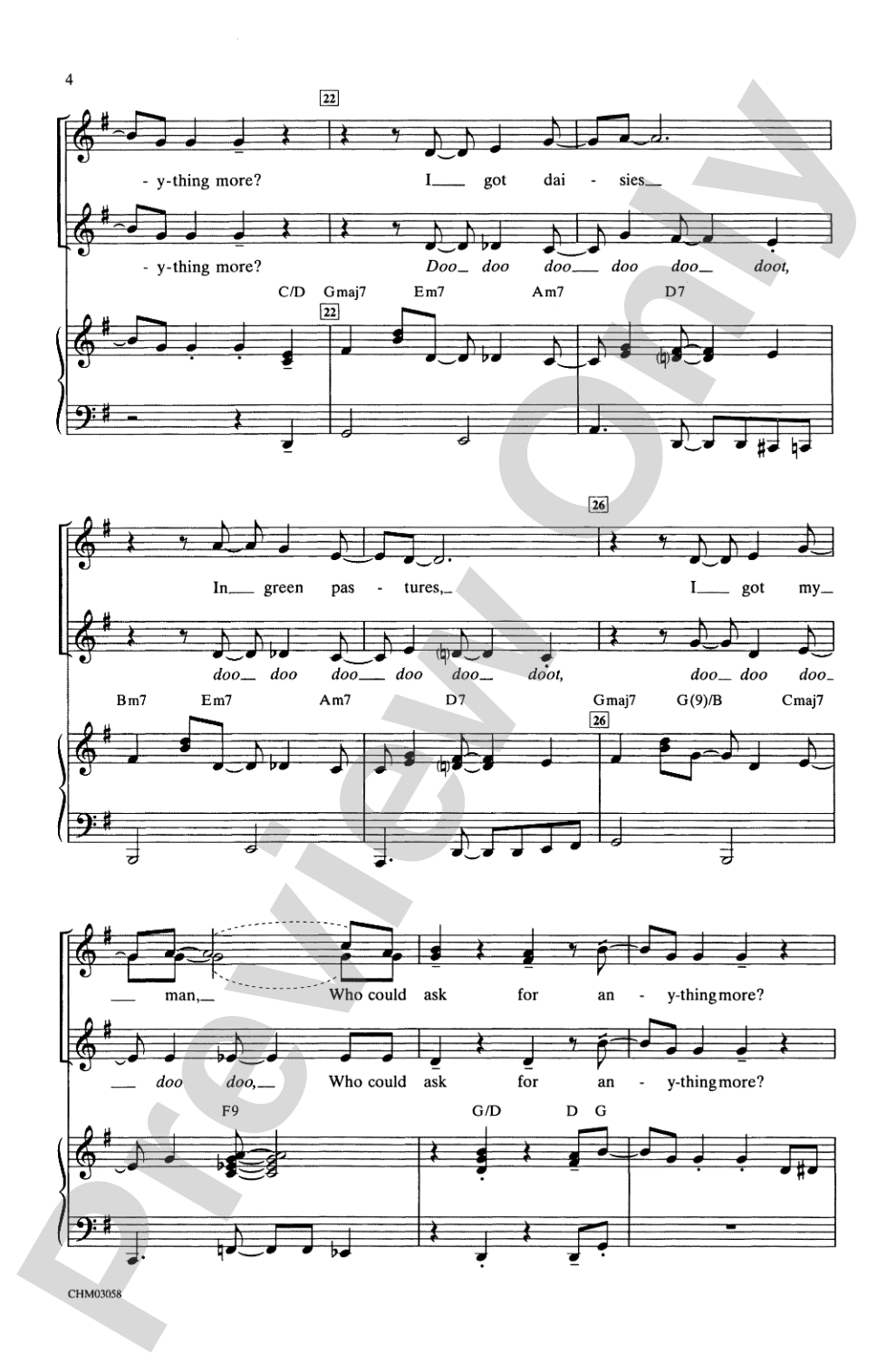

I Got Rhythm: SSA Choral Octavo
With "Fascinating Rhythm"
Music and lyrics by George Gershwin and Ira Gershwin / arr. Kirby Shaw
Level: Moderate
Item: 00-PO-0004833
$2.25
Minimum order quantity: 20 copies
One moment…
Description
Two Gershwin® classics are combined in a driving Latin style choral as only Kirby Shaw could. Whether you're looking for a change of pace for your concert choir or an upbeat staged number for your show choir, take a look at this one. You'll be glad you did!


I Got Rhythm: SSA Choral Octavo isn't in MakeMusic Cloud just yet...but it could be. Let us know you'd like to see it, and you'll help shape what comes next. In the meantime, start a free trial and dive into thousands of interactive titles your students can play along with today.
Request This Title
Tell us you want it.
Start Your Free Trial
Explore everything that's ready to play right now.
Sample Audio
No sample audio found.
Sample Video
No sample videos found.
Additional Details
Series:
Alfred Archive Edition: Alfred Pop Choral Series
Publisher:
Alfred Music
Page Count:
12
SKU:
00-PO-0004833
More about this title
About the Composer: George Gershwin
George Gershwin (1898-1937) brought jazz idioms and American vernacular into concert music at a time when classical composers largely dismissed popular styles. His rhythmic vitality, harmonic sophistication, and gift for melody shaped twentieth-century American music and continue to anchor repertoire across instrumental and vocal ensembles.
Gershwin's influence on music education runs deep. His works appear in curricula from elementary through university because they bridge classical technique and accessible, energetic material. Teachers recognize in his music a rare combination: genuine artistic substance paired with immediate student engagement.
Why we love this
Kirby Shaw's arrangement strips away the symphonic scale of Gershwin's originals and delivers pure momentum. The Latin groove energizes singers who might otherwise disengage from older material, while the two-song structure keeps rehearsals fresh and gives your program genuine variety. This reads as contemporary and fun without sacrificing the harmonic intelligence you'd expect from Gershwin.
What to expect
Bright and propulsive, with the swagger of Tin Pan Alley filtered through a Latin lens. The harmonic sophistication beneath the surface prevents the piece from feeling lightweight, even as the groove and melody carry the room.
Who it's for
Directors of treble choirs and show choirs looking for contemporary energy without sacrificing musical credibility. Singers comfortable with syncopation and rhythmic precision will thrive on the forward motion. The moderate difficulty makes it accessible to high school groups while rewarding singers with stronger reading skills.
How to get the most out of it
- Establish the Latin groove early in rehearsal using a metronome or recorded accompaniment. Without that pocket locked in, the arrangement loses its drive.
- Shape phrases around the syncopation rather than fighting it. Let rhythmic gestures breathe; the Gershwin material will land harder if you don't over-articulate.
- Layer in movement and staging elements from the beginning. This piece invites choreography, and singers perform better when physicality matches the rhythmic energy.
- Balance the alto and soprano lines carefully in the denser sections. The Latin texture can muddy if altos aren't singing with the same clarity as sopranos.
How to use it
Slot this between heavier repertoire to energize an audience and give singers a performance win. It works equally well as a concert closer or as the centerpiece of a show choir set where staging and movement take focus. The style shift signals a deliberate change of mood without requiring an entirely different skill set.
Skills your students will build
- Reading and executing syncopated rhythms in 4/4 time
- Singing through Latin percussion grooves while maintaining clarity
- Balancing independence in parts during texture-heavy arranging
- Connecting physical movement to musical phrasing
- Recognizing and performing harmonic sophistication in contemporary arrangements