
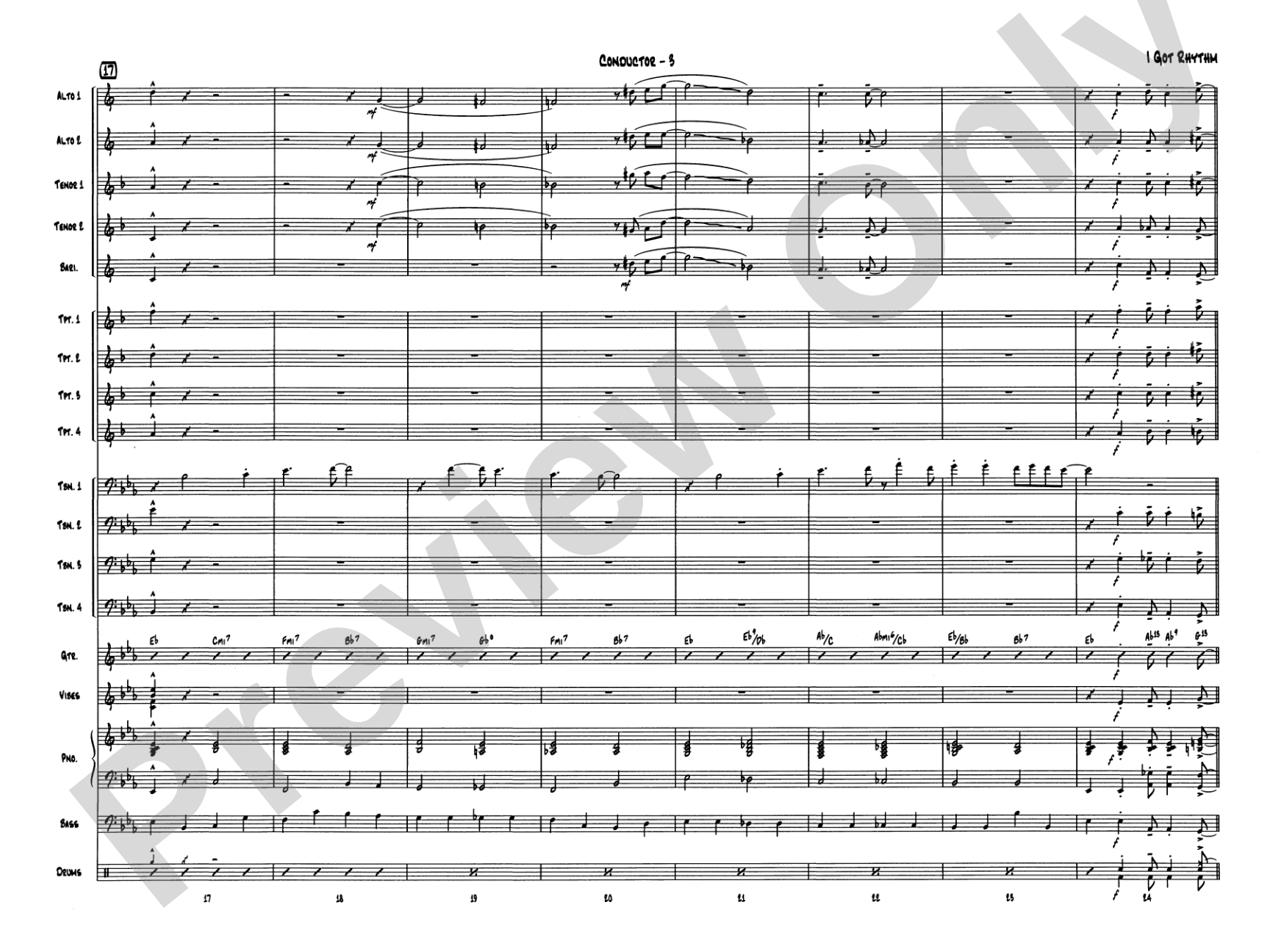
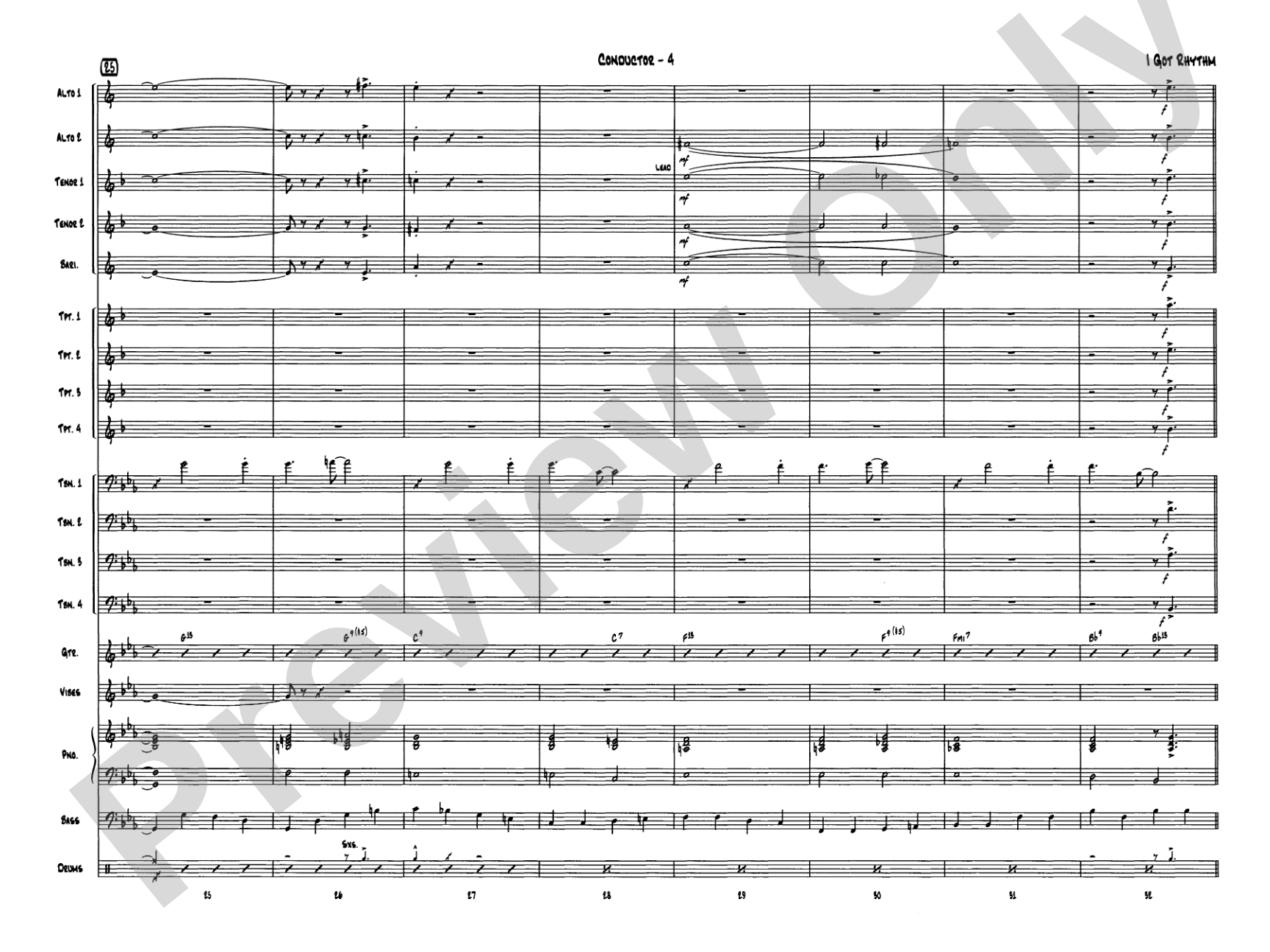
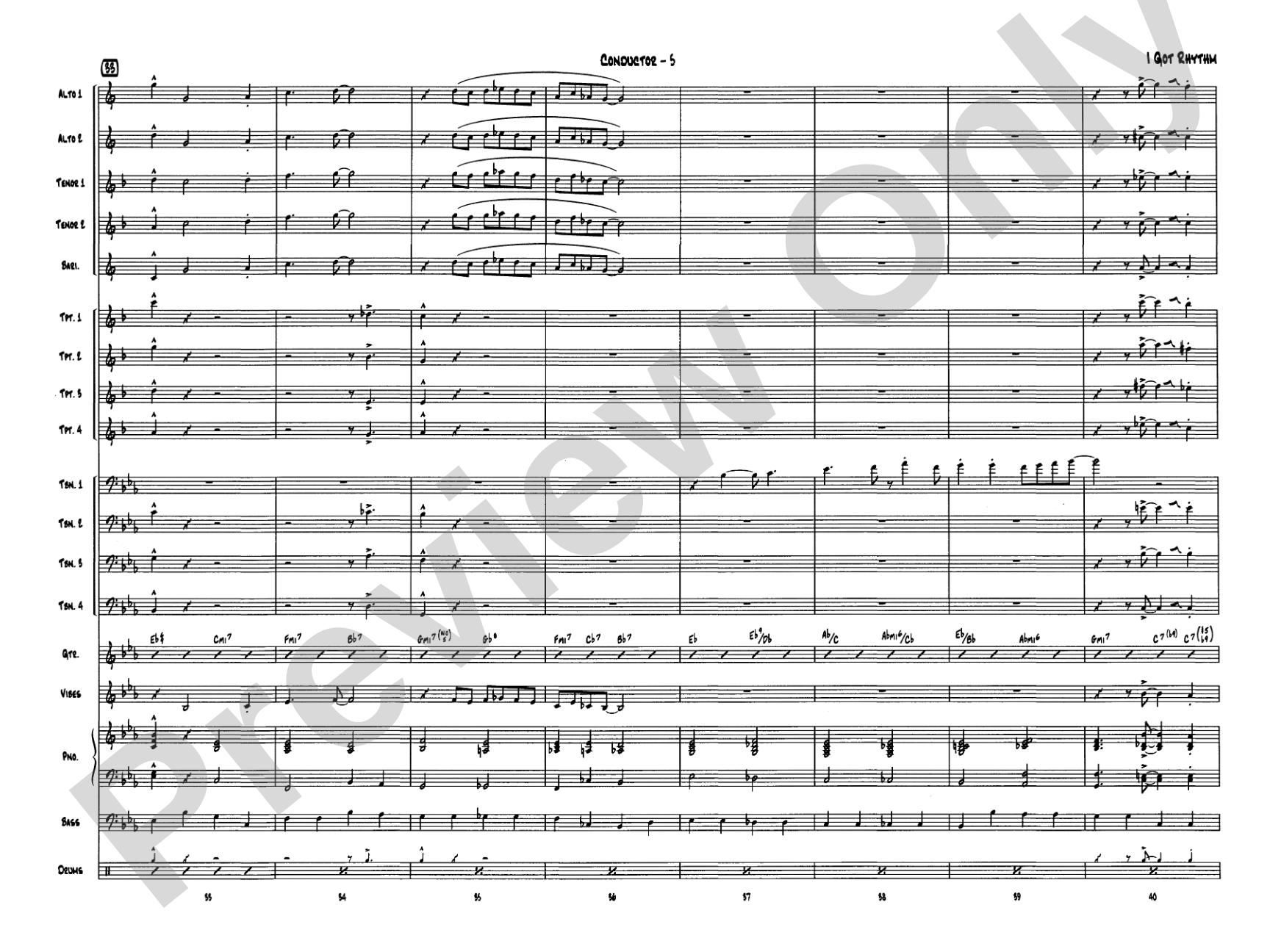
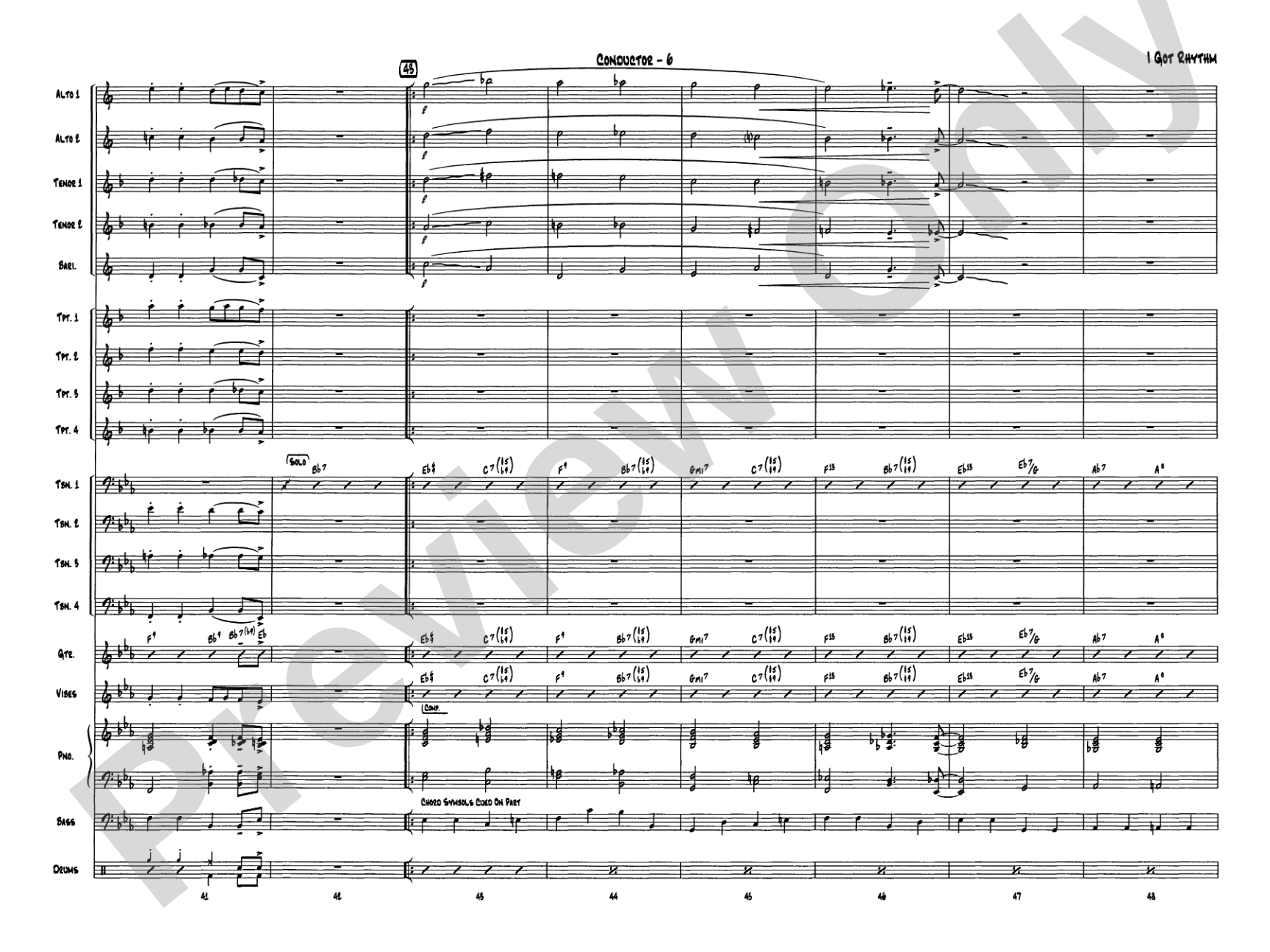
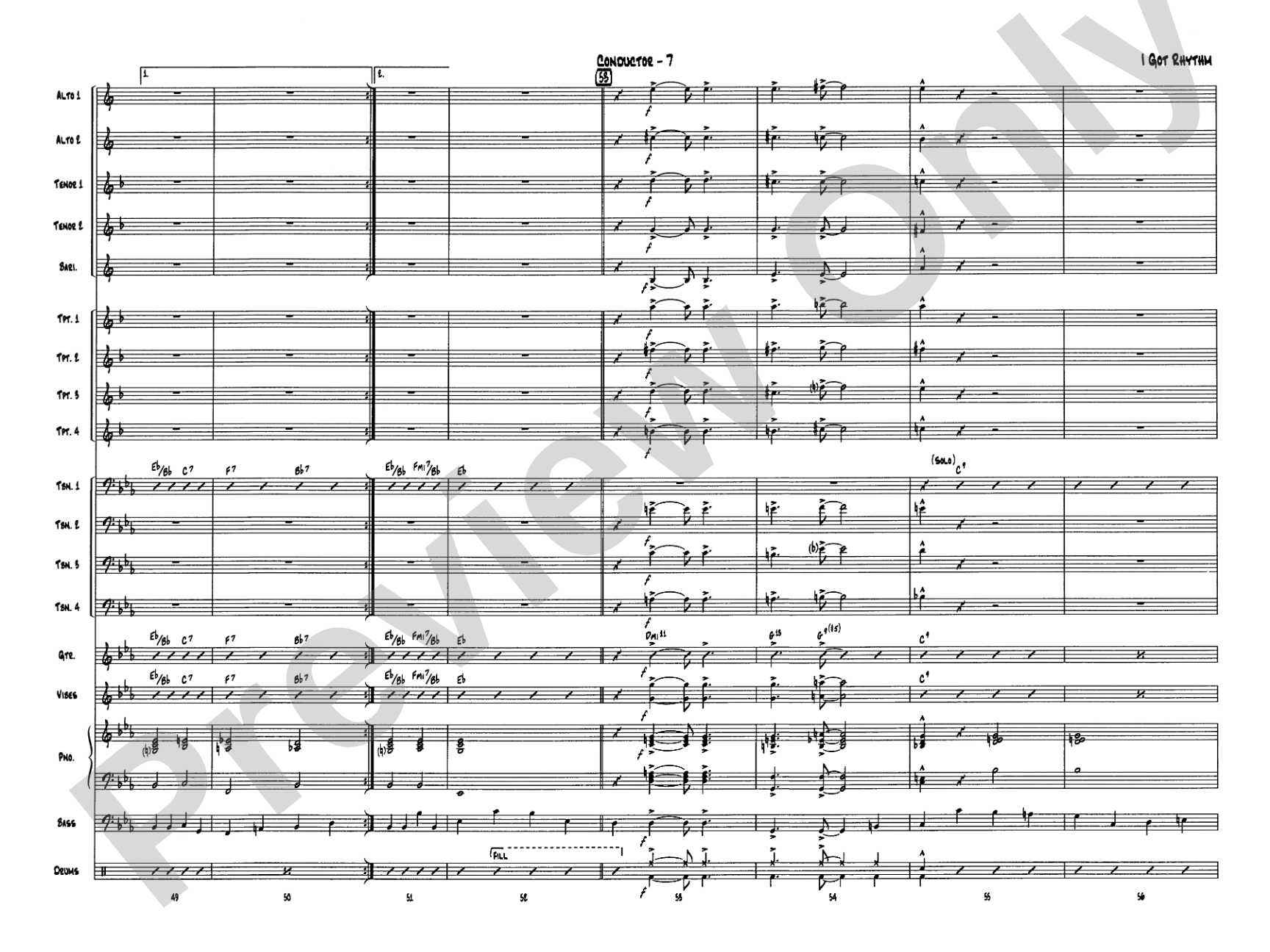
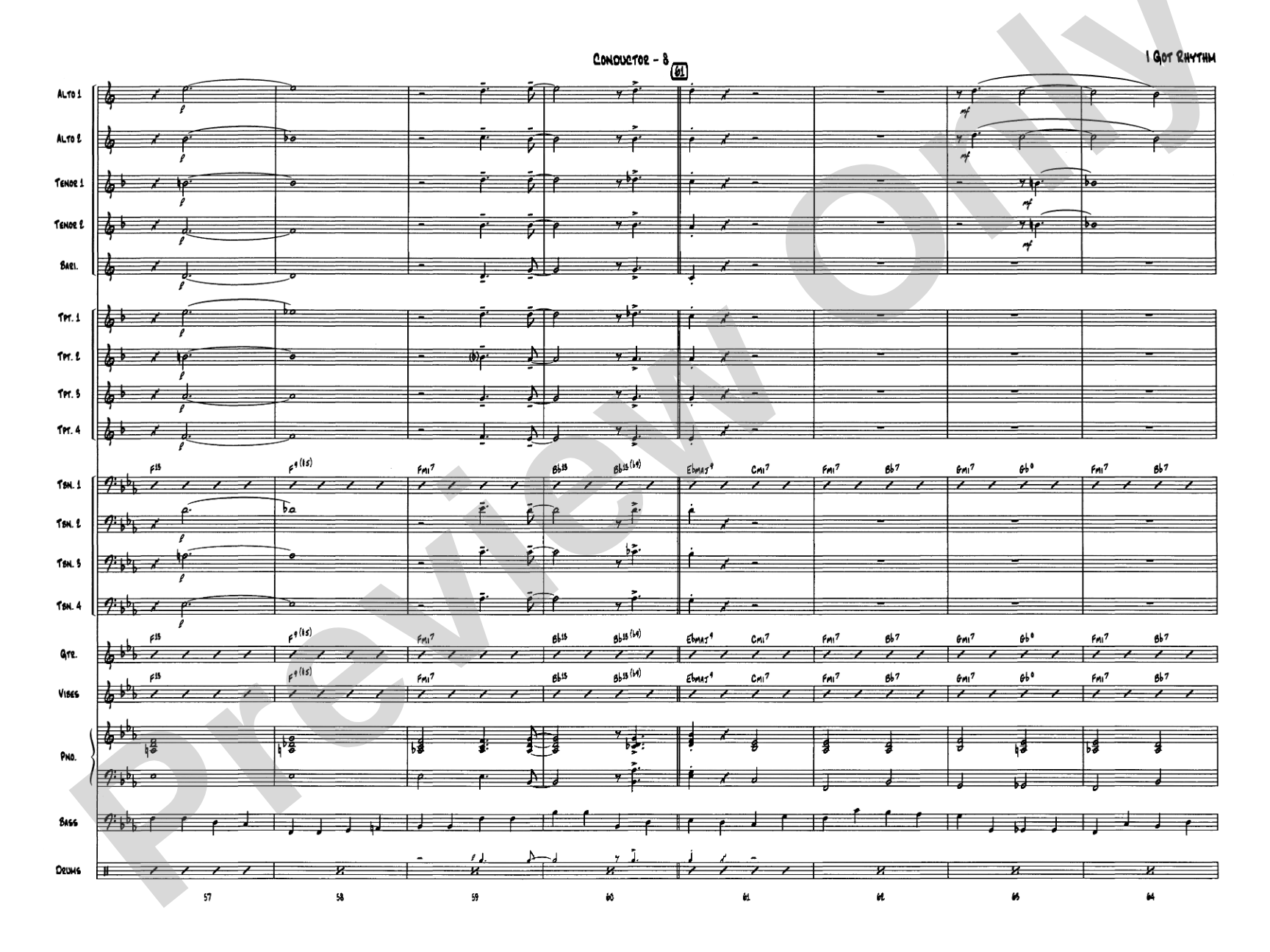
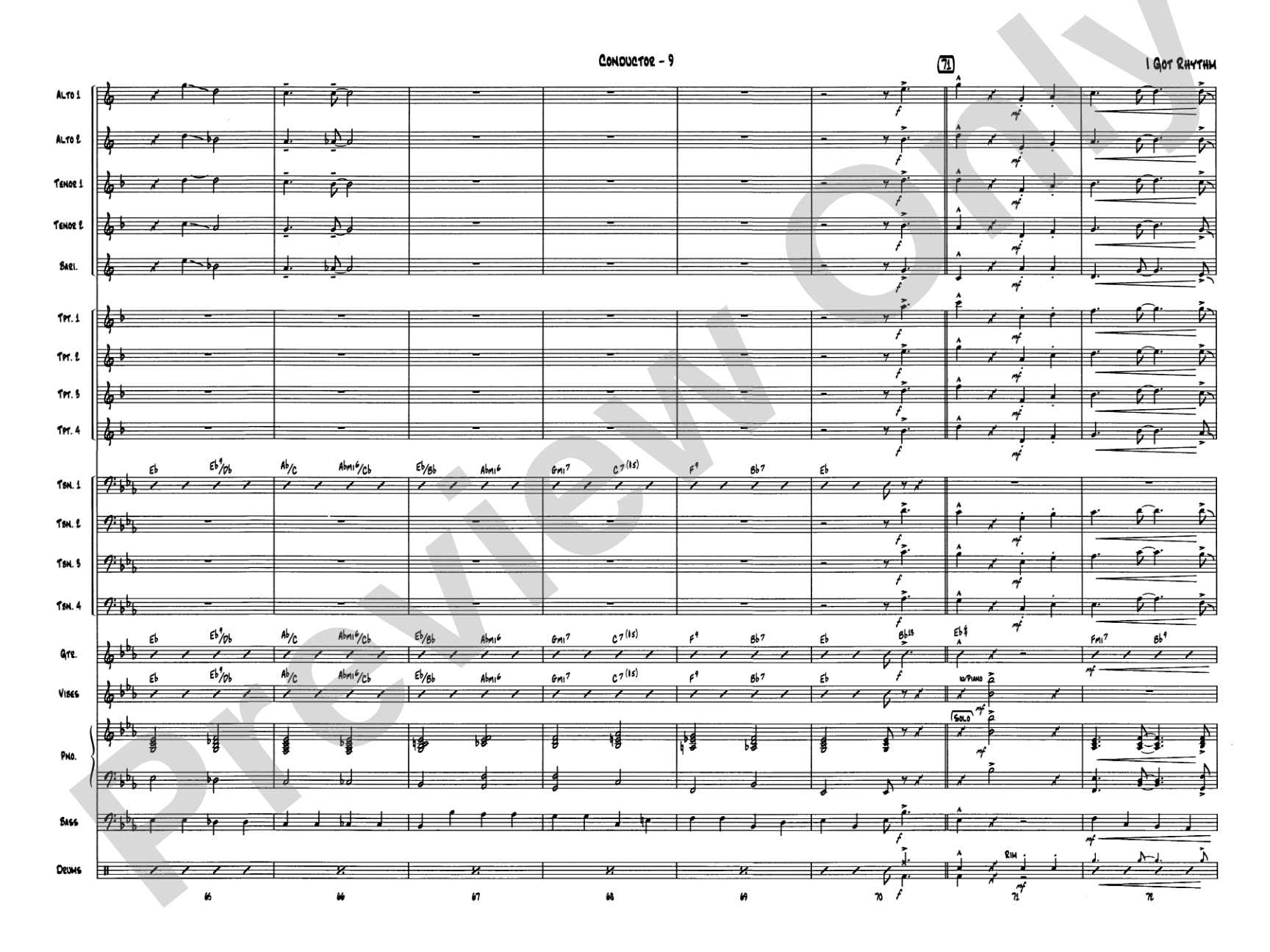
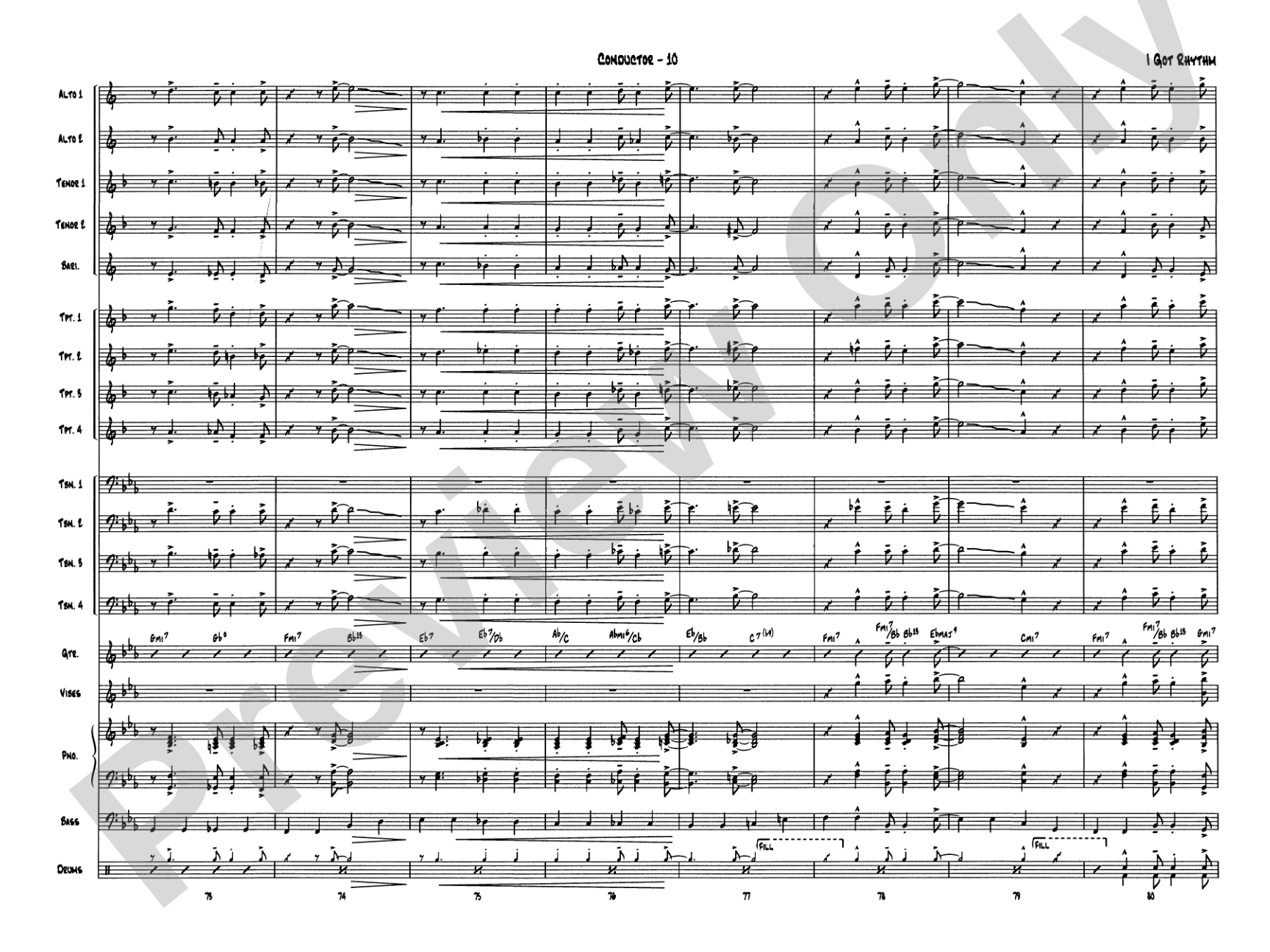
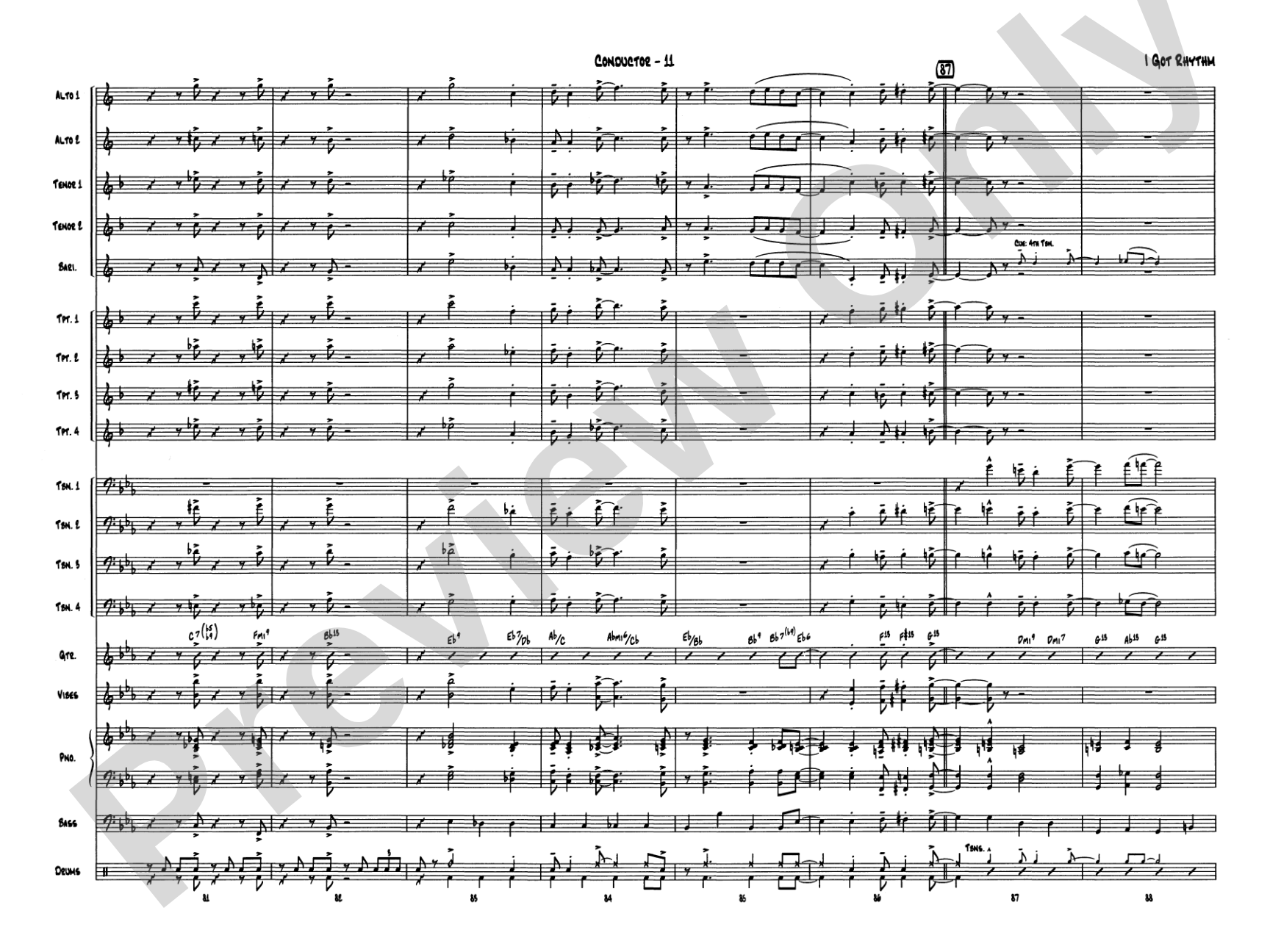
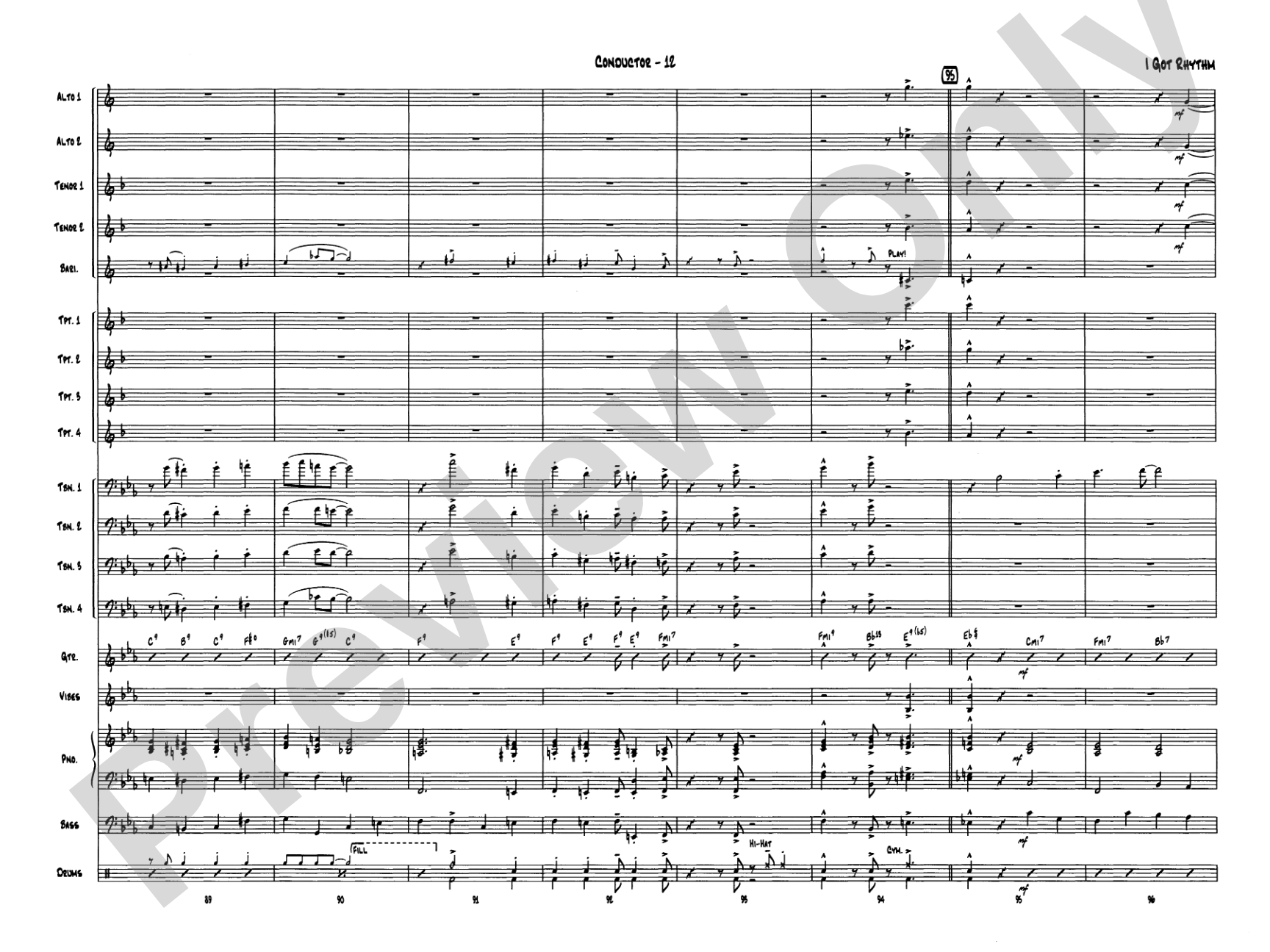
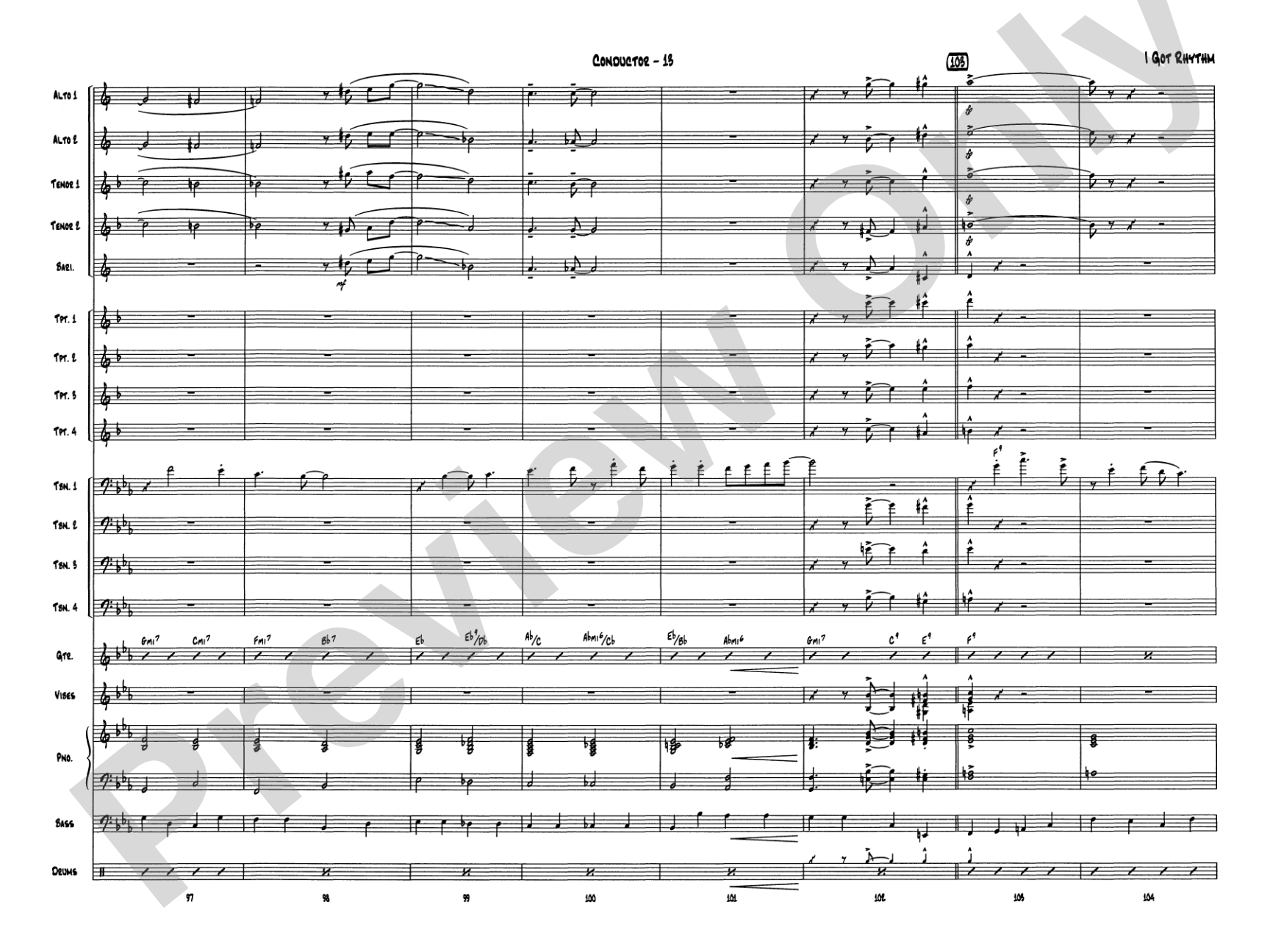
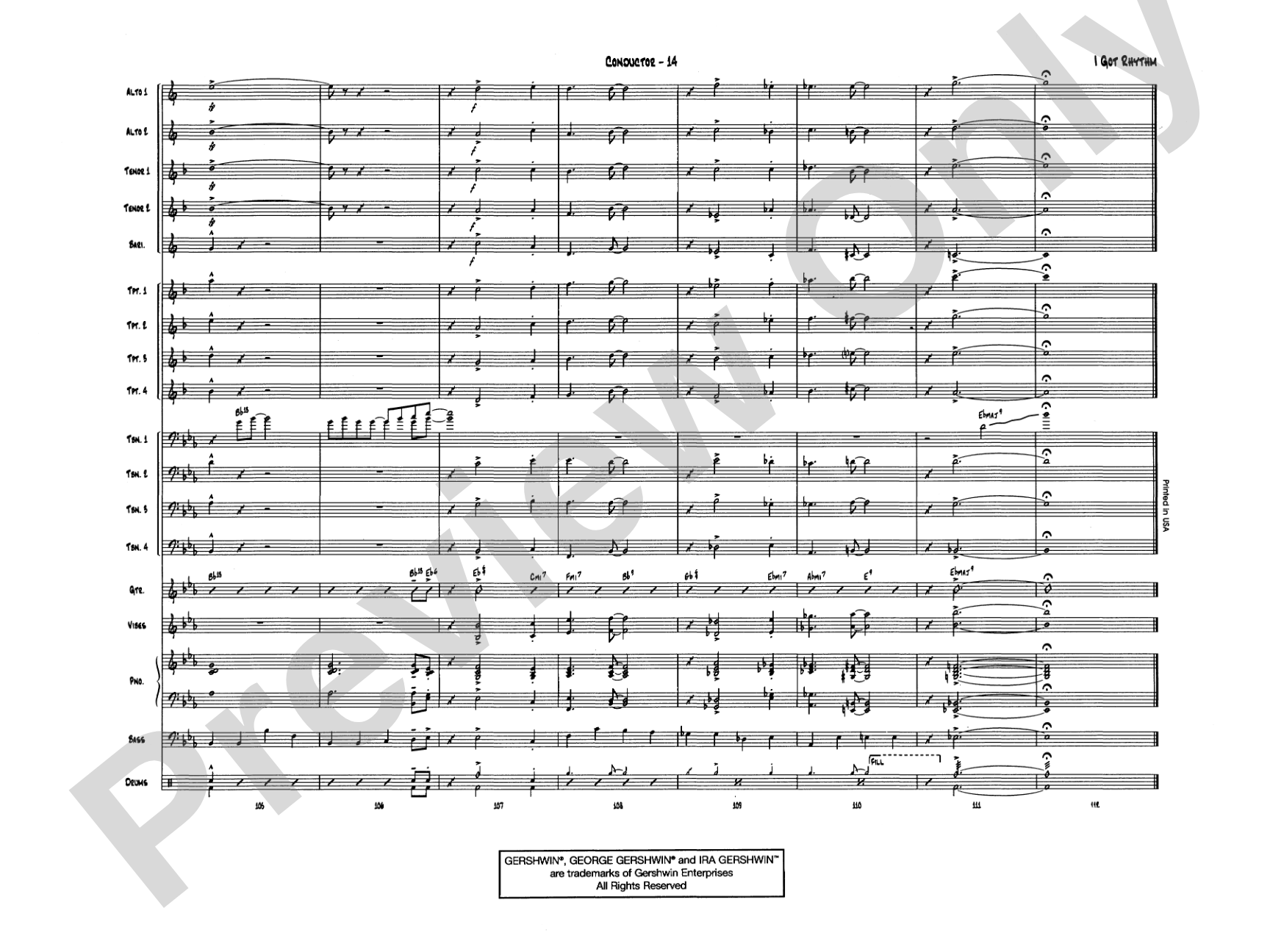

I Got Rhythm: Jazz Ensemble Conductor Score & Parts
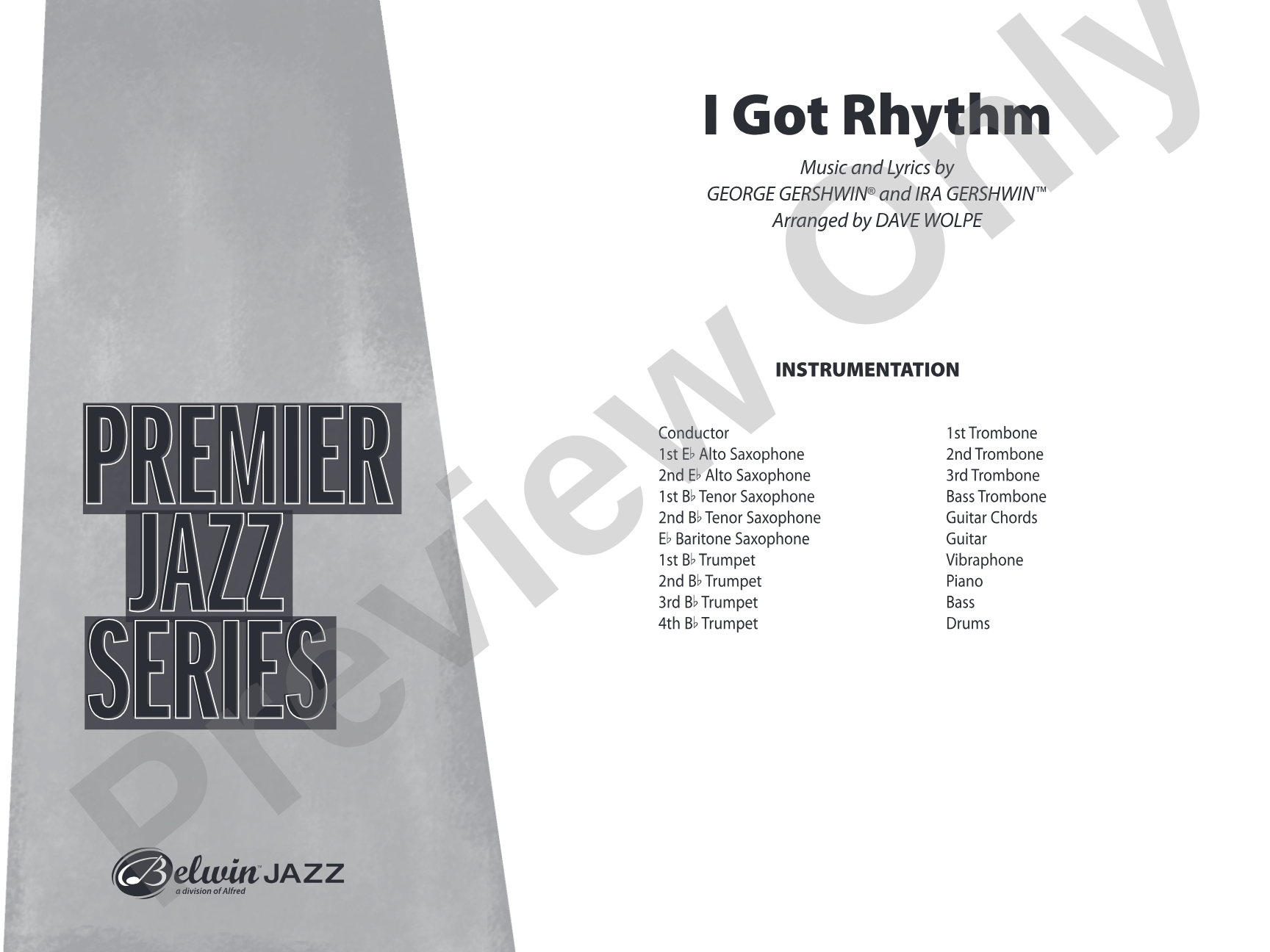
Music and lyrics by George Gershwin and Ira Gershwin / arr. Dave Wolpe
Grade: 4.5 (Medium Advanced / Difficult)
Item: 00-PK-0004427

$60.00
Pickup currently not available
Buy Extra Parts (Digital PDF Download)
| Product | Price | Quantity |
|---|---|---|
| I Got Rhythm: Score | $10.00 | |
| I Got Rhythm: E-flat Alto Saxophone | $5.99 | |
| I Got Rhythm: 2nd E-flat Alto Saxophone | $5.99 | |
| I Got Rhythm: B-flat Tenor Saxophone | $5.99 | |
| I Got Rhythm: 2nd B-flat Tenor Saxophone | $5.99 | |
| I Got Rhythm: E-flat Baritone Saxophone | $5.99 | |
| I Got Rhythm: 1st B-flat Trumpet | $5.99 | |
| I Got Rhythm: 2nd B-flat Trumpet | $5.99 | |
| I Got Rhythm: 3rd B-flat Trumpet | $5.99 | |
| I Got Rhythm: 4th B-flat Trumpet | $5.99 | |
| I Got Rhythm: 1st Trombone | $5.99 | |
| I Got Rhythm: 2nd Trombone | $5.99 | |
| I Got Rhythm: 3rd Trombone | $5.99 | |
| I Got Rhythm: 4th Trombone | $5.99 | |
| I Got Rhythm: Guitar Chords | $5.99 | |
| I Got Rhythm: Guitar | $5.99 | |
| I Got Rhythm: Vibraphone | $5.99 | |
| I Got Rhythm: Piano Accompaniment | $5.99 | |
| I Got Rhythm: String Bass | $5.99 | |
| I Got Rhythm: Drums | $5.99 |
Parts Added to Cart!
Description
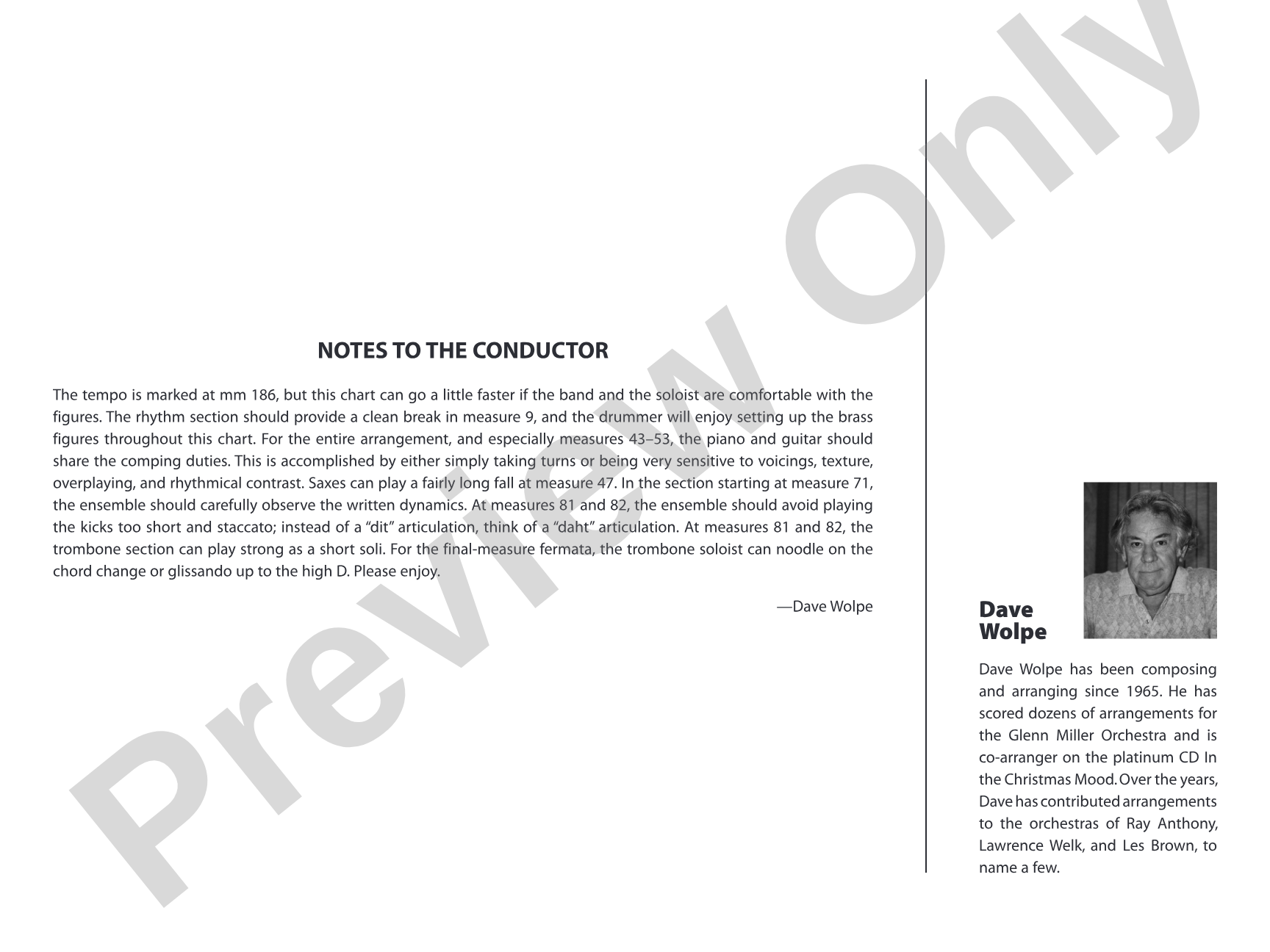
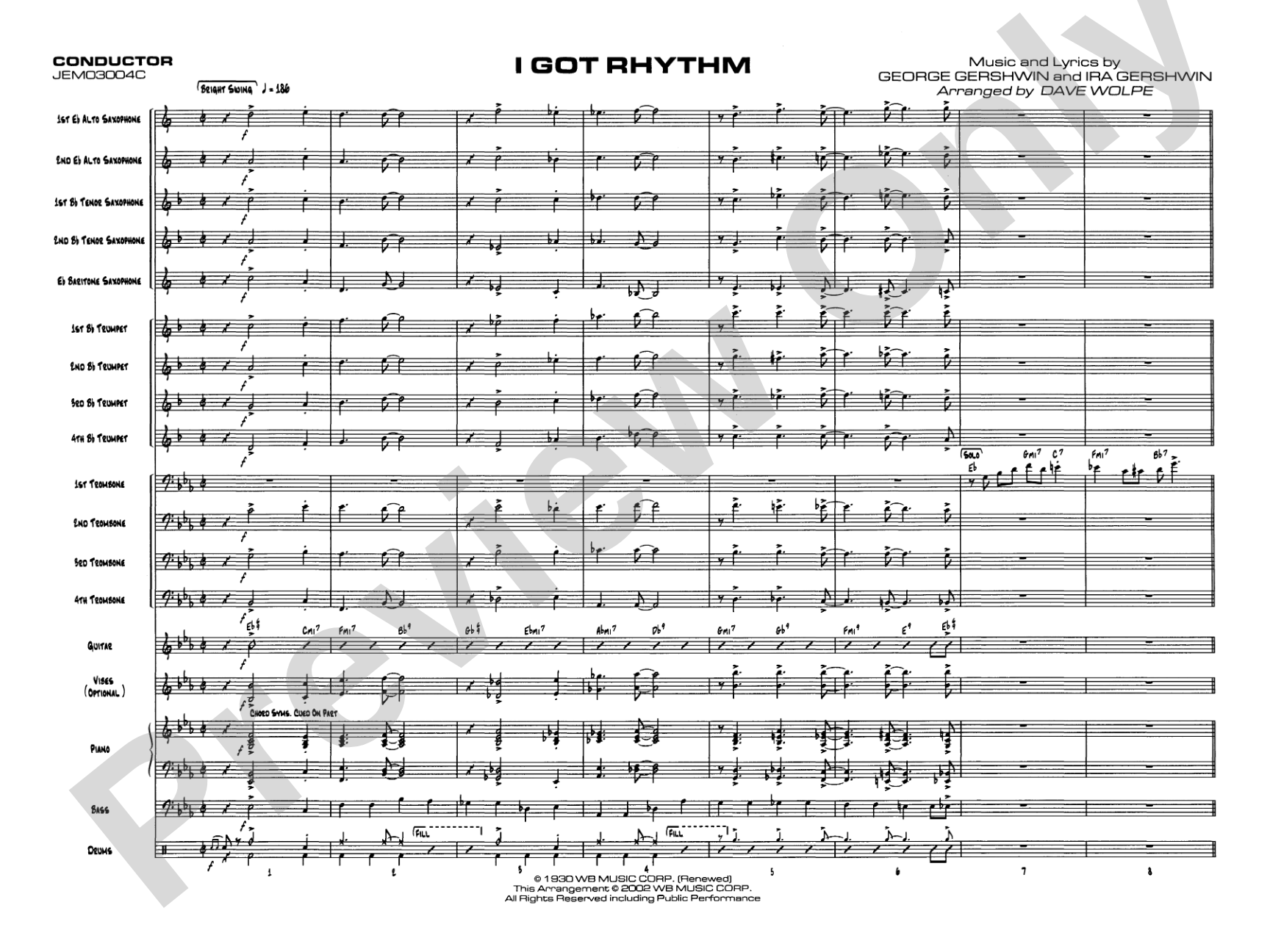
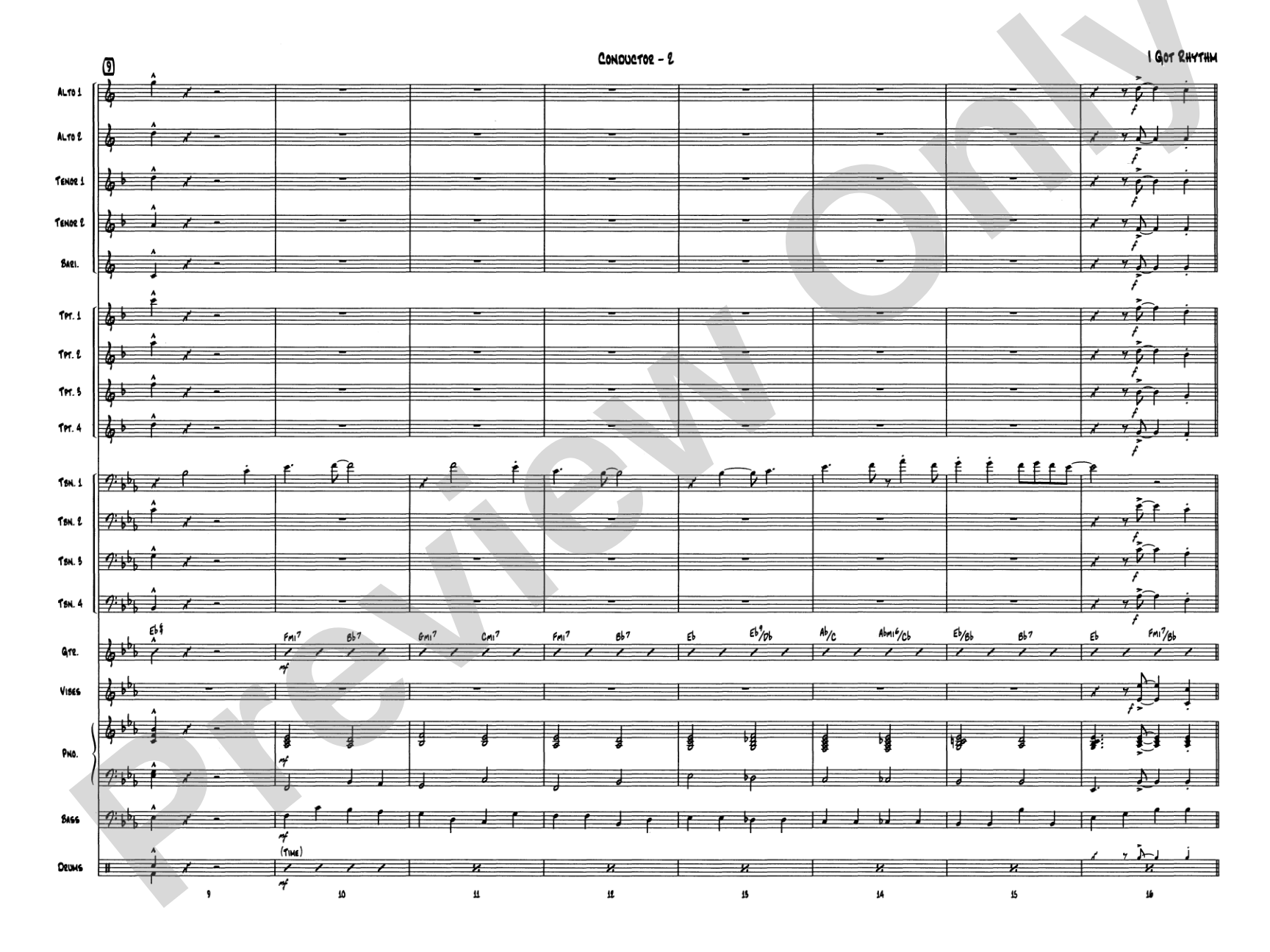
Featuring the lead trombone, this one really swings! George Gershwin® composed it and Dave Wolpe arranged the ultimate jazz standard as a showcase for your trombone soloist and the entire bone section. There is solo space galore in a well-crafted chart. Lead trumpet to high D and trombone soloist also to high D. Optional vibe part. A top choice.


Don't just read it, hear it, play along with it, and watch your students grow with it. In MakeMusic Cloud, I Got Rhythm: Jazz Ensemble Conductor Score & Parts comes alive with professional accompaniment, adjustable tempo, and built-in practice tools that turn solo practice into real progress.
Open in the Player
Jump straight in and assign it today.
Start Your Free Trial
Open this title and explore the full library in minutes.
Sample Audio
1
Audio File
--:--
0:00
0:00
Sample Video
No sample videos found.
Additional Details
Series:
Premier Jazz Series
Publisher:
Alfred Music
Page Count:
78
SKU:
00-PK-0004427
More about this title
About the Composer: George Gershwin
George Gershwin (1898-1937) bridged concert music and popular song with unprecedented fluency, creating works that remain central to American musical identity. His gift for melody and harmonic sophistication made him a natural voice for jazz idioms, and his influence on how composers approach improvisation and blues tonality continues to shape music education today.
Why we love this
Wolpe's arrangement gives every section meaningful material while keeping the focus on the trombone soloist, making this an intelligent choice for ensembles ready to showcase a strong lead player. The chart swings hard without losing clarity, and the optional vibe part adds textural flexibility depending on your instrumentation.
What to expect
Buoyant and propulsive, with the infectious charm of a standard that has earned its place through sheer musicality. The trombone voice sits naturally in the groove while the ensemble drives forward with the kind of rhythmic ease that makes big-band jazz so satisfying to play.
Who it's for
Jazz ensembles at the intermediate-advanced level with a capable lead trombone soloist and solid section depth. This arrangement suits groups ready for the technical demands of Grade 4.5 writing and the interpretive maturity needed to balance spotlight solos with ensemble cohesion.
How to get the most out of it
- Balance the lead trombone's solo passages so they soar over the section, especially when both trumpet and trombone push toward high D. The arrangement will handle the texture if soloists play with confidence rather than restraint.
- Establish a solid groove with your rhythm section before rehearsing the horns. This tune's swing depends on lock, not just tempo; a metronome helps initially, but trust your players' ears once they find the pocket.
- Exploit the solo space strategically in performance. These aren't throwaway bars; they're moments for individual voices to breathe. Mark dynamics and articulation choices clearly so players understand when to solo forward and when to sit back in the section.
- Use the vibe part as a rehearsal tool early on if your ensemble includes mallets. It clarifies harmonic color and gives younger players a reference for comping rhythms before you thin the texture in performance.
How to use it
Program this as a feature piece on a concert celebrating American composers, or pair it with other Gershwin arrangements to explore his harmonic language across styles. It works equally well as a spring concert highlight or a showcase performance at jazz festival competitions.
Skills your students will build
- Trading solos and responding to lead voice within ensemble texture
- Balancing individual articulation with section unity in swing idiom
- Reading and executing jazz phrasing, rhythmic pushes, and behind-the-beat interpretations
- Sustaining intonation and voicing at high range (trumpet and trombone to D)
- Listening and comping responsively as accompaniment to soloists