
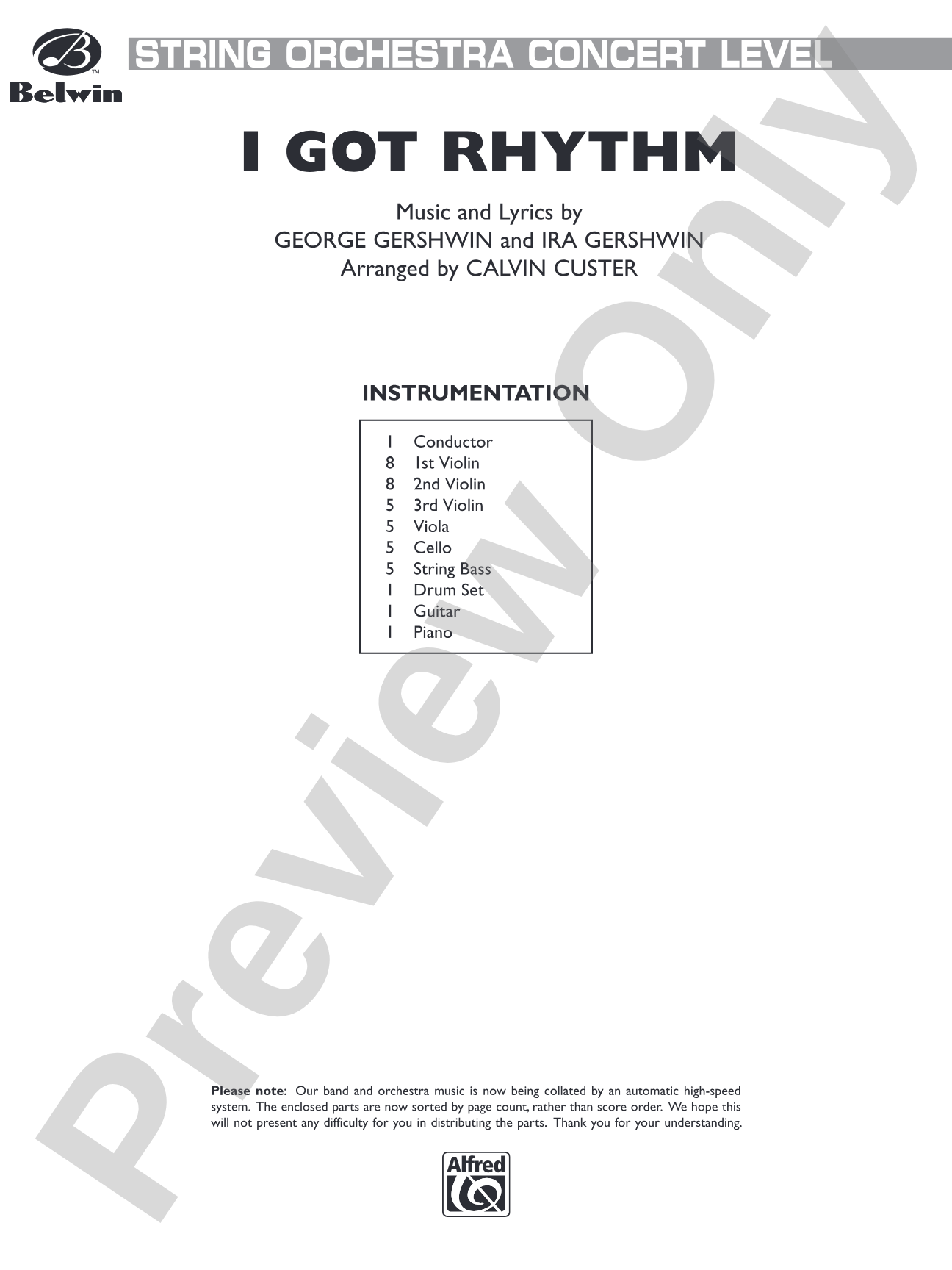
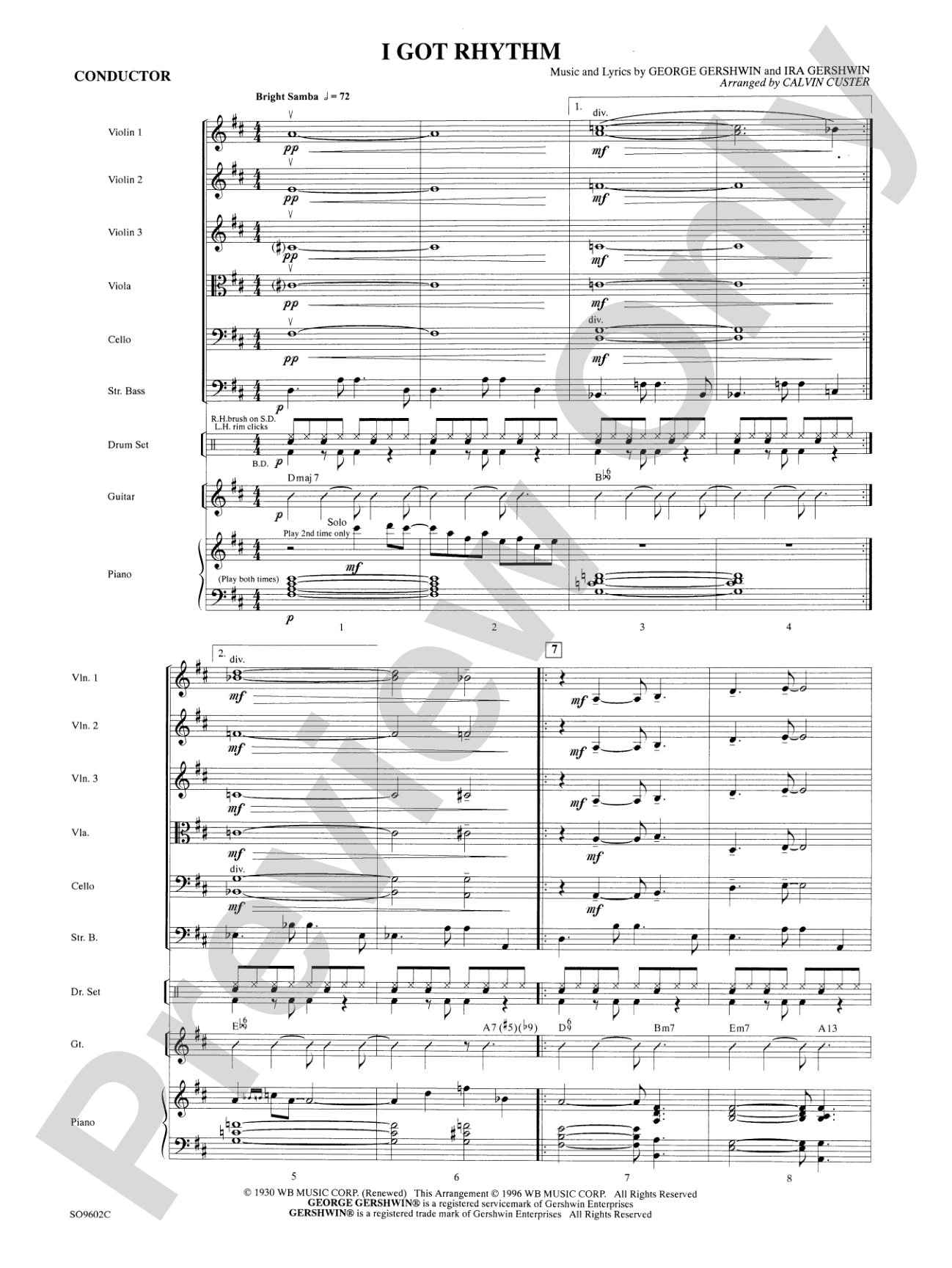
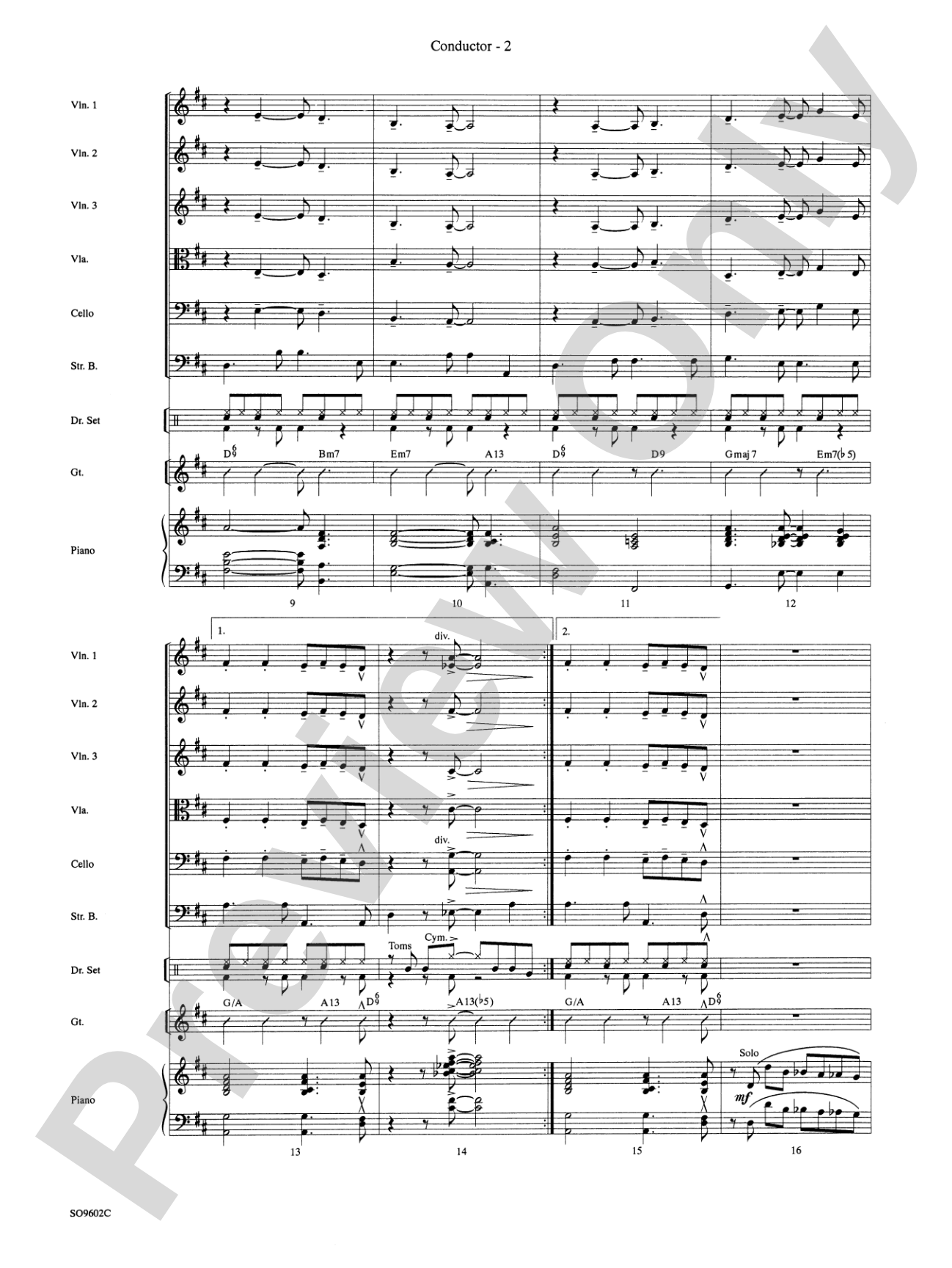
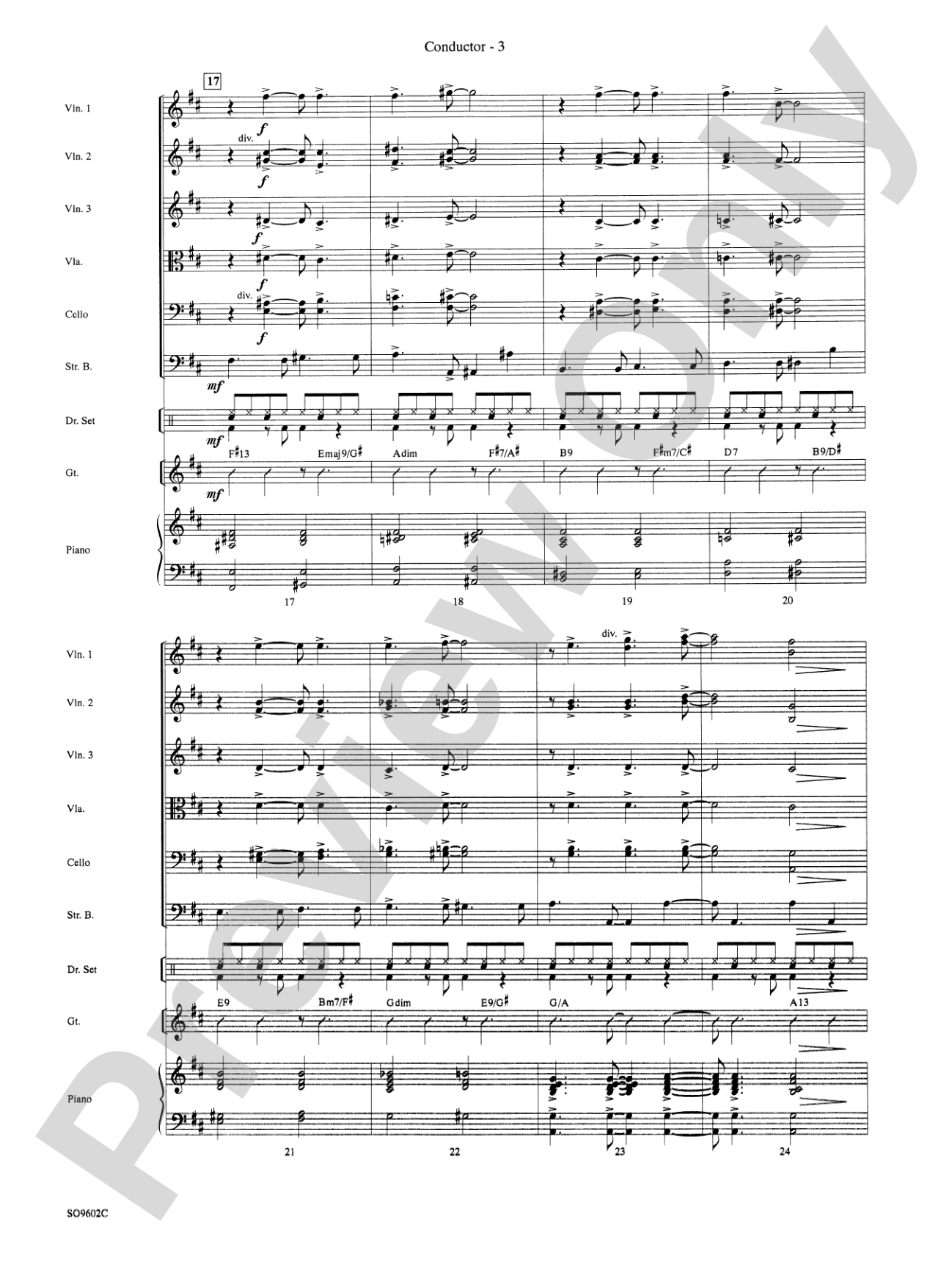
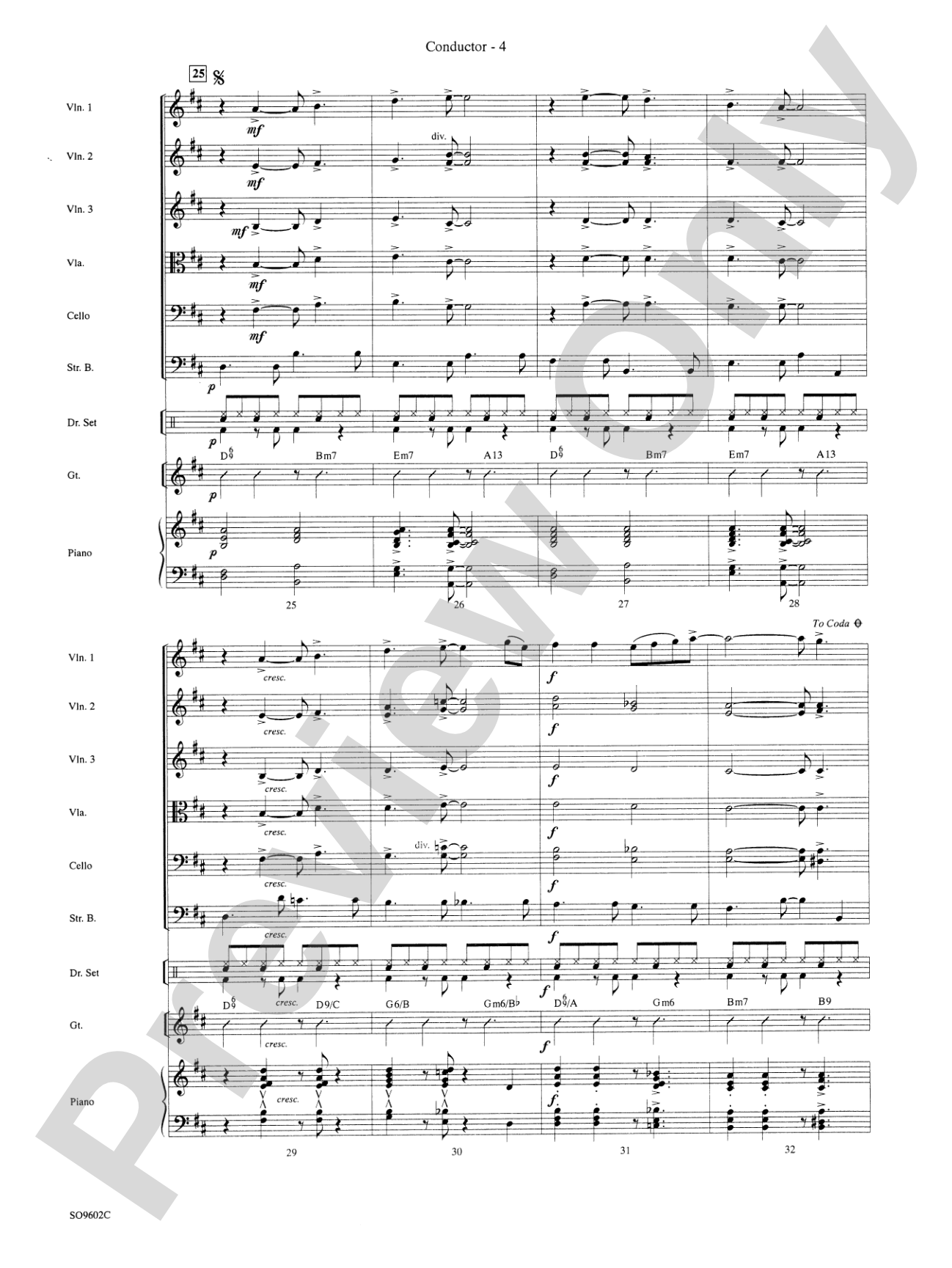
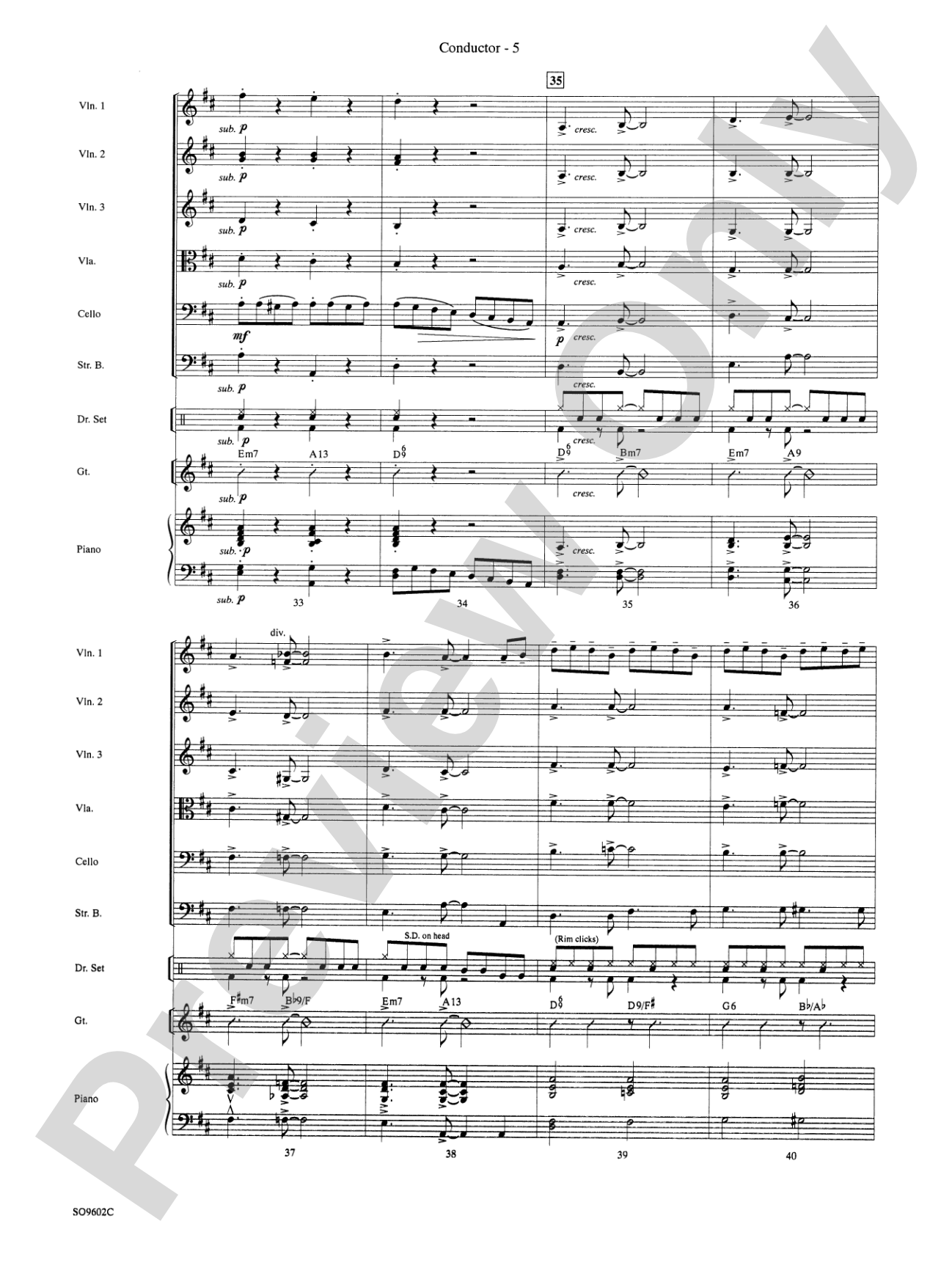
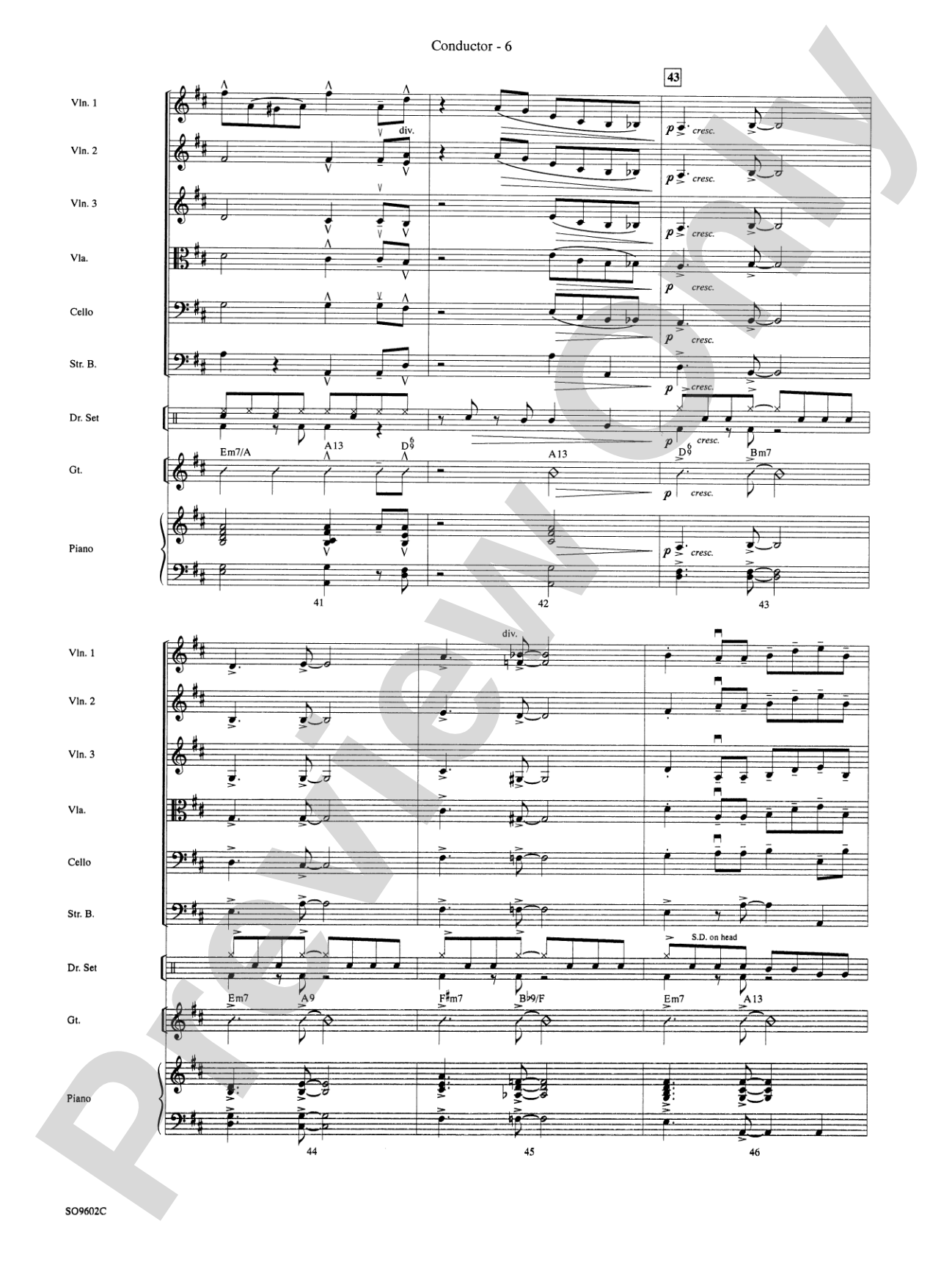
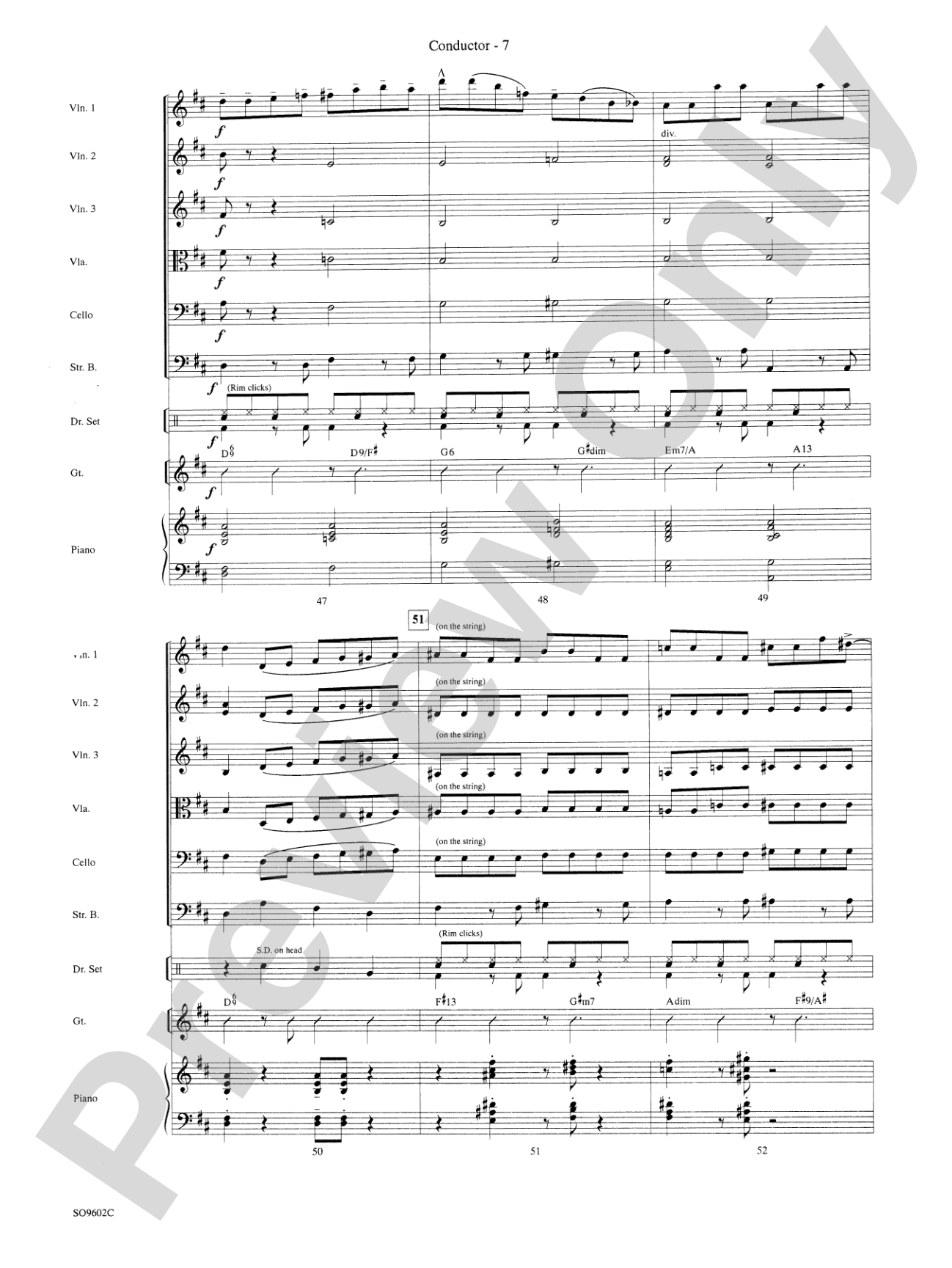
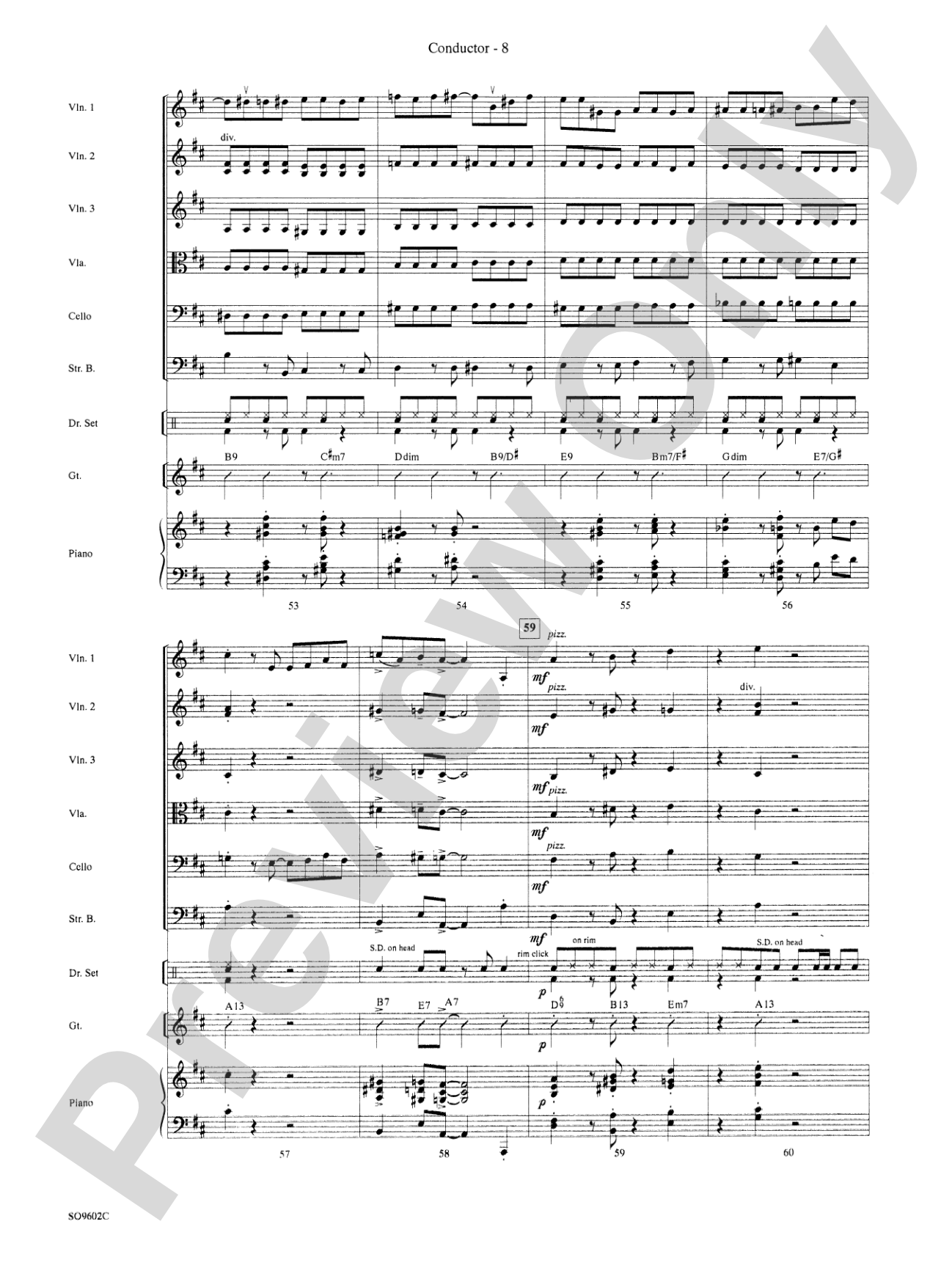
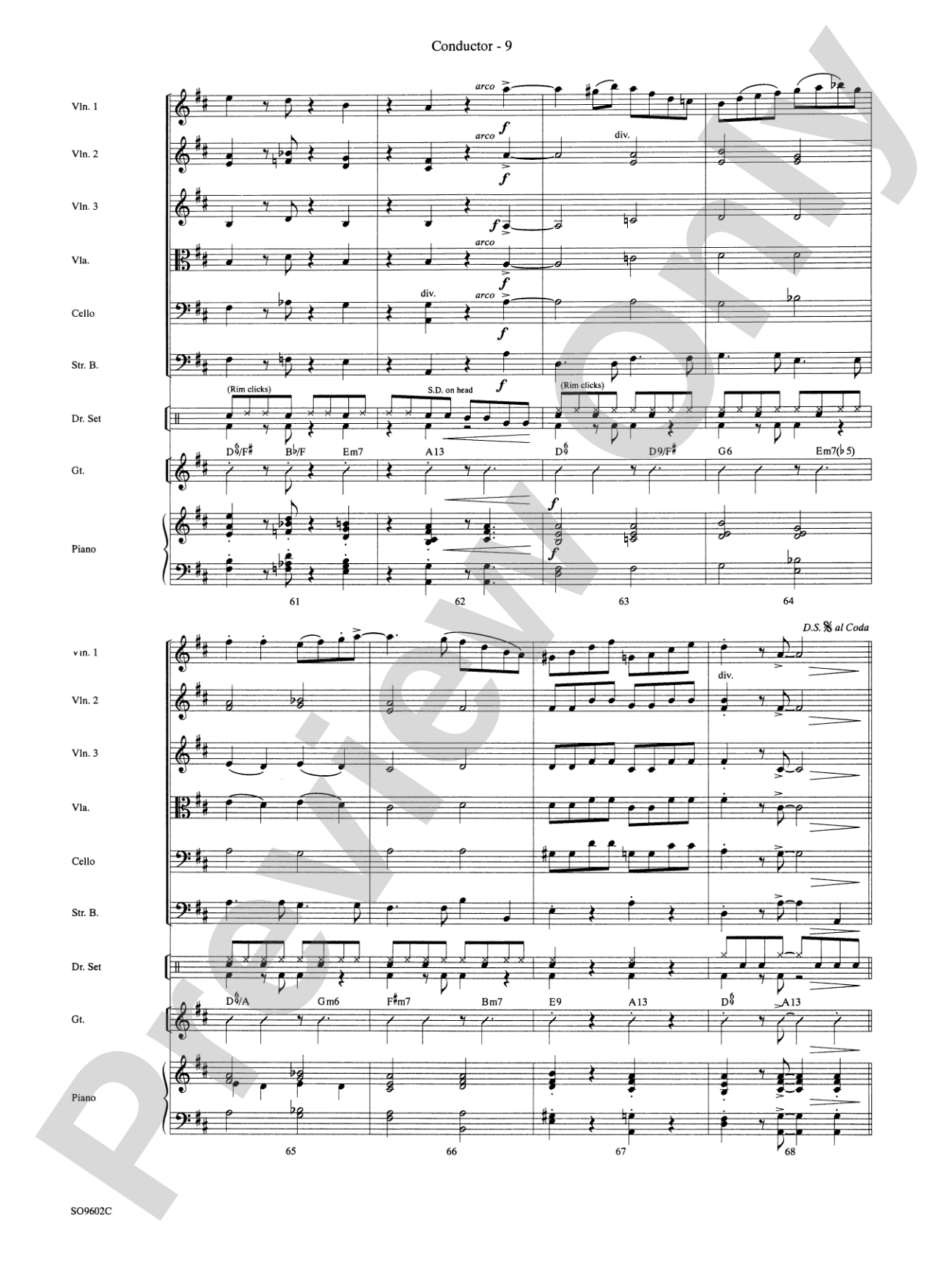
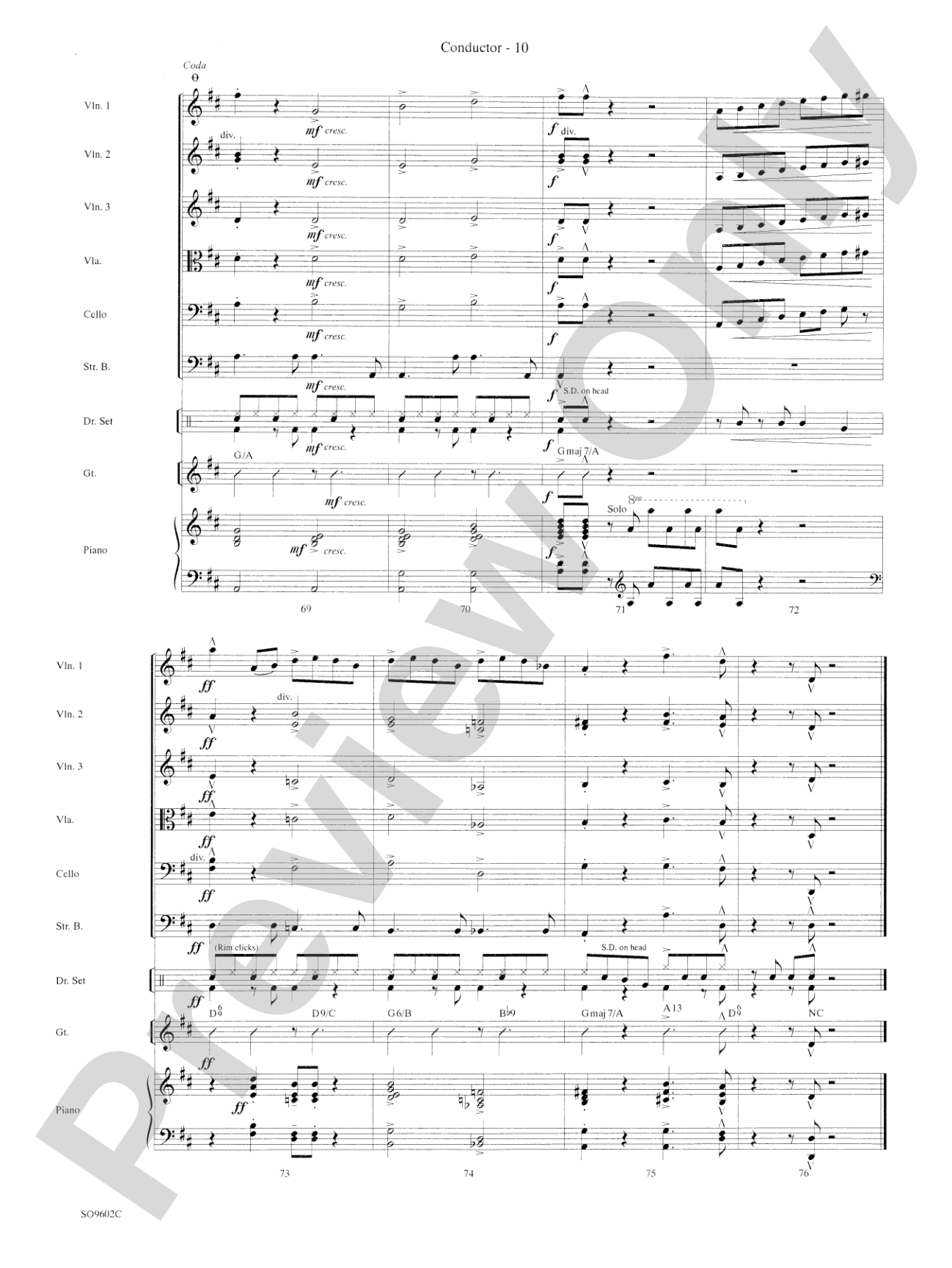


I Got Rhythm: String Orchestra Conductor Score & Parts
By George Gershwin and Ira Gershwin / arr. Calvin Custer
Grade: 3.5
Item: 00-PK-0002617

$64.00
One moment…
Description
The timeless melodies of George Gershwin and Ira Gershwin are complimented by Calvin Custer's unique, jazz-tinged harmonic structurings. The subtle inclusion of the rhythm section reinforcement allows for a softly sensitive, yet strongly entertaining performance. Lush and gracious, this scoring is oh-so-satisfying. (2:13) This title is available in MakeMusic Cloud.


Don't just read it, hear it, play along with it, and watch your students grow with it. In MakeMusic Cloud, I Got Rhythm: String Orchestra Conductor Score & Parts comes alive with professional accompaniment, adjustable tempo, and built-in practice tools that turn solo practice into real progress.
Open in the Player
Jump straight in and assign it today.
Start Your Free Trial
Open this title and explore the full library in minutes.
Sample Audio
1
Audio File
--:--
0:00
0:00
Sample Video
Additional Details
Series:
Pop Concert String Orchestra
Publisher:
Alfred Music
Page Count:
170
SKU:
00-PK-0002617
More about this title
About the Composer: George Gershwin
George Gershwin (1898-1937) bridged the worlds of concert music and popular song in ways few composers have matched. His gift for melody and harmonic sophistication made him a central figure in American musical life, and his works remain central to the repertoire because they speak to both professional musicians and general audiences with equal conviction.
Gershwin's collaboration with his brother Ira produced some of the most enduring songs of the 20th century. "I Got Rhythm" exemplifies their partnership: a melody so natural it feels inevitable, lyrics so clever they reward repeated listening, and harmonic possibilities so rich that arrangers continue to find new colors within it nearly a century later.
Why we love this
Calvin Custer's arrangement respects the song's DNA while opening new harmonic doors through jazz-inflected voicings that feel fresh without overwhelming the melody. The strategic use of rhythm section reinforcement keeps the texture light enough for Grade 3.5 orchestras to handle confidently, yet the orchestration has real sophistication that challenges growing players. This is the kind of standard that makes a concert program feel both celebratory and substantial.
What to expect
Elegant and swinging at once. The opening settles into a groove that feels almost improvisational, even though every note is written. The harmonies gently shift the color of the melody with each phrase, suggesting the jazz clubs and concert halls where Gershwin's music lived. It invites the audience in with a melody they may already know while rewarding attentive listening with the craft of the orchestration.
Who it's for
String orchestra conductors programming at the intermediate level who want a piece that combines melodic accessibility with genuine harmonic interest. This works equally well for groups seeking to build confidence with a crowd-pleasing standard or for directors who want their students to experience how a great song can be reimagined without losing its soul.
How to get the most out of it
- Shape the primary melody with warmth and directness; the harmonic sophistication around it will shine brightest when the tune sits clearly in the listener's ear.
- Balance the rhythm section reinforcement so it supports without dominating. The strings should feel like the primary voice, with accompaniment elements adding color rather than weight.
- Attend to the jazz inflections in the harmony by softening section attacks slightly on chromatic passing tones and allowing the ear to hear the harmonic movement rather than rhythmic punctuation.
- Use the 2:13 timing as a guide for tempo stability. The piece gains its infectious quality through groove, not rush.
How to use it
Position this in a concert program where you want to signal sophistication and joy together. It pairs naturally with other Great American Songbook material, opens doors to conversations about jazz harmony and orchestral arranging, or stands alone as a defining moment in a pops concert. The 2:13 duration also makes it an ideal closer for a string ensemble concert, leaving audiences with the song stuck in their heads.
Skills your students will build
- Balancing melody and accompaniment in jazz-inflected harmony
- Intonation in chromatic voice leading and passing tones
- Ensemble cohesion and groove without a conductor's beat
- Listening for harmonic color and chord function beyond root position voicings
- Interpreting stylistic indications (swing feel, touch, phrasing) across an arrangement