
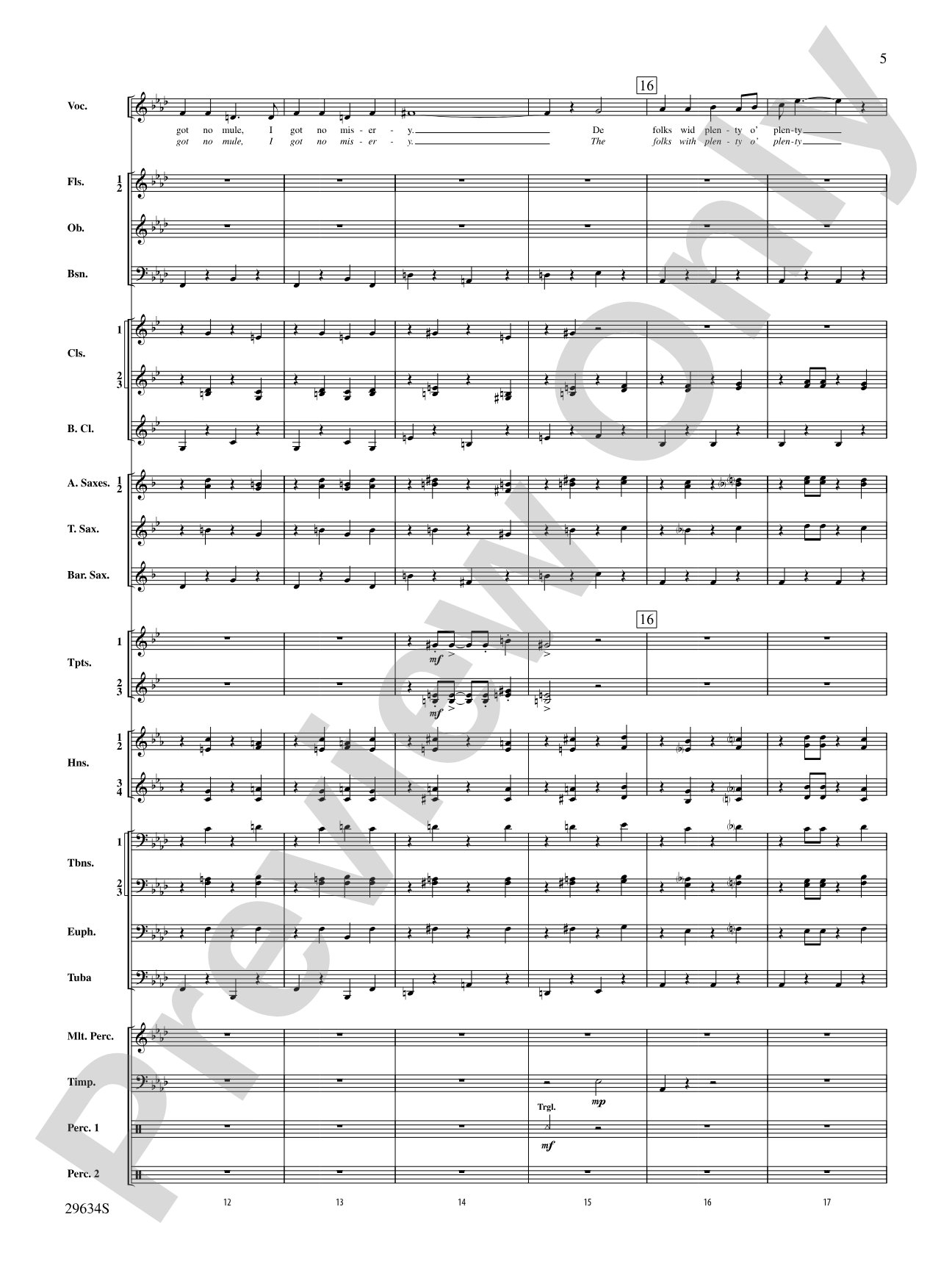
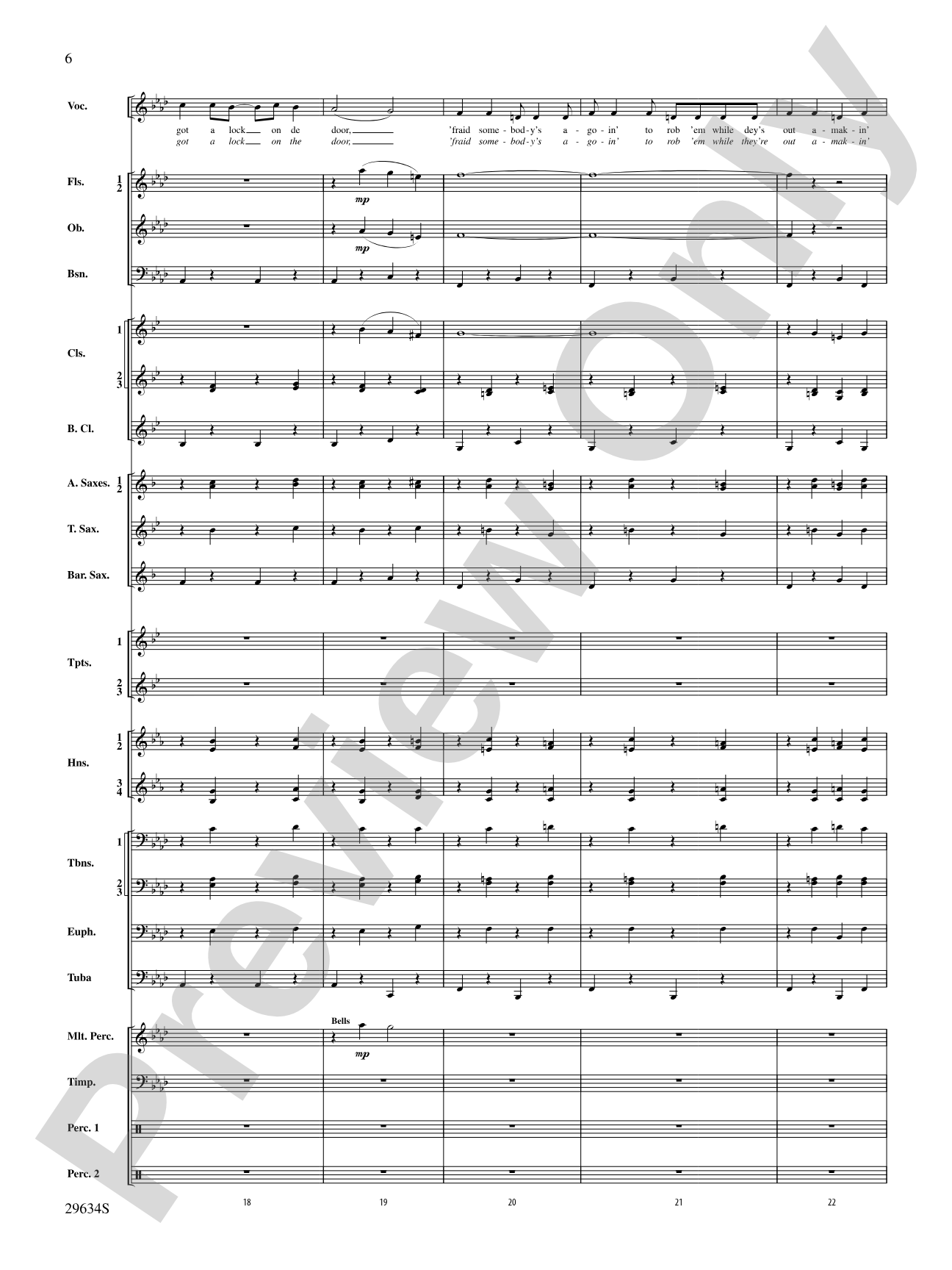
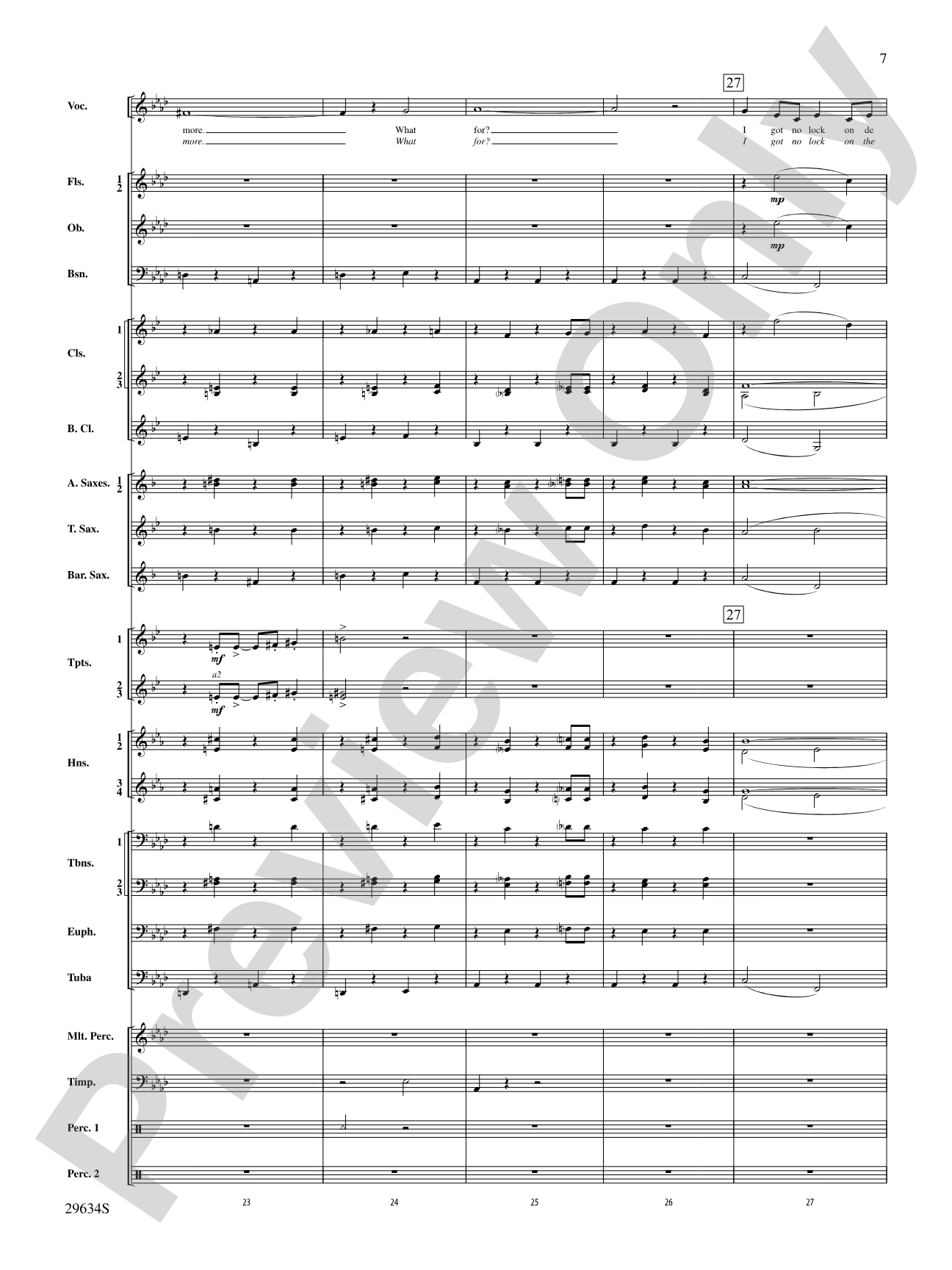
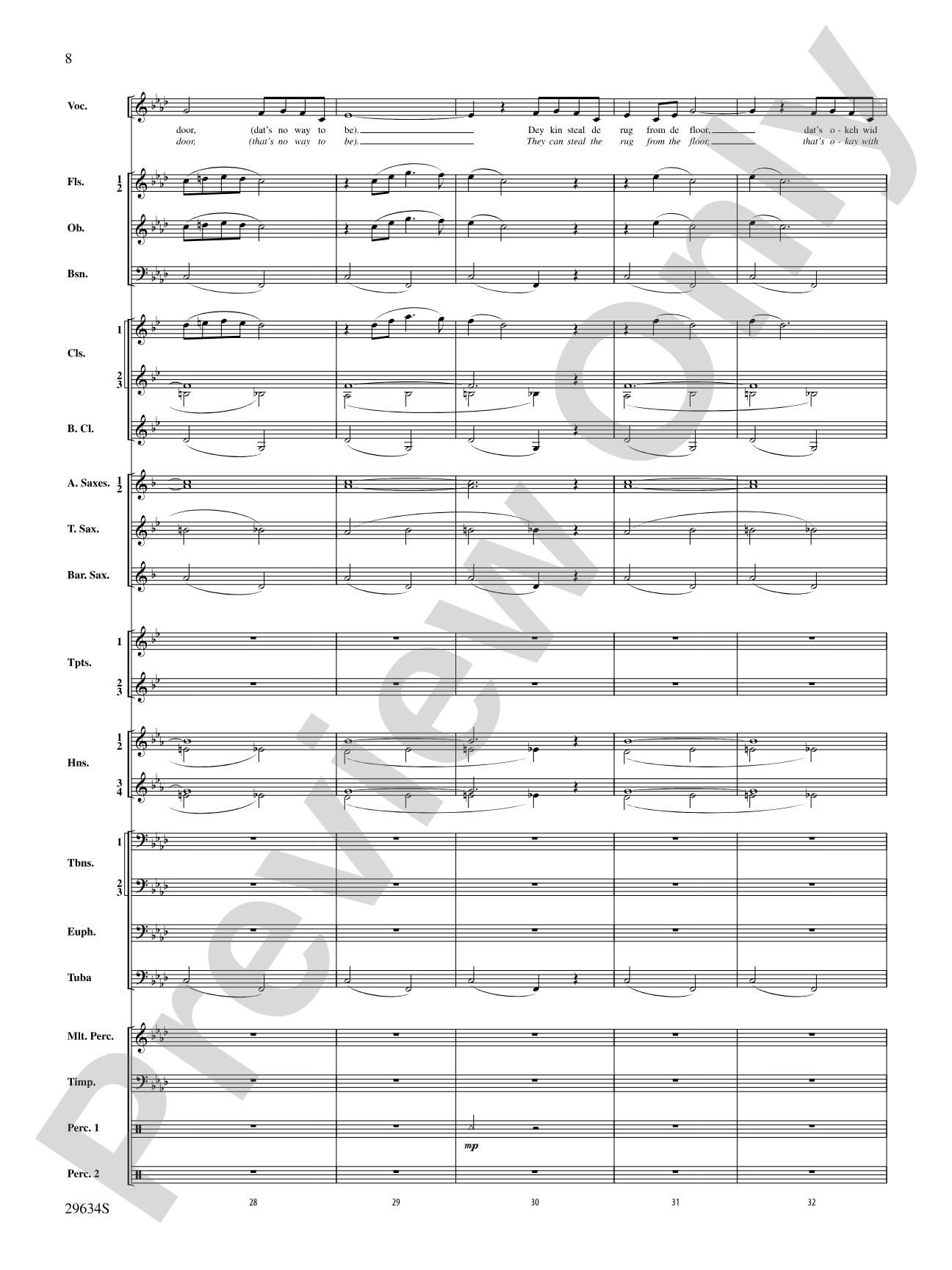
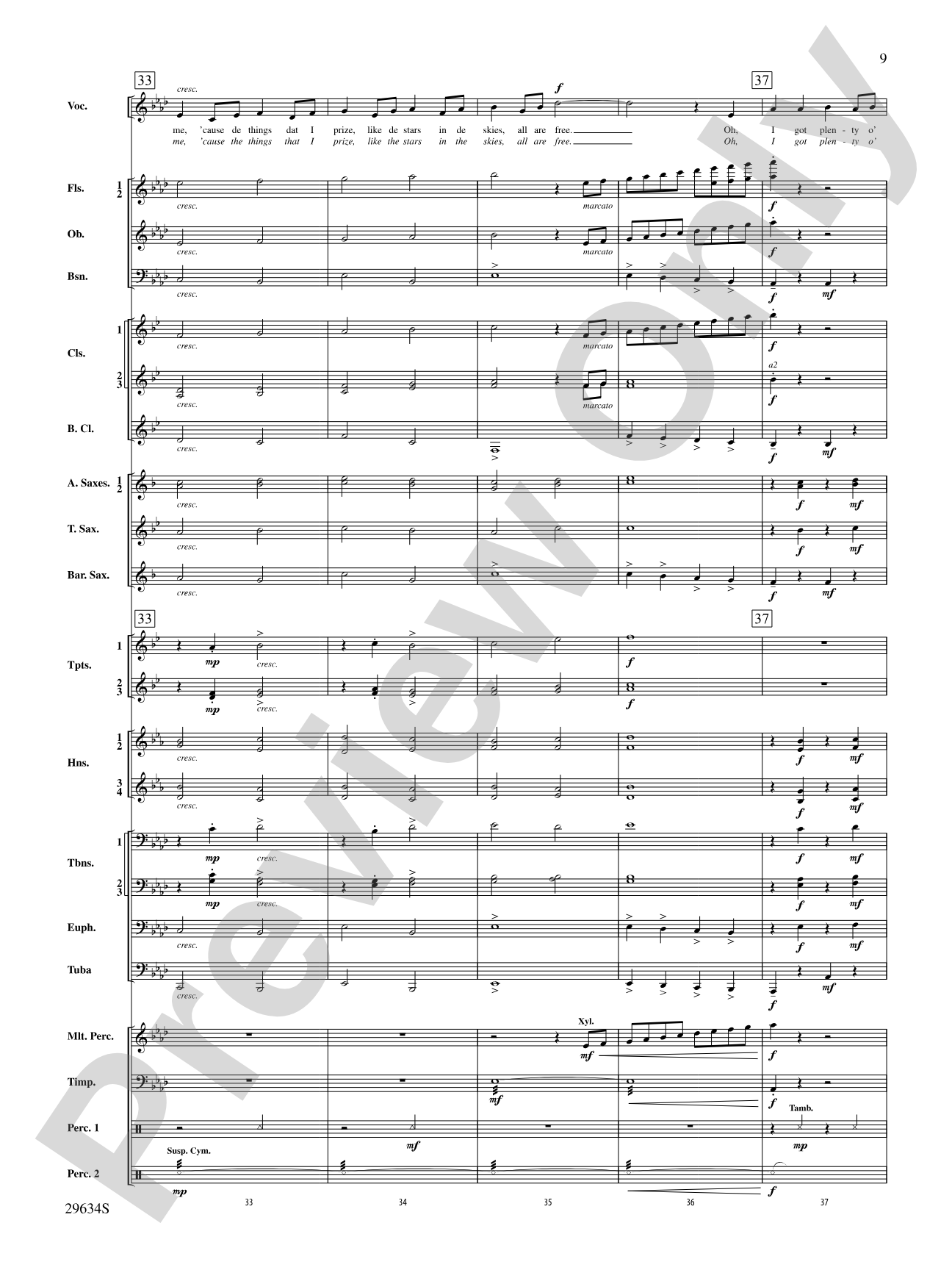
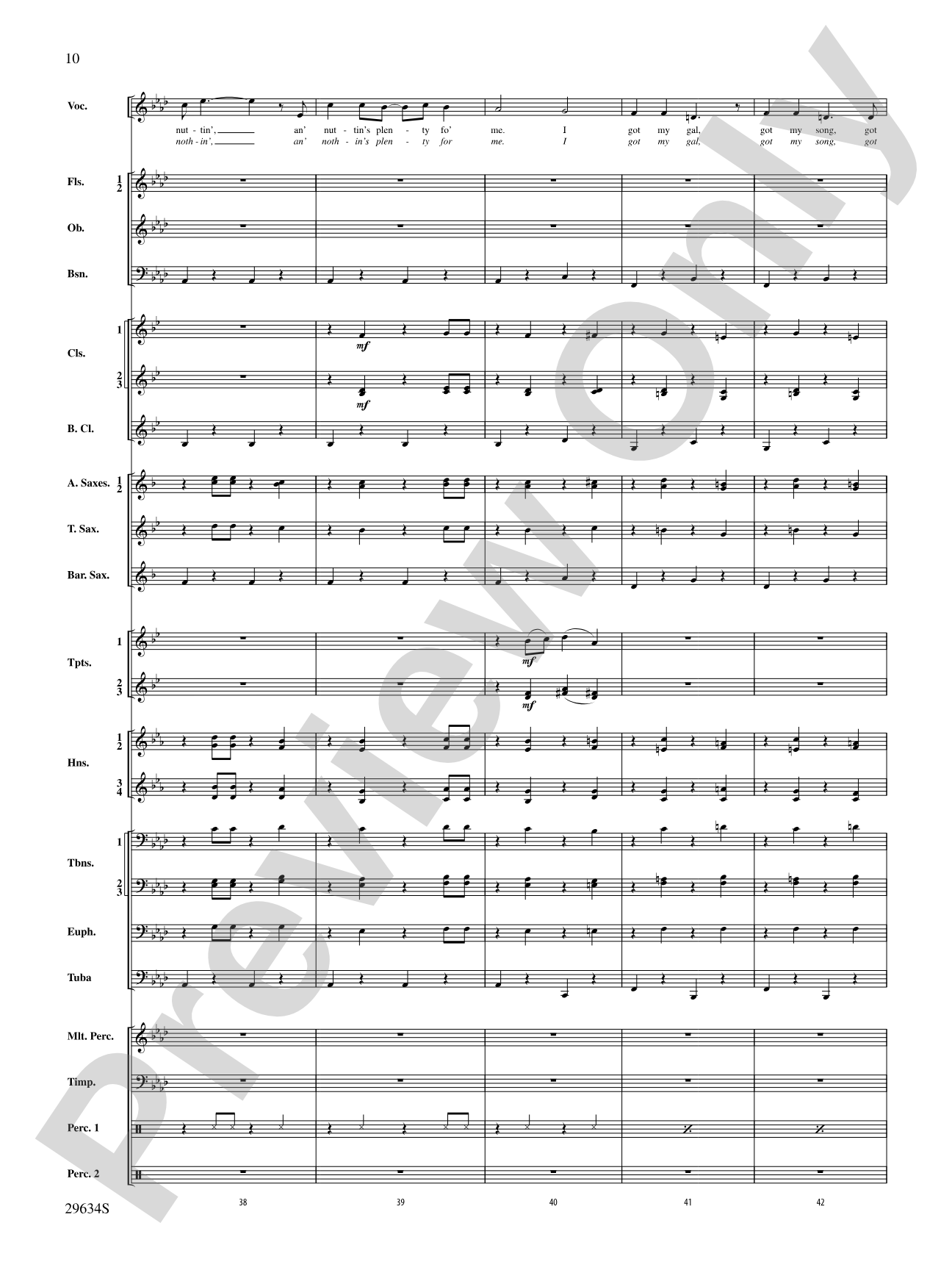
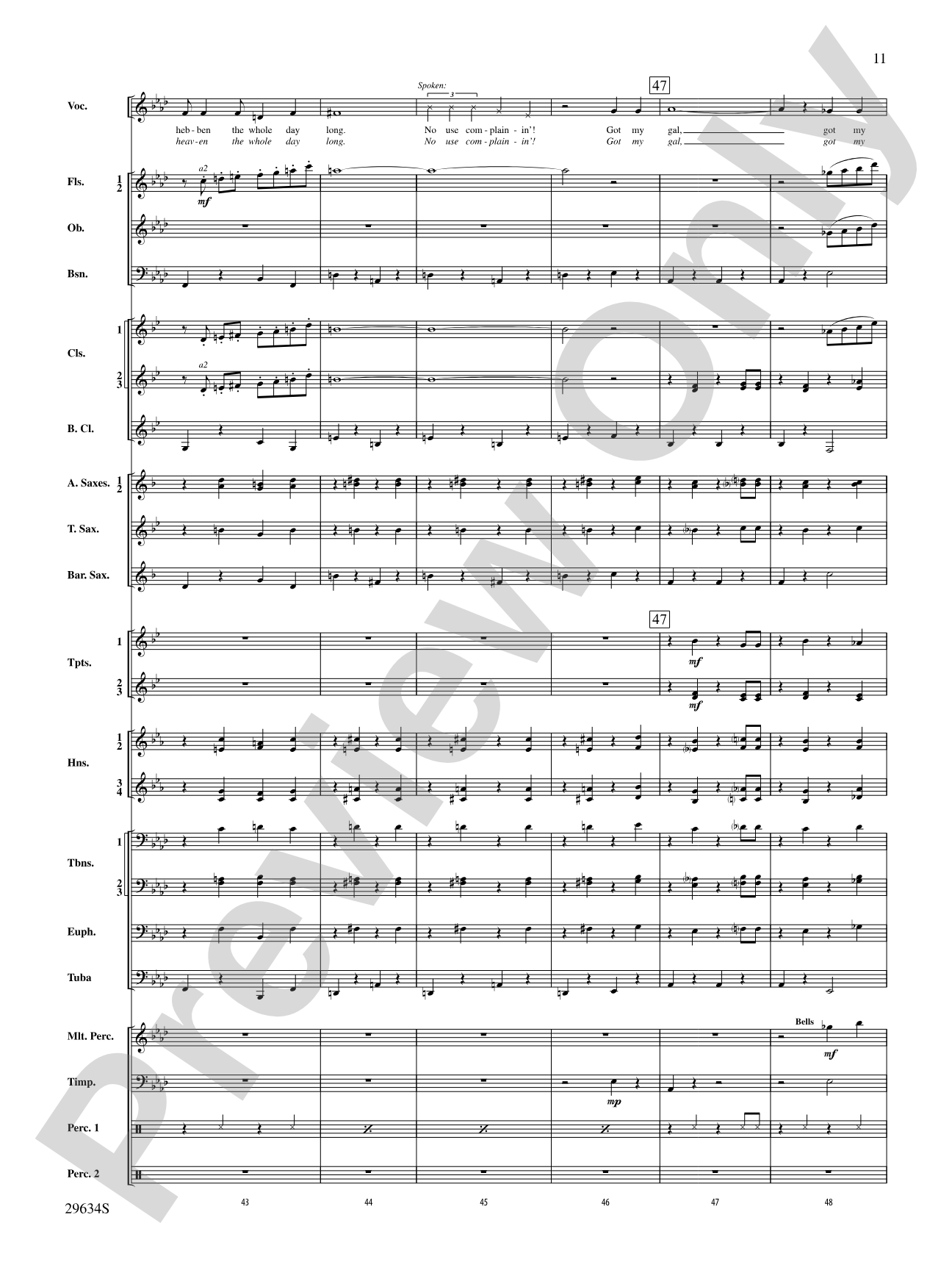
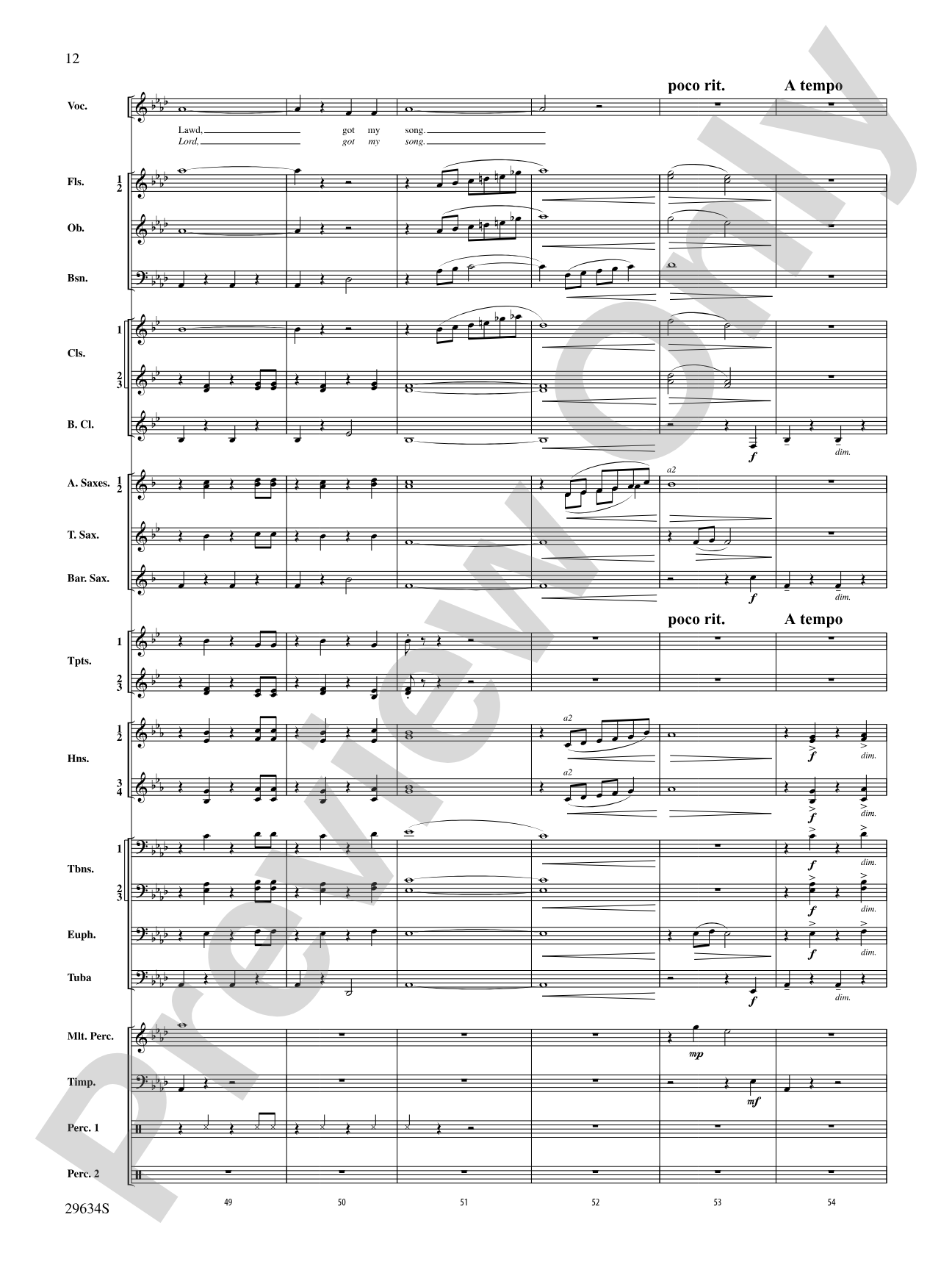
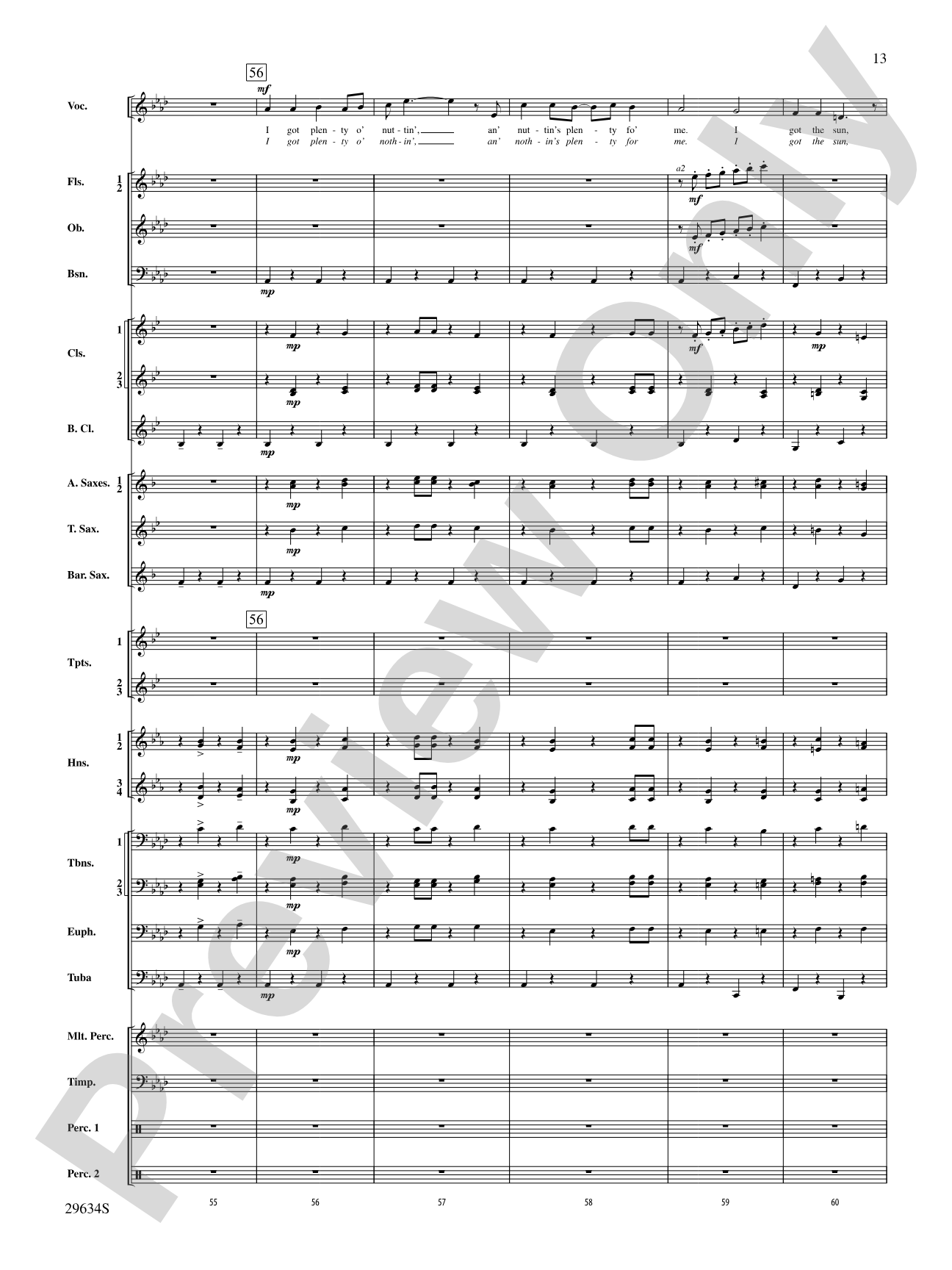
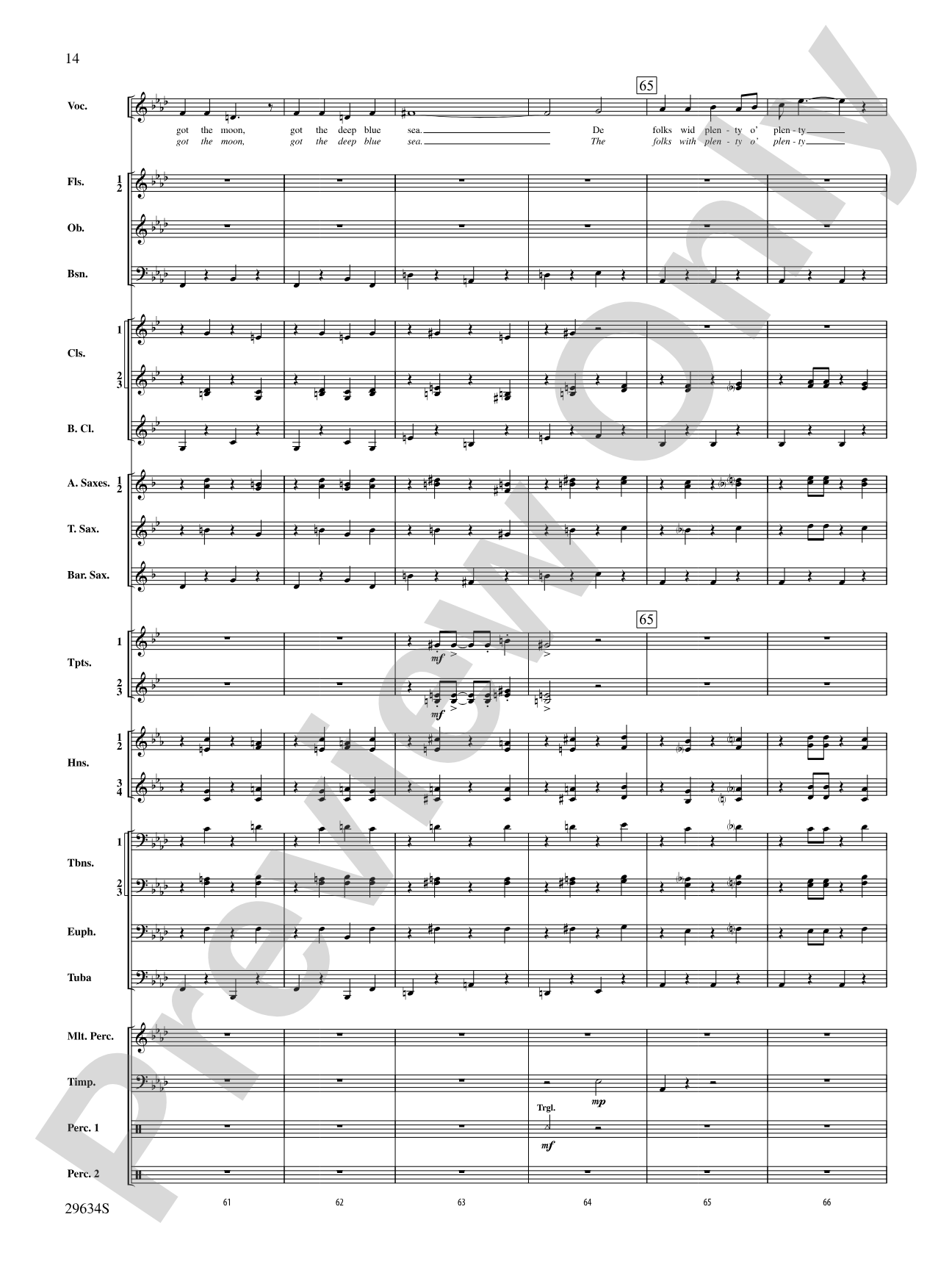
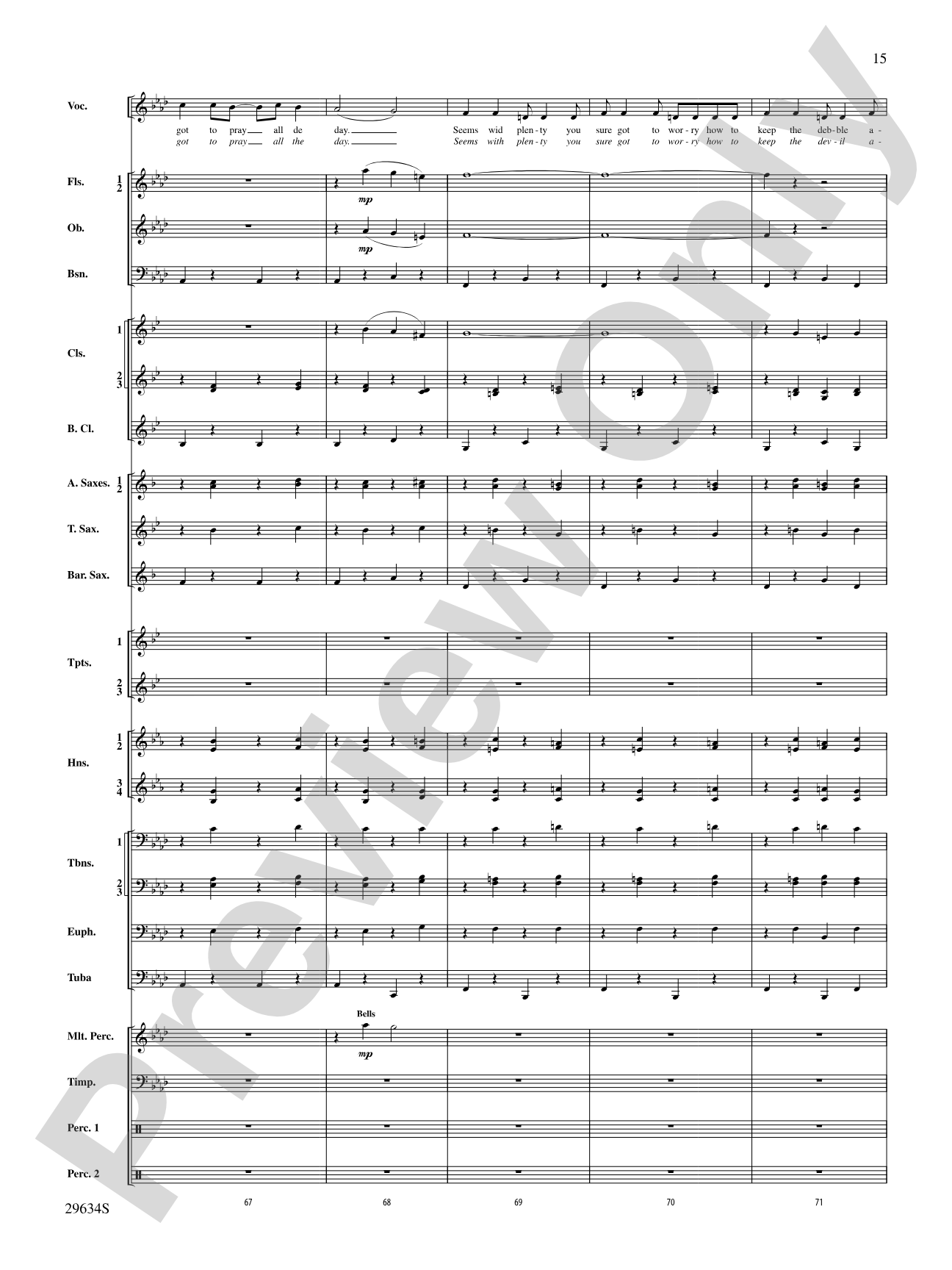
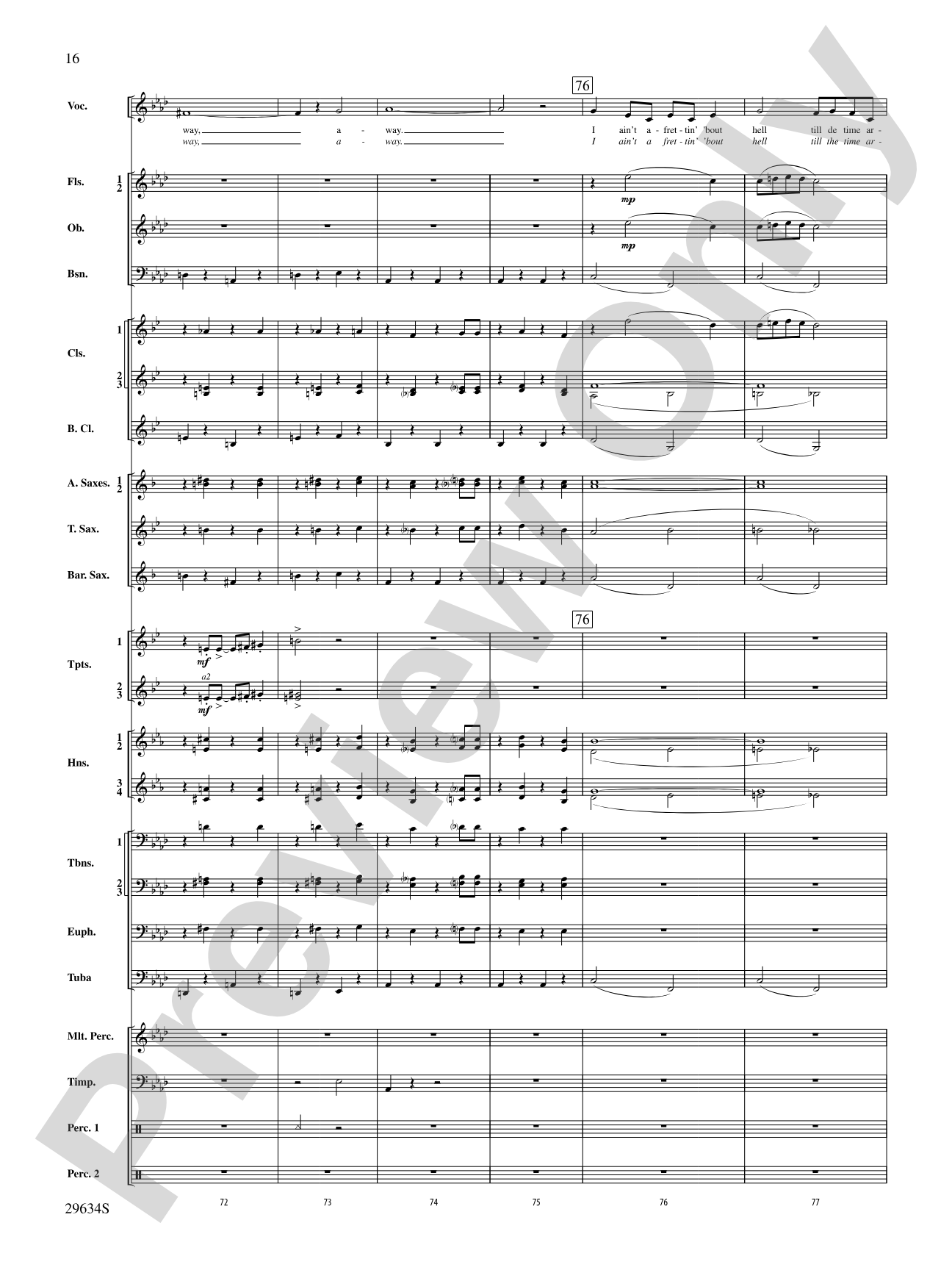
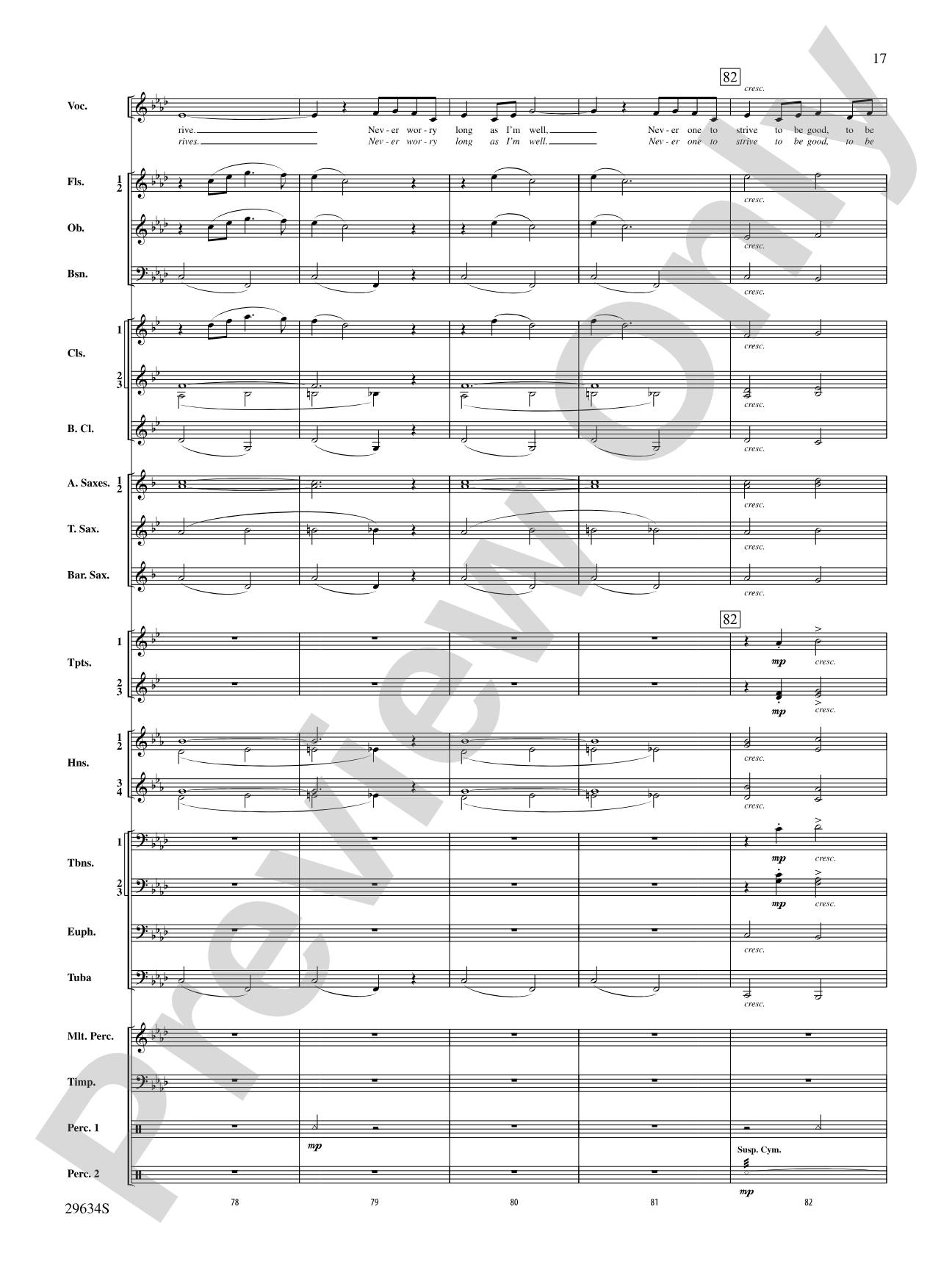
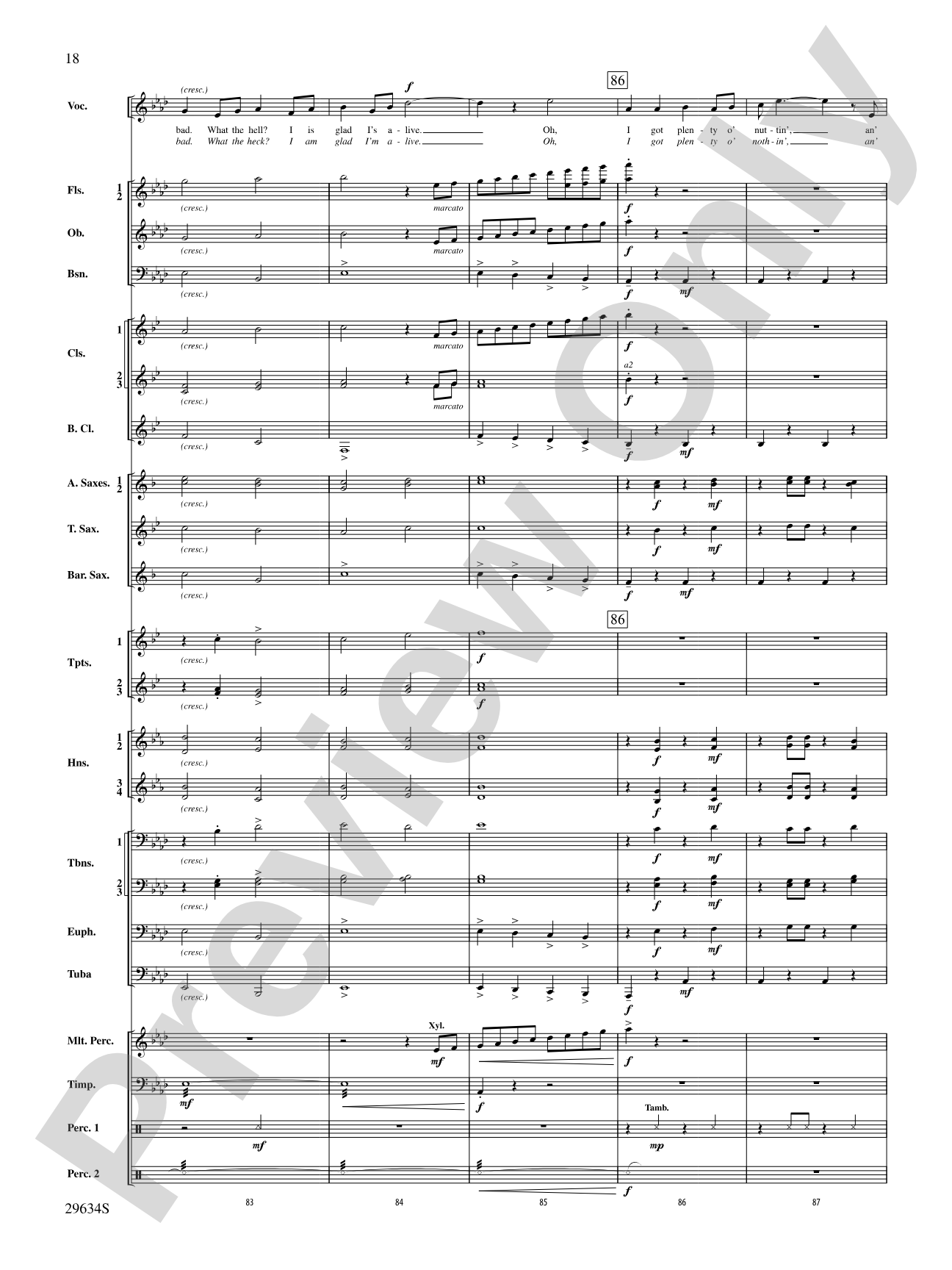
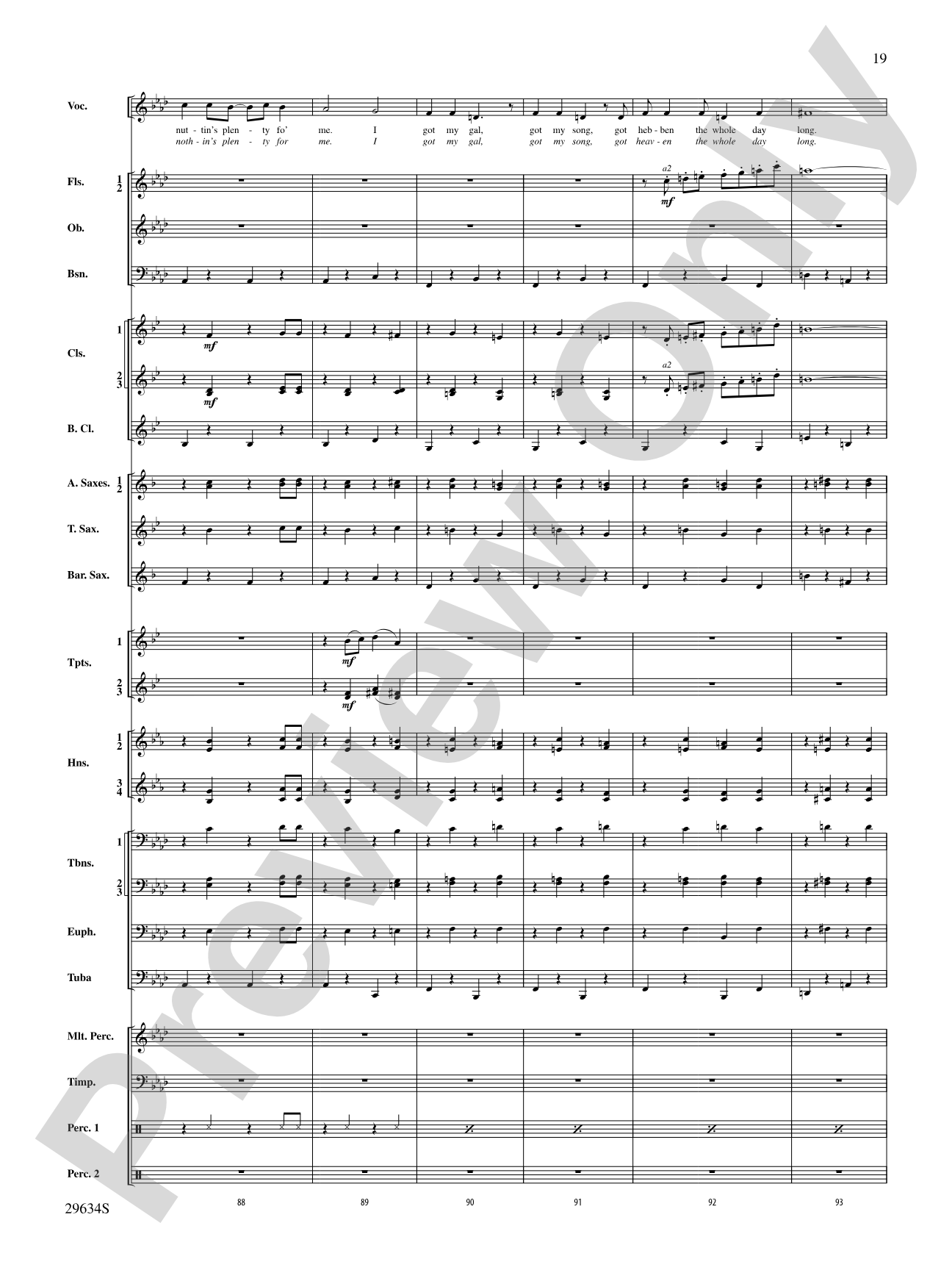
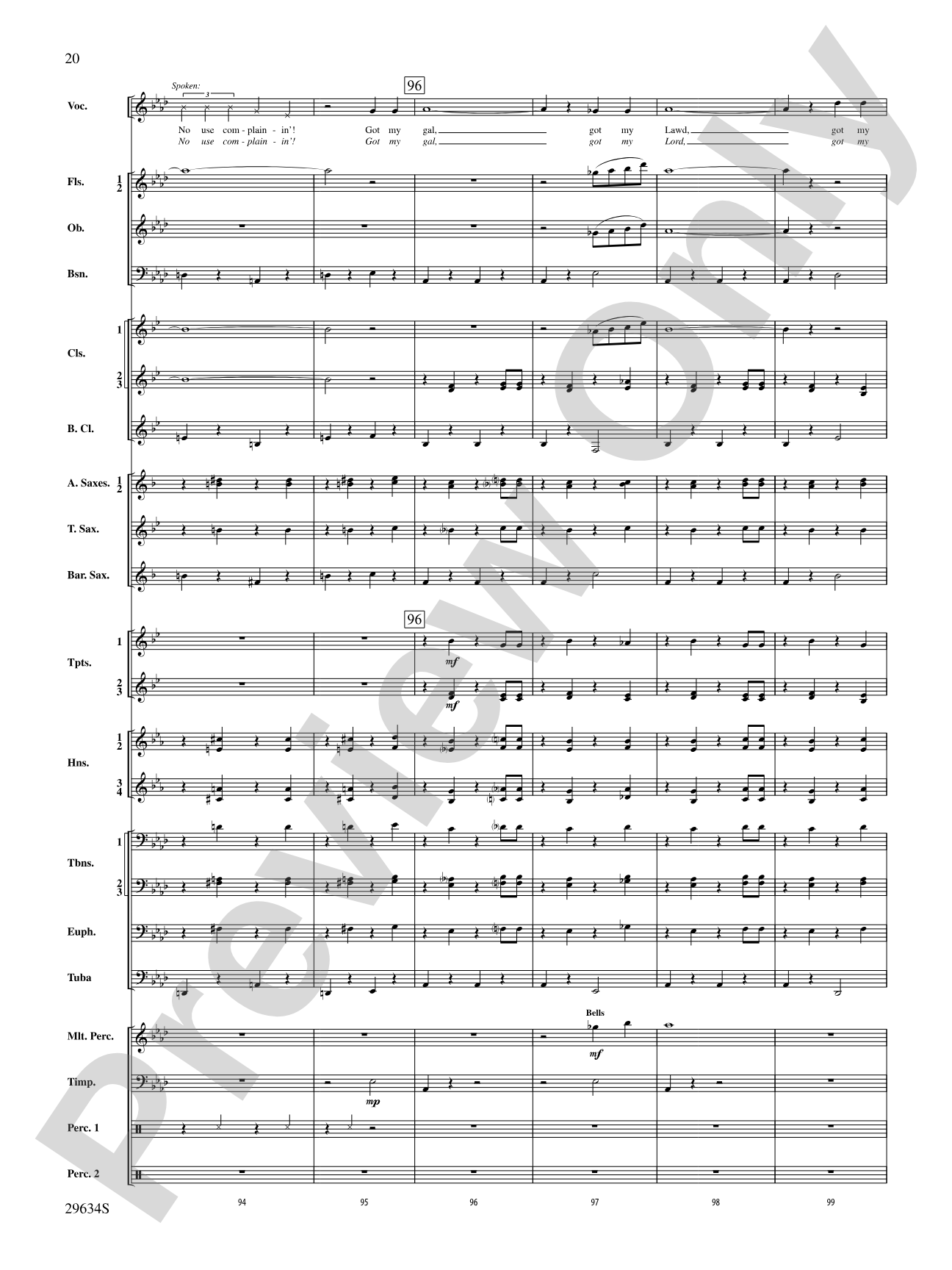
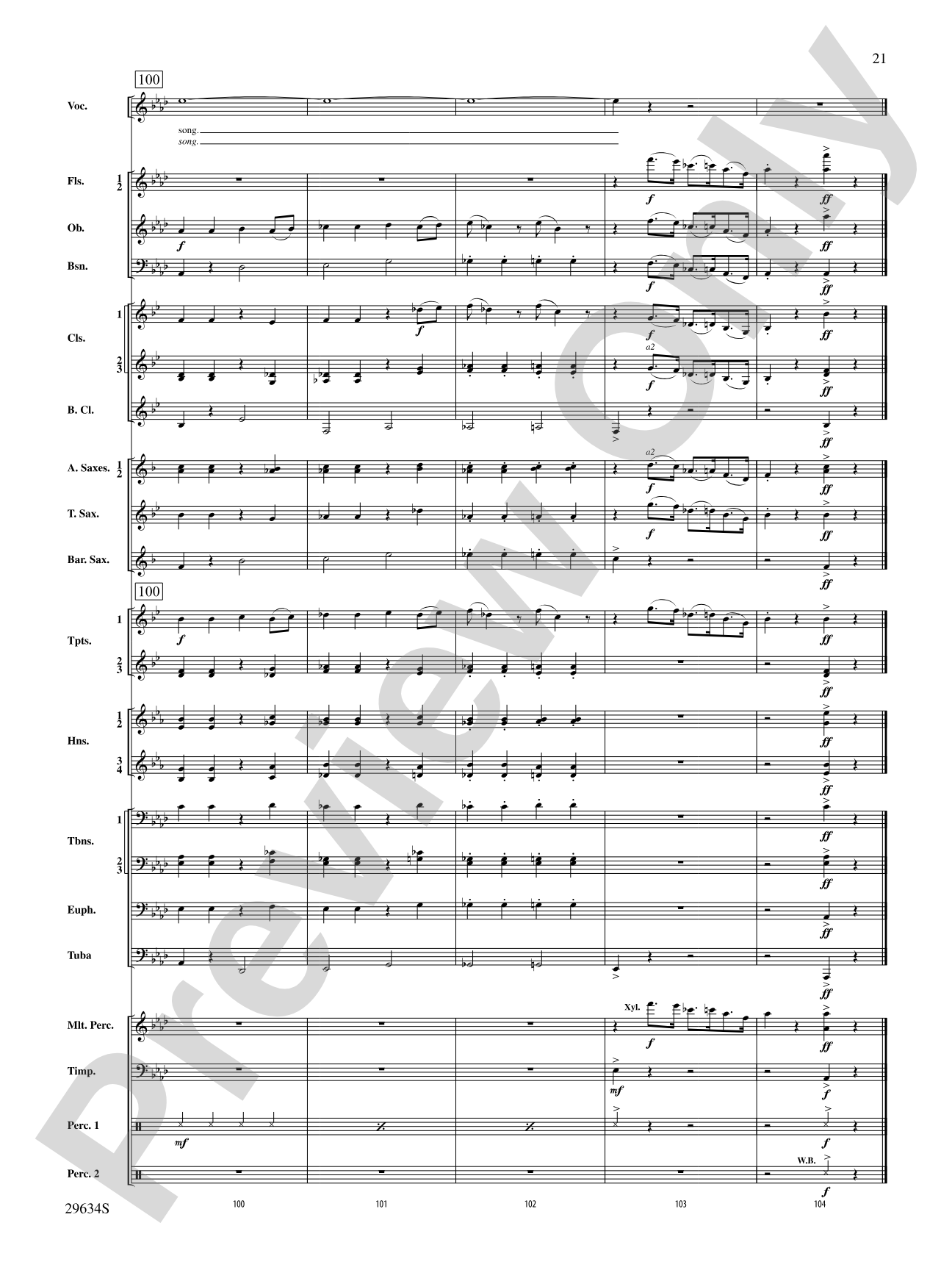




I Got Plenty o' Nuttin': Concert Band Conductor Score & Parts
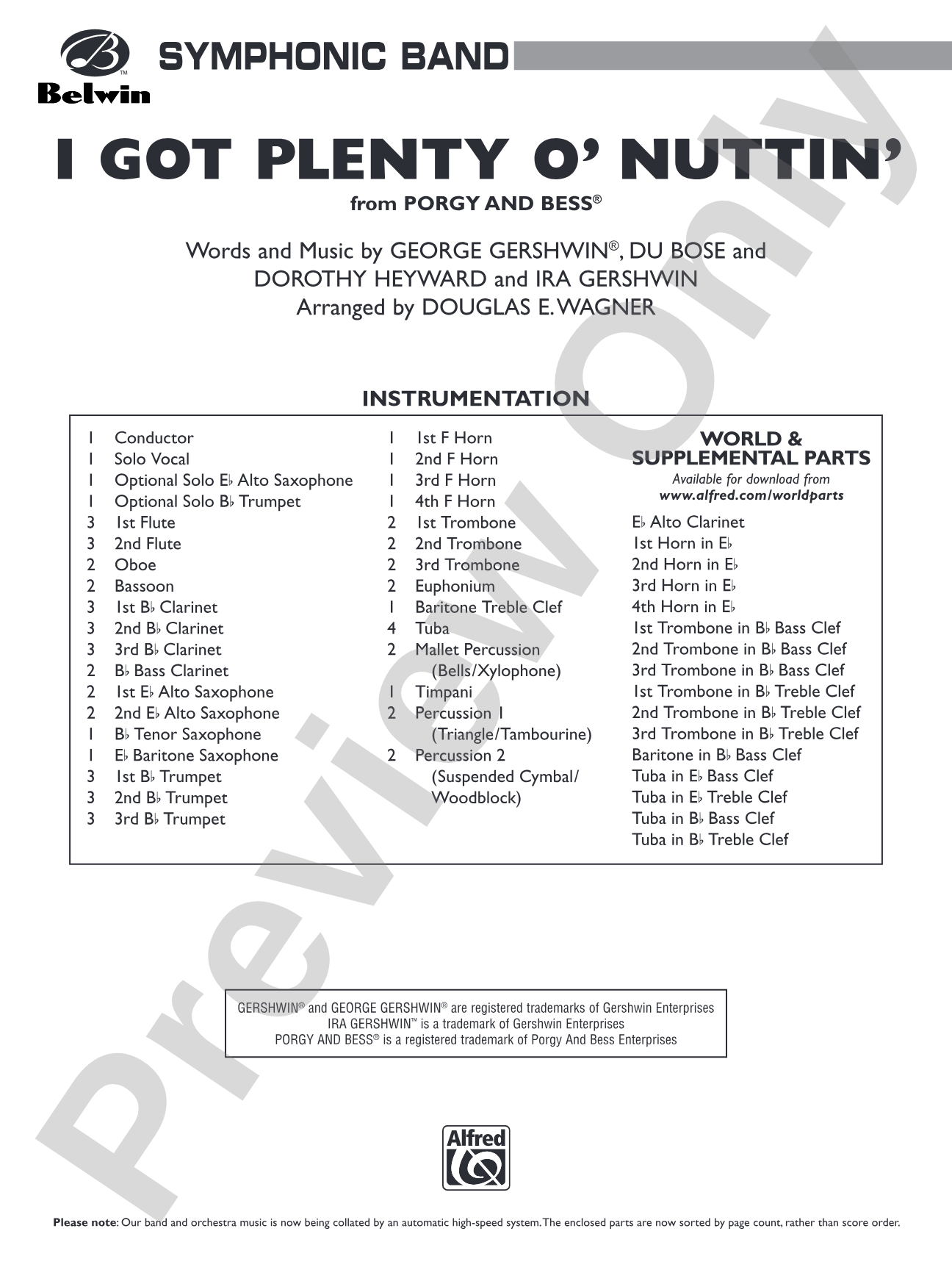
From Porgy and Bess (Vocal, Trumpet or Alto Saxophone Solo)
By George Gershwin / arr. Douglas E. Wagner
Grade: 4 (Medium)
Item: 00-PK-0001521

$87.00
One moment…
Description
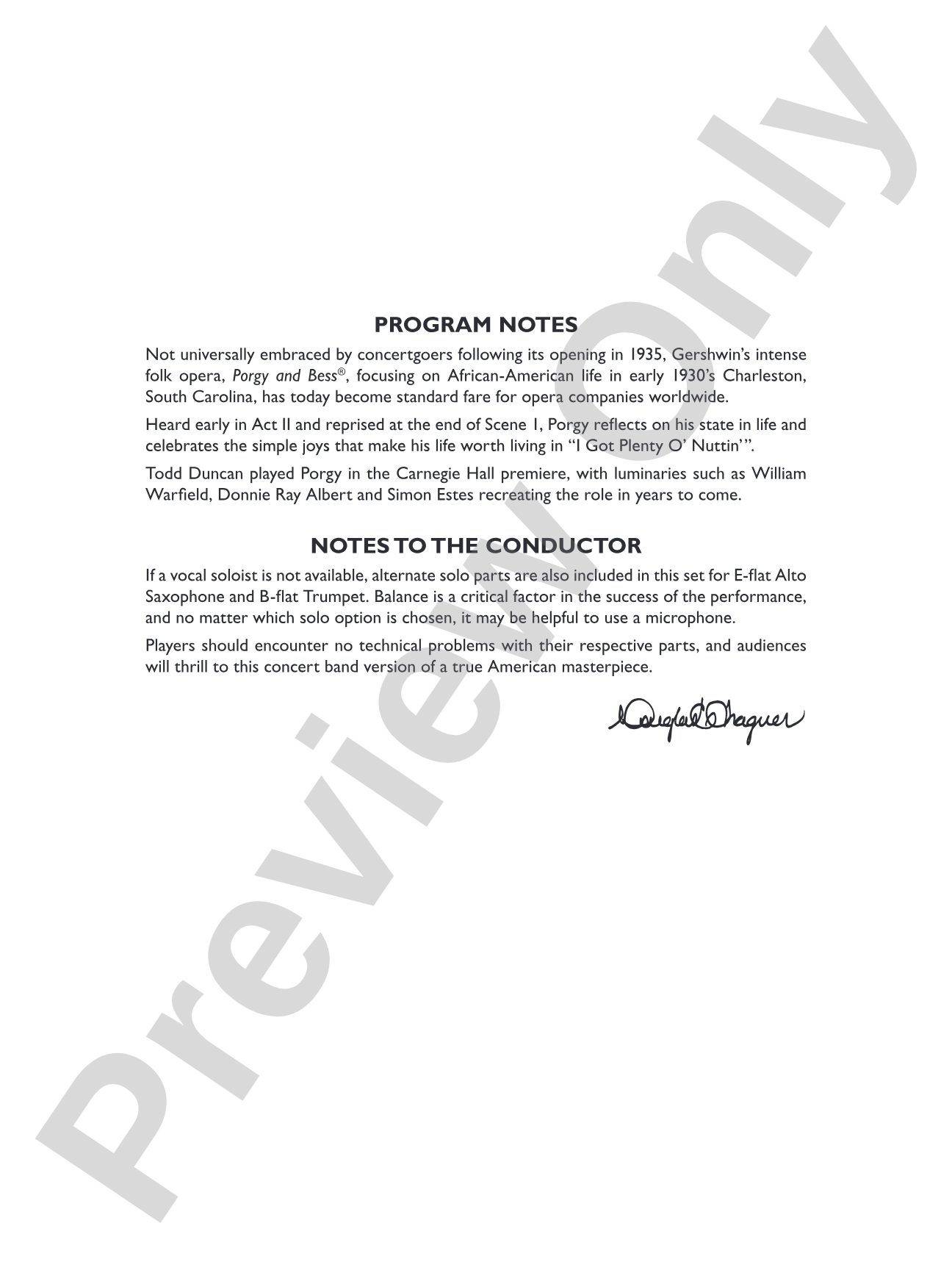
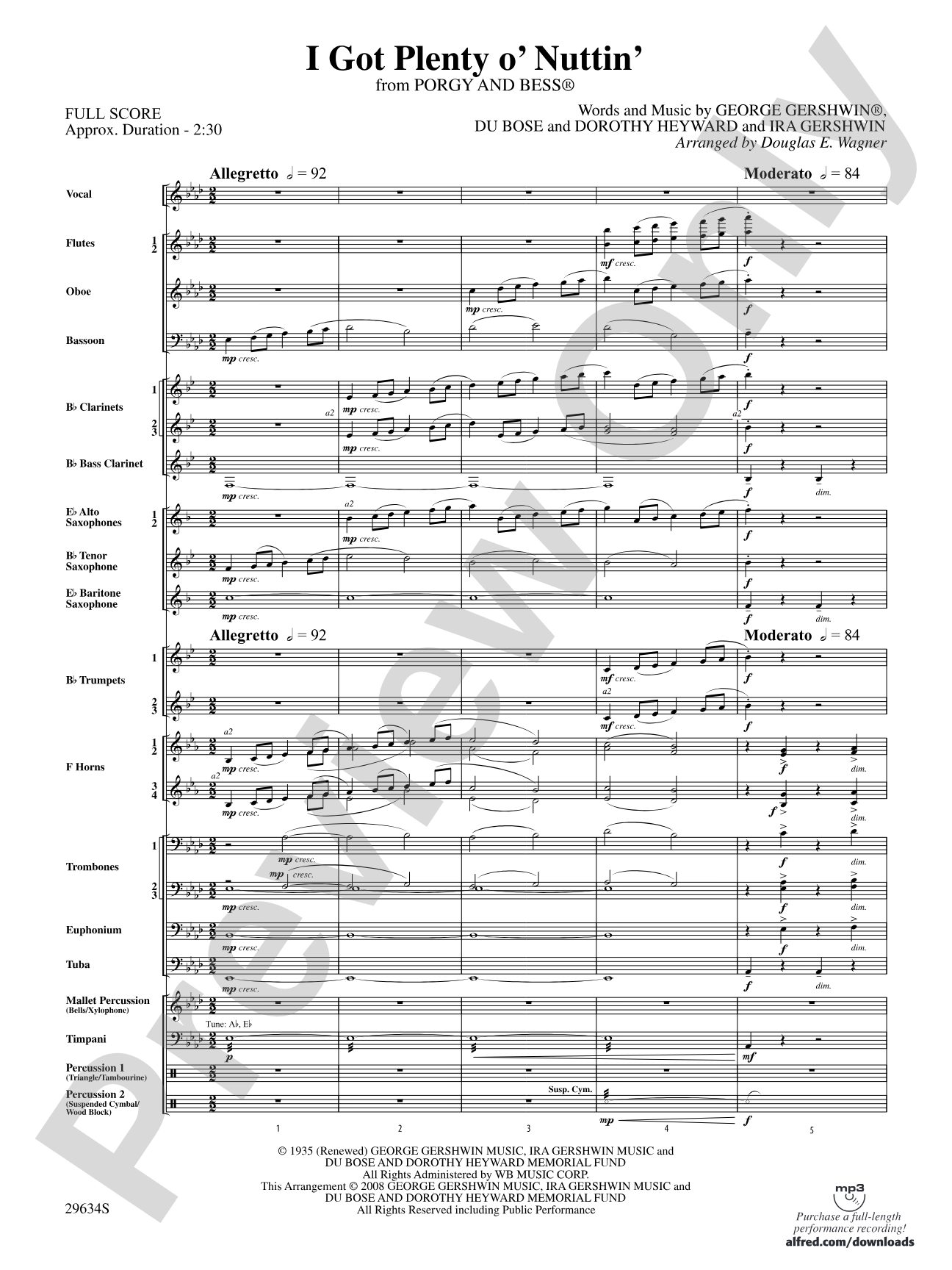
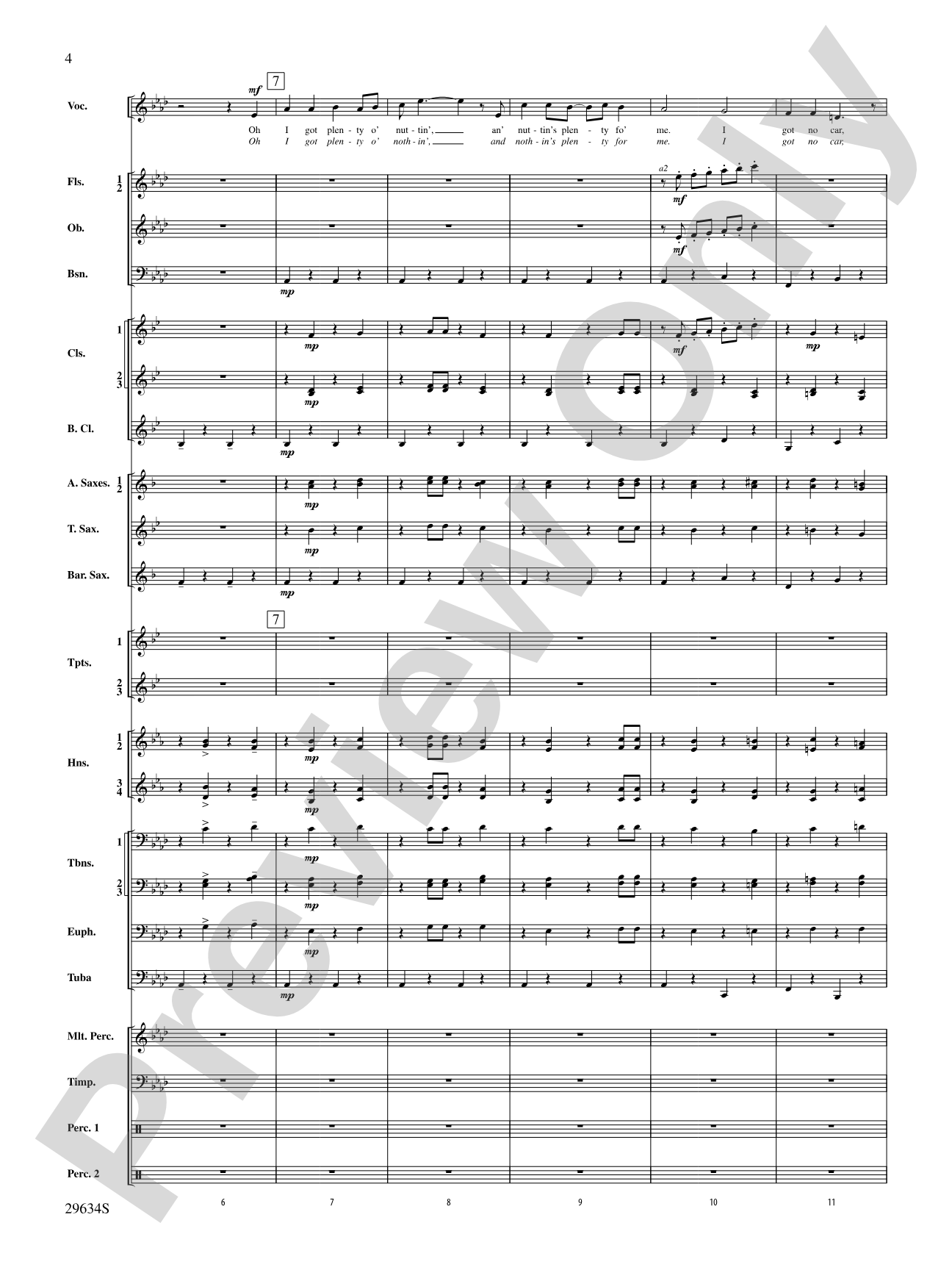
This cherished Gershwin melody from Porgy and Bess is a certain audience and band pleaser. The accompaniment is playable by less-experienced ensembles, and what a wonderful way to feature a male or female vocalist. Optional parts for solo trumpet or solo alto saxophone are also included, so you can be creative with featuring a variety of soloists. Musical through-and-through! (2:46)


Don't just read it, hear it, play along with it, and watch your students grow with it. In MakeMusic Cloud, I Got Plenty o' Nuttin': Concert Band Conductor Score & Parts comes alive with professional accompaniment, adjustable tempo, and built-in practice tools that turn solo practice into real progress.
Open in the Player
Jump straight in and assign it today.
Start Your Free Trial
Open this title and explore the full library in minutes.
Sample Audio
1
Audio File
--:--
0:00
0:00
Sample Video
Additional Details
Series:
Pop Symphonic Band
Publisher:
Alfred Music
Page Count:
204
SKU:
00-PK-0001521
More about this title
About the Composer: George Gershwin
George Gershwin (1898-1937) composed some of the most enduring melodies in American music, bridging classical concert music with popular song and jazz idioms. His opera Porgy and Bess remains a cornerstone of the American musical theater repertoire, and its songs have become standards performed across every musical genre and setting, from concert halls to brass bands.
Why we love this
Wagner's arrangement captures the warmth and accessibility of this Gershwin standard while keeping the band writing lean enough for Grade 4 ensembles to execute cleanly. The inclusion of optional solo trumpet and alto saxophone parts, plus a vocal feature option, gives you multiple ways to spotlight soloists without overcomplicating rehearsal logistics. Audiences recognize this melody instantly, and a well-paced performance lands every time.
What to expect
Warm, nostalgic, and deeply human. The arrangement lets Gershwin's melody breathe with the gentle swing and blues inflection that make this song timeless. There's a quality of contentment and acceptance in the music, paired with understated sophistication that feels both approachable and artistic.
Who it's for
Concert bands at the Grade 4 level seeking repertoire that feels sophisticated without demanding advanced technical facility. Directors who want to feature a vocalist or solo instrumentalist within a context that supports rather than overwhelms them. Ensembles programming a Great American Songbook concert or seeking music with immediate audience appeal.
How to get the most out of it
- Balance the vocal feature generously in the mix; the band's role is to support, not compete with the soloist's storytelling.
- Shape phrases with gentle rubato that honors the song's lyrical quality, resisting the urge to drive the tempo forward during emotional peaks.
- Choose your solo trumpet or alto saxophone feature based on which player reads most securely and has the warmth to match the song's character; either instrument works beautifully if well-prepared.
- Tune the band carefully before rehearsal and spot-check voicing balance during the first read-through, since the arrangement's transparency will expose any intonation drift.
How to use it
Feature this as a concert centerpiece where a vocalist or solo instrumentalist can shine under the band's supportive accompaniment. It pairs naturally with other American songbook standards or jazz-influenced concert band music. The 2:46 runtime makes it ideal for a full program without monopolizing rehearsal time.
Skills your students will build
- Accompanying soloists with transparent, rhythmically stable ensemble writing
- Balancing dynamics across parts to support rather than overshadow a featured voice or instrument
- Interpreting swing and jazz-inflected phrasing in a concert band idiom
- Reading optional parts and understanding how flexible instrumentation serves ensemble flexibility