I Got It Bad and That Ain't Good: Piano Digital Sheet Music

I Got It Bad and That Ain't Good: Piano Digital Sheet Music

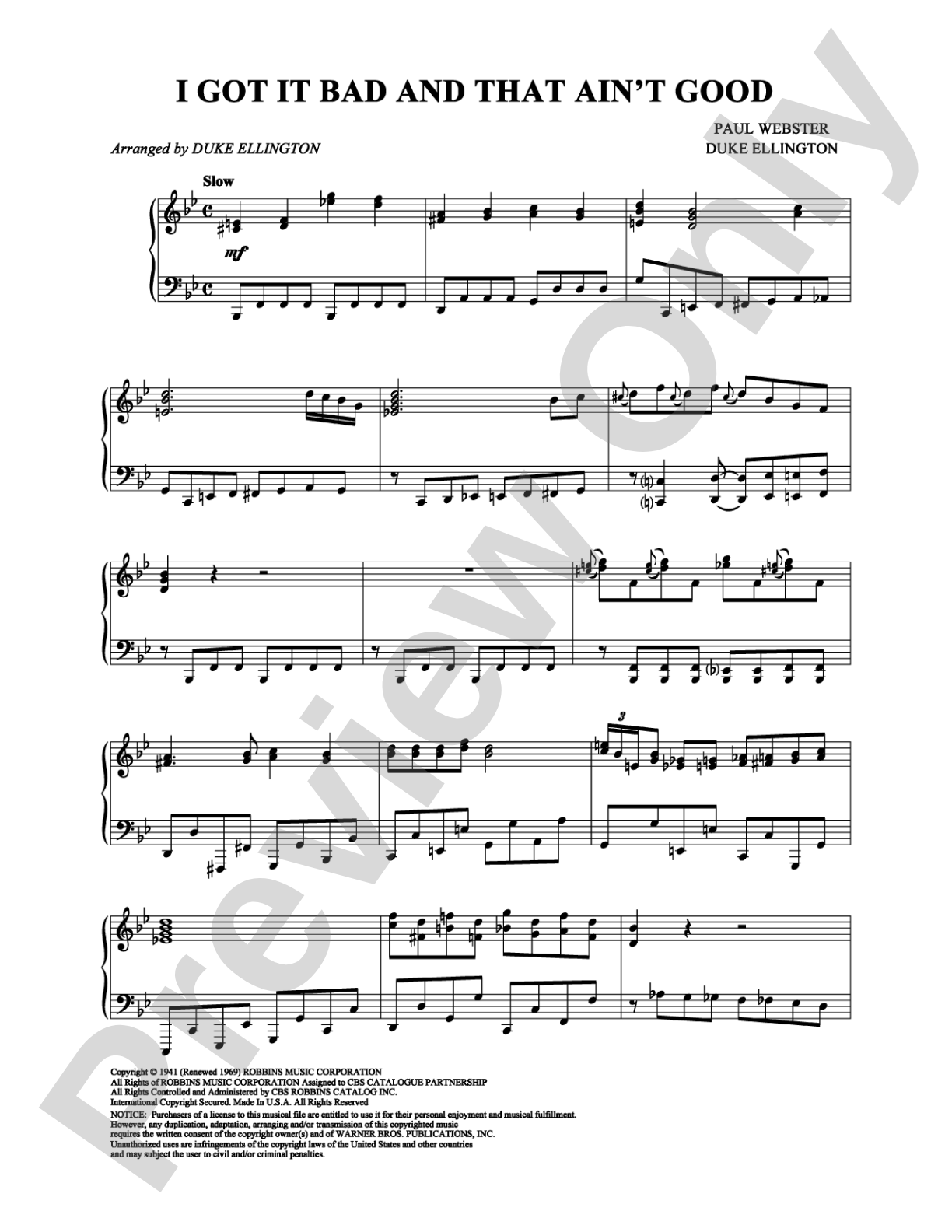
Duke Ellington, Paul Francis Webster

Item: 00-PS-0007141

Digital Download
$3.99
Description

I Got It Bad and That Ain't Good: Piano Digital Sheet Music isn't in MakeMusic Cloud just yet...but it could be. Let us know you'd like to see it, and you'll help shape what comes next. In the meantime, start a free trial and dive into thousands of interactive titles your students can play along with today.

Sample Audio
No sample audio found.
Sample Video
Additional Details
SKU: 00-PS-0007141

More about this title

About the Artist: Duke Ellington

Duke Ellington (1899-1974) stands as one of the most consequential composers in American music. His output spanned over five decades and encompassed symphonic works, ballets, film scores, and thousands of songs for small ensembles and orchestras. Ellington's harmonic sophistication and orchestral imagination fundamentally expanded what jazz composition could be, influencing musicians far beyond the jazz world.

As a pianist and bandleader, Ellington understood instrumental voices with remarkable depth. His compositions for piano showcase his command of stride technique, chromatic harmony, and melodic storytelling. "I Got It Bad and That Ain't Good" exemplifies his gift for writing standards that endure through generations of musicians.

Why we love this

This Ellington standard sits perfectly between accessibility and sophistication. The melody is instantly memorable, yet the harmonic palette rewards careful listening and offers genuine interpretive choices in voicing and tempo flexibility. Jazz pianists at intermediate levels and beyond find real satisfaction in this piece because it demands both technical fluency and emotional conviction.

What to expect

The title tells the story: this is a blues-inflected standard steeped in longing and resignation. The melody carries a gentle, conversational quality that belies the chromaticism moving underneath, creating a sense of emotional complexity that feels both vintage and timeless. The harmonic landscape pulls you toward minor and suspended sonorities, giving the tune its characteristically Ellington sophistication.

Who it's for

Jazz pianists working toward fluency with American standards benefit from tackling this composition. The piece works equally well for students learning to read jazz chord charts and for advanced players refining their interpretive voice. Pianists studying Ellington's harmonic language or preparing for jazz ensemble work will find this essential.

How to get the most out of it

  • Explore the original stride piano foundation without feeling locked into it. Consider lighter left-hand approaches that emphasize harmony over rhythm, especially if you're still building stamina.
  • The chromatic voice leading in the changes rewards slow practice with careful attention to smooth transitions between chords. Map out your voicings before running the tune.
  • Ellington's melodies sing. Shape phrases with attention to where the lyric would breathe, even on an instrumental. This prevents the tune from feeling detached or merely technical.
  • Experiment with swing articulation in the right hand while keeping the harmonic movement clear. The tension between behind-the-beat phrasing and steady harmonic support creates the emotional core of the tune.

How to use it

Feature this in a jazz recital or as part of a standards showcase that traces Ellington's influence on American songwriting. It pairs naturally with other compositions from the Great American Songbook and works well in teaching contexts where students are exploring stride piano, jazz harmony, or the connection between blues and popular song. Consider programming it alongside other Ellington compositions to demonstrate his range as a composer.

Skills your students will build

  • Reading jazz chord symbols and understanding substitute chords within a standards context
  • Voice leading in jazz comping, particularly chromatic movement between chord tones
  • Balancing left-hand rhythmic drive with harmonic clarity in stride or walking bass styles
  • Phrasing and time feel interpretation within a swing idiom
  • Understanding the relationship between melody, lyric, and harmonic structure in American standards

You May Also Like