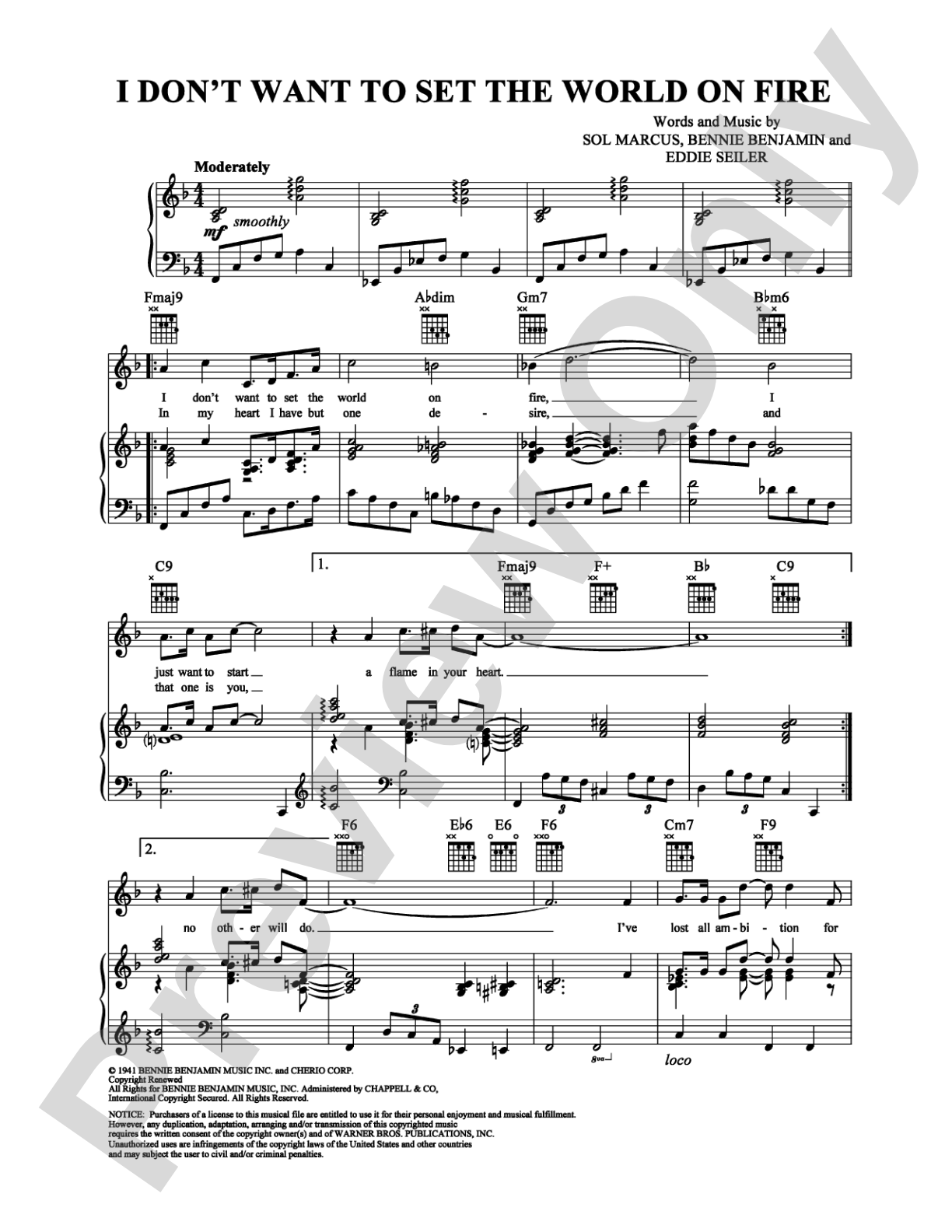
I Don't Want to Set the World on Fire: Piano/Vocal/Chords Digital Sheet Music

I Don't Want to Set the World on Fire: Piano/Vocal/Chords Digital Sheet Music

Bennie Benjamin, Sol Marcus, The Ink Spots, Eddie Seiler

Item: 00-PS-0007761

Digital Download
$3.99
Description

I Don't Want to Set the World on Fire: Piano/Vocal/Chords Digital Sheet Music isn't in MakeMusic Cloud just yet...but it could be. Let us know you'd like to see it, and you'll help shape what comes next. In the meantime, start a free trial and dive into thousands of interactive titles your students can play along with today.

Sample Audio
No sample audio found.
Sample Video
Additional Details
SKU: 00-PS-0007761

More about this title

About the Artist: The Ink Spots

The Ink Spots emerged in the 1930s as one of the most influential vocal groups of the swing era, pioneering the close-harmony style that defined American popular music for decades. Their innovative approach to arrangement, featuring a deep-voiced bass singer anchoring intricate tenor and baritone harmonies, became a model for countless groups and remains instantly recognizable. Their recordings sold millions of copies and established them as cultural ambassadors of jazz-inflected American song.

Why we love this

This standard sits at the intersection of accessibility and genuine artistry, making it an ideal choice for programs that bridge concert repertoire and American popular song. The simple harmonic language and straightforward melody allow singers to focus on style and phrasing rather than wrestling with complex notation, while the piano part rewards thoughtful accompaniment work. Programming this alongside art song or contemporary chamber work signals that your ensemble takes all well-crafted music seriously.

What to expect

The piece breathes with the warmth of a late-night broadcast, intimate and understated. There's a gentle melancholy beneath the surface cheerfulness, as if the singer is offering reassurance to someone who needs it. The harmonies evoke candlelit rooms and close listening, creating space for reflection rather than spectacle.

Who it's for

This arrangement serves vocalists exploring American standards and jazz repertoire, from high school jazz singers to community singers and music theater performers. Pianists preparing for collaborative work will find clear, singable accompaniment that demands tasteful playing rather than technical fireworks. Directors building programs that celebrate the full spectrum of American song will find this a natural addition to their libraries.

How to get the most out of it

  • Anchor the harmonic integrity by practicing the piano and vocal line separately first, then layering them together only after each part sits securely in the hands and voice.
  • Shape the melody with rubato rather than strict metronomic rhythm; the Ink Spots' recordings emphasize conversational phrasing over mechanical timing.
  • Balance the piano accompaniment so it supports without overwhelming; this song lives in the warmth of the voice, not in keyboard decoration.
  • Explore the lyrical subtext during rehearsal. The apparent simplicity of 'I don't want to set the world on fire' carries real emotional weight when sung with awareness of its context.

How to use it

Slot this into programs exploring American vocal traditions or as a sophisticated opener that signals your ensemble's versatility beyond classical repertoire. It pairs beautifully with other standards from the swing era or with contemporary art songs that share its introspective quality. Consider it for a nostalgia-themed concert or as a palate-cleanser between heavier chamber works.

Skills your students will build

  • Singing with rhythmic flexibility and rubato while maintaining harmonic support from the accompanist
  • Reading and executing chord symbols and figured bass notation for collaborative piano playing
  • Shaping a melody through dynamic nuance and phrasing rather than relying on written dynamic markings
  • Understanding the stylistic conventions of swing-era vocal delivery and harmonic language

You May Also Like