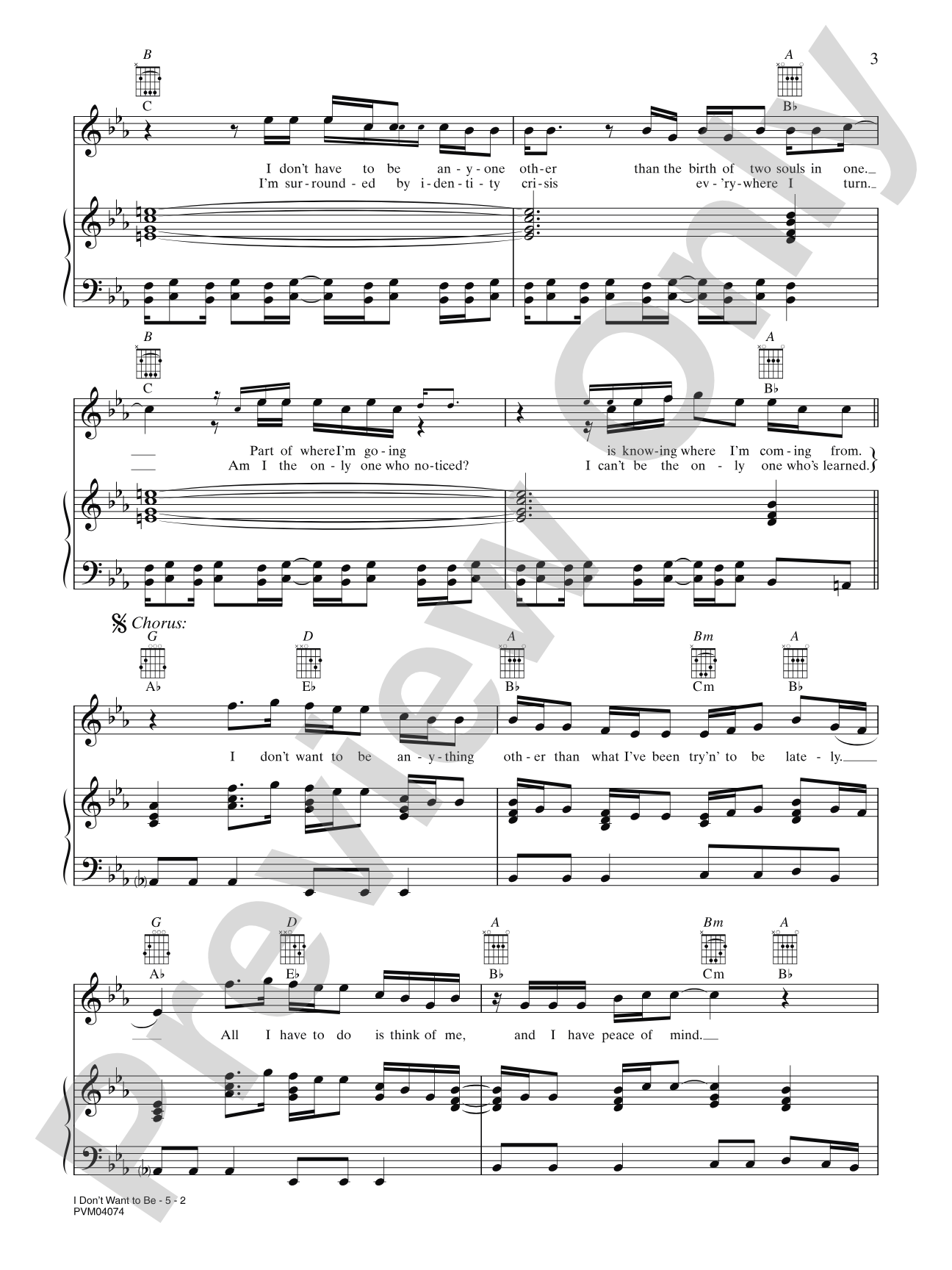
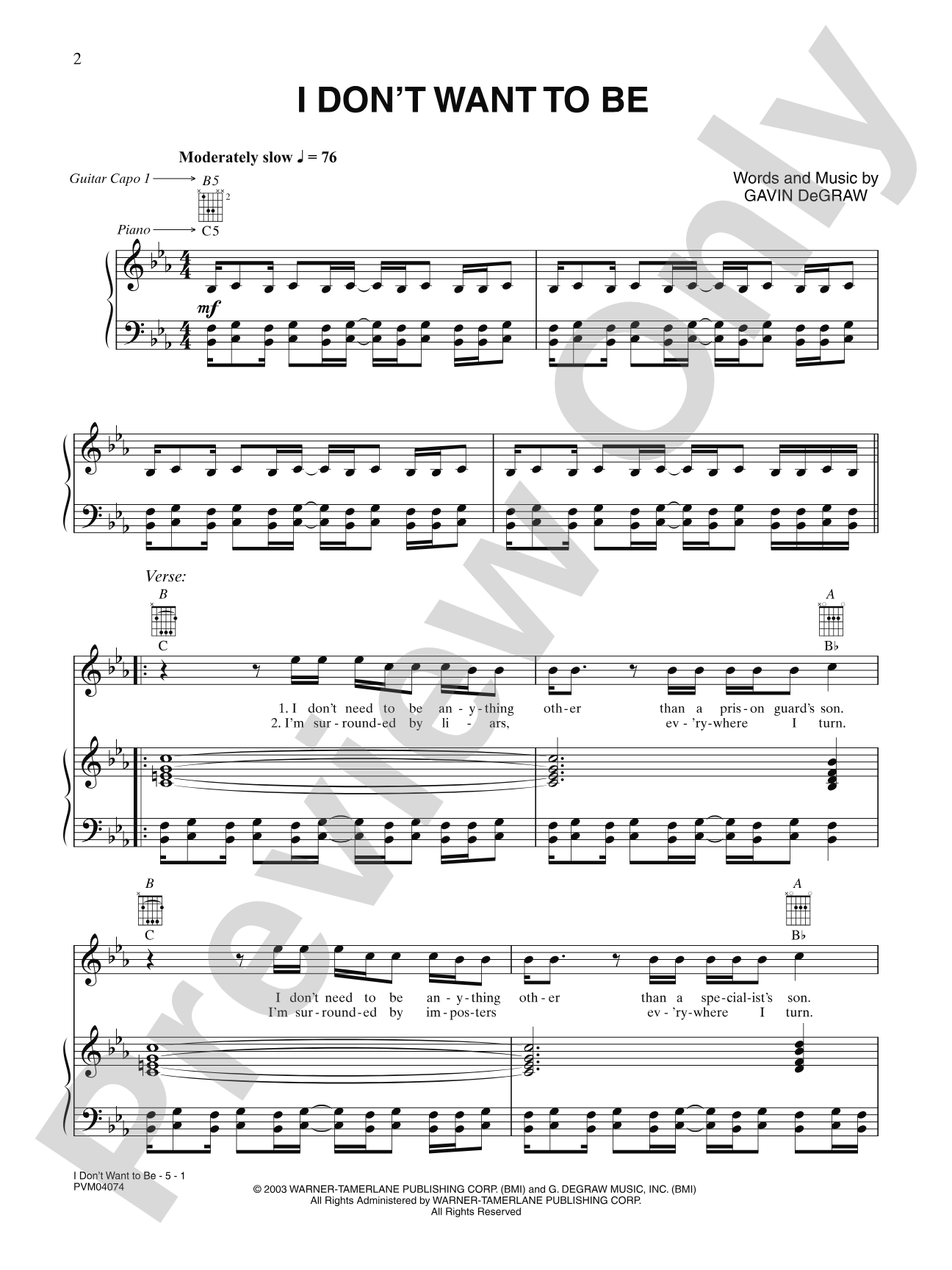
I Don't Want To Be Sheet Music Preview

I Don't Want To Be: Piano/Vocal/Chords

Recorded by Gavin DeGraw

Item: 00-XIP-000058

Digital Download
$3.99

One moment…

Description

I Don't Want To Be: Piano/Vocal/Chords isn't in MakeMusic Cloud just yet...but it could be. Let us know you'd like to see it, and you'll help shape what comes next. In the meantime, start a free trial and dive into thousands of interactive titles your students can play along with today.

Sample Audio
No sample audio found.
Sample Video
Additional Details
Publisher: Alfred Music
Page Count: 6
SKU: 00-XIP-000058

More about this title

About the Artist: Gavin DeGraw

Gavin DeGraw emerged as a distinctive voice in pop-rock during the early 2000s, known for his emotionally direct songwriting and genre-blending approach. His work spans piano-driven ballads and rock anthems, making him a natural fit for musicians exploring contemporary songwriting across both acoustic and electric settings.

Why we love this

This arrangement gives singers and pianists access to one of DeGraw's most recognizable songs in a format that works for solo performance, vocal coaching, or ensemble programming. The piano and chord structure support both intimate interpretations and fuller arrangements, making it adaptable to different musical contexts.

What to expect

The track carries an introspective, almost vulnerable quality. There's a tension between restraint and emotional honesty that asks performers to find authenticity in every note rather than relying on technical display.

Who it's for

Singers preparing contemporary repertoire for recitals or auditions will find this direct and singable. Pianists developing skills in pop-rock accompaniment and chord interpretation can use this as a bridge between classical technique and modern styles.

How to get the most out of it

  • Pay attention to the dynamic shape within phrases rather than locking into one volume level; DeGraw's style relies on subtle emotional peaks and valleys.
  • Coordinate the vocal melody with the piano's rhythmic feel; the groove sits slightly differently than a purely classical approach.
  • Let the chord voicings breathe; resist the urge to fill every space, especially in the verses.

How to use it

Include this on a recital exploring contemporary songwriting alongside art songs or as a standalone contemporary piece. It works well as a duet between vocalist and pianist in cabaret or concert settings.

Skills your students will build

  • Interpreting contemporary chord symbols and voicings
  • Balancing sung melody with accompaniment groove
  • Reading and performing piano-vocal scores in a popular music context
  • Understanding stylistic nuance in emotional delivery

You May Also Like