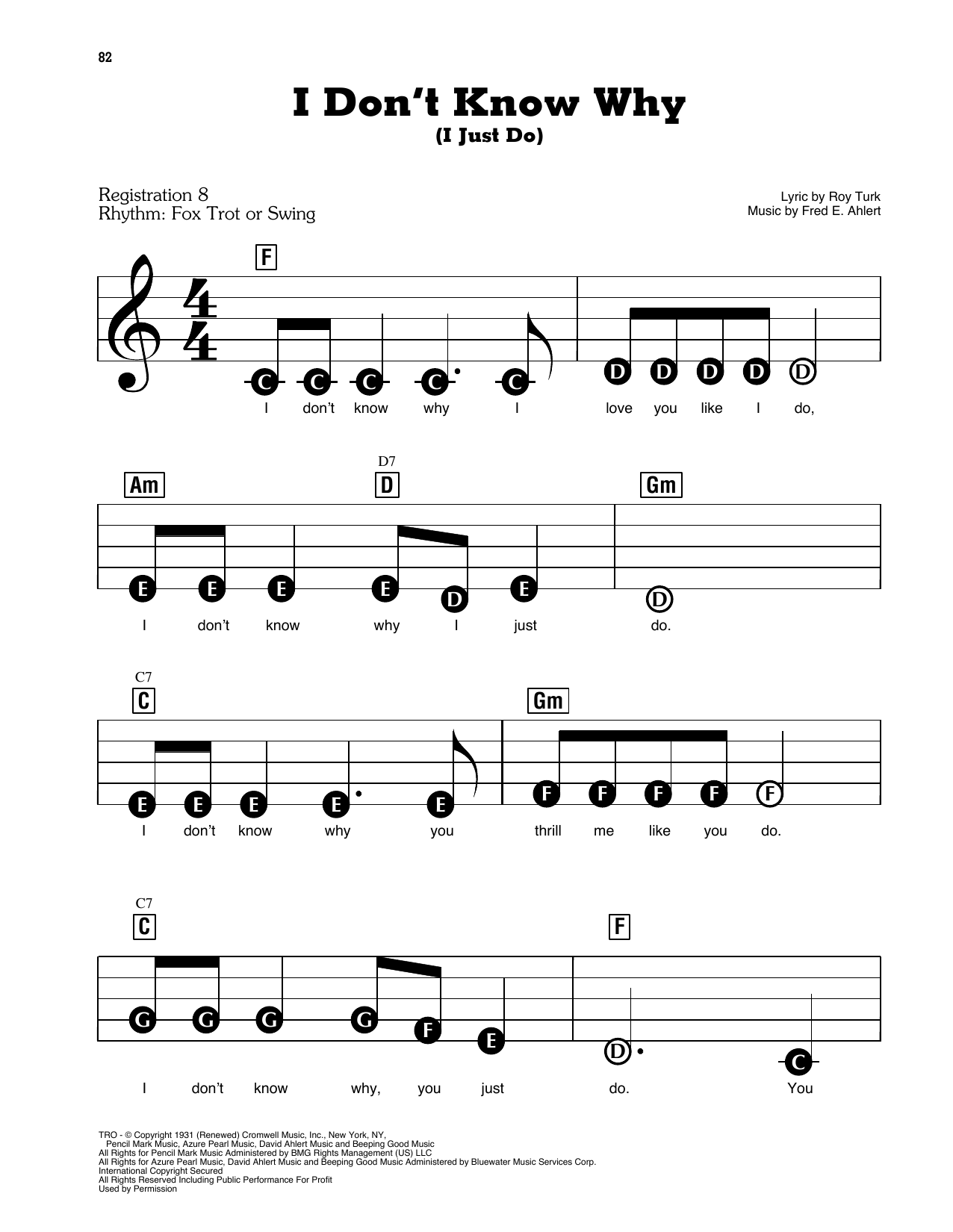
I Don't Know Why (I Just Do) Sheet Music Preview

I Don't Know Why (I Just Do): E-Z Play Today

As performed by Frank Sinatra

Item: 35-DS00447832

Digital Download
$4.99
Description

I Don't Know Why (I Just Do): E-Z Play Today isn't in MakeMusic Cloud just yet...but it could be. Let us know you'd like to see it, and you'll help shape what comes next. In the meantime, start a free trial and dive into thousands of interactive titles your students can play along with today.

Sample Audio
No sample audio found.
Sample Video
Additional Details
Publisher: Hal Leonard
Page Count: 2
SKU: 35-DS00447832

More about this title

About the Artist: Frank Sinatra

Frank Sinatra shaped American popular music across seven decades, establishing himself as one of the most recorded artists in history. His interpretive approach to the Great American Songbook transformed how singers approached phrasing, dynamics, and emotional storytelling, making him a study in vocal artistry that pianists can learn from through accompaniment and arrangement.

Why we love this

This standard offers students a masterclass in swing phrasing without requiring complex harmonic navigation. The E-Z Play format keeps the focus on where it belongs: capturing the relaxed, conversational quality that makes this song endure.

What to expect

Casual sophistication meets genuine vulnerability. The melody meanders with the ease of someone thinking out loud, while the harmonies beneath it provide warmth and emotional grounding. There's an unhurried confidence here, as if the singer is sharing something personal that just happens to sound effortless.

Who it's for

Pianists accompanying vocalists in jazz or musical theater contexts will find this essential repertoire. It also works well for intermediate students exploring jazz standards and understanding how accompaniment shapes a vocalist's interpretation.

How to get the most out of it

  • Keep the tempo conversational rather than metronomic. Sinatra's genius was in the space between notes, so allow rubato in the vocal line while maintaining a steady harmonic foundation.
  • Voice the chords with attention to smooth voice leading. This era of jazz songwriting rewards pianists who think about chord color and transition rather than just hitting the right notes.
  • Anchor the left hand with a light swing feel. The rhythm section pulse should support the vocalist without pushing or overshadowing their phrasing choices.

How to use it

Pair this with other Sinatra standards from the same era to build a jazz standards unit that connects vocalists and pianists. It also sits comfortably in a cabaret or American songbook concert, offering audiences a familiar touchstone while introducing students to essential accompaniment repertoire.

Skills your students will build

  • Swing rhythm feel and triplet subdivision
  • Comping strategies that support rather than compete with a vocalist
  • Chord voicing and voice leading in jazz contexts
  • Interpreting rubato and phrasing in a jazz standard setting
  • Understanding the relationship between melody and harmonic support

You May Also Like