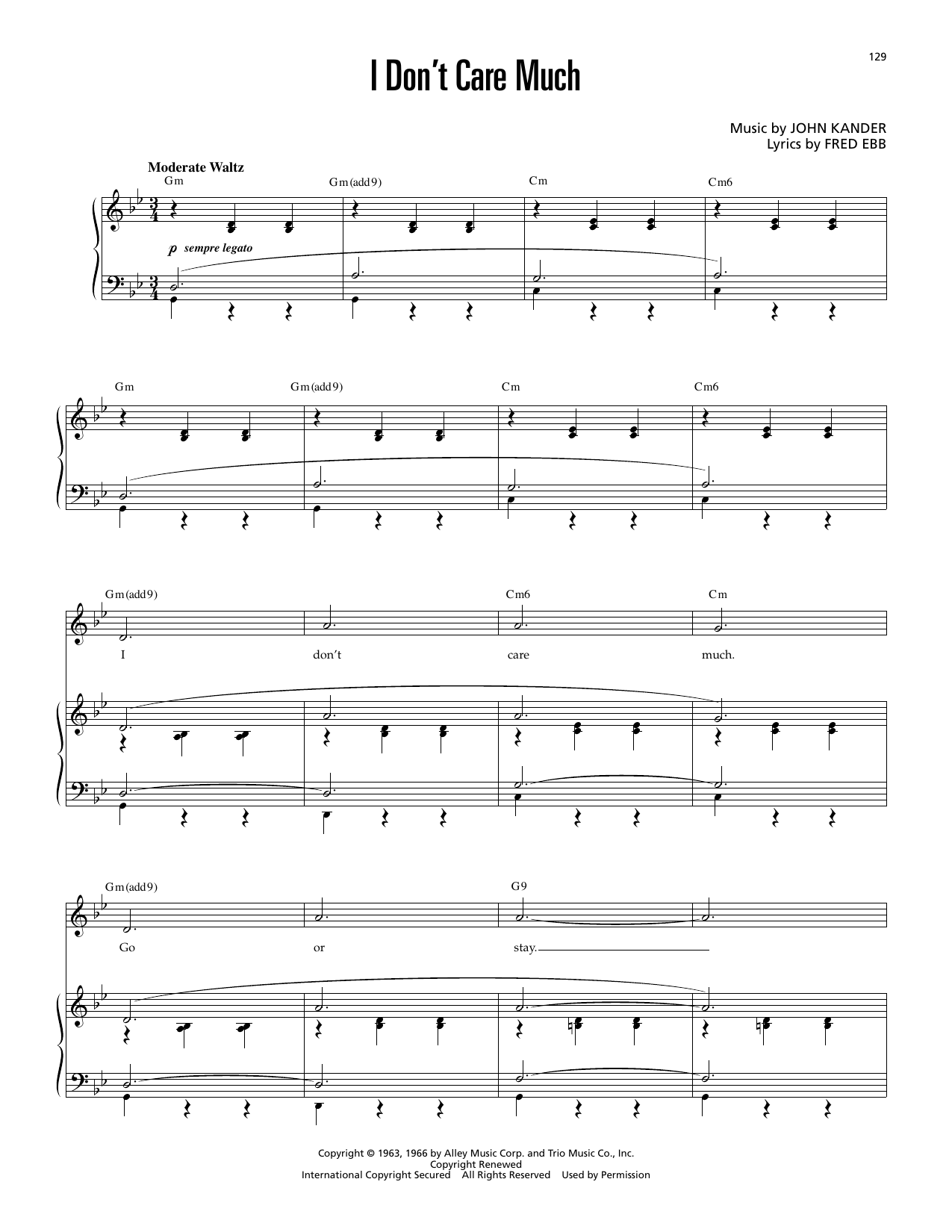
Stephen Sondheim composed the score for Cabaret, which premiered on Broadway in 1966. His collaboration with lyricist Fred Ebb and director/choreographer Bob Fosse created one of musical theatre's most influential works. Sondheim's sophisticated harmonies and Ebb's razor-sharp lyrics defined the sound of the show, earning eight Tony Awards and establishing the piece as a cornerstone of the American musical theatre canon.
Why we love this
This number captures the jaded world-weariness at Cabaret's heart with effortless style. The piano accompaniment sits perfectly under the vocal line, making it accessible for singers developing phrasing and emotional nuance without excessive technical demands.
What to expect
The tune exhales a cigarette-smoke kind of elegance, all surface charm masking something bruised underneath. The cabaret setting hangs in every phrase, turning emotional detachment into an art form. It's weariness performed as sophistication.
Who it's for
This arrangement suits intermediate to advanced singers comfortable with jazz-inflected phrasing and pianists who can navigate Sondheim's harmonic language. Voice students and performers preparing audition material will find it a sophisticated standard that reveals much about stylistic control.
How to get the most out of it
Shape the vocal line with gentle rubato; the casual indifference of the lyric will feel more authentic when the melody breathes slightly rather than lock-steps with strict time.
Keep the piano accompaniment lean and conversational. This is not a showstopper that demands grandeur, but an intimate confession.
Pay attention to how the vocal phrasing breaks across bar lines. Sondheim's lyrics often subvert the expected rhythmic placement for dramatic effect.
Let the harmonic shifts do their work. The piano's chord choices carry the emotional weight when the singer underplays the performance.
How to use it
Pair this with other American standards or musical theatre selections for a cabaret-themed recital. The seven-page length makes it substantial enough for a concert slot without overwhelming a program, and it works beautifully as a bridge between classical vocal repertoire and contemporary musical theatre exploration.
Skills your students will build
Phrasing in jazz and popular idioms
Harmonic analysis of Sondheim's sophisticated chord progressions
Subtext and dramatic intention in lyric interpretation
Rhythmic flexibility and rubato within a composed framework
Collaboration between vocalist and accompanist
You May Also Like
Scan to Complete Your Purchase
Use your phone's camera to scan the code below
You'll log in on your phone and the order will be added to your account