
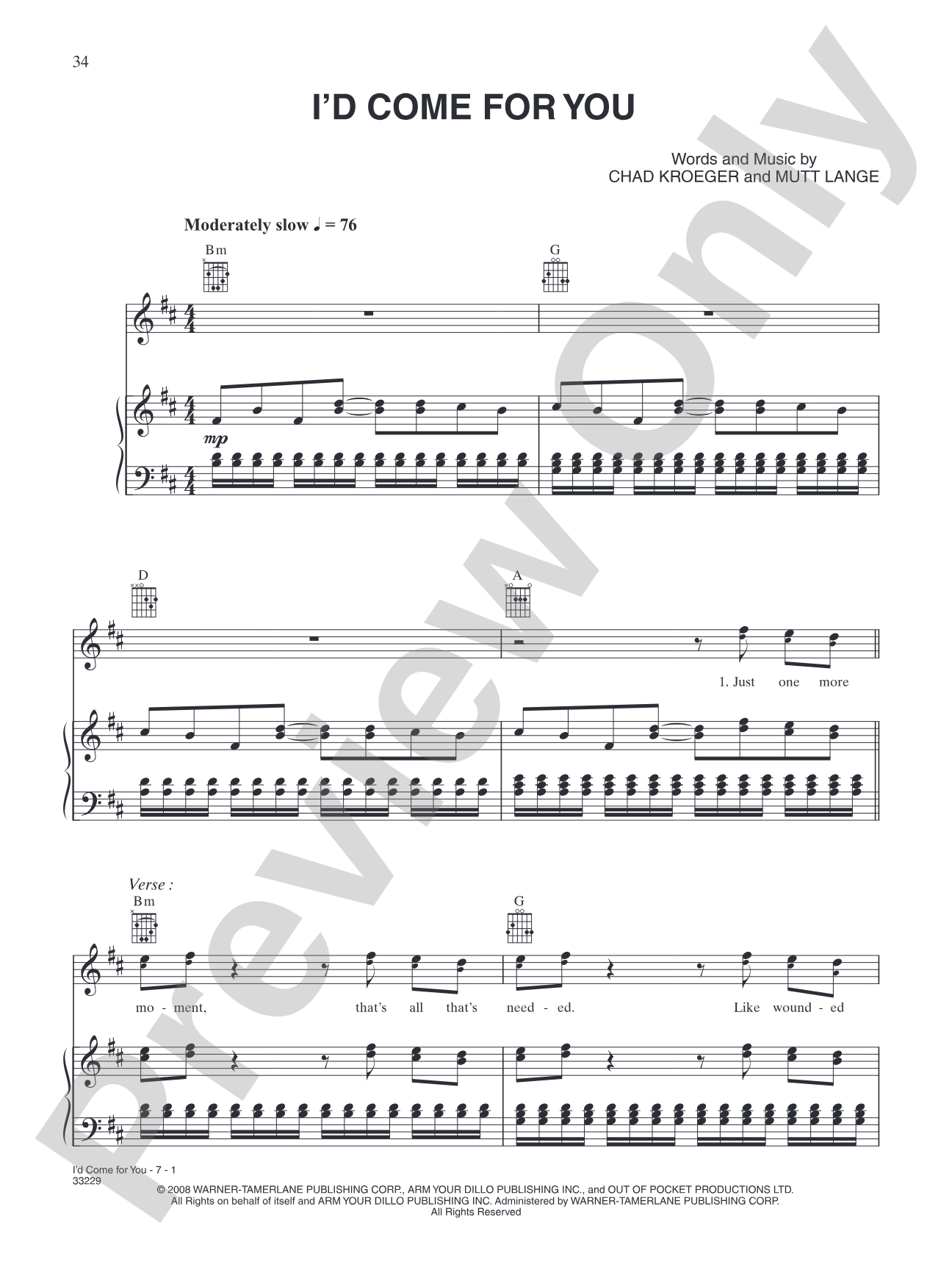
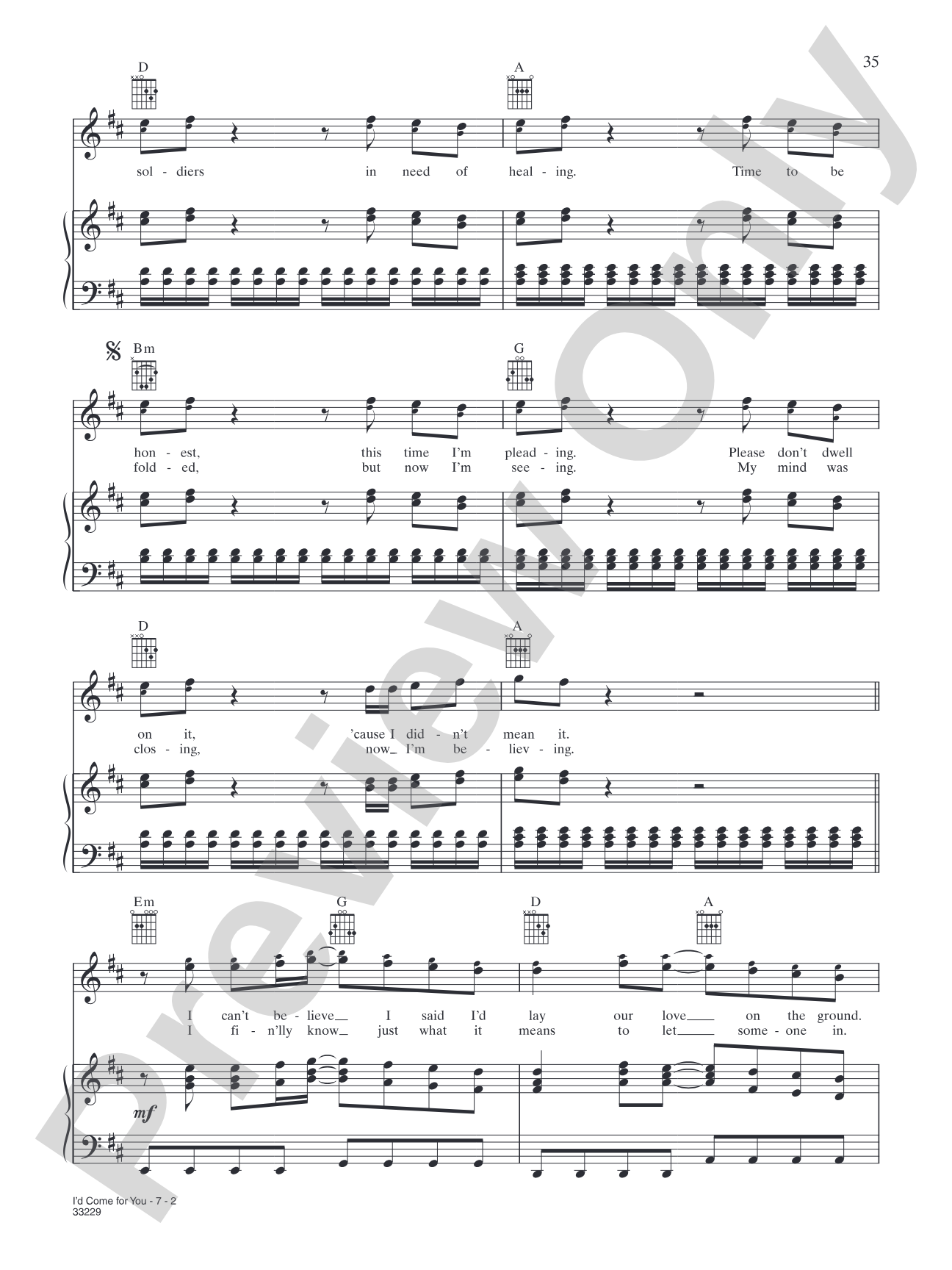

I'd Come for You: Piano/Vocal/Chords
Nickelback
Item: 00-PS-0011428
$5.99
One moment…
Description
After more than a decade of hits and sold-out concerts, Nickelback presents their first multi-album sheet music anthology! This piano/vocal/chords songbook contains sheet music for 15 songs spanning four hit albums, including the 2009 album Dark Horse. Titles: Far Away * Feelin' Way Too Good * Figured You Out * Gotta Be Somebody * How You Remind Me * I'd Come for You * If Everyone Cared * If Today Was Your Last Day * Never Gonna Be Alone * Photograph * Rockstar * Savin' Me * Should've Listened * Someday * Too Bad.


I'd Come for You: Piano/Vocal/Chords isn't in MakeMusic Cloud just yet...but it could be. Let us know you'd like to see it, and you'll help shape what comes next. In the meantime, start a free trial and dive into thousands of interactive titles your students can play along with today.
Request This Title
Tell us you want it.
Start Your Free Trial
Explore everything that's ready to play right now.
Sample Audio
No sample audio found.
Sample Video
No sample videos found.
Additional Details
Series:
Sheet Music Anthology
Publisher:
Alfred Music
Page Count:
92
SKU:
00-PS-0011428
More about this title
About the Composer: Chad Kroeger
Chad Kroeger is the lead vocalist and primary songwriter of Nickelback, the Canadian rock band that achieved global commercial success beginning in the early 2000s. His songwriting approach balances accessible melodies with lyrics that resonate across rock and pop audiences, making his catalog particularly valuable for musicians studying contemporary composition and commercial song structure.
Why we love this
This anthology captures 15 songs that define a generation's rock radio experience, giving pianists and singers direct access to chart-defining material without arrangement compromises. The span of four albums means you're not limited to one sonic era; you can build programs that show evolution within a single artist's catalog. For students learning to interpret modern rock through a classical lens (piano and voice), these songs offer immediate cultural relevance and immediate payoff.
What to expect
These songs sit in that muscular middle ground between rock authenticity and pop accessibility. Driving rhythms and anthemic hooks meet introspective moments and straightforward emotional directness, creating material that feels both energetic and grounded. The piano/vocal/chords format preserves the songs' essential character while giving musicians room to inhabit the material on their own terms.
Who it's for
Pianists and singers performing contemporary material in recital settings, music theater programs, or popular music ensembles will find these arrangements accessible yet musically substantive. Students preparing auditions for popular music programs or seeking to expand beyond classical traditions benefit from working with songs that demand both technical skill and interpretive maturity. Keyboard players in rock bands can also use these charts as a learning resource for voicing and arrangement approaches.
How to get the most out of it
- Study the chord voicings carefully; Kroeger's songs often use power chords and suspended chords that require deliberate hand positioning to ring cleanly on piano rather than blurring together.
- Lock into the rhythmic pocket of each song by counting the drum patterns in your head before you begin; these pieces are rhythm-driven, and staying aligned with the beat matters more than rubato flexibility.
- Layer your vocal tone with the harmonic depth of the piano; resist singing too loudly or forcing emotion, since these melodies work best when they sit naturally over supportive accompaniment.
- Tailor your dynamics to the song's arc rather than playing at one volume throughout; notice which sections build and which pull back, and shape your touch accordingly.
How to use it
Build a contemporary rock concert featuring 3-4 selections from this anthology paired with other modern songwriters, or create a solo recital showcasing how a single artist's songwriting evolved across multiple albums and musical seasons. For music theater or integrated arts programs, these songs work especially well as bridges between classical and contemporary idioms, demonstrating that rock composition deserves serious musical consideration.
Skills your students will build
- Reading and performing contemporary chord symbols (major, minor, suspended, power chords)
- Balancing vocal melody with dynamic piano accompaniment in pop/rock contexts
- Interpreting rhythmic notation in straight-eighth vs. swing contexts
- Understanding song form and structure in modern radio-era compositions
- Developing interpretive choices within commercially composed material