I Could Write A Book (arr. John Wasson) Sheet Music Preview

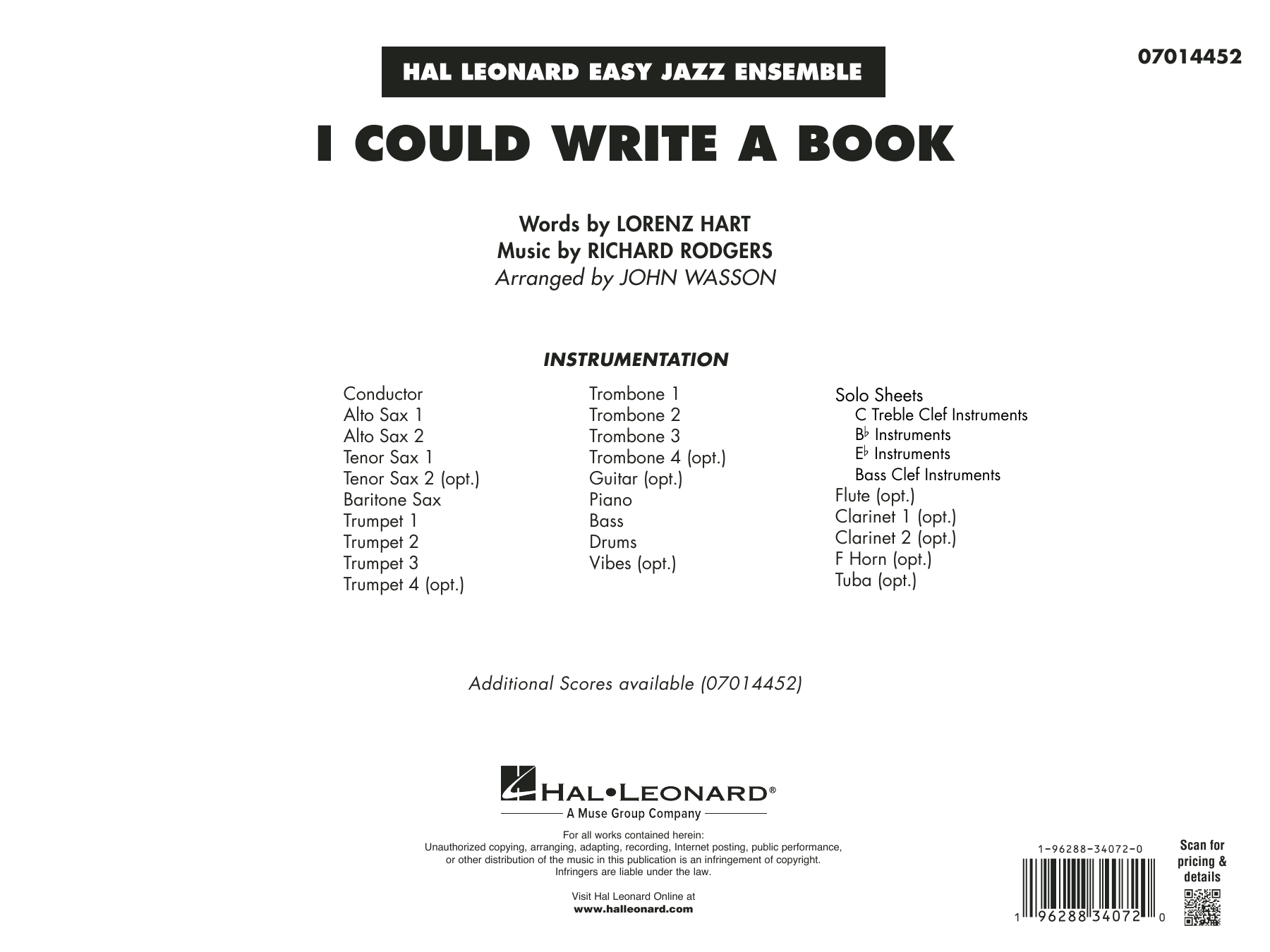
I Could Write A Book (arr. John Wasson): Jazz Ensemble Conductor Score & Parts

Arranged by John Wasson

Grade: 2

Item: 35-PK01678285

Digital Download
$50.00

One moment…

Description
Perfectly scored for young jazz ensembles, this arrangement of the classic standard written for the musical Pal Joey is perfect to teach swing style and to expand your players knowledge of classic American standards.

I Could Write A Book (arr. John Wasson): Jazz Ensemble Conductor Score & Parts isn't in MakeMusic Cloud just yet...but it could be. Let us know you'd like to see it, and you'll help shape what comes next. In the meantime, start a free trial and dive into thousands of interactive titles your students can play along with today.

Sample Audio
No sample audio found.
Sample Video
Additional Details
Publisher: Hal Leonard
SKU: 35-PK01678285

More about this title

About the Arranger: John Wasson

John Wasson has spent decades writing and arranging for young jazz ensembles, building a reputation for crafting parts that respect players at all levels while maintaining genuine jazz idiom. His arrangements prioritize clarity and teachability without sacrificing the character of the original material.

Why we love this

Wasson's voicings capture the sophistication of the Rodgers and Hart standard while remaining completely accessible to players still developing their jazz chops. The arrangement gives every section meaningful material, which means your ensemble stays engaged rather than sitting on hits and kicks. It's the kind of piece that sounds polished in performance but doesn't demand hours of sectional work to lock in.

What to expect

The piece swings with the easiness of a 1940s ballroom, romantic without being syrupy. There's an inherent elegance in Rodgers and Hart's melody that Wasson preserves, paired with the warmth of well-spaced jazz voicings that let the tune shine through cleanly.

Who it's for

This arrangement works for jazz ensembles at the early intermediate level who are ready to explore classic standards but need straightforward part writing. It's ideal for groups meeting the Grade 2 standard in technical demands and jazz literacy.

How to get the most out of it

  • Shape the melody with rubato in the opening phrase; let it breathe like a vocalist would rather than metering it rigidly.
  • Balance the ensemble hits behind the soloist so the solo line remains the focal point; this requires intentional dynamic control from your rhythm section and ensemble.
  • Anchor the swing feel through the walking bass line. If your bassist locks in with the drummer, the whole band settles into the pocket.
  • Bring out the counter-melodies in the background voices during the A section; they add harmonic color and showcase your section's musicianship.

How to use it

Pair this with other Broadway standards or classic jazz repertoire as part of a concert exploring American songwriting. It works beautifully as a mid-set piece where a soloist can step forward, or as a full ensemble feature if you prefer the collective sound. The Grade 2 difficulty makes it a solid choice for introducing younger ensembles to the standard repertoire without overwhelming them.

Skills your students will build

  • Swing articulation and phrasing
  • Reading and executing jazz chord changes
  • Balancing solo lines against ensemble backgrounds
  • Understanding classic American song standards
  • Listening and responding to ensemble texture changes

You May Also Like