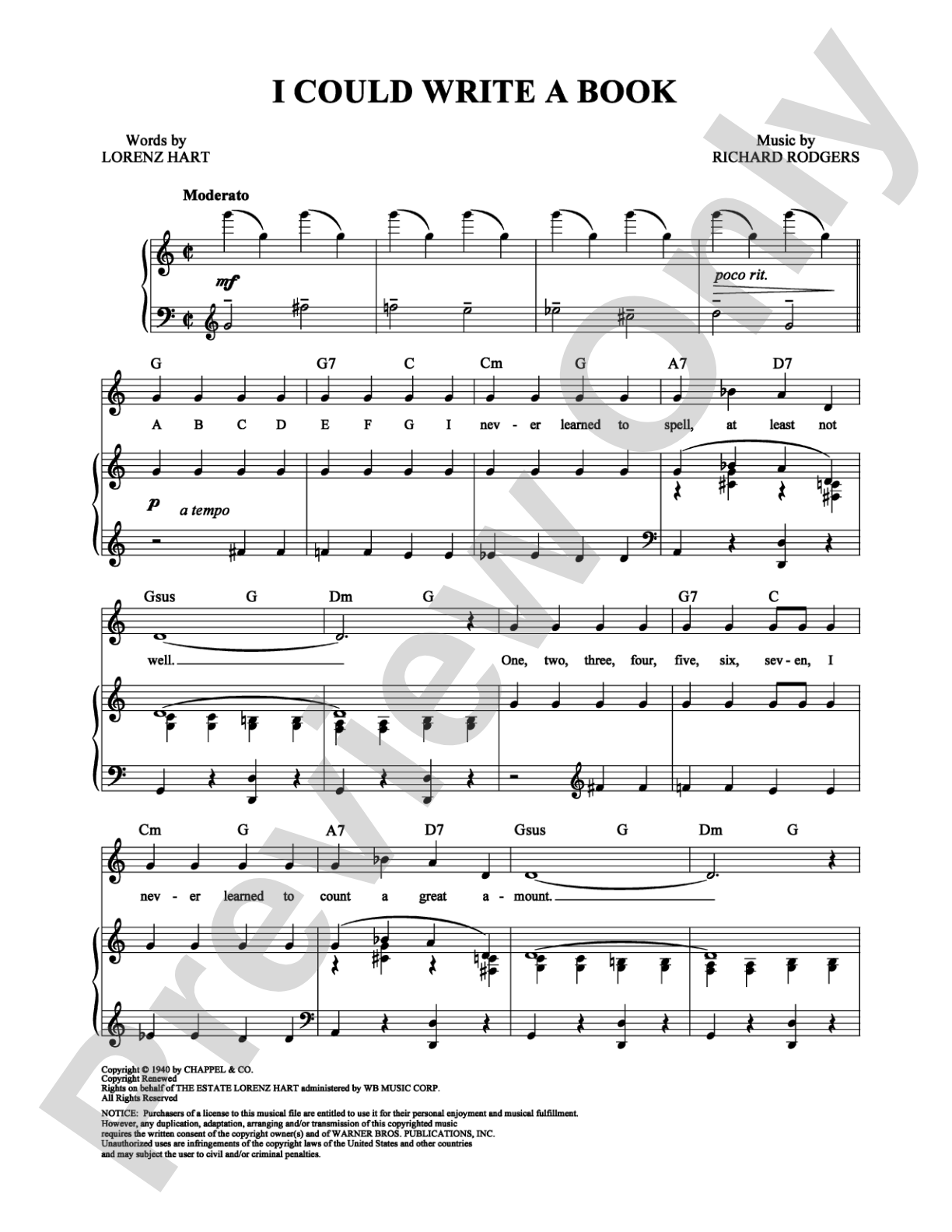
I Could Write a Book: Piano/Vocal/Chords Digital Sheet Music

I Could Write a Book: Piano/Vocal/Chords Digital Sheet Music

Richard Rodgers, Frank Sinatra, Kim Novak

Item: 00-PS-0001103

Digital Download
$3.99
Description

I Could Write a Book: Piano/Vocal/Chords Digital Sheet Music isn't in MakeMusic Cloud just yet...but it could be. Let us know you'd like to see it, and you'll help shape what comes next. In the meantime, start a free trial and dive into thousands of interactive titles your students can play along with today.

Sample Audio
No sample audio found.
Sample Video
Additional Details
SKU: 00-PS-0001103

More about this title

About the Artist: Frank Sinatra

Frank Sinatra (1915-1998) remains the gold standard for American vocal interpretation. His approach to phrasing, dynamics, and rhythmic flexibility transformed how singers think about storytelling in jazz standards. Sinatra's influence extends far beyond his recordings; his interpretive choices established a template for balancing technical control with emotional authenticity that every vocalist benefits from studying.

For music educators, Sinatra's work offers a masterclass in how a singer shapes melody. His treatment of lyrics, his placement of notes relative to the beat, and his use of silence all serve the song's narrative. These decisions make his recordings invaluable references for students learning to move beyond note-accurate singing toward genuine performance.

Why we love this

This is a romantic standard with real melodic substance, and Sinatra's association with it guarantees student interest. The piano/vocal/chords format gives singers and accompanists everything they need to explore how a timeless melody lives in different interpretive contexts, and students will naturally want to compare their choices to Sinatra's famous rendering.

What to expect

Tender and conversational. The melody unfolds with unhurried lyricism, and the harmonic language supports intimacy without sentimentality. There's elegance in its straightforwardness, and room for the singer to make the declaration feel genuinely personal rather than performed.

Who it's for

This works for intermediate to advanced vocalists comfortable with jazz standards and ready to think critically about interpretation. Pianists using the chords chart gain practice comping underneath a vocal line while maintaining harmonic sophistication. Both singer and accompanist benefit from the clarity of this particular arrangement.

How to get the most out of it

  • Sing the melody straight through once before adding interpretive choices. This ensures the lyric and harmonic progression are secure before you layer in Sinatra-influenced phrasing.
  • Listen closely to how the original handles the bridge. Notice where the melody sits rhythmically relative to the accompaniment, then make deliberate choices about where your version aligns or diverges.
  • Work with your pianist on the relationship between vocal phrasing and harmonic movement. The chords chart gives you freedom to breathe where the melody suggests, not where bar lines dictate.

How to use it

Pair this with other romantic standards from the same era to build a cohesive set, or use it as a solo recital centerpiece that showcases mature vocal interpretation. It also works well as a duet if you're programming for mixed voices, since both Sinatra and the film version with Kim Novak demonstrate how the song accommodates different vocal characters.

Skills your students will build

  • Interpreting the relationship between melody and chord harmony
  • Phrasing beyond bar lines using lyrical and harmonic landmarks
  • Working from a chords chart to shape accompaniment around a vocal line
  • Comparing multiple interpretations of the same standard

You May Also Like