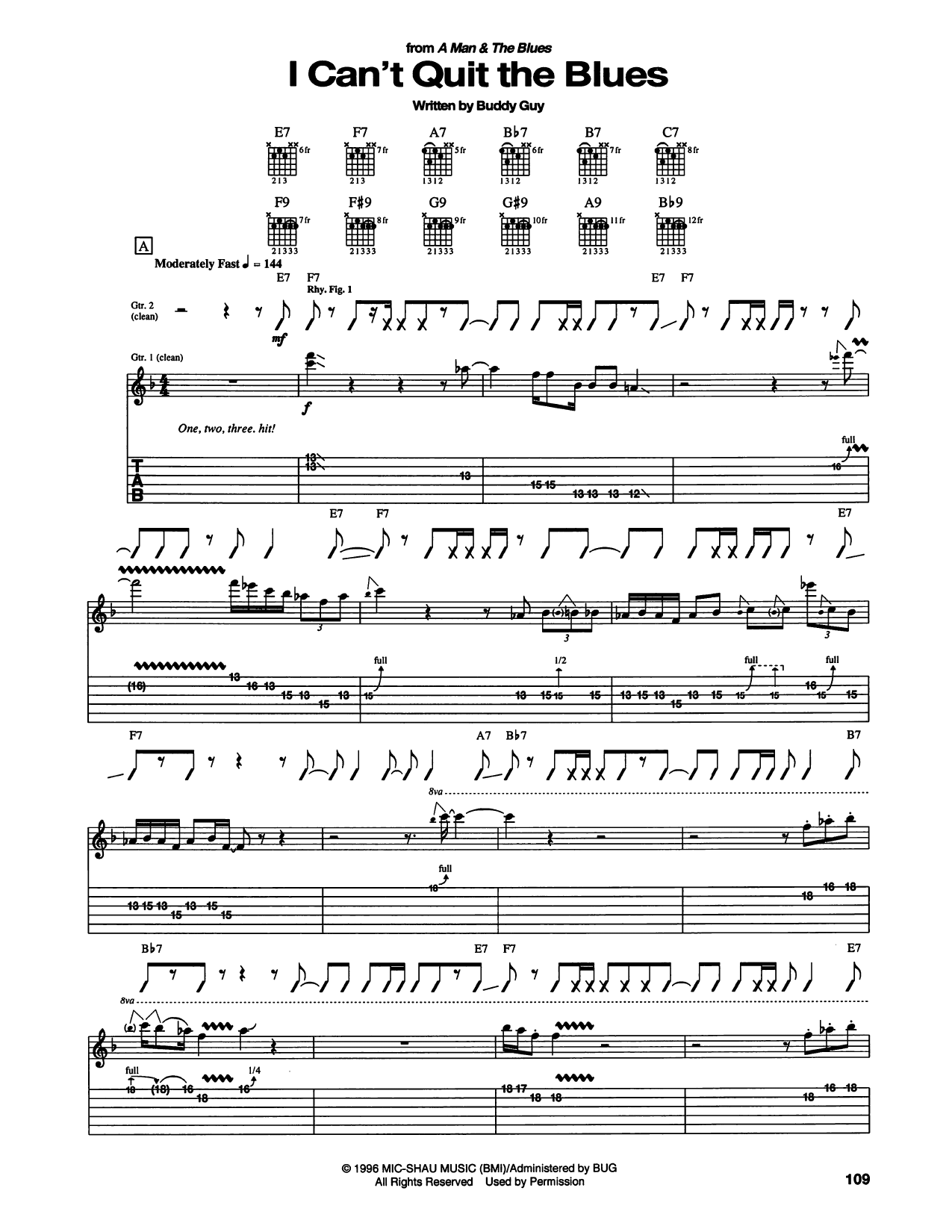
Buddy Guy is a foundational figure in modern electric blues, with a six-decade career that redefined the guitar's role in the idiom. His explosive technique, expressive bends, and fearless use of distortion influenced countless rock and blues players who followed, making him essential listening for anyone serious about understanding electric guitar vocabulary.
Why we love this
This tab gives students a direct window into how a master bends notes for emotional impact and constructs solos within a 12-bar blues framework without relying on flashy complexity. Guy's phrasing prioritizes feel over speed, which makes this an ideal teaching tool for guitarists who are ready to move beyond pentatonic scale exercises into genuine musical storytelling.
What to expect
Raw and conversational, like Guy is speaking directly through his instrument. The phrases breathe with space and intention, balancing moments of restraint with sudden bursts of intensity that capture the emotional core of the blues.
Who it's for
Intermediate to advanced blues guitarists who understand basic 12-bar form and want to study authentic soloing approaches from a living legend. This works well for students transitioning from learning licks to developing their own voice within the blues vocabulary.
How to get the most out of it
Pay close attention to bend targeting and release timing; Guy's signature sound comes from how deliberately he approaches each bend rather than rushing through them.
Listen to the original recording multiple times before working through the tab to internalize the rhythmic phrasing and note durations that make the solo breathe.
Experiment with tone controls and gain settings to find the right amount of grit; too much distortion obscures the nuance of his bend work.
How to use it
Include this in a blues history unit or ensemble jazz program as a case study in 12-bar soloing architecture. It pairs naturally with transcription assignments where students compare different approaches to the same form.
Skills your students will build
Targeting specific pitches within bent notes
Phrasing over 12-bar blues form
Call-and-response soloing patterns
Dynamics and tone control for expressive playing
Reading standard guitar tab notation
You May Also Like
Scan to Complete Your Purchase
Use your phone's camera to scan the code below
You'll log in on your phone and the order will be added to your account