
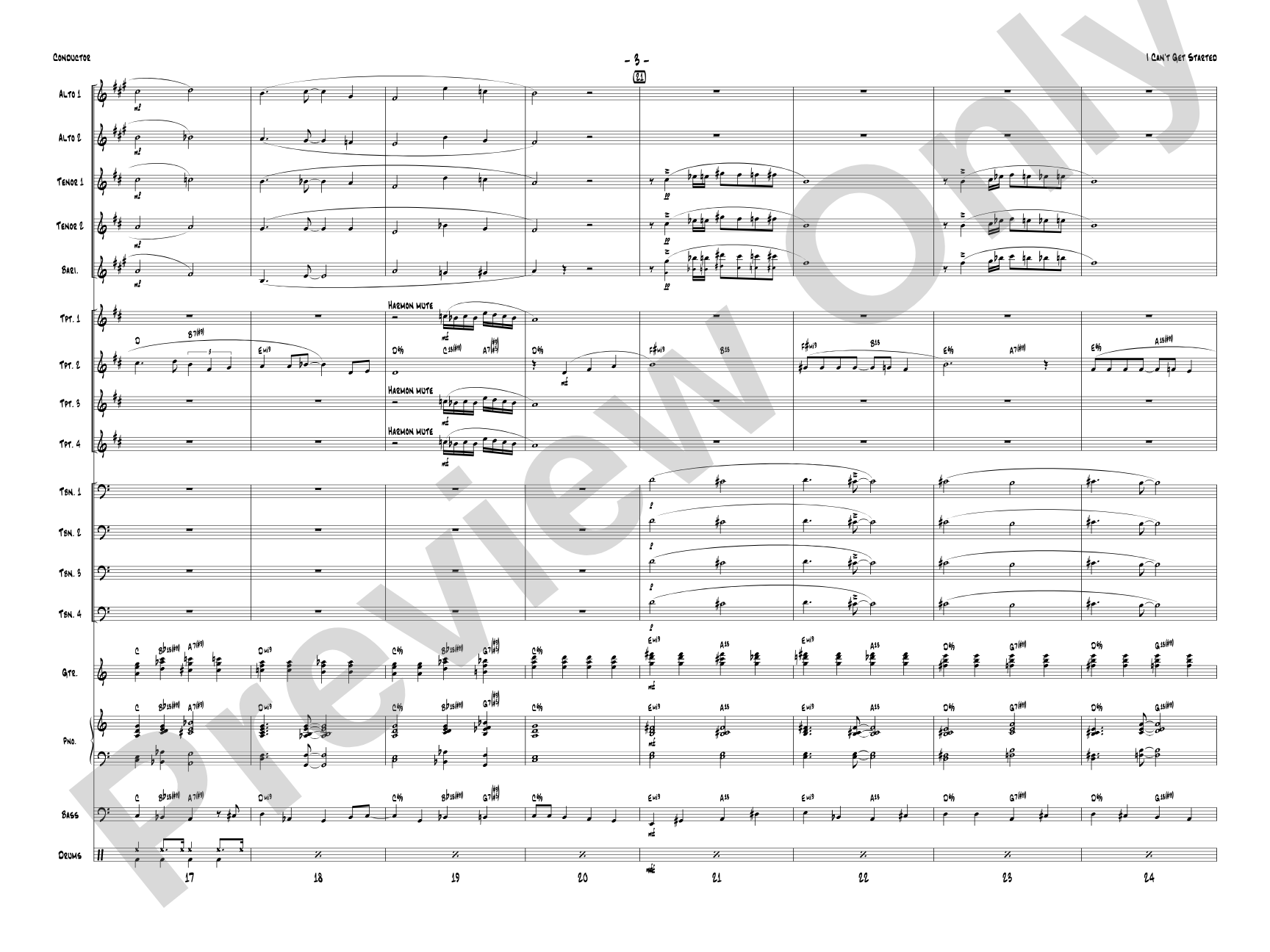
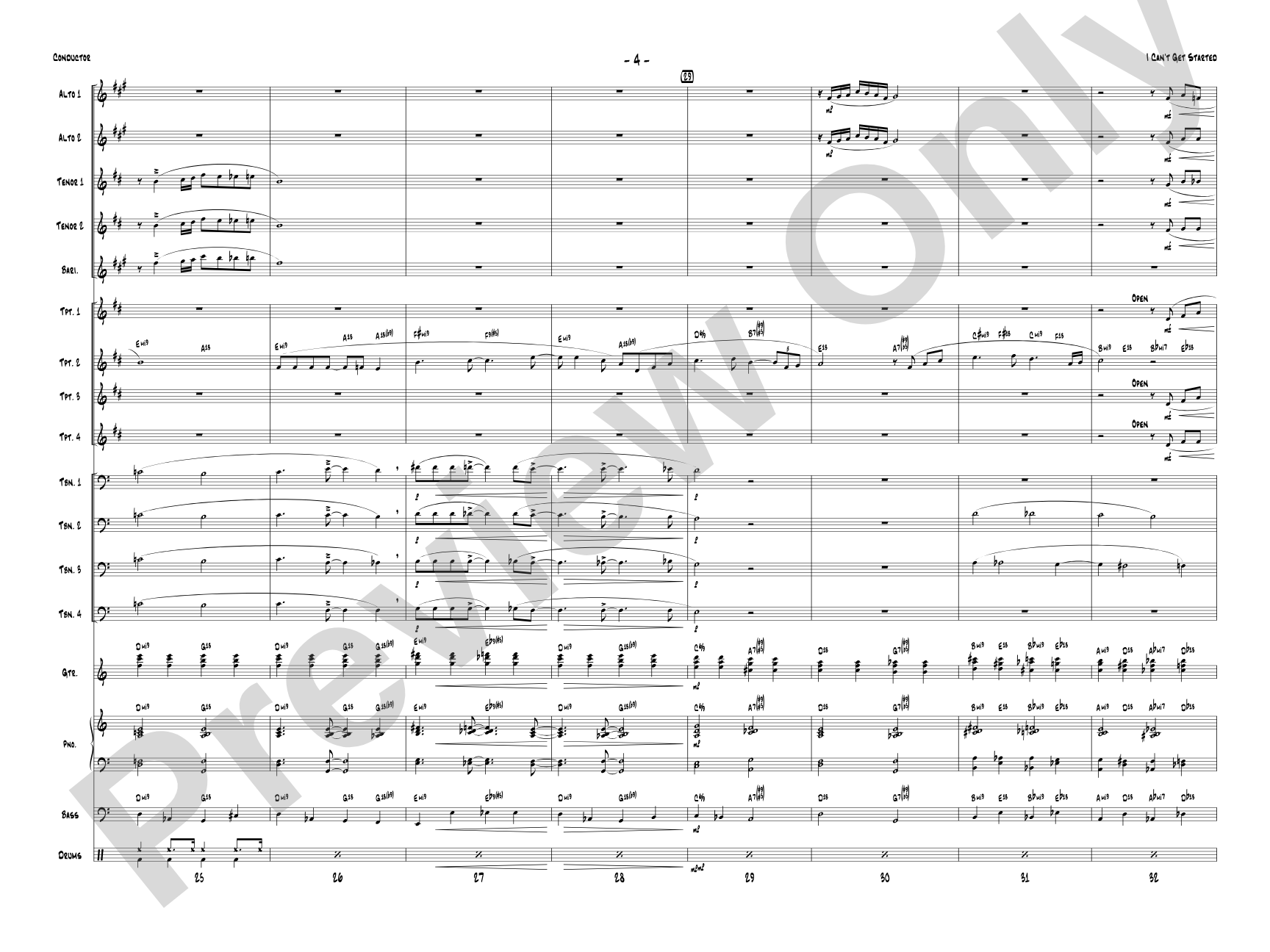
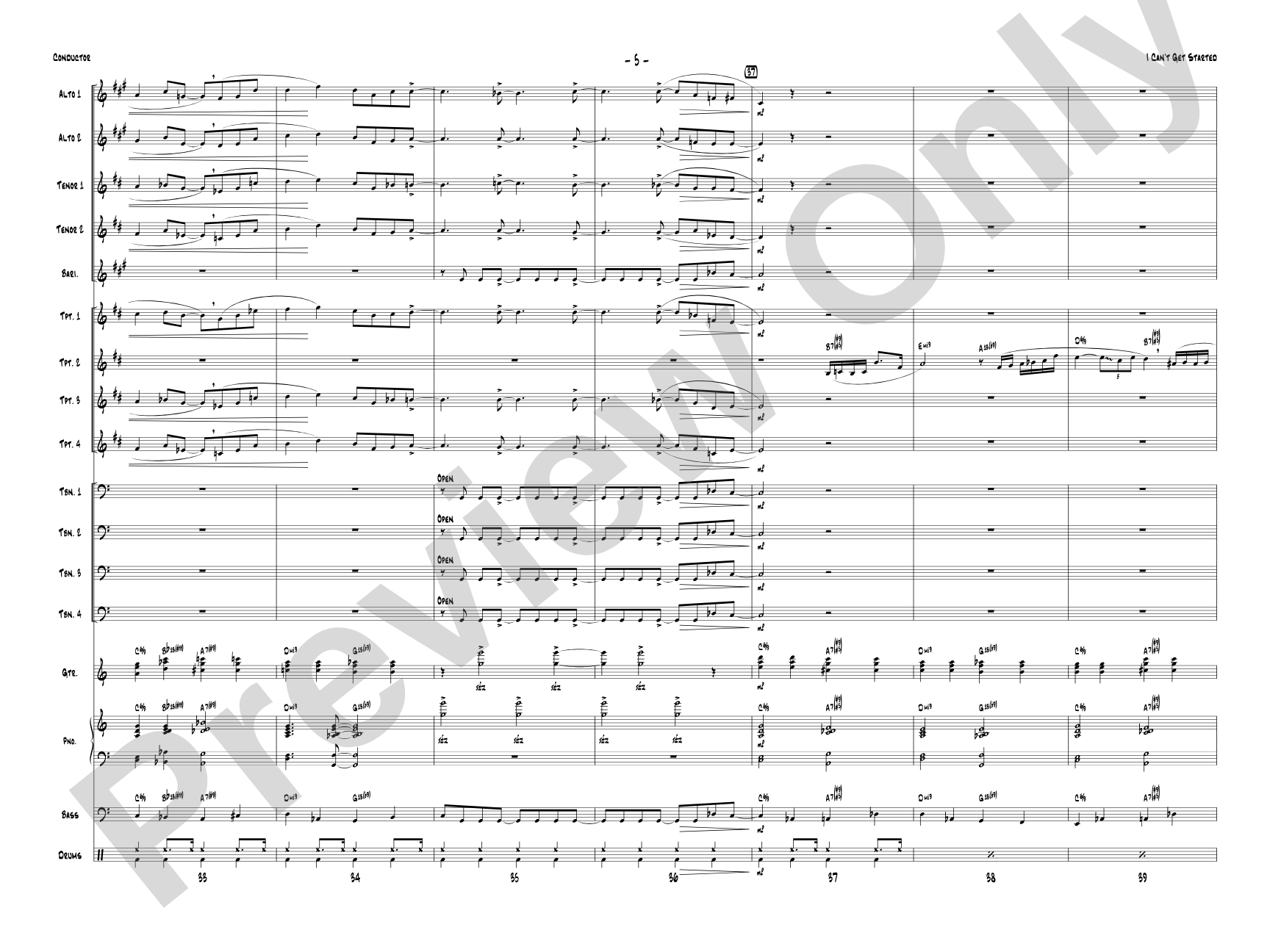
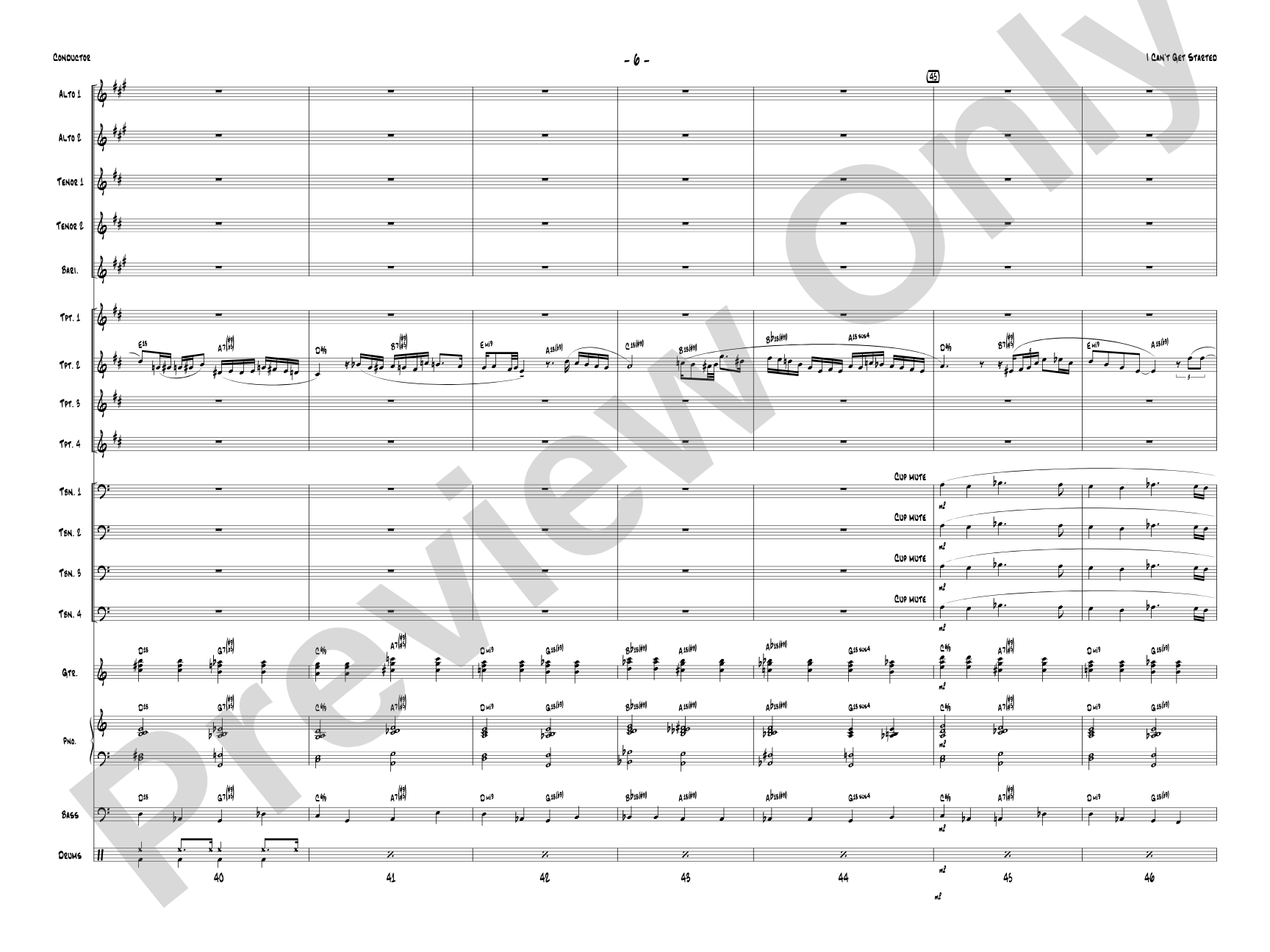
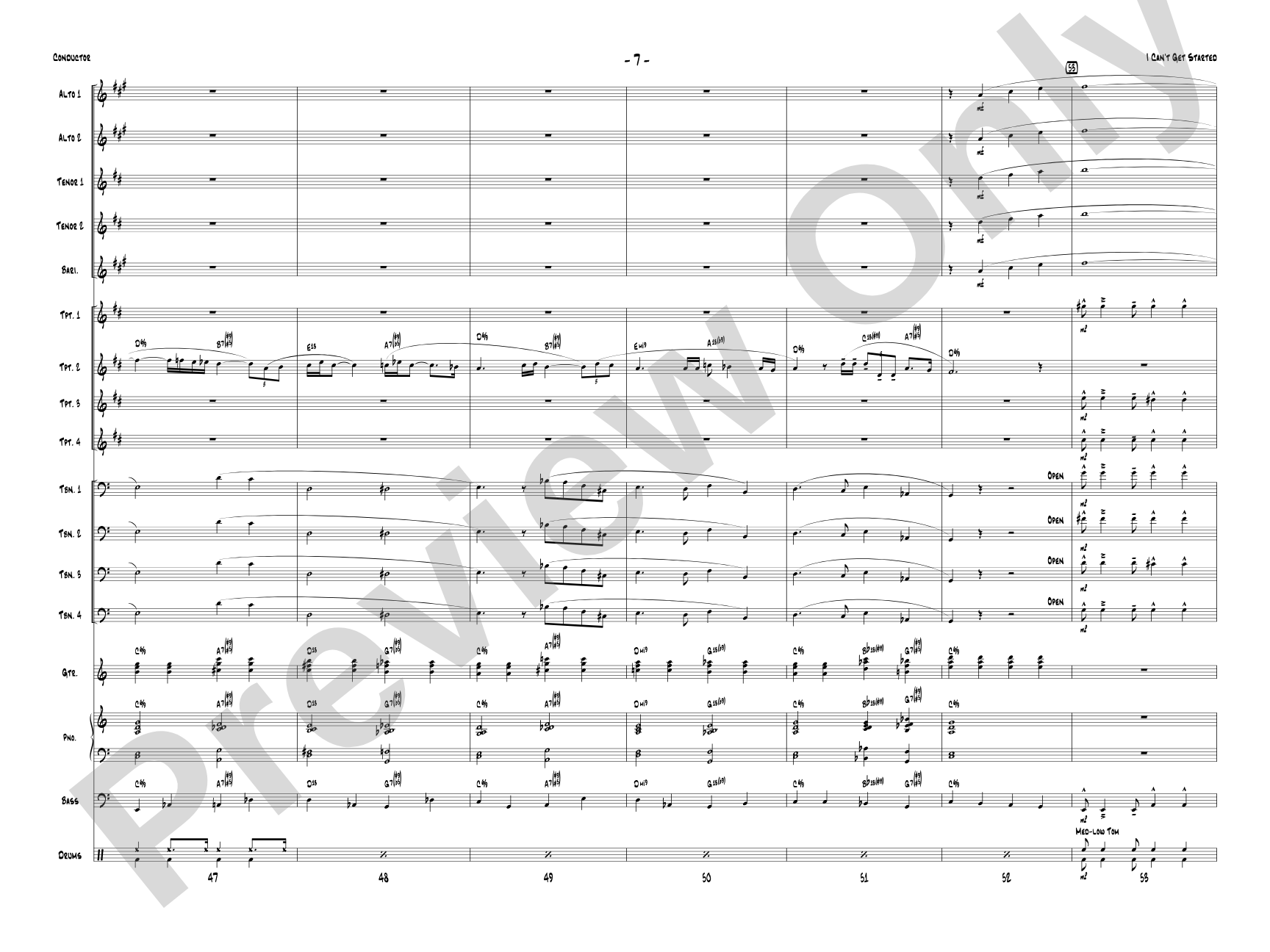
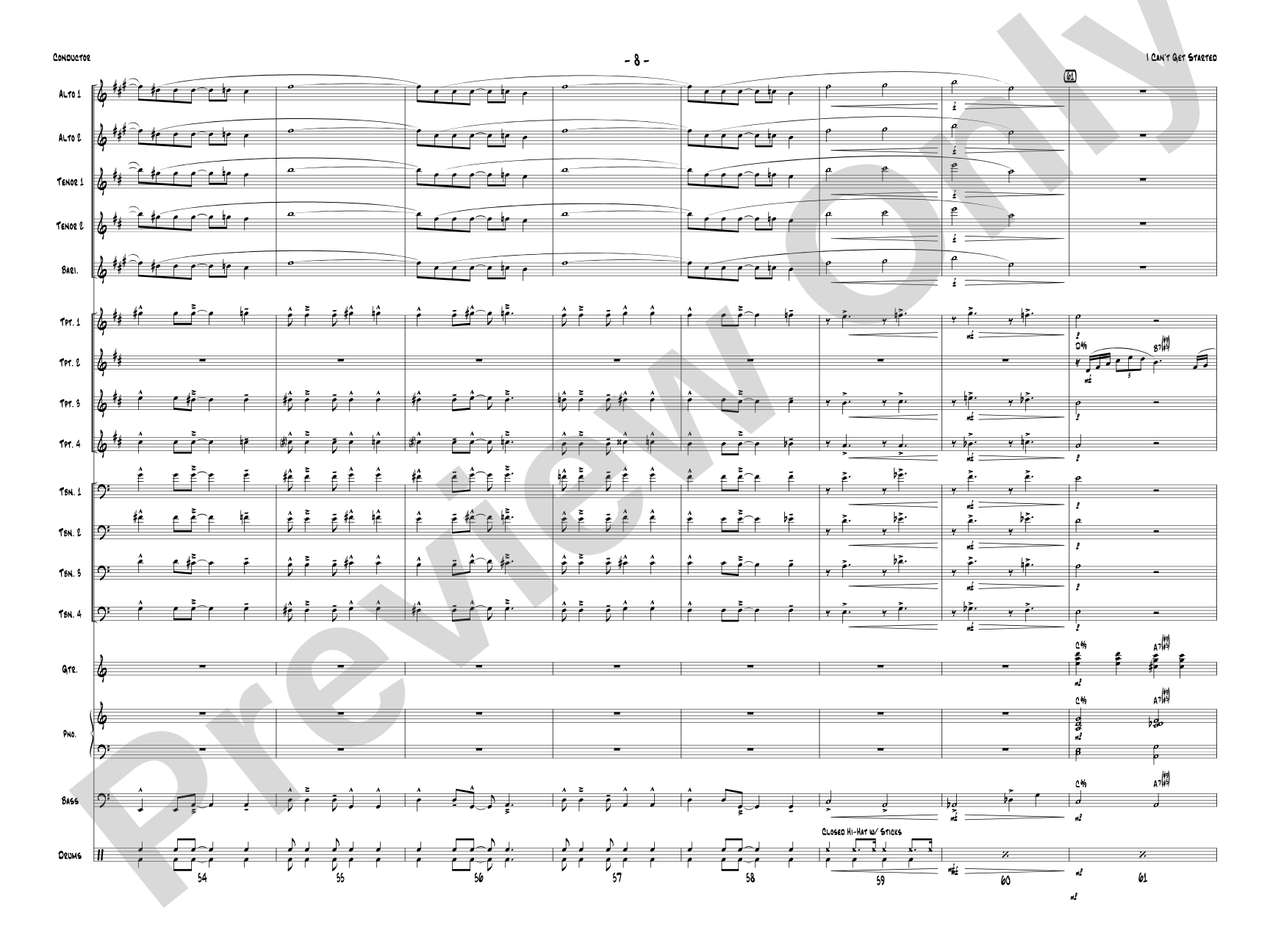
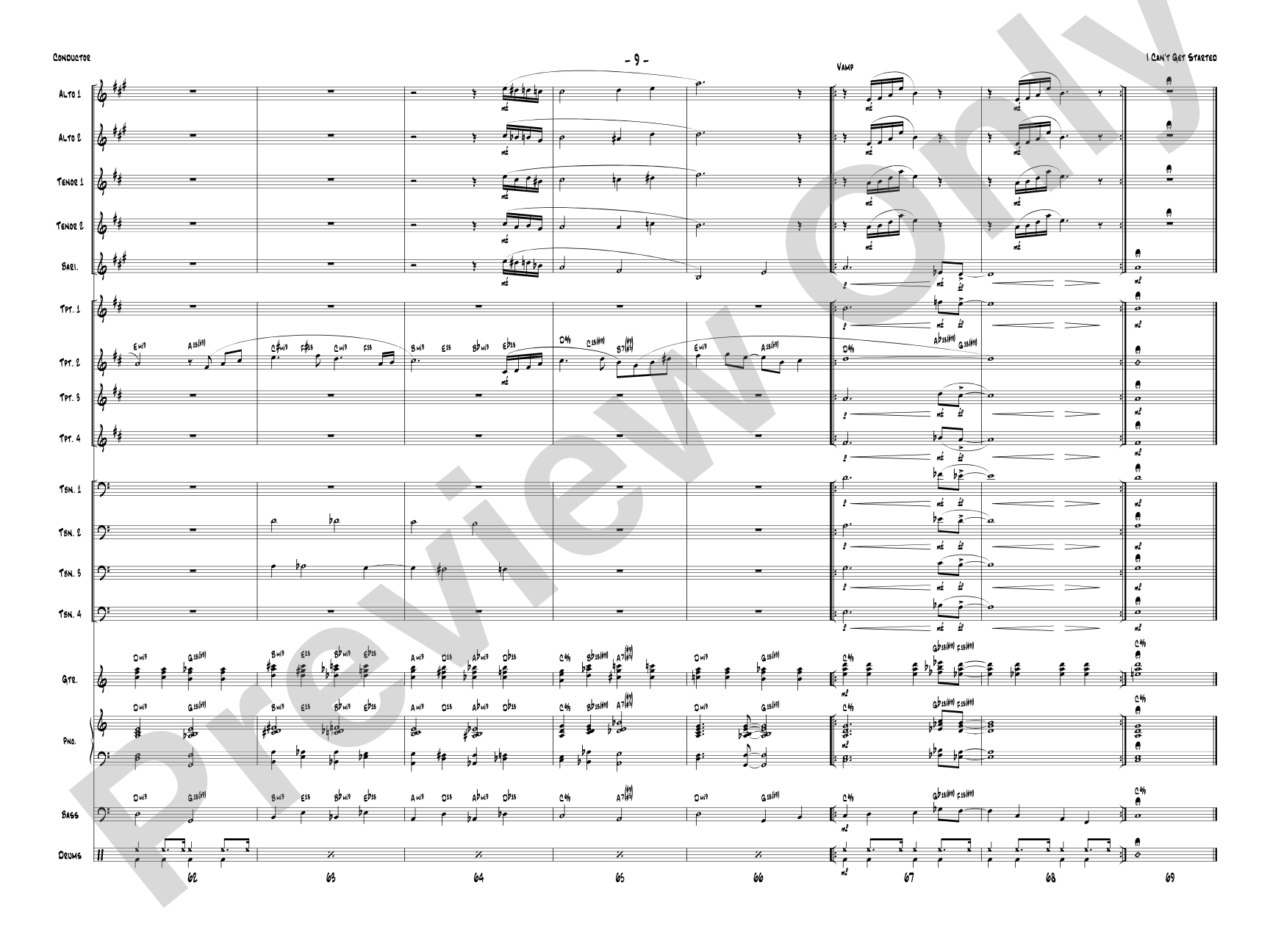


I Can't Get Started: Score
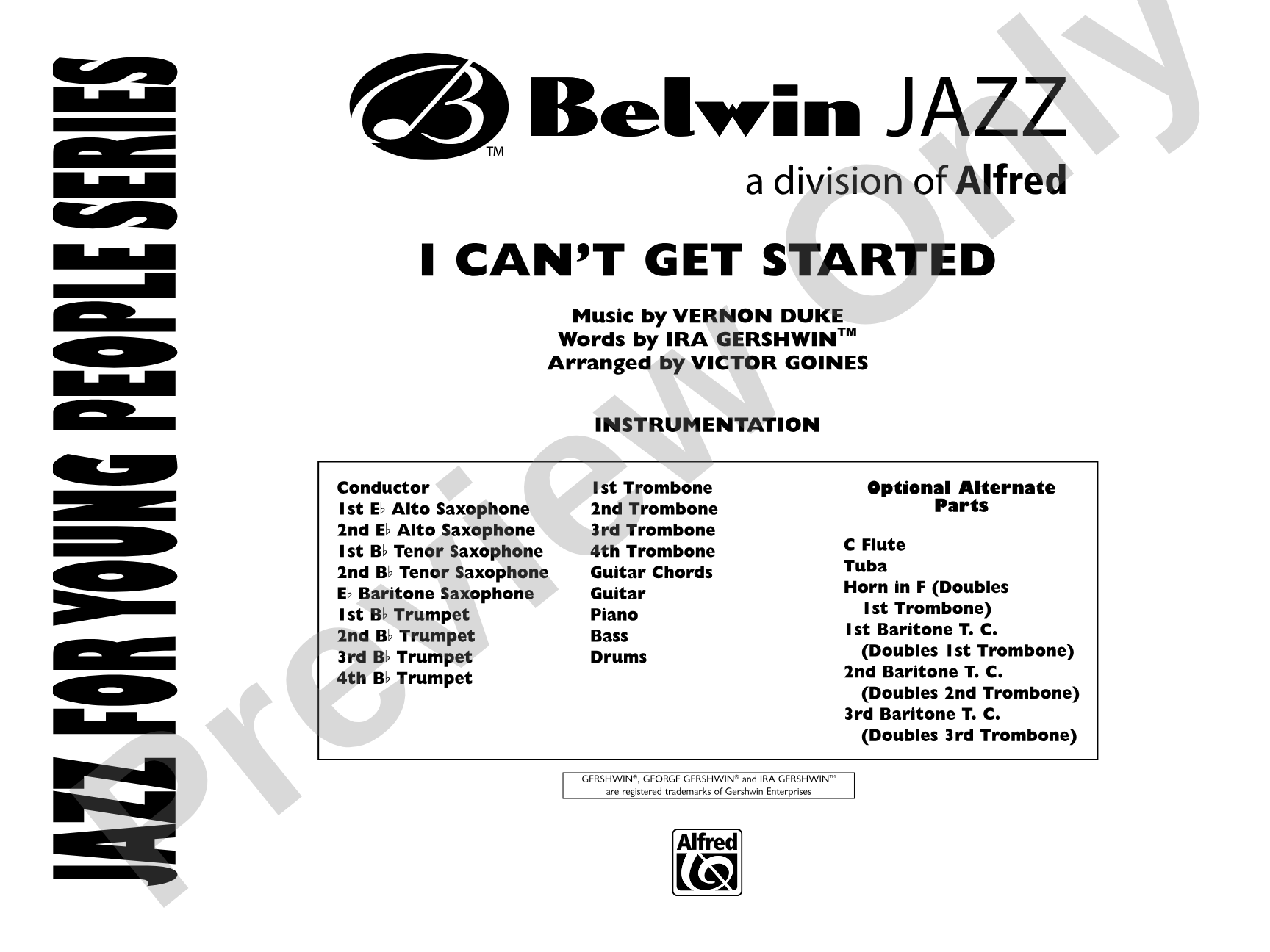
By Vernon Duke / arr. Victor Goines
Grade: 3 (Medium)
Item: 00-PR-0002593
$12.00
Pickup currently not available
Description
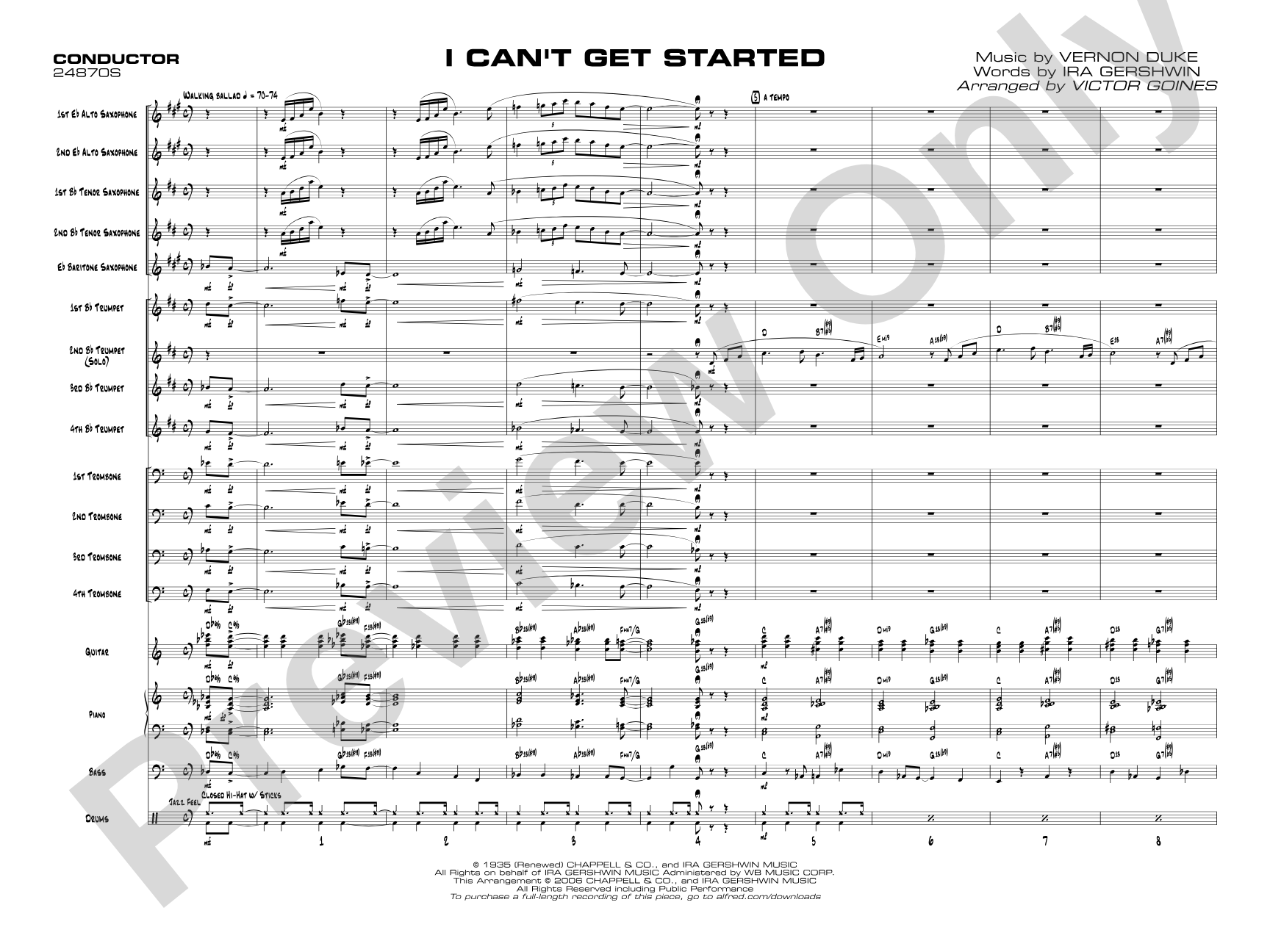
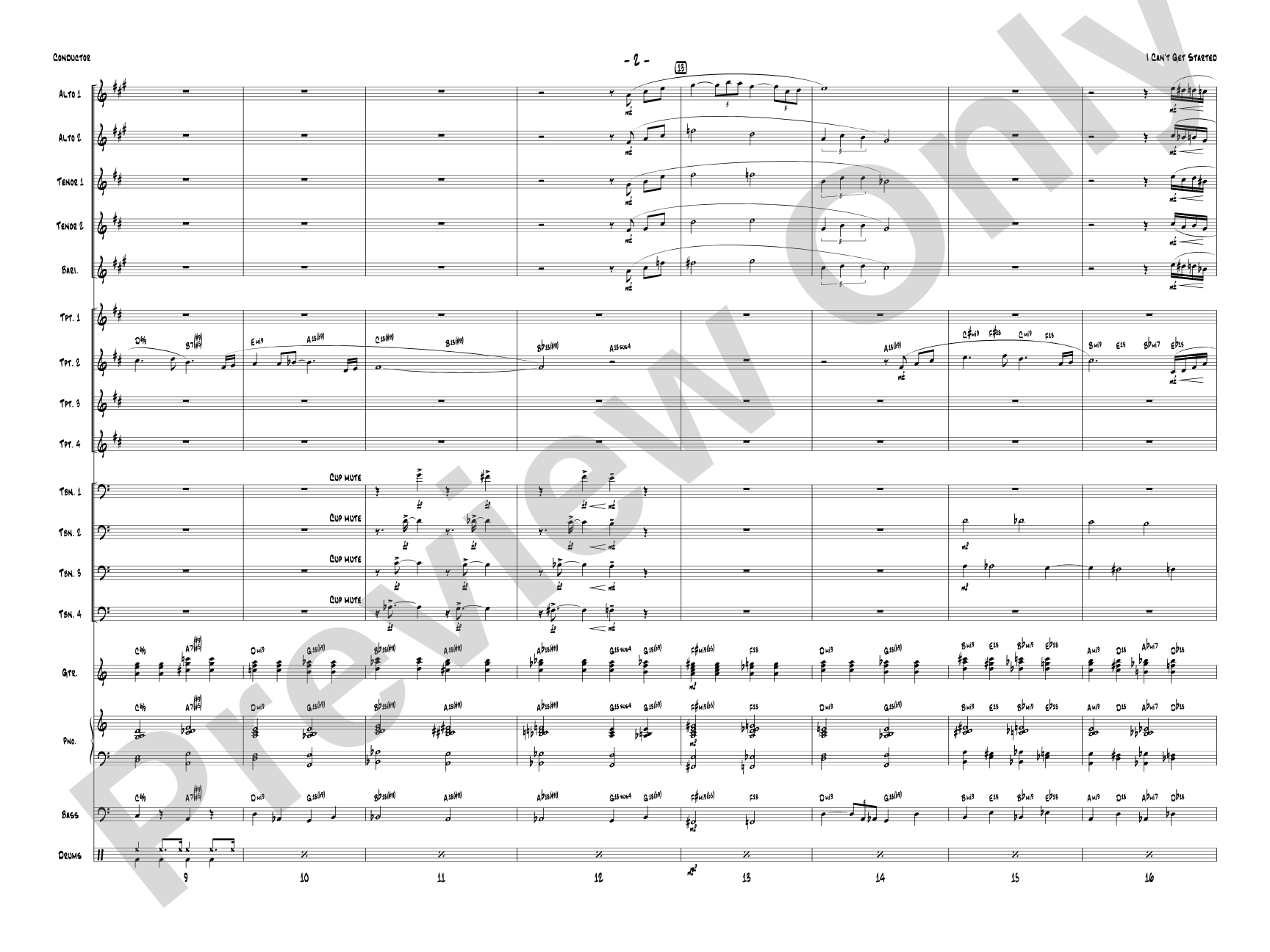
A classic trumpet solo arranged in a more contemporary style by Victor Goines. Correlated to the Jazz for Young People curriculum by Jazz at Lincoln Center. A written out solo is provided and the solo 2nd trumpet part range it to written F-sharp on the top line. Lead trumpet range is to written G-sharp above the staff. An effective chart for every library. This title is available in MakeMusic Cloud.


Don't just read it, hear it, play along with it, and watch your students grow with it. In MakeMusic Cloud, I Can't Get Started: Score comes alive with professional accompaniment, adjustable tempo, and built-in practice tools that turn solo practice into real progress.
Open in the Player
Jump straight in and assign it today.
Start Your Free Trial
Open this title and explore the full library in minutes.
Sample Audio
1
Audio File
--:--
0:00
0:00
Sample Video
No sample videos found.
Additional Details
Series:
Jazz for Young People Series
Publisher:
Alfred Music
Page Count:
58
SKU:
00-PR-0002593
More about this title
About the Composer: Vernon Duke
Vernon Duke (1903-1969) was a Russian-born composer who became a force in American musical theater and popular song during the 1920s through 1950s. His gift for melody and harmonic sophistication made him a sought-after composer for Broadway shows, film scores, and jazz standards that continue to define the Great American Songbook.
Why we love this
Victor Goines has reimagined this sophisticated standard through a contemporary lens that respects the melody while giving your ensemble room to breathe and swing. The arrangement balances accessibility with genuine jazz language, making it engaging for young musicians without sacrificing the song's inherent elegance. It's a chart that sounds mature on the bandstand and teaches real ensemble jazz skills in the process.
What to expect
Wistful and sophisticated, with enough contemporary character to keep young ears engaged. The melody unfolds naturally over a swinging accompaniment, creating moments of genuine lyricism alongside ensemble interplay that feels fresh and alive.
Who it's for
This arrangement suits jazz ensembles working at Grade 3 level, particularly those using the Jazz at Lincoln Center curriculum. Lead trumpet players with secure upper register technique and rhythm sections ready to support a feature will find this chart rewarding.
How to get the most out of it
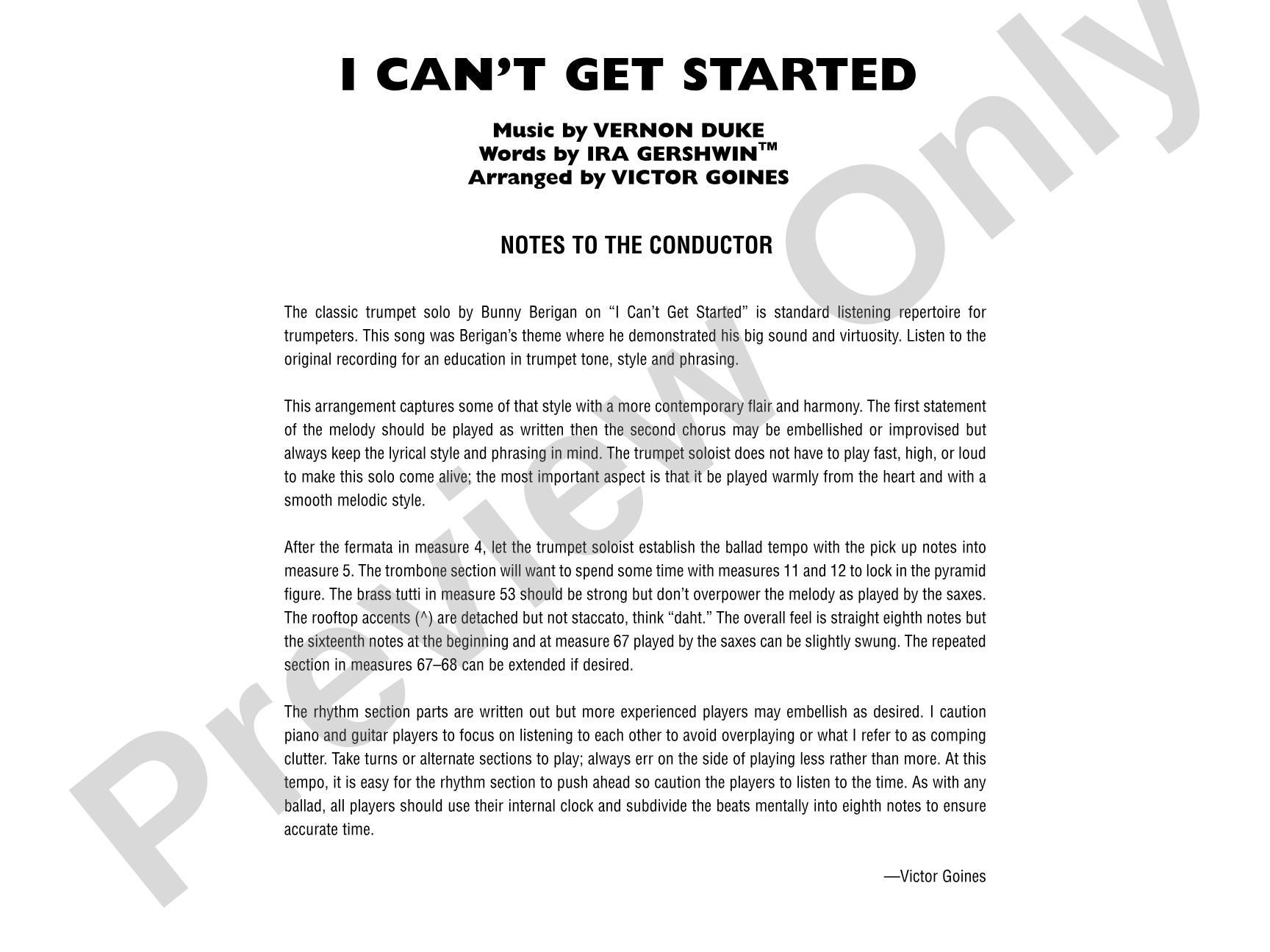
- Study the written-out trumpet solo carefully before the ensemble learns the chart. The solo establishes the song's identity and shapes how the ensemble will accompany and support the lead voice.
- Balance the lead trumpet prominently so every listener hears the melody clearly, but ensure the rhythm section locks together with precision. That foundation lets the solo breathe.
- Encourage the lead trumpet to listen to classic recordings of this standard before rehearsals begin. Familiarity with the song's phrasing and swing feel will inform your ensemble's approach.
- Pay attention to the solo 2nd trumpet part. With its range extending to F-sharp, it requires a capable player who can handle upper register work while maintaining tone quality.
How to use it
Feature this as a centerpiece in a jazz concert where it can stand alongside other standards or more modern compositions. The combination of a recognizable melody with contemporary arranging makes it an excellent bridge piece for audiences encountering jazz for the first time.
Skills your students will build
- Comping changes in a jazz context while maintaining consistent groove
- Balancing solo and ensemble voices in real time
- Executing swing rhythms and interpreting jazz articulation
- Reading lead trumpet range to written G-sharp above the staff
- Listening and responding to a featured soloist