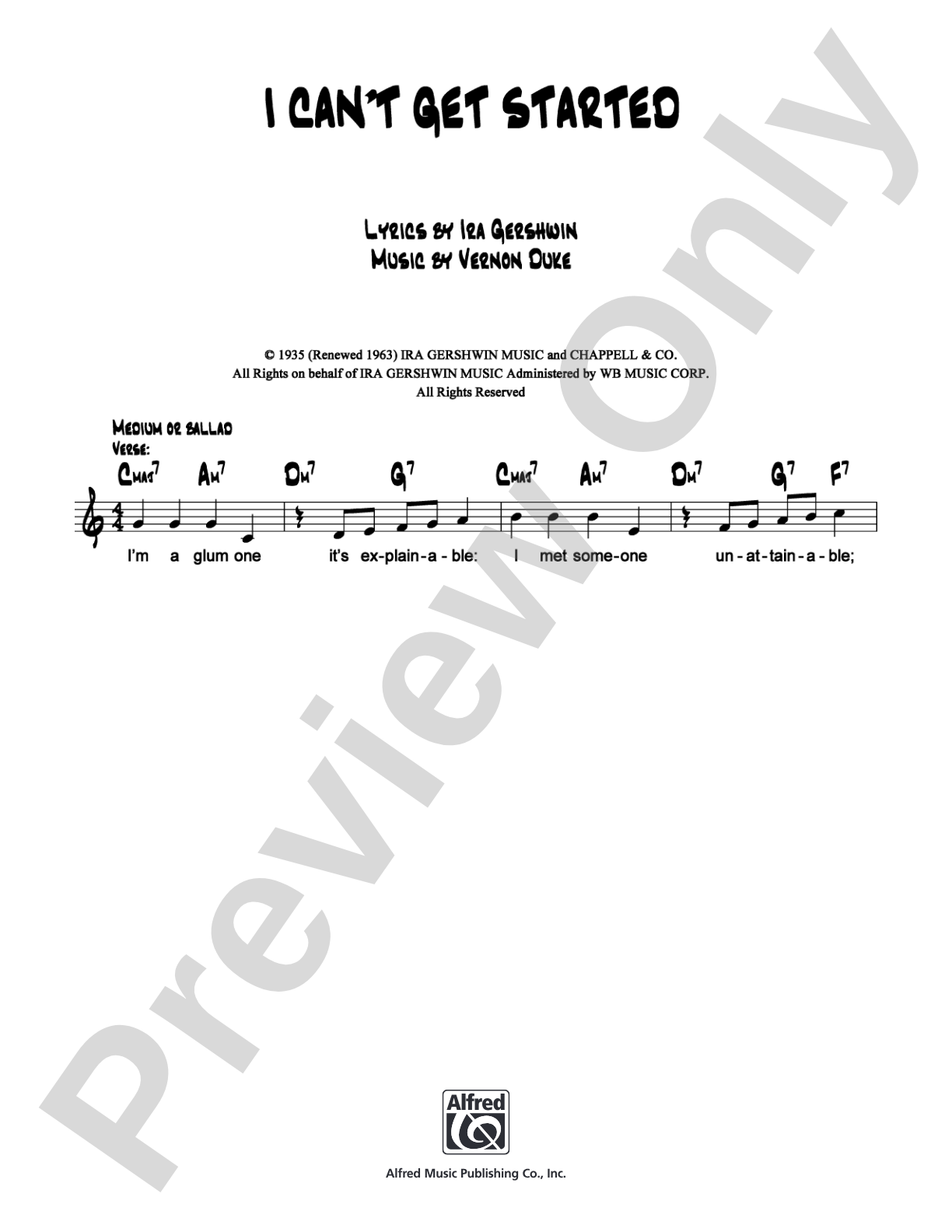
I Can't Get Started: Lead Sheet Digital Sheet Music

I Can't Get Started: Lead Sheet Digital Sheet Music

Vernon Duke, Frank Sinatra

Item: 00-PS-0007855

Digital Download
$1.99
Description

I Can't Get Started: Lead Sheet Digital Sheet Music isn't in MakeMusic Cloud just yet...but it could be. Let us know you'd like to see it, and you'll help shape what comes next. In the meantime, start a free trial and dive into thousands of interactive titles your students can play along with today.

Sample Audio
No sample audio found.
Sample Video
Additional Details
SKU: 00-PS-0007855

More about this title

About the Artist: Frank Sinatra

Frank Sinatra (1915-1998) shaped popular song interpretation for generations. His phrasing, breath control, and ability to inhabit a lyric set the standard for jazz singers and remain essential listening for anyone teaching or studying vocal jazz standards.

Why we love this

This lead sheet captures one of the great American standards in its most useful form for jazz ensembles, combos, and vocal jazz students. Sinatra's interpretation of this Vernon Duke composition became definitive, and having the melody and chord changes on a single page means your players can focus on comping, soloing, and listening rather than page-turning.

What to expect

Yearning and intimate. The melody sits in a comfortable range and moves with conversational ease, but the harmonic sophistication underneath keeps things interesting. There's a quality of reaching for something just out of grasp, which is exactly what the lyric conveys.

Who it's for

Jazz directors and combo leaders who need a quick, readable chart for students learning to comp, solo, and interpret standards; vocal jazz singers working with a small group; and any musician interested in studying Sinatra's interpretive choices through the lens of melody and harmony.

How to get the most out of it

  • Treat the melody as a singing line even on instrumental instruments. The phrasing and space between phrases are what make this standard sing.
  • Lock in on the harmonic movement rather than pushing the tempo. This tune rewards musicians who listen to the changes underneath.
  • Leave room for soloing space. A lead sheet works best when the ensemble understands who plays the head, who solos, and in what order.
  • Pay attention to the original lyrics when learning the tune. Understanding what Sinatra was expressing rhythmically and emotionally will sharpen your interpretation of the changes.

How to use it

Use this in a jazz standards unit or combo rehearsal where the focus is on reading changes and developing listening skills. It works equally well as a feature for a capable vocalist or as a vehicle for instrumental soloists learning to navigate a sophisticated harmonic landscape. Include it in a standards showcase or jazz concert where students can demonstrate their ability to interpret a song the way a master did.

Skills your students will build

  • Reading lead sheet notation and understanding chord symbols
  • Comping over changes in a jazz context
  • Phrasing a melody with space and intention
  • Improvising over a standard form
  • Listening and responding to harmonic movement

You May Also Like