(I Can't Get No) Satisfaction: Guitar Sheet Music Preview

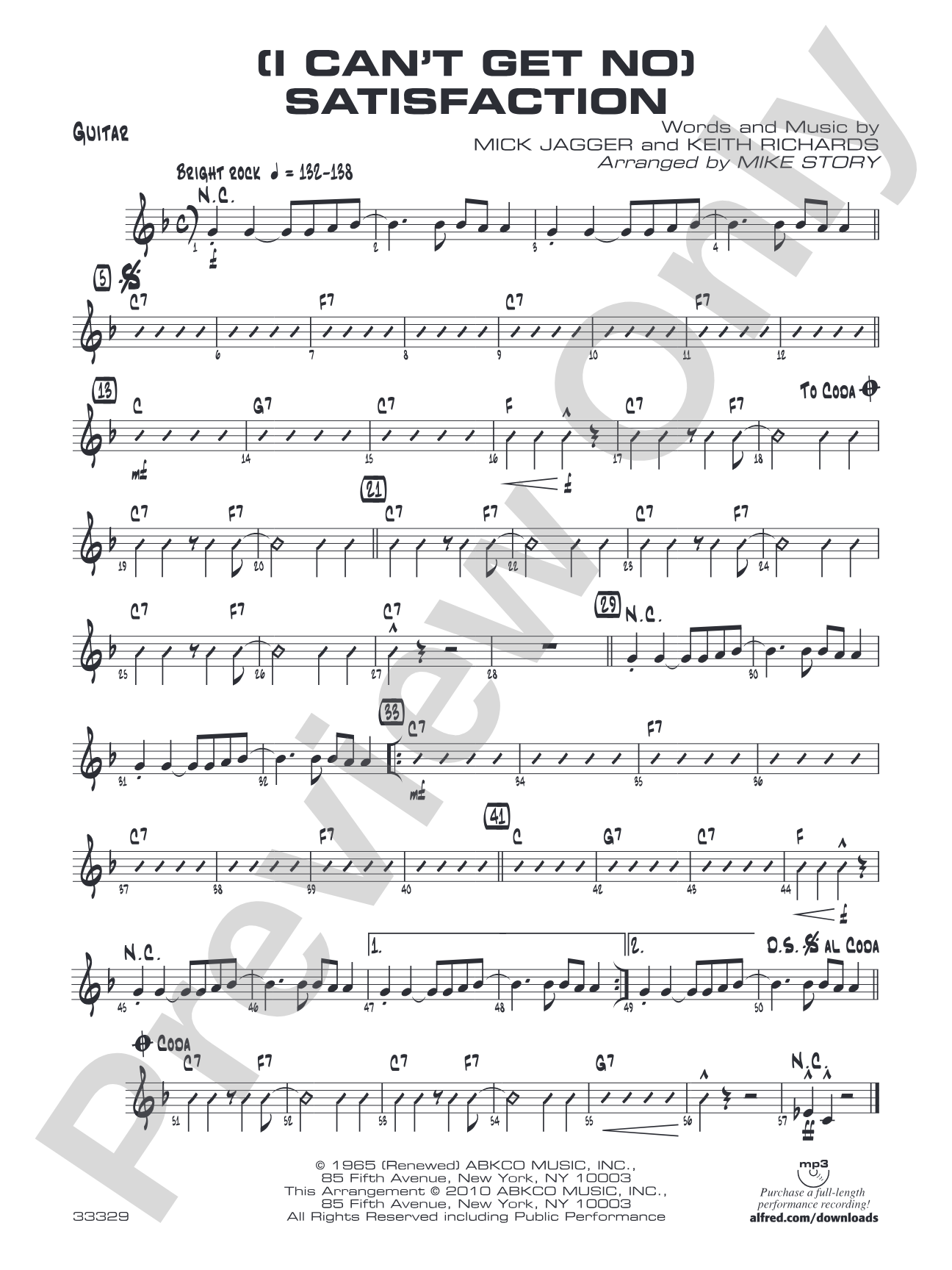
(I Can't Get No) Satisfaction: Guitar

Words and music by Mick Jagger and Keith Richards [The Rolling Stones] / arr. Mike Story

Grade: 1 (Easy)

Item: 00-PC-0017516_G

Digital Download
$3.00
Description
(I Can't Get No) Satisfaction from the First Year Charts for Jazz Ensemble series is designed for first year jazz ensembles. Full instrumentation includes 5 saxophones, 6 brass, and 4 rhythm parts. Reduced instrumentation is playable with 3 saxophones, 2 trumpets, 1 trombone, and 3 rhythm parts. Optional parts include flute, tuba, horn in F, and baritone T.C/tenor sax. All solos are written out, the rhythm section parts suggest chord voicings and rhythms and guitar chord frames are provided to assist young guitarists.

Don't just read it, hear it, play along with it, and watch your students grow with it. In MakeMusic Cloud, (I Can't Get No) Satisfaction: Guitar comes alive with professional accompaniment, adjustable tempo, and built-in practice tools that turn solo practice into real progress.

Sample Audio
0:00
0:00
Sample Video
Additional Details
Series: First Year Charts for Jazz Ensemble
Publisher: Alfred Music
Page Count: 44
SKU: 00-PC-0017516_G

More about this title

About the Composer: Mick Jagger

Mick Jagger cofounded The Rolling Stones in 1962 and became one of rock music's most influential frontmen. His songwriting partnership with Keith Richards produced some of the most recognizable melodies and hooks in popular music history, songs that have transcended generations and genres. For music educators, Jagger's work offers direct access to culturally relevant material that engages student musicians and demonstrates how strong melodic and rhythmic ideas drive memorable arrangements.

Why we love this

This arrangement captures the relentless energy and iconic riff that define the original while remaining completely accessible for first-year players. The written-out solos eliminate guesswork, the flexible instrumentation lets you adapt to your ensemble's needs, and the chord voicings and guitar frames give rhythm section members genuine support rather than leaving them to improvise at this stage. Your students will recognize the song immediately, which does half the work of keeping them engaged.

What to expect

Propulsive and confident, driven by that signature riff that never lets up. The arrangement has attitude and swagger without sounding polished or overdone, capturing the raw energy of a song built on rhythm and repetition rather than technical complexity.

Who it's for

First-year jazz ensemble players who need a chart that builds foundational ensemble skills without overwhelming them. Directors looking for repertoire that connects with students' existing musical knowledge and motivates them to improve their reading and ensemble awareness.

How to get the most out of it

  • Lock the rhythm section into the opening riff as a unit before adding any other voices; it's the foundation of the entire arrangement and needs to feel inevitable.
  • Emphasize the space and restraint in the introduction rather than rushing forward; let that famous guitar line breathe so the entrance of horns lands with impact.
  • Balance the written solos carefully so featured players don't overshadow the ensemble backdrop, especially during rhythm section breaks.
  • Pay attention to the dynamic contrasts between the verses and the chorus; many first-year ensembles play everything at the same volume.

How to use it

Program this early in the year as a morale booster and a teaching tool for interpreting a rock groove in a jazz ensemble context. It works equally well as a concert opener that energizes an audience or as a mid-year repertoire choice after your students have developed basic ensemble fundamentals.

Skills your students will build

  • Locking rhythm section parts to a steady groove
  • Reading and executing written solos with rhythmic clarity
  • Balancing individual lines within ensemble texture
  • Interpreting rock-based rhythmic feels in a jazz ensemble setting
  • Understanding basic jazz chord voicings through rhythm section parts

You May Also Like