
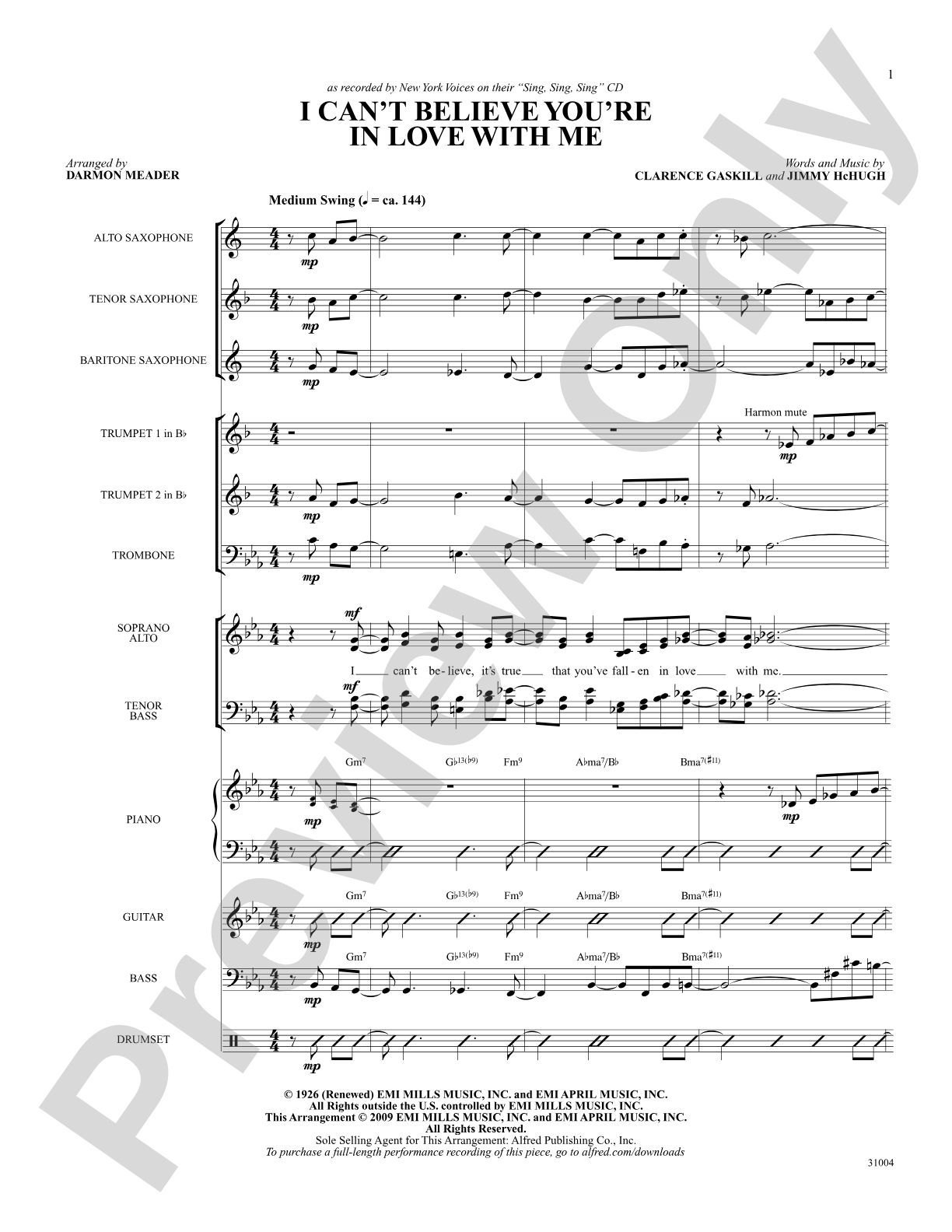
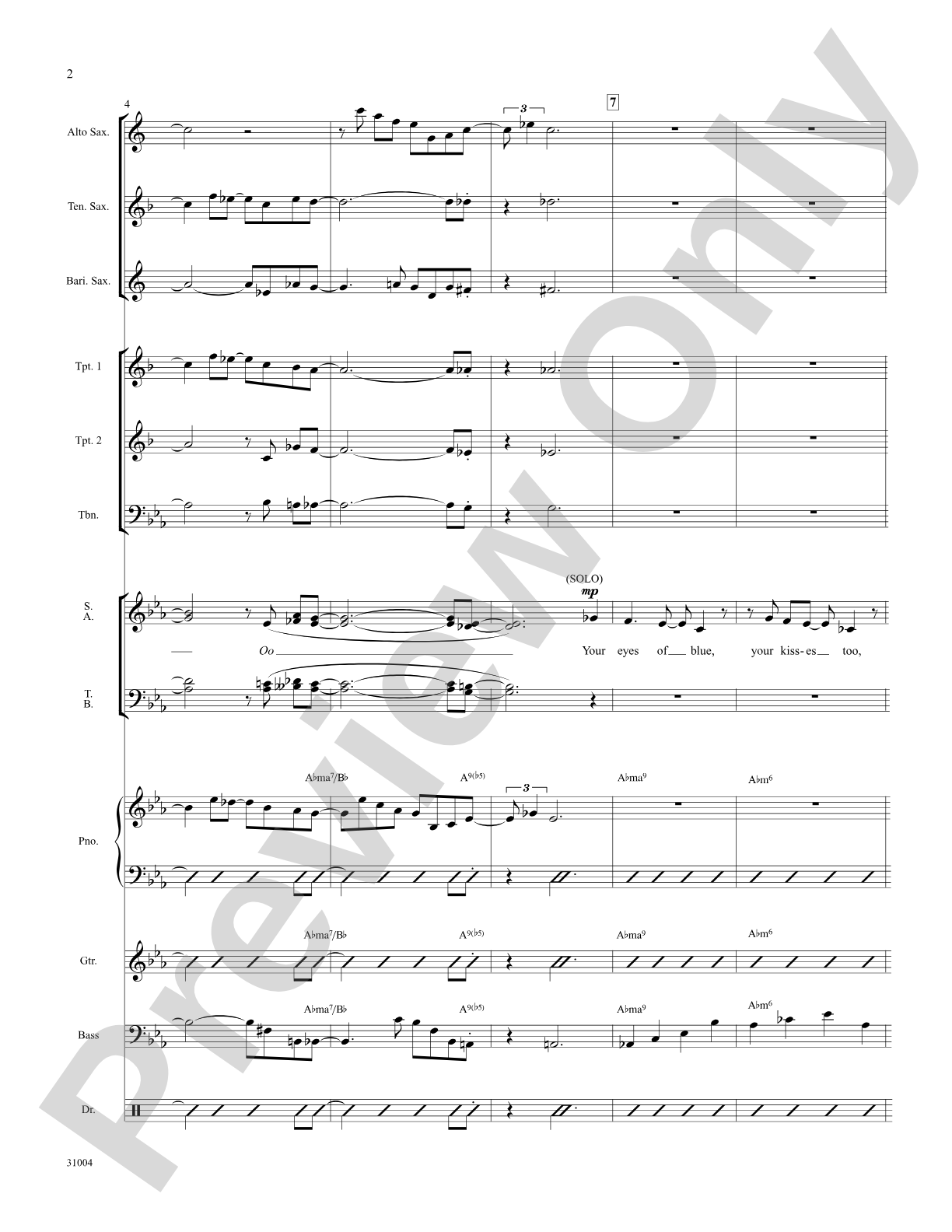
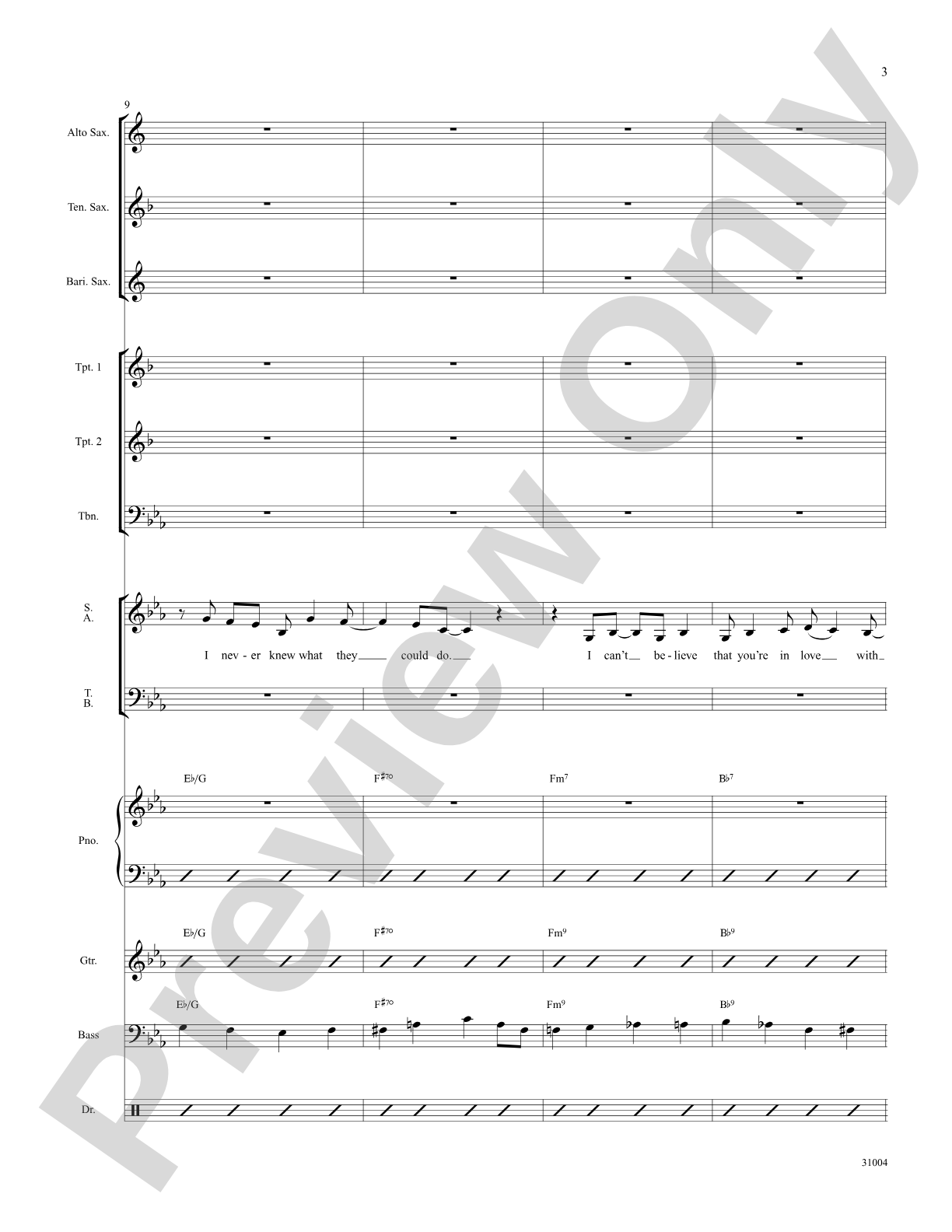
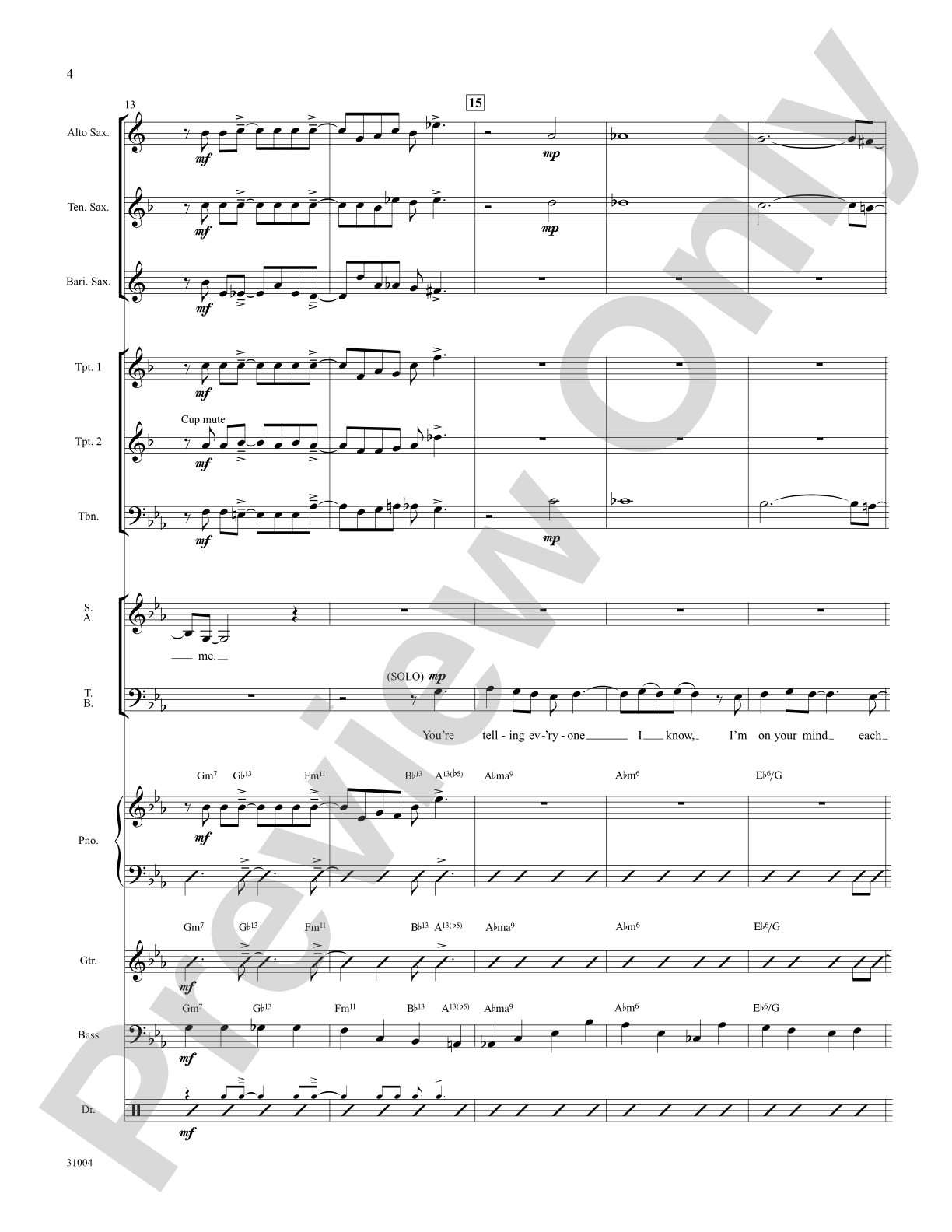
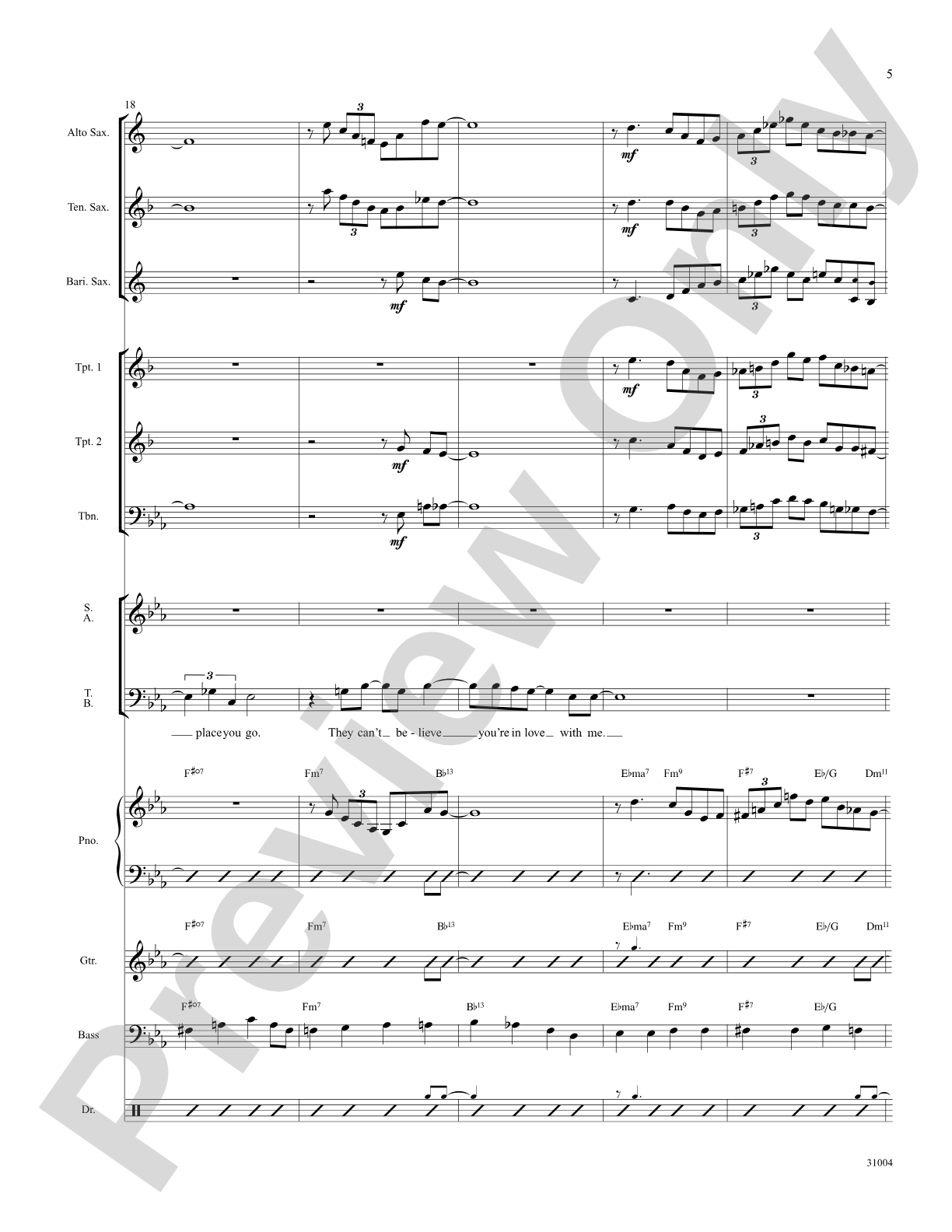
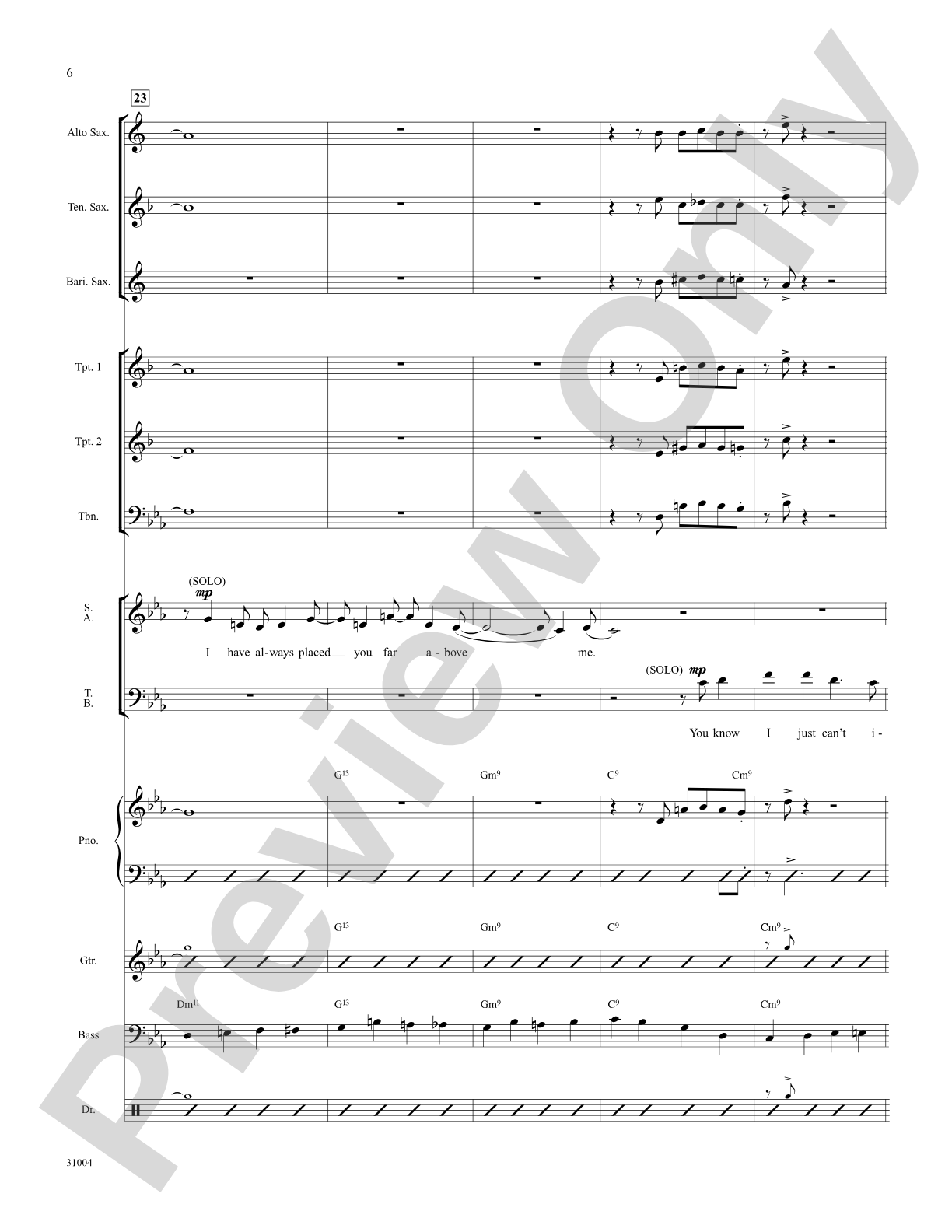
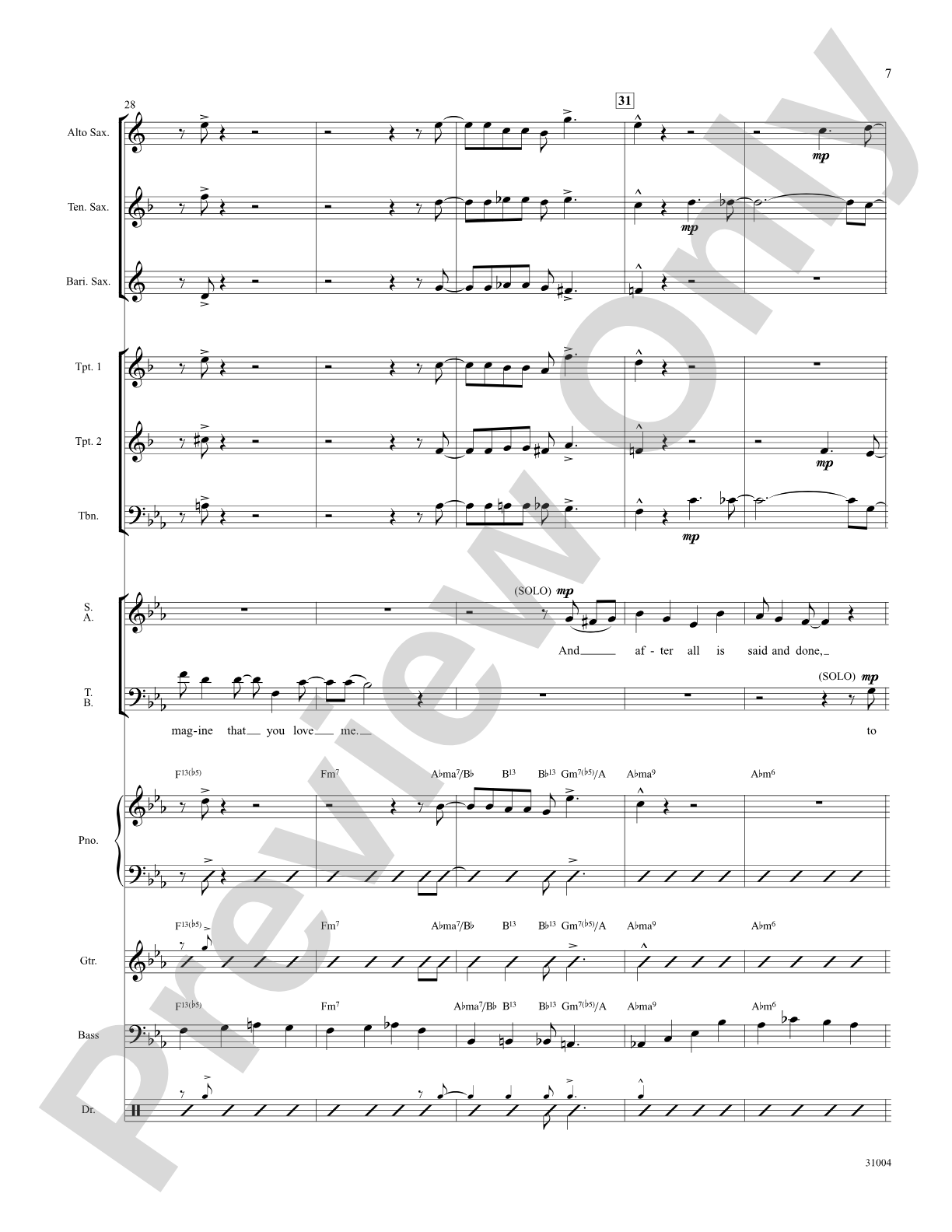
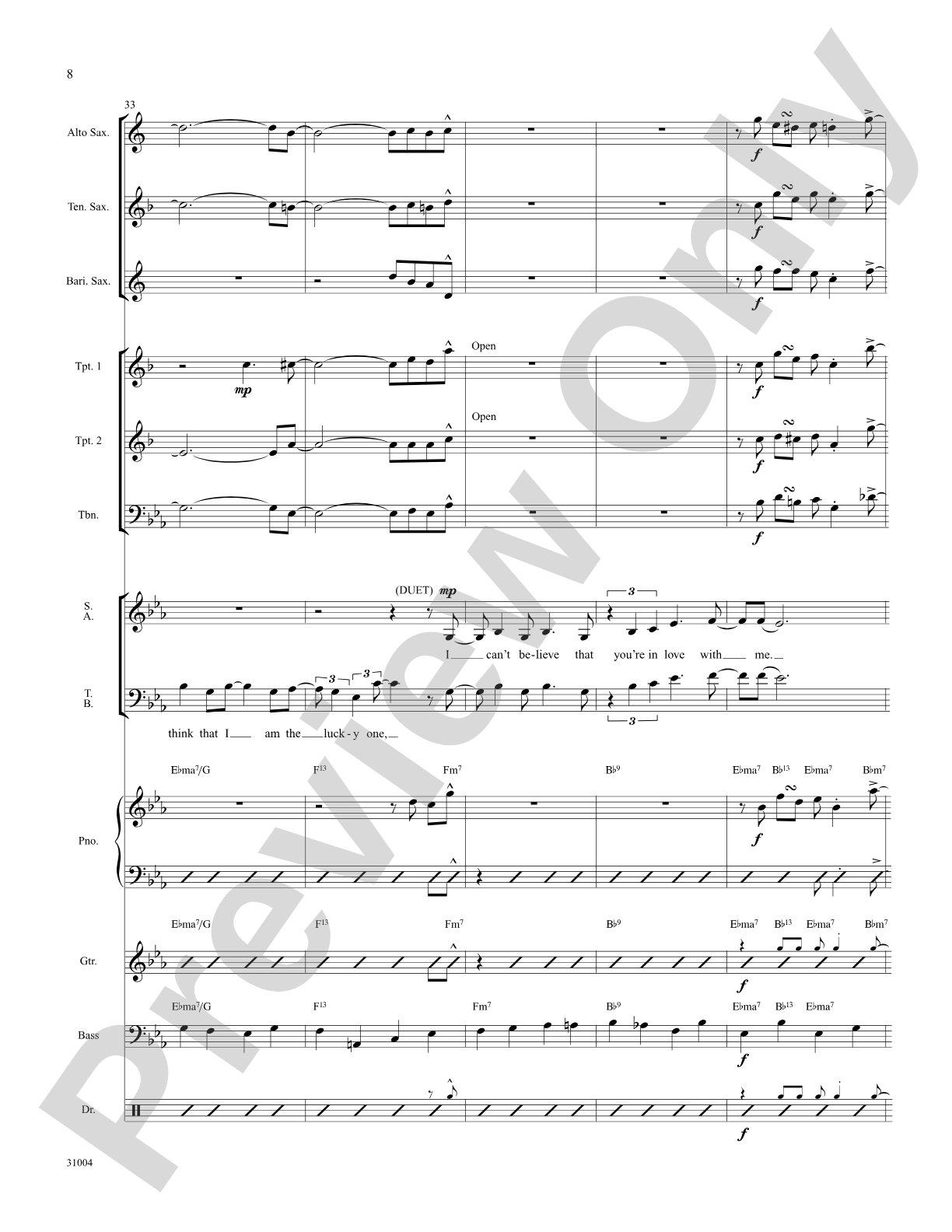
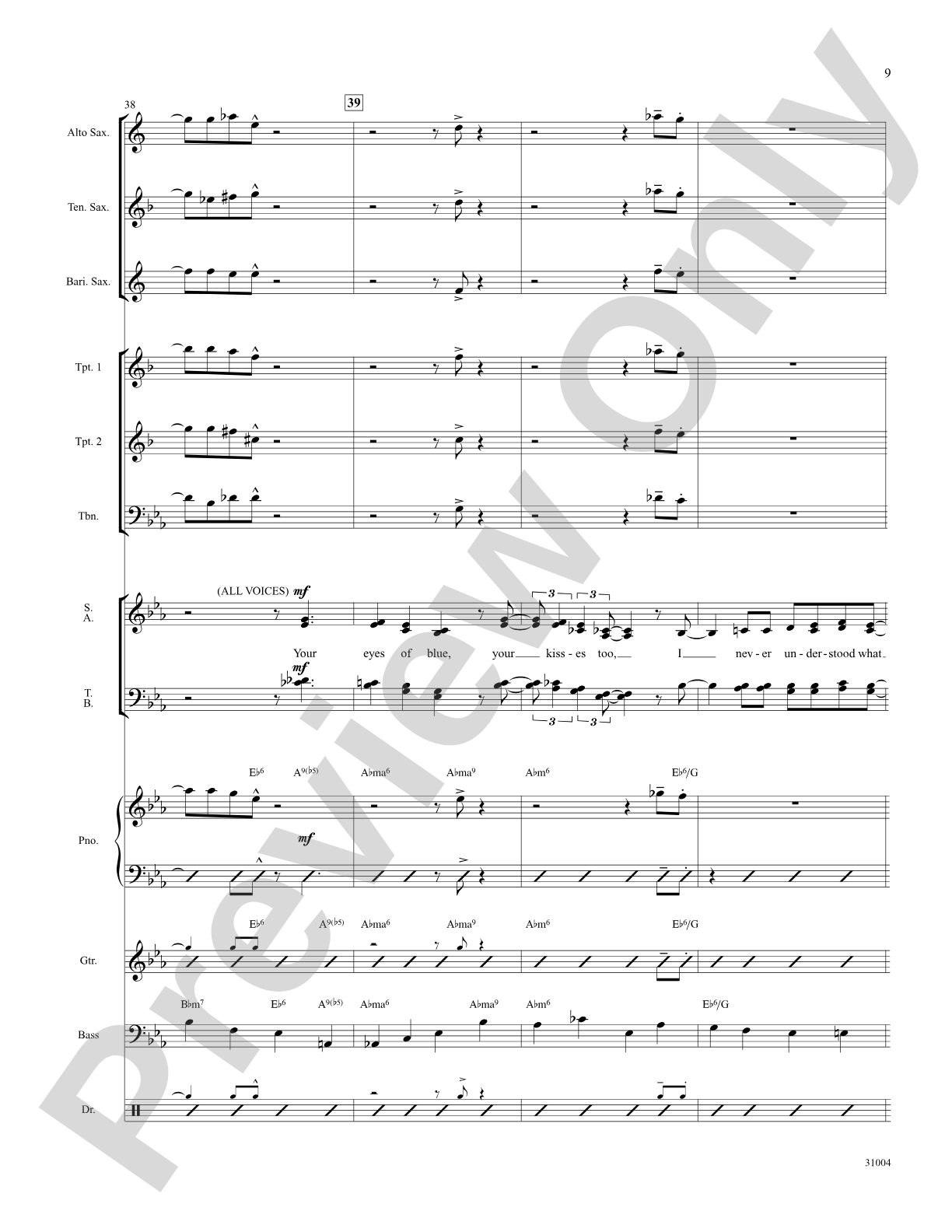
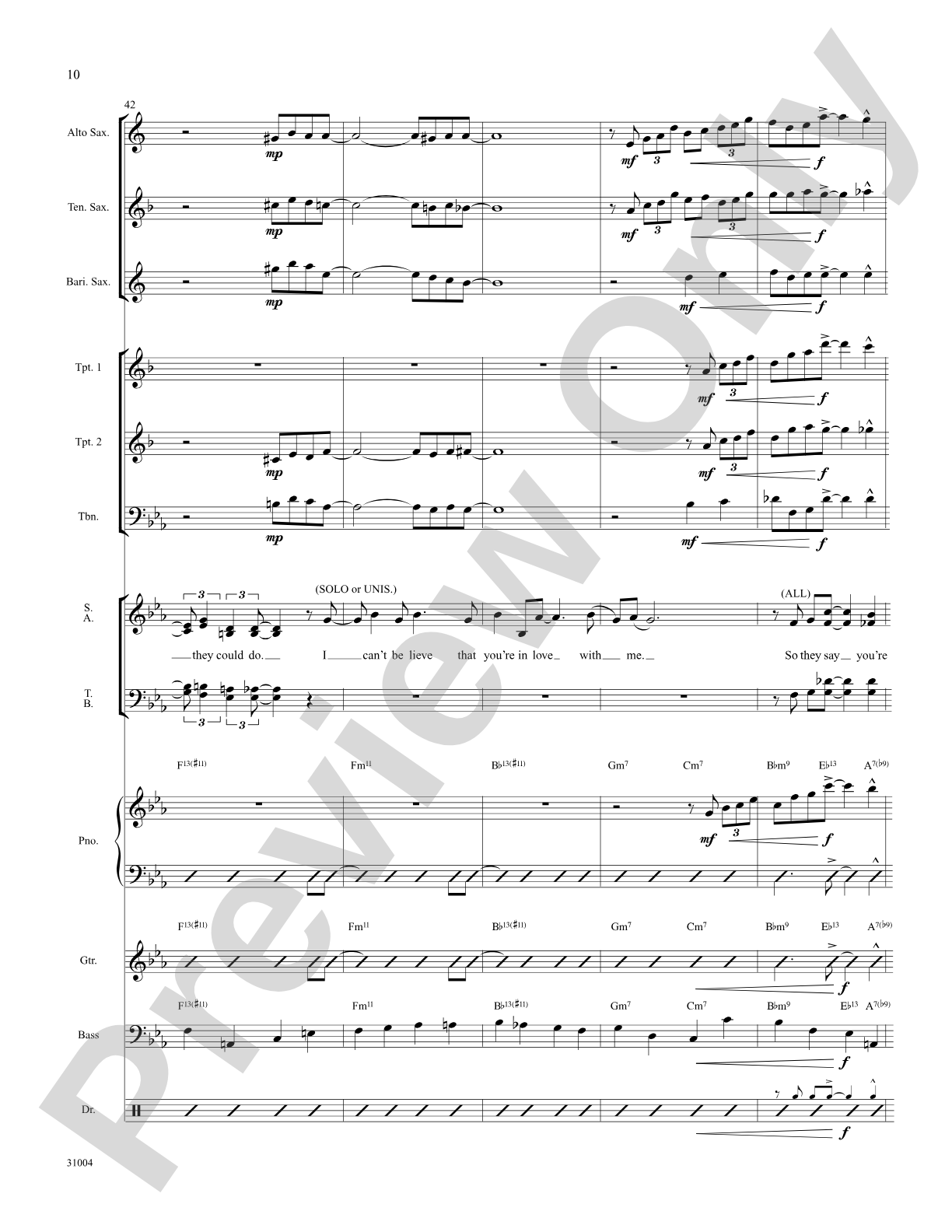
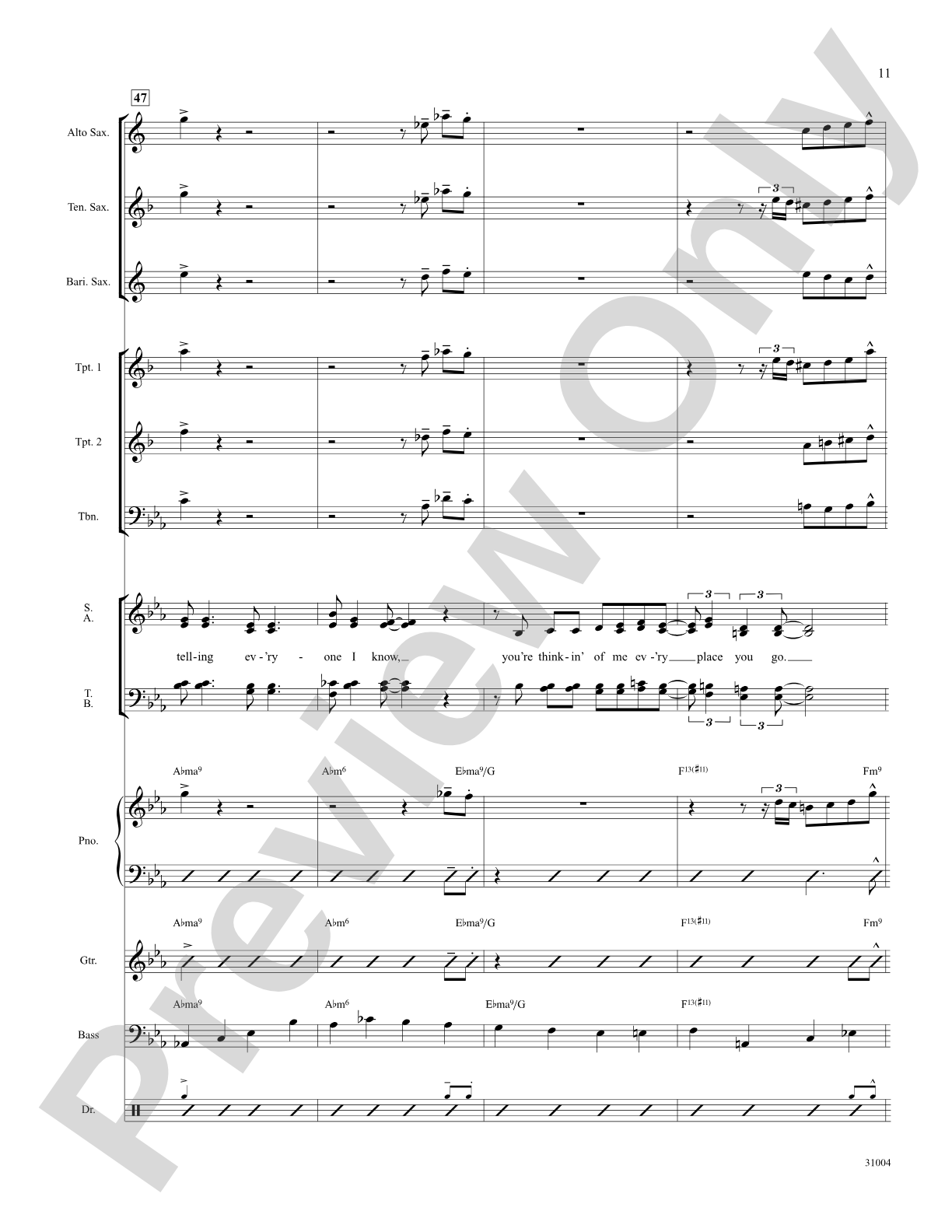
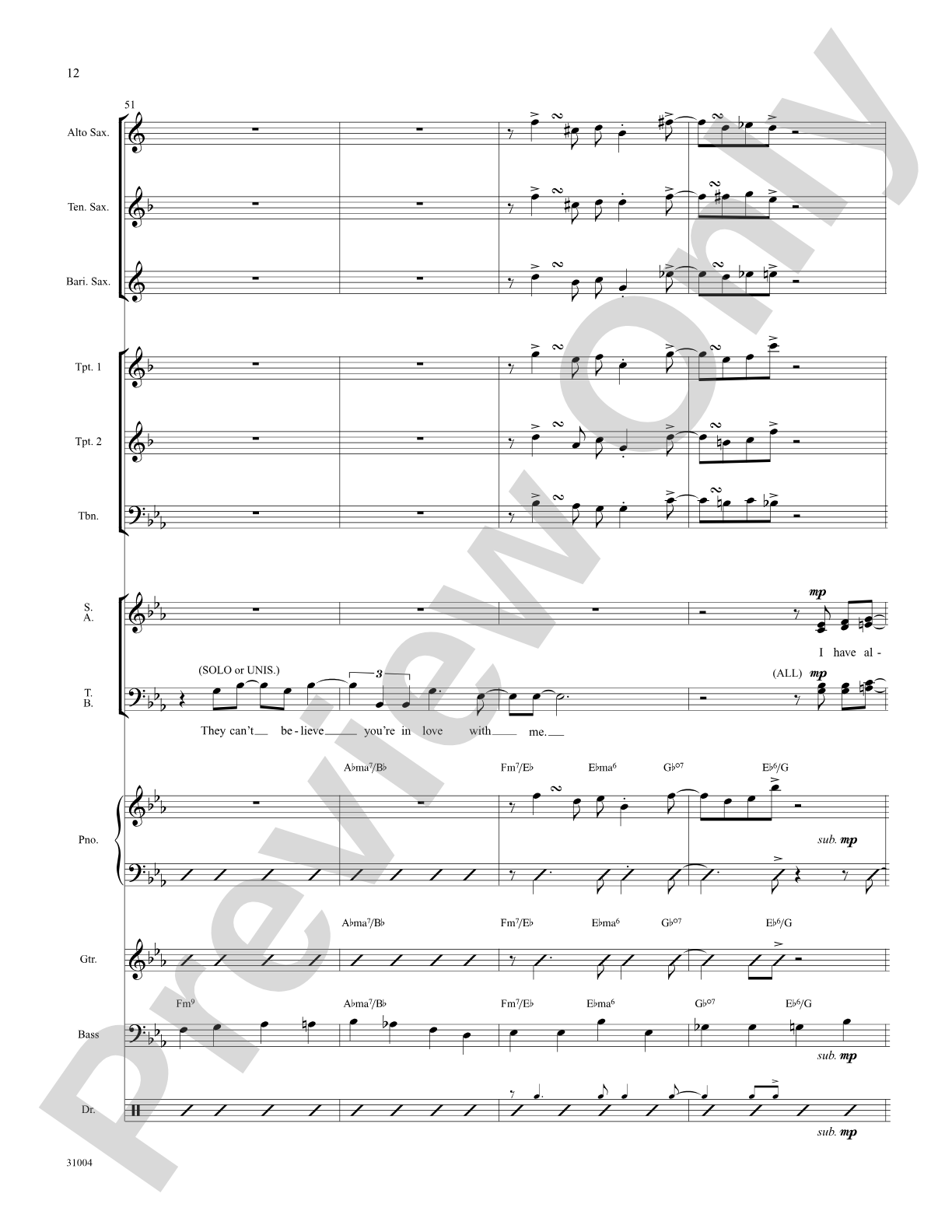
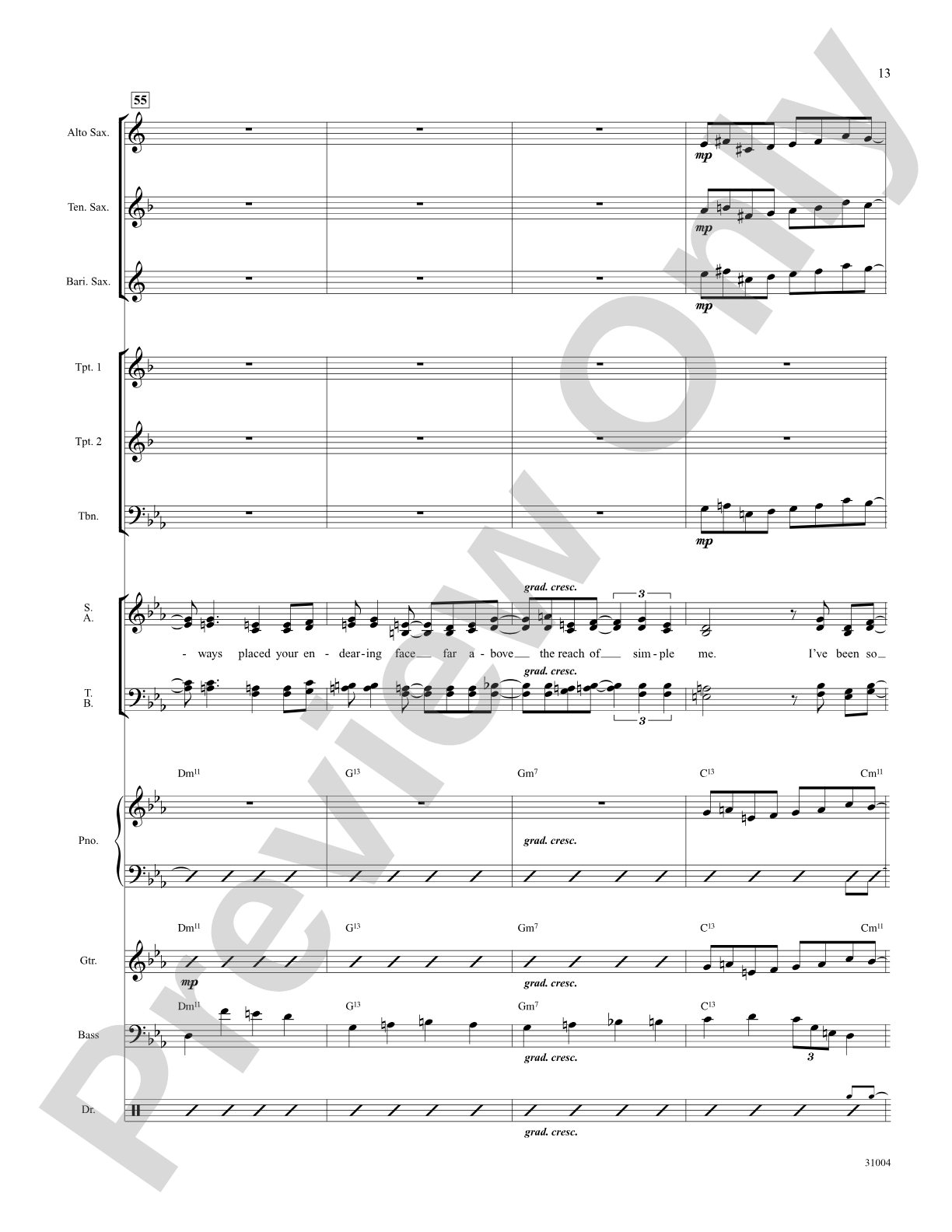
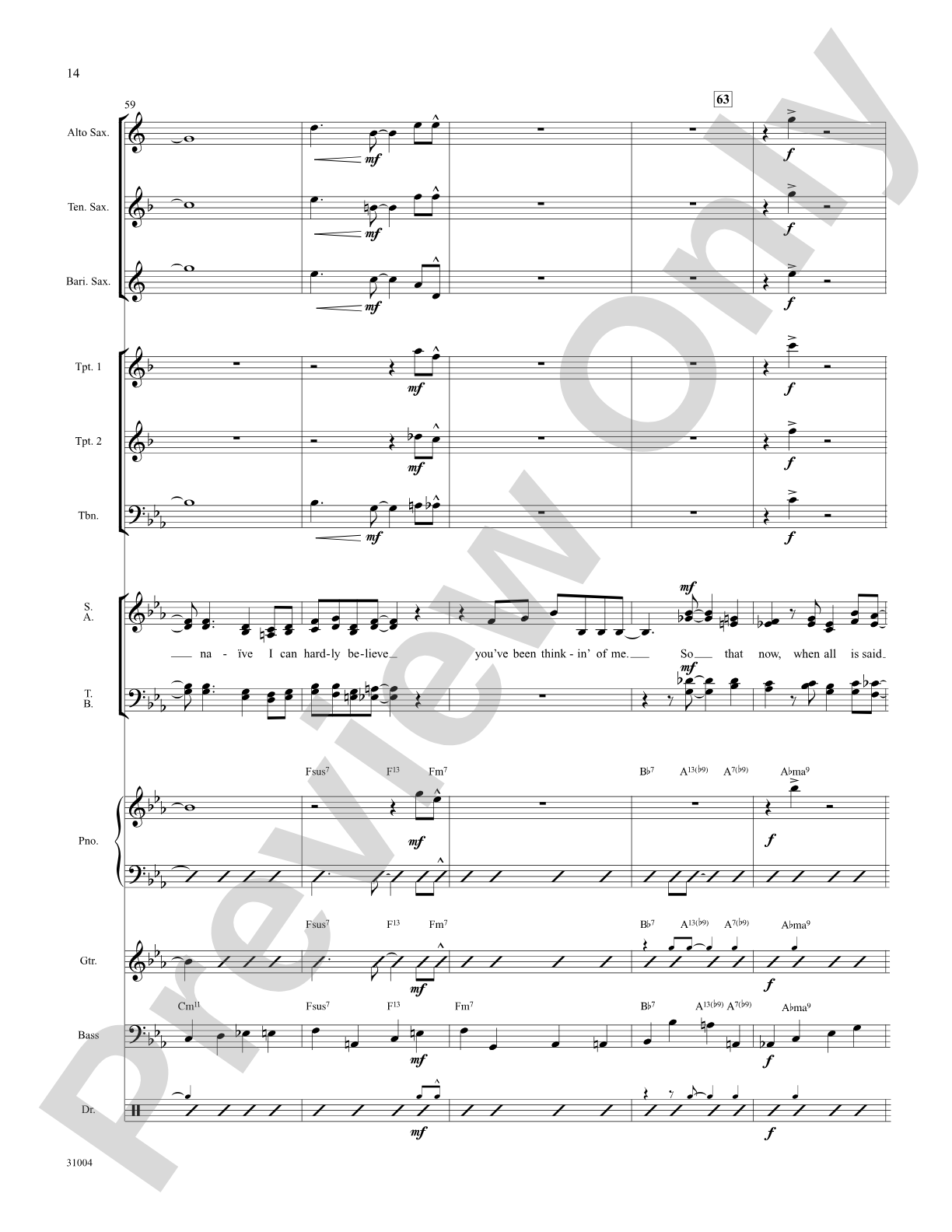
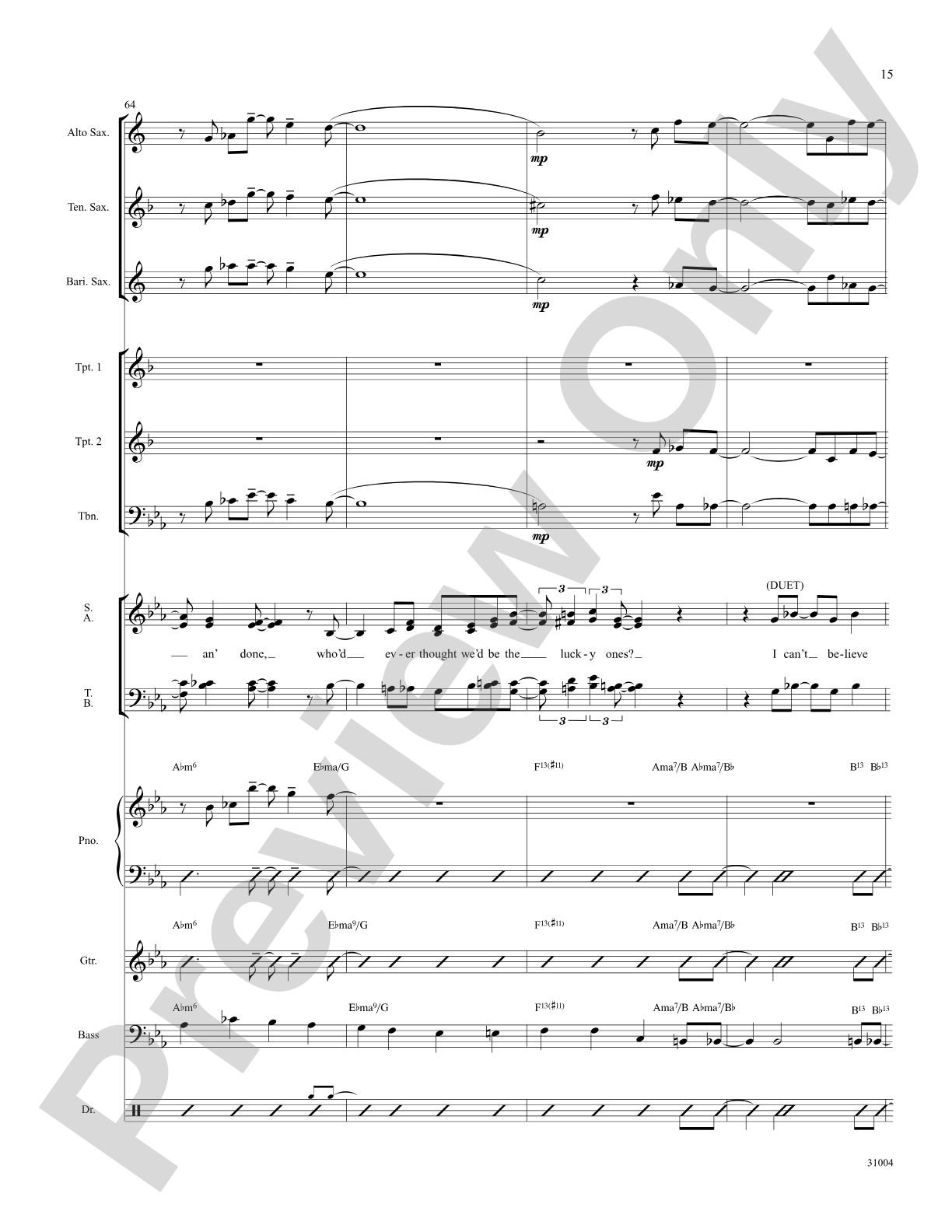
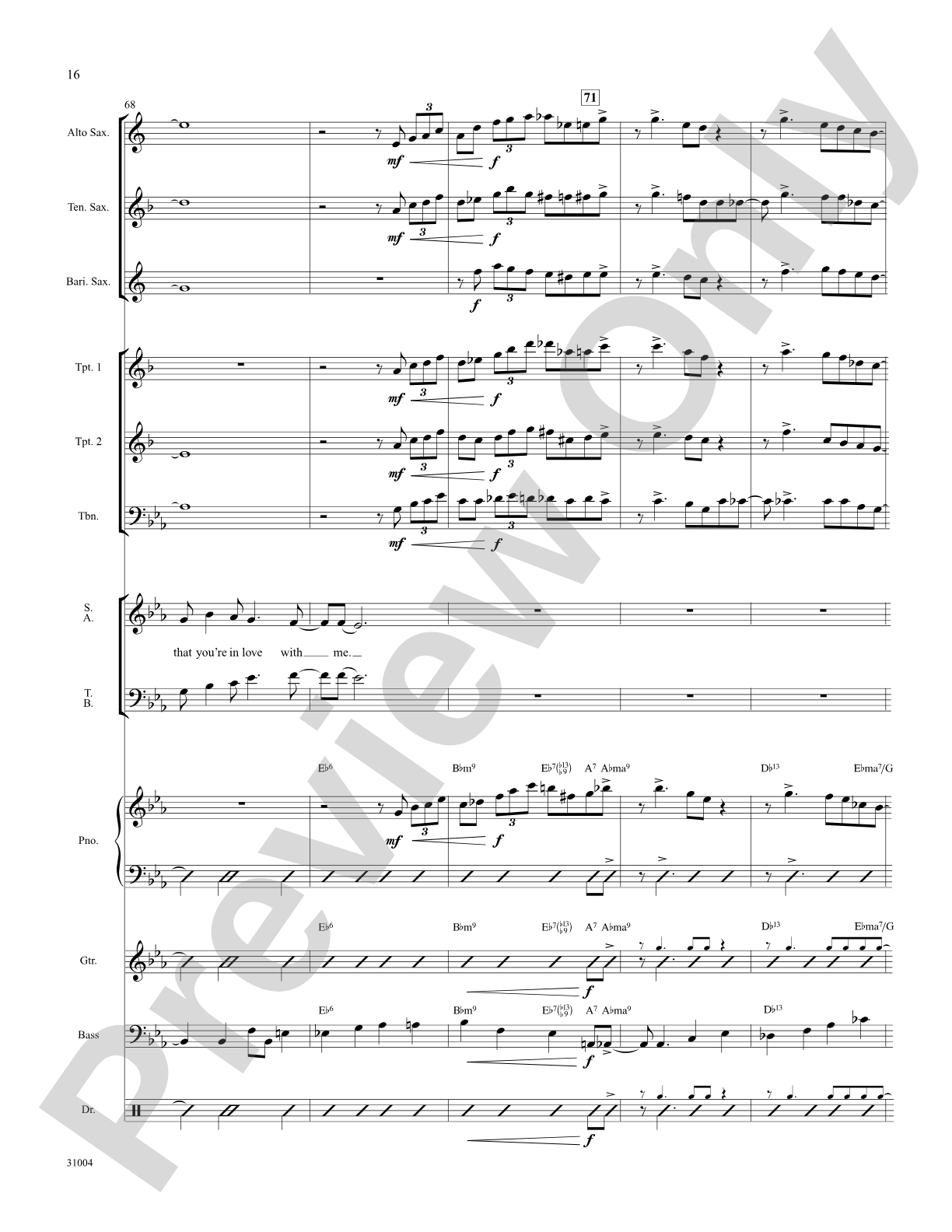
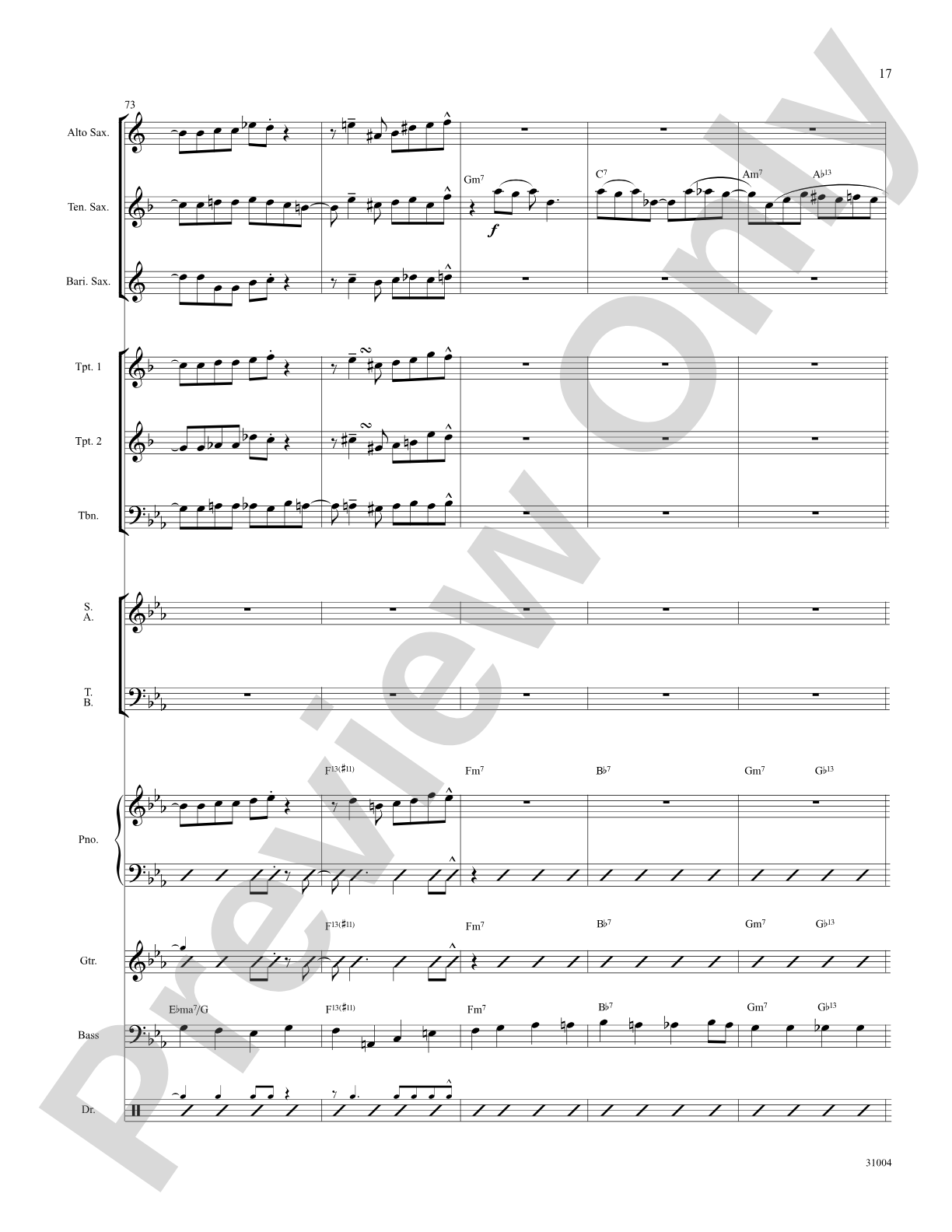
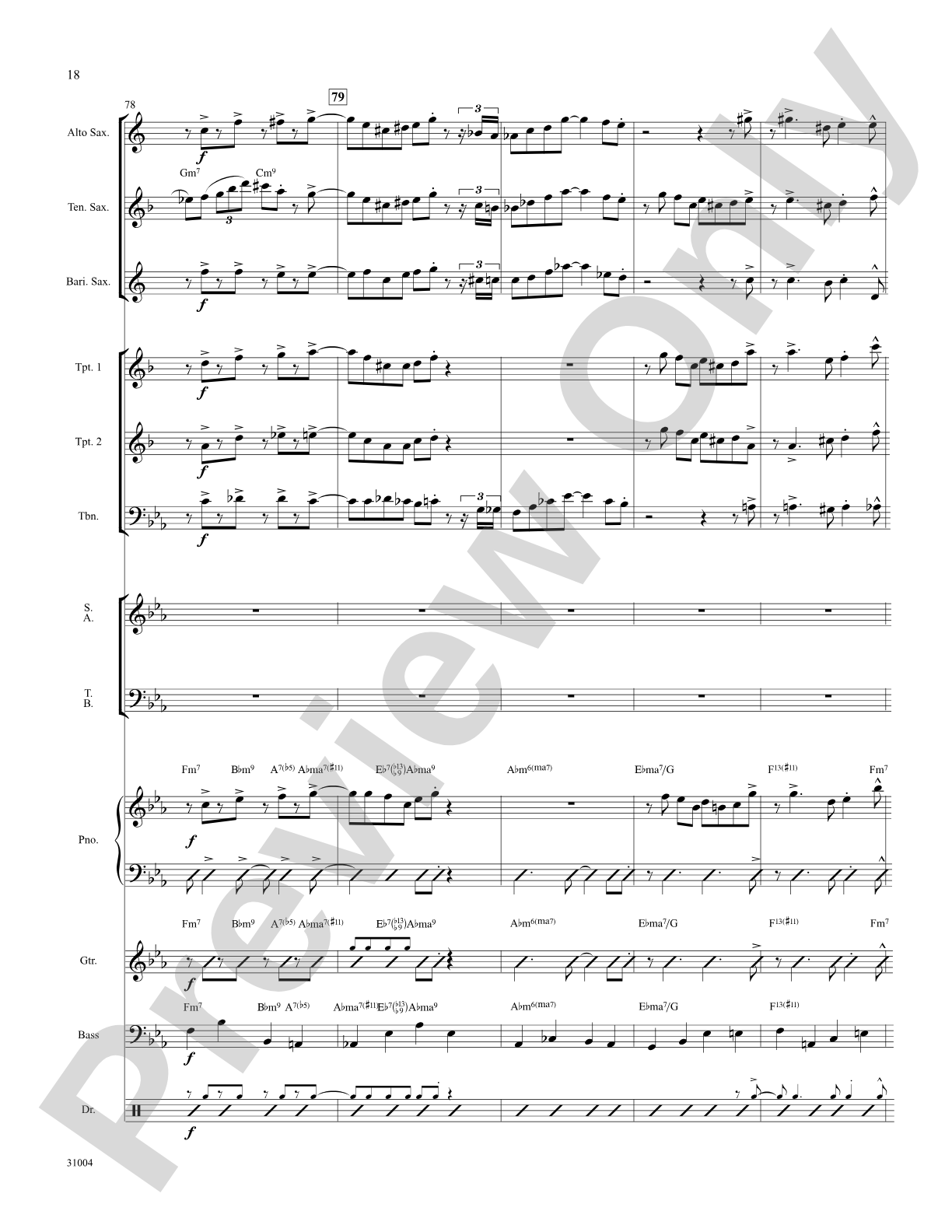
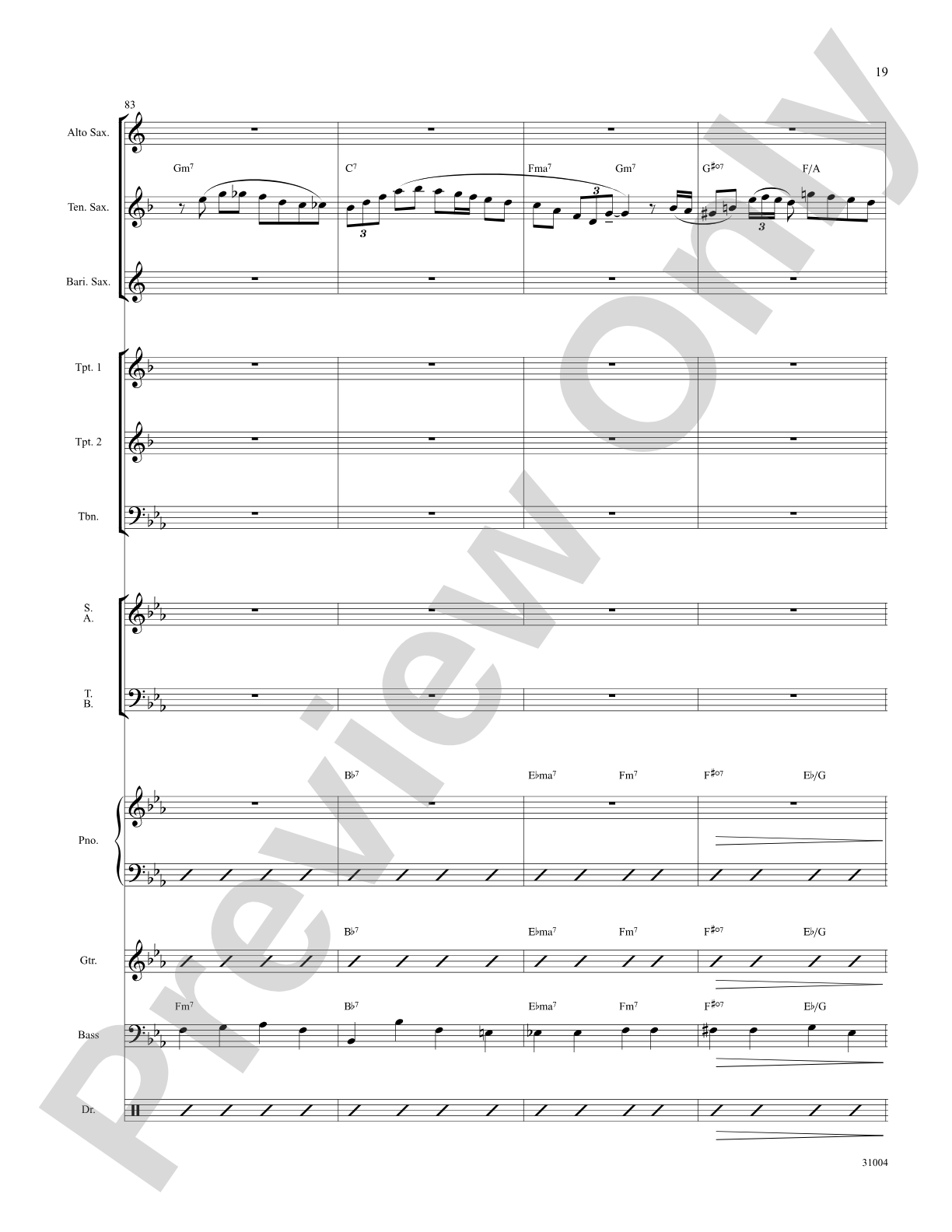
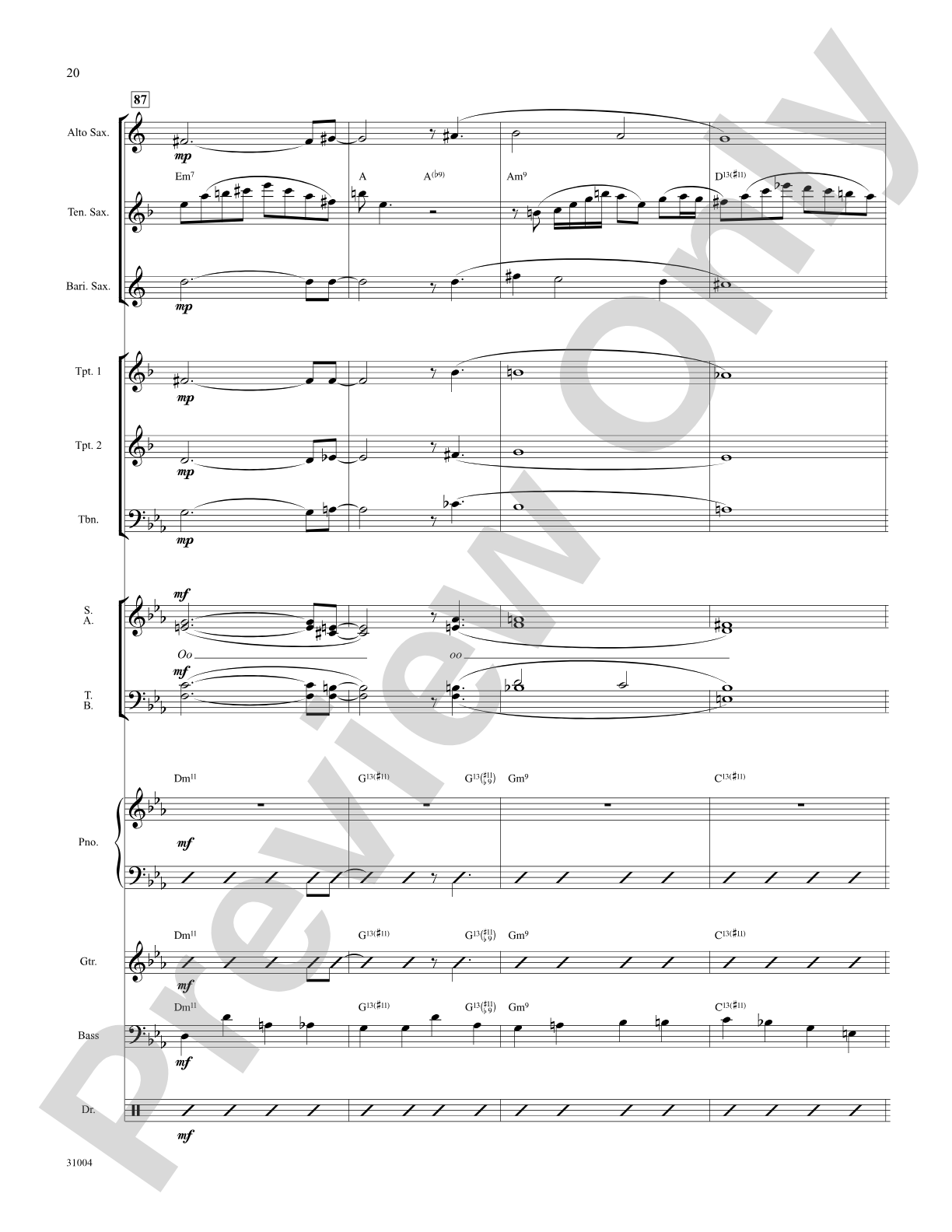
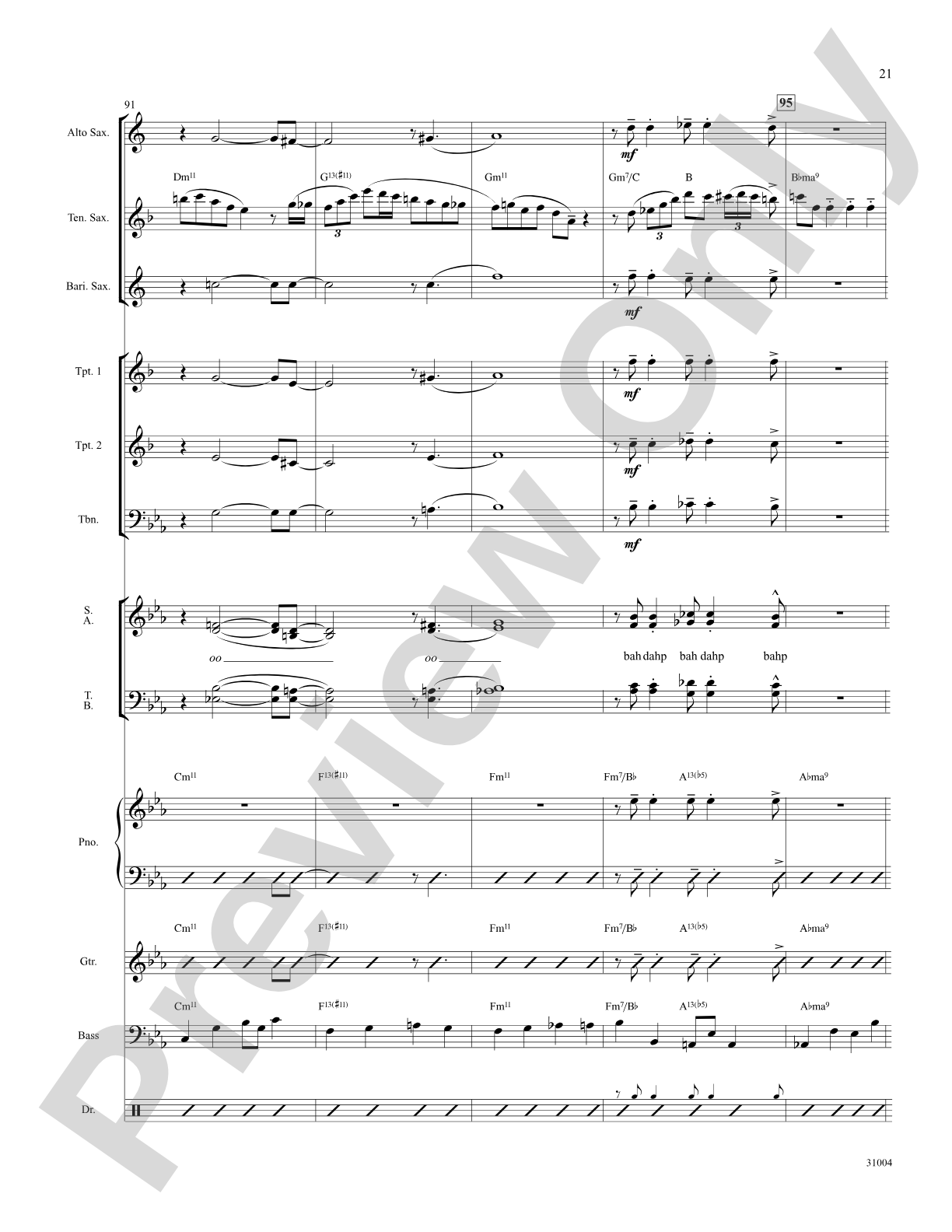
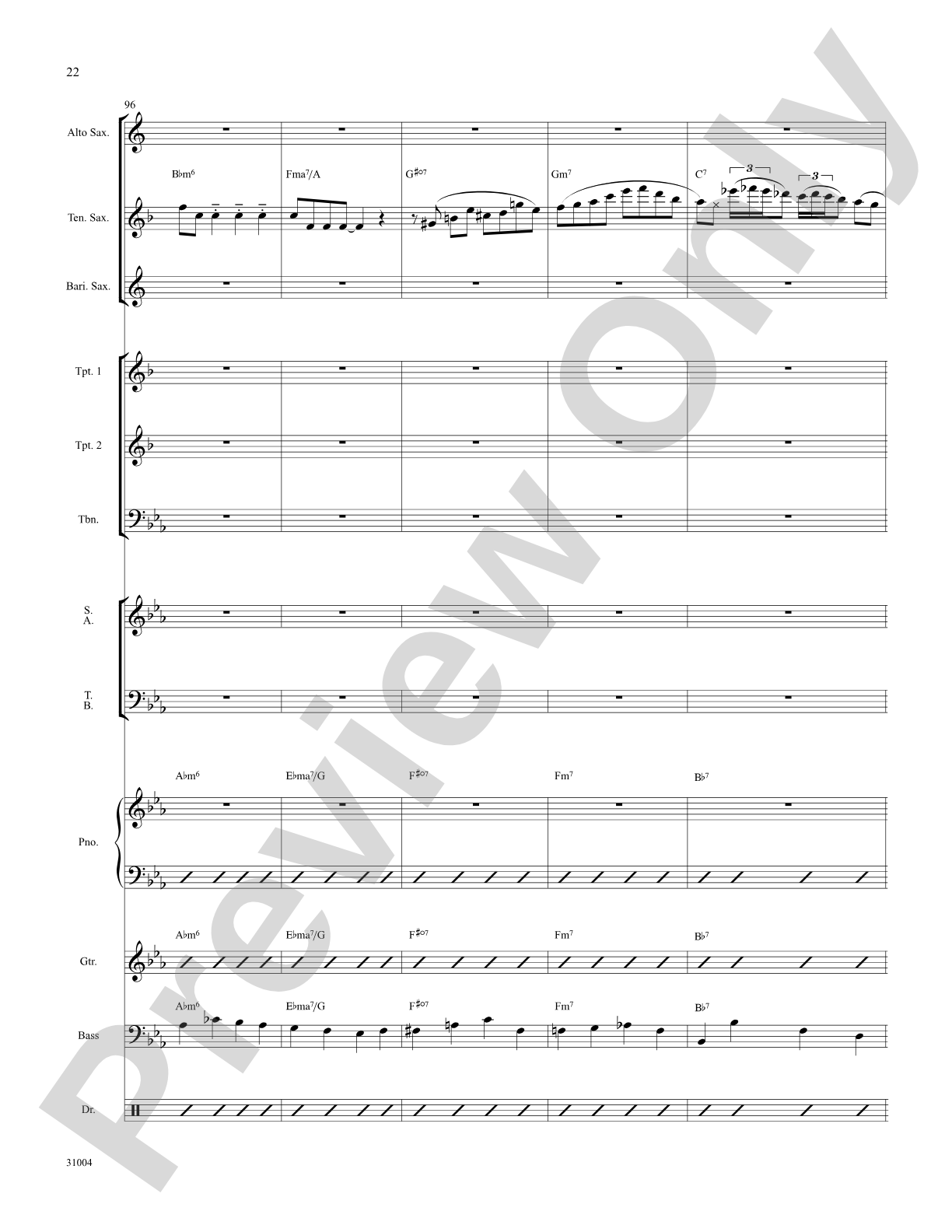
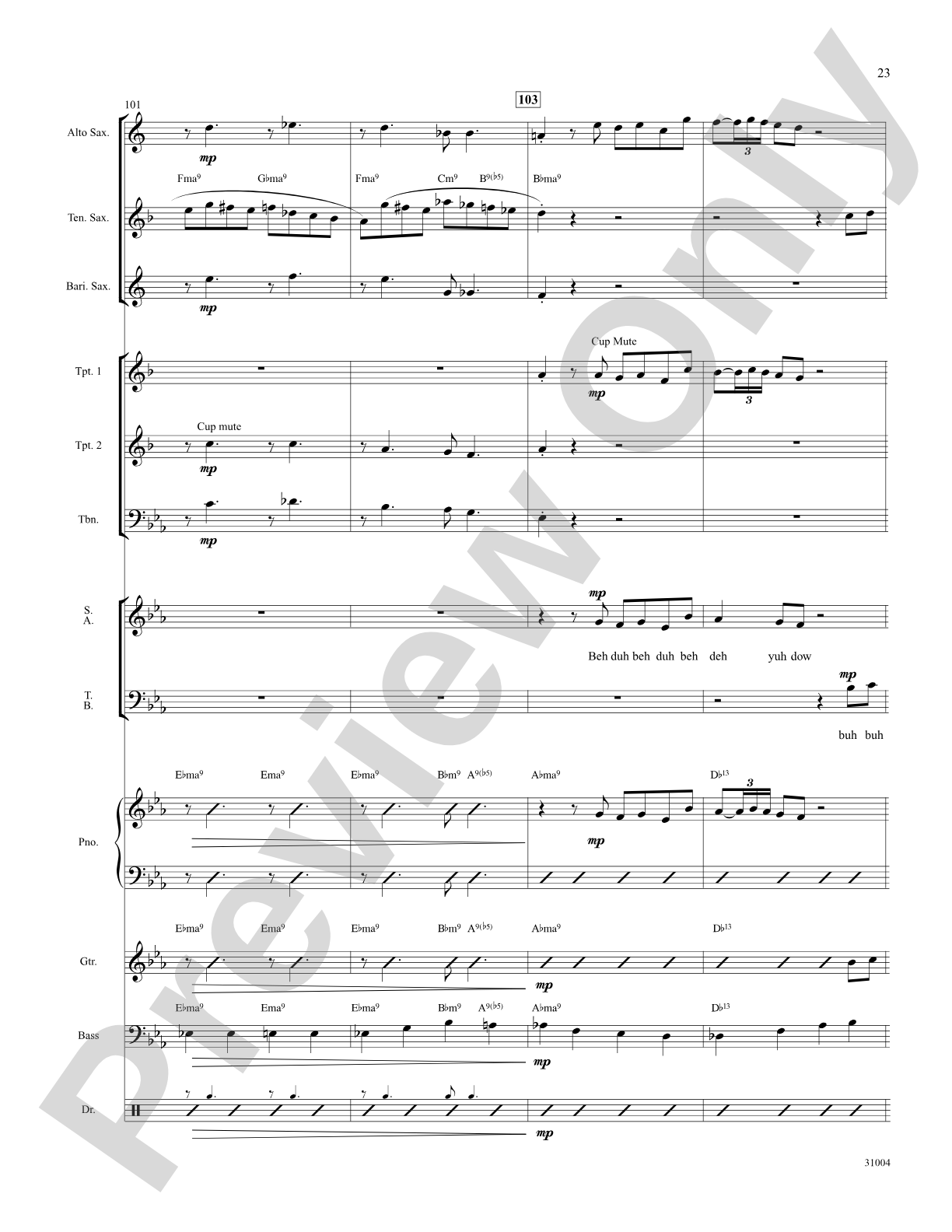
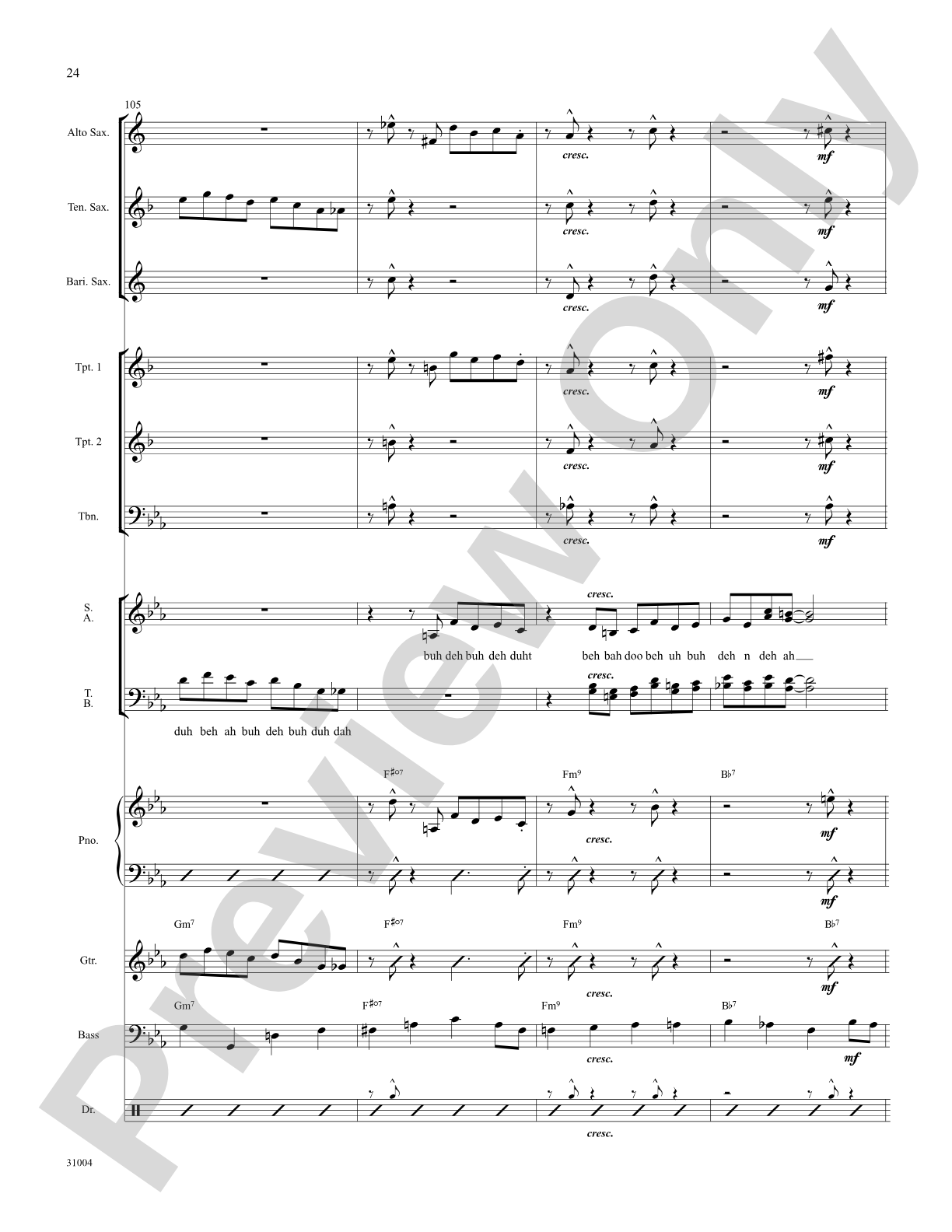
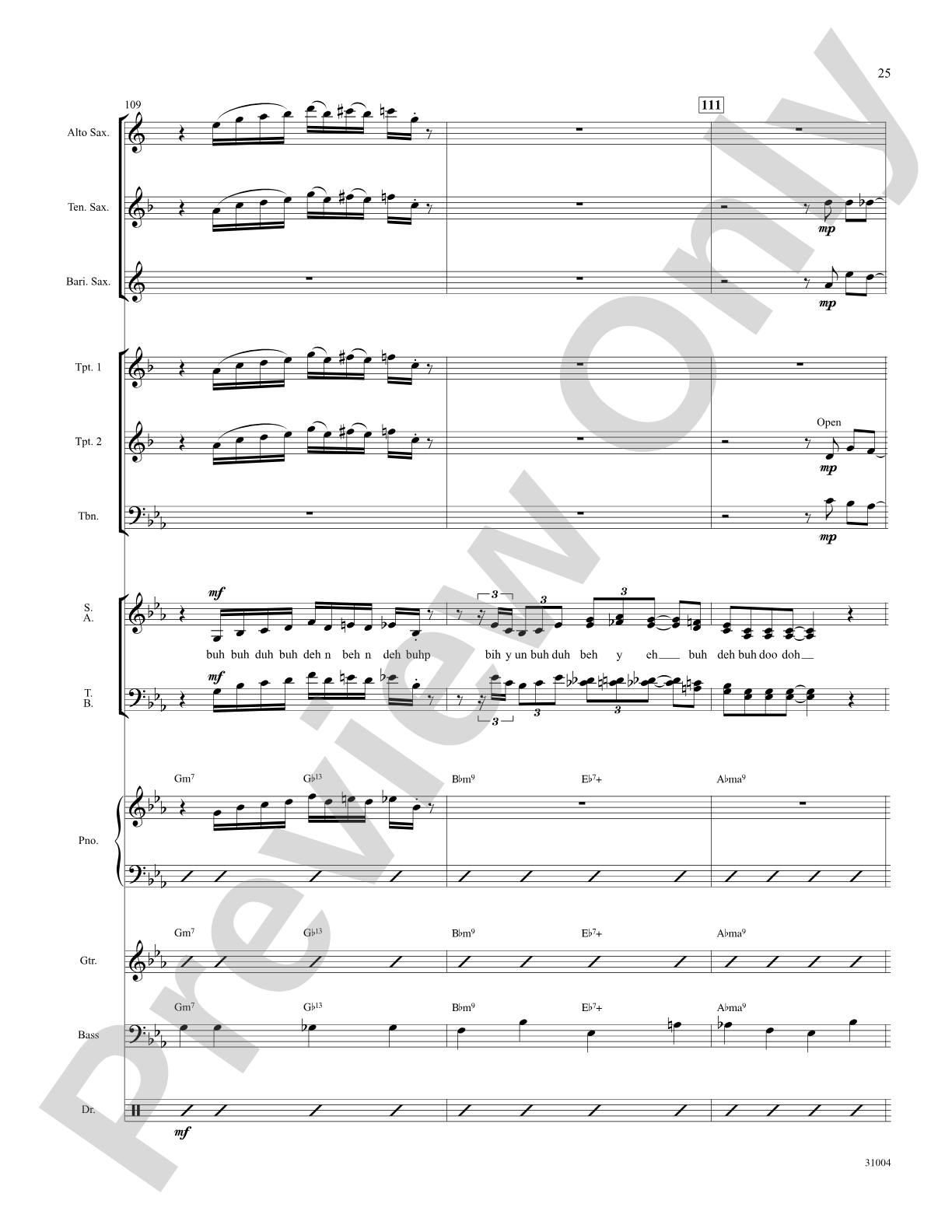
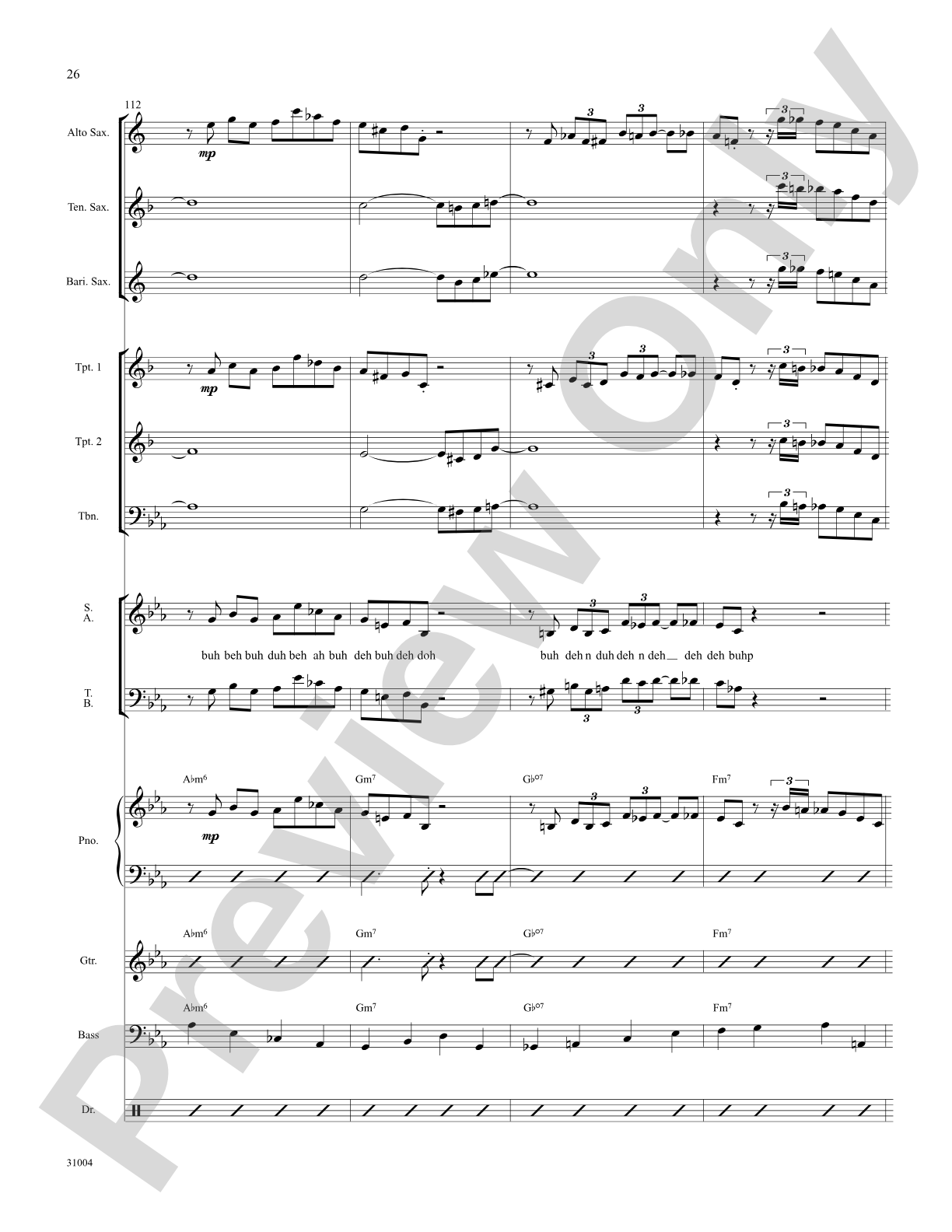
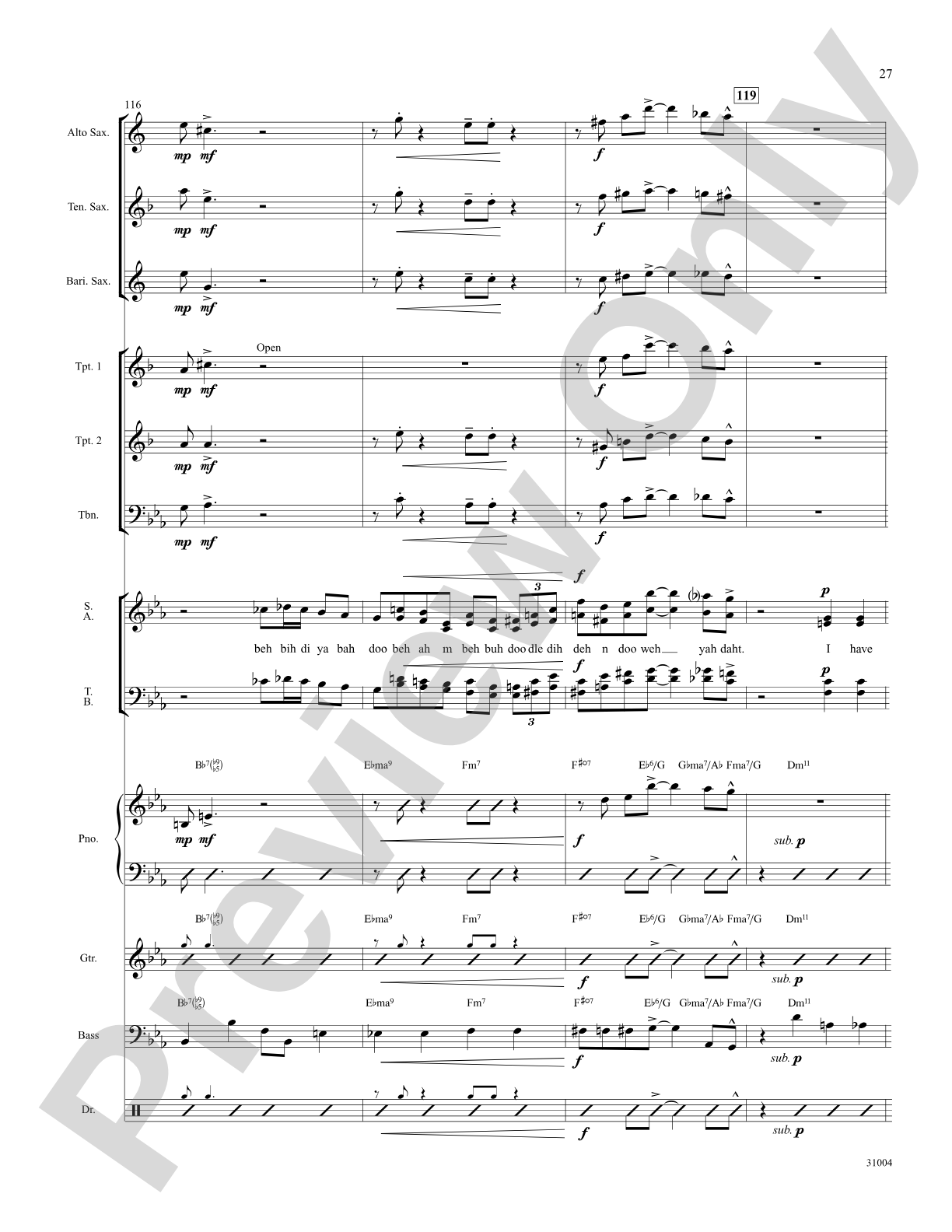
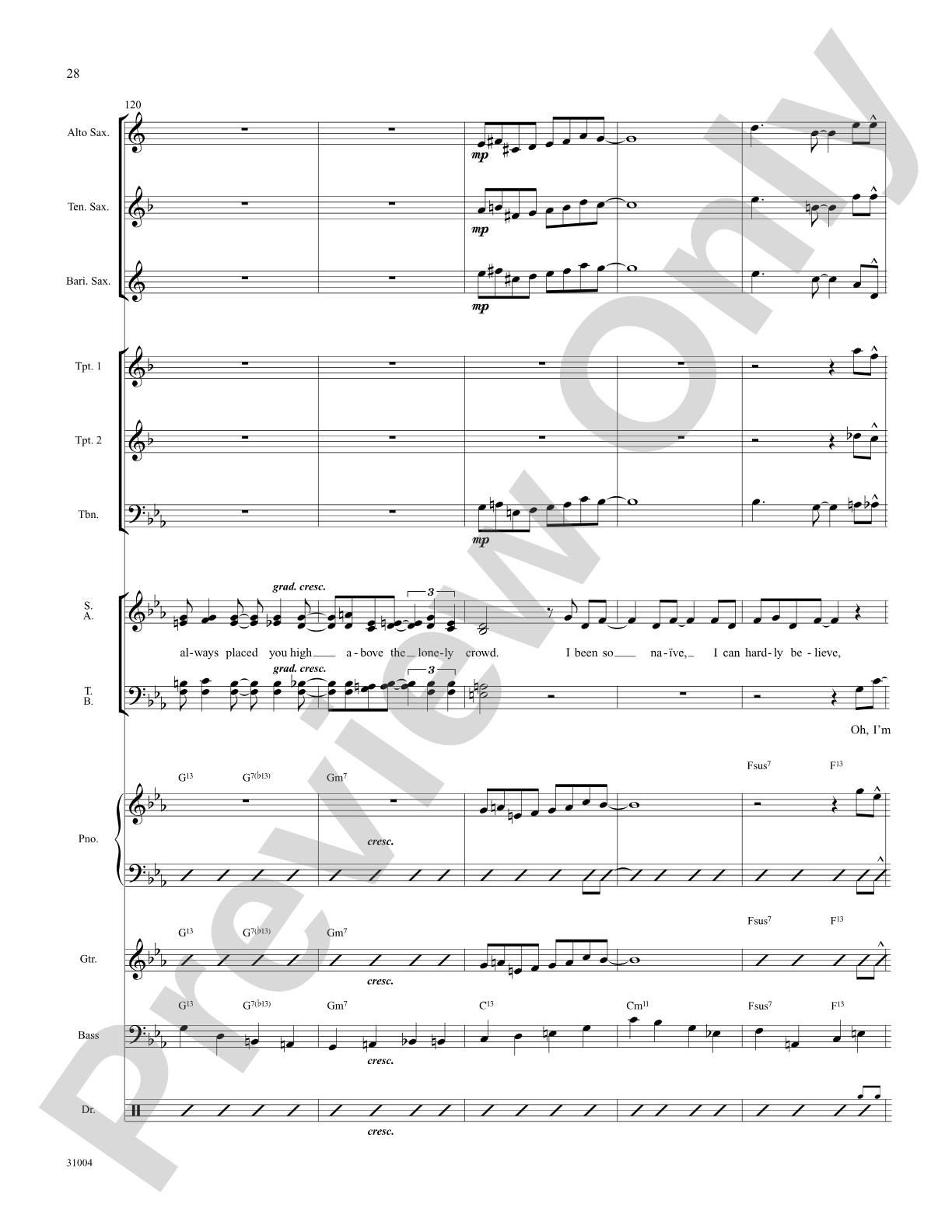
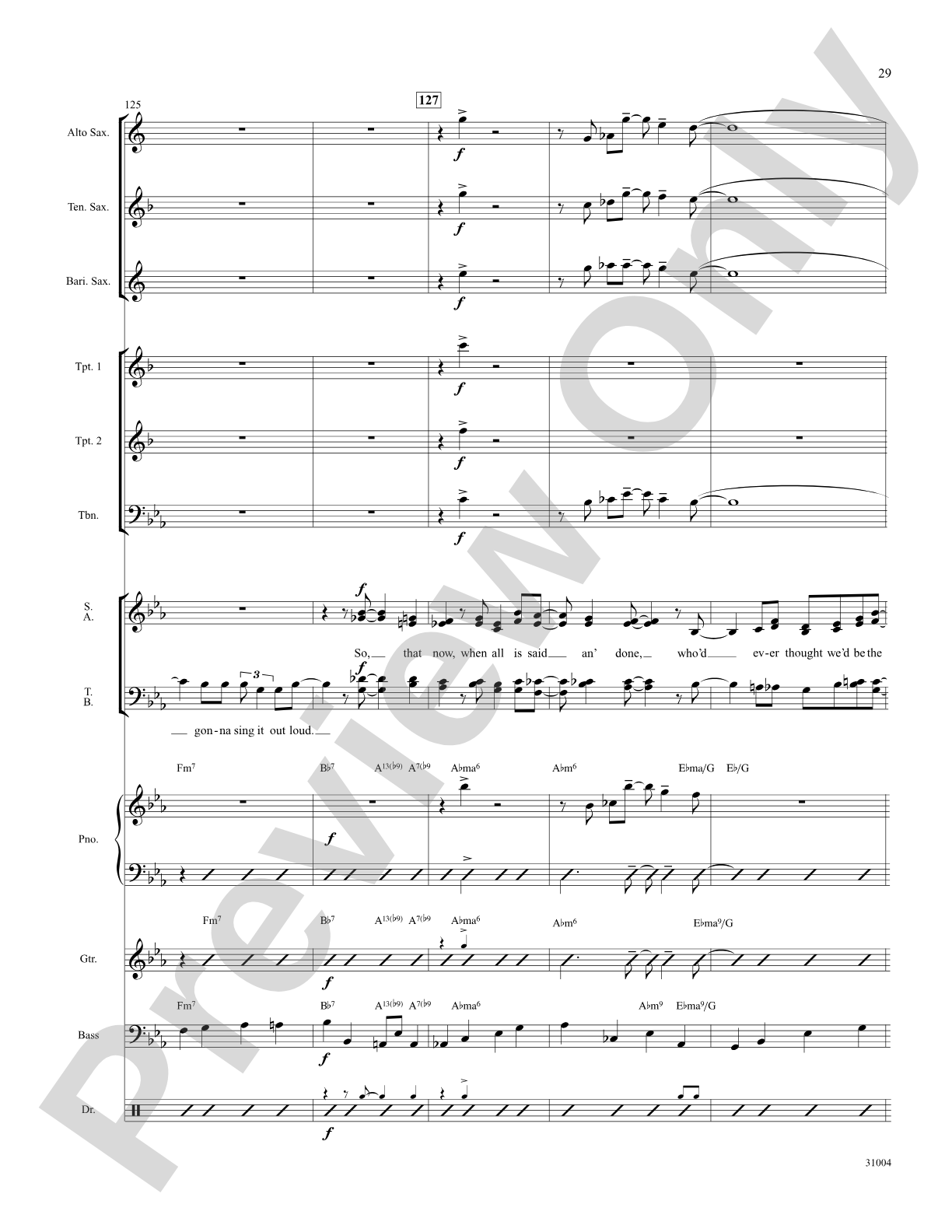
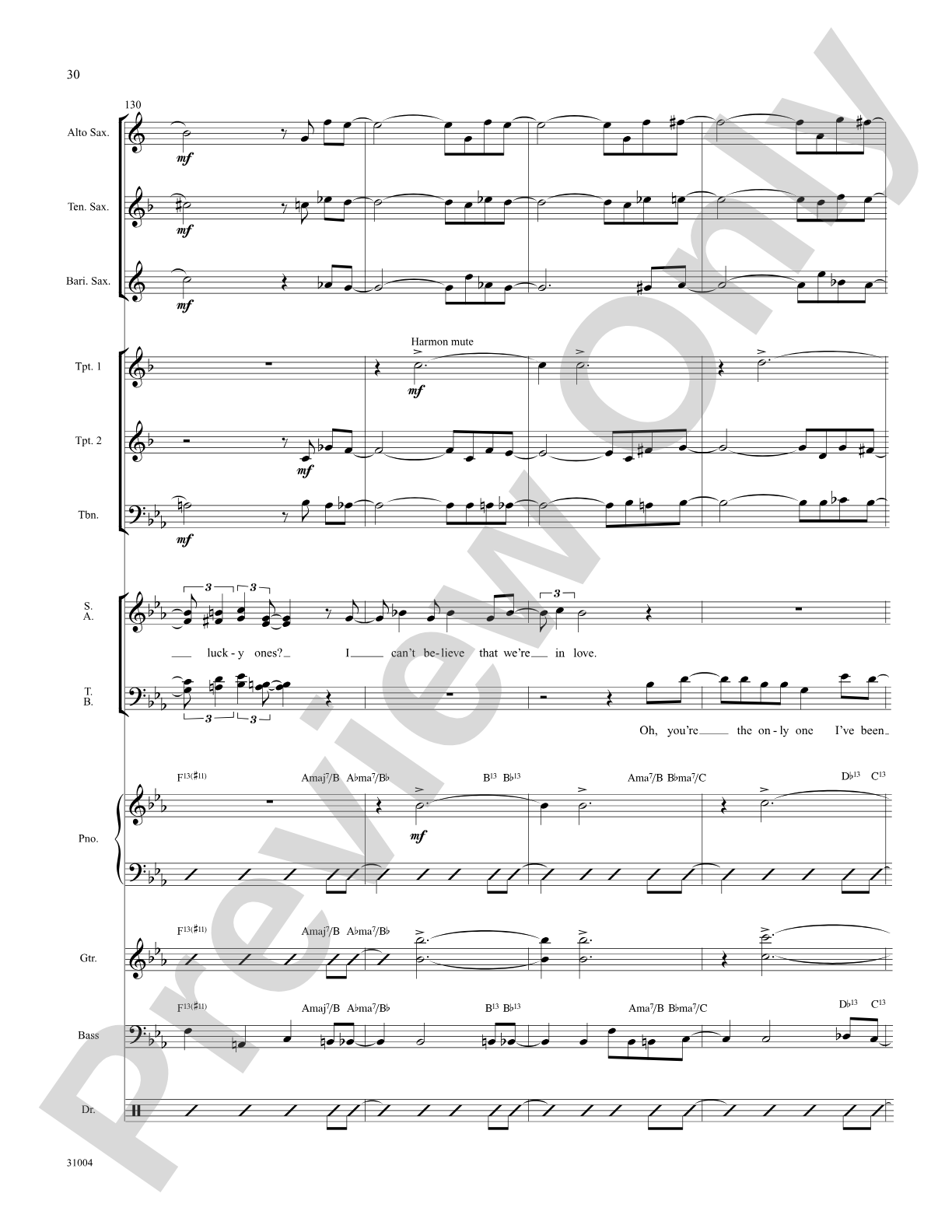
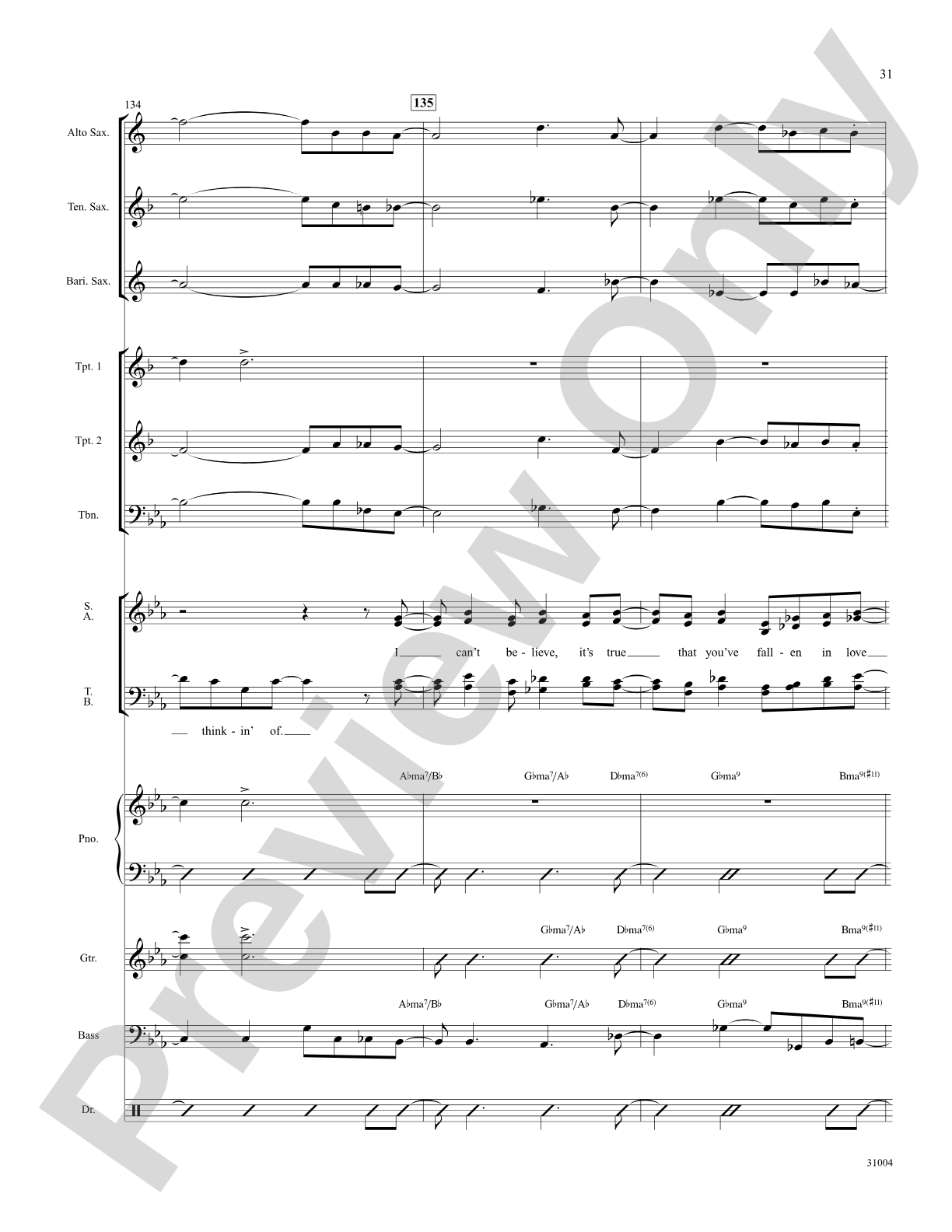
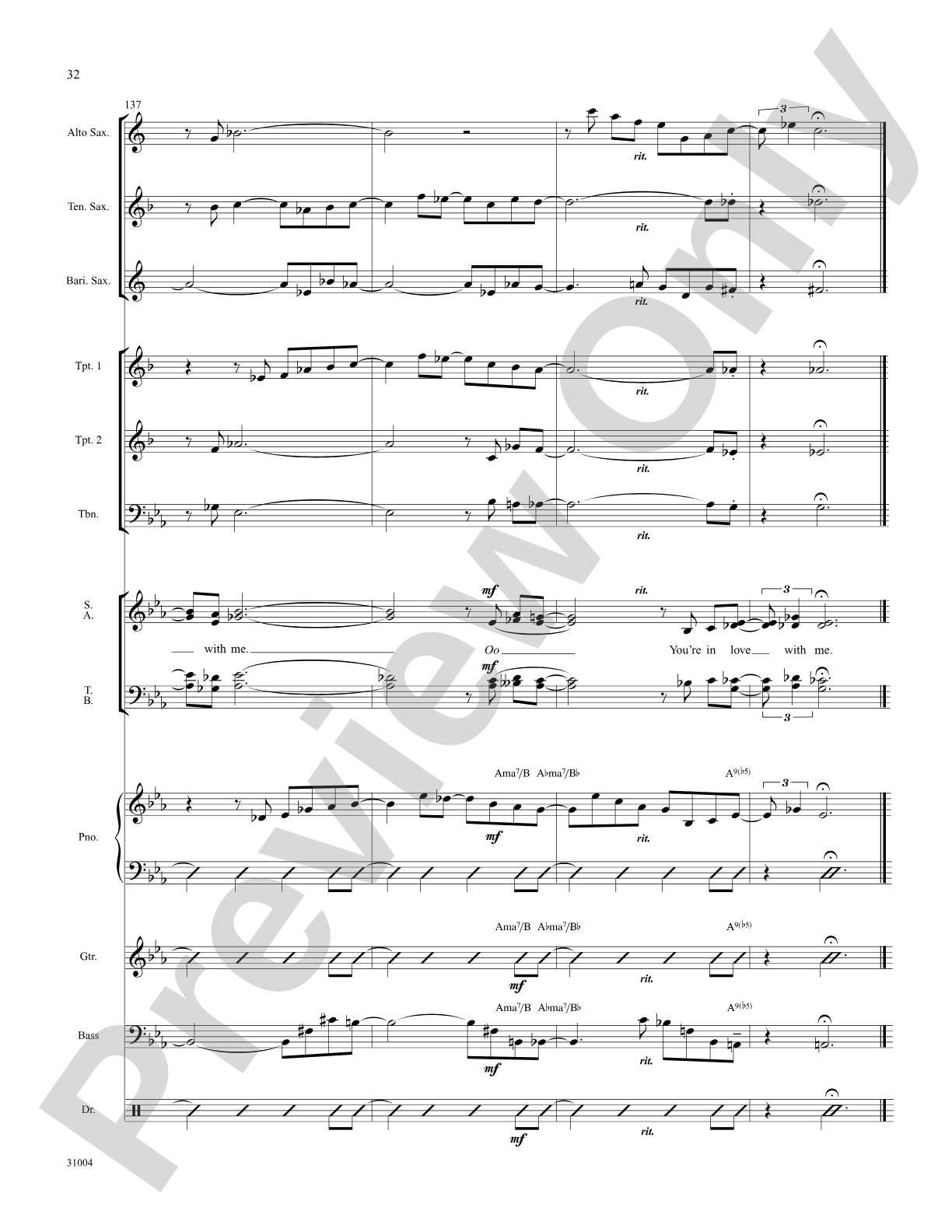

I Can't Believe That You're in Love with Me: Score: Choral SoundPax
Words and music by Clarence Gaskill and Jimmy McHugh / arr. Darmon Meader
Item: 00-PR-0003154
$8.00
Pickup currently not available
Description
Recorded by New York Voices on their Sing, Sing, Sing album, this contemporary Darmon Meader arrangement offers superb vocal jazz writing. Perform with the SoundPax or consider using the full jazz band accompaniment. SoundPax includes a. sax., t. sax., b. sax., 2 tpt., tbn., rhy., pia.


Don't just read it, hear it, play along with it, and watch your students grow with it. In MakeMusic Cloud, I Can't Believe That You're in Love with Me: Score: Choral SoundPax comes alive with professional accompaniment, adjustable tempo, and built-in practice tools that turn solo practice into real progress.
Open in the Player
Jump straight in and assign it today.
Start Your Free Trial
Open this title and explore the full library in minutes.
Sample Audio
1
Audio File
--:--
0:00
0:00
Sample Video
No sample videos found.
Additional Details
Series:
Alfred Pop Choral Series
Publisher:
Alfred Music
Page Count:
44
SKU:
00-PR-0003154
Instrumentation:
SoundPax
More about this title
About the Composer: Clarence Gaskill
Clarence Gaskill was a prolific songwriter and pianist who contributed significantly to the Great American Songbook during the early-to-mid twentieth century. Working alongside composers like Jimmy McHugh, he helped define the sound of American popular song with melodies that balanced sophistication and accessibility, making them natural vehicles for both instrumental and vocal interpretations.
Why we love this
Darmon Meader's arrangement captures the swagger and sophistication of New York Voices' recording while remaining genuinely singable for high school and college choirs. The SoundPax instrumentation gives you flexibility: use the full jazz band sound for a polished concert performance, or strip it back to the rhythm section for rehearsals and smaller venues. This is vocal jazz writing that respects both the singers and the style.
What to expect
Confident and cool, with the kind of effortless sophistication that comes from a standard reimagined for a modern ensemble. The harmonies sparkle against the jazz band backdrop, and the overall effect feels like a celebration rather than a challenge.
Who it's for
High school and college choirs with solid sight-reading skills and interest in contemporary vocal jazz repertoire. Your singers should have some familiarity with jazz phrasing and rhythm; this arrangement rewards ears that understand swing and syncopation.
How to get the most out of it
- Balance the sax section carefully in the opening and riffing passages. A. sax. should anchor the sound while t. sax. and b. sax. add color without overwhelming the choir.
- Work the rhythmic precision of the ensemble against the piano and bass. Jazz phrasing requires ensemble agreement about where the beat sits, not just metronomic accuracy.
- Shape the melody with attention to blue notes and slides where they appear. The arrangement assumes singers understand that jazz articulation differs from classical legato.
- Use the recorded accompaniment to lock the tempo and feel early in rehearsals, then gradually reduce dependence on it as the choir internalizes the groove.
How to use it
Program this as a concert showcase piece that demonstrates your choir's range beyond traditional choral literature. It pairs well with other contemporary jazz standards or works as a energetic closer that leaves audiences smiling. Consider programming it in a set that includes at least one other jazz or popular arrangement to give the style context.
Skills your students will build
- Sight-reading jazz chord symbols and rhythmic figures in swing feel
- Balancing blend and articulation in a jazz ensemble context
- Responding dynamically to instrumental accompaniment and managing blend with a full jazz band
- Interpreting blue notes and jazz phrasing through listening and imitation
- Maintaining rhythmic independence while listening to syncopated instrumental lines