I Can't Believe That You're In Love With Me (arr. Kirby Shaw) Sheet Music Preview

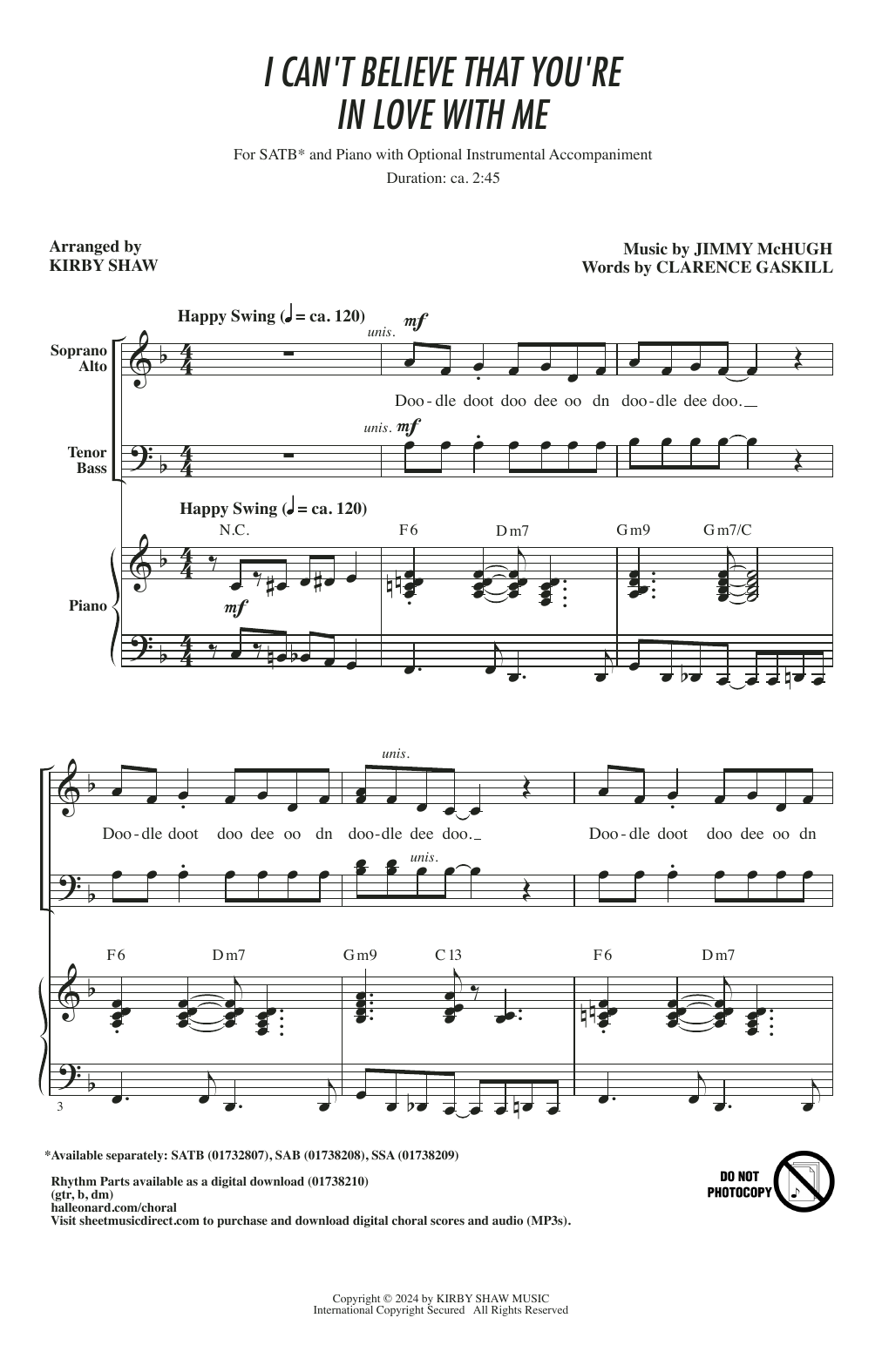
I Can't Believe That You're In Love With Me (arr. Kirby Shaw): SATB Choral Octavo

Arranged by Kirby Shaw

Item: 35-DS01567687

Digital Download
$2.50
Description

I Can't Believe That You're In Love With Me (arr. Kirby Shaw): SATB Choral Octavo isn't in MakeMusic Cloud just yet...but it could be. Let us know you'd like to see it, and you'll help shape what comes next. In the meantime, start a free trial and dive into thousands of interactive titles your students can play along with today.

Sample Audio
No sample audio found.
Sample Video
Additional Details
Publisher: Hal Leonard
Page Count: 11
SKU: 35-DS01567687

More about this title

About the Arranger: Kirby Shaw

Kirby Shaw

Kirby Shaw's influence on choral music spans five decades and six continents. With formal training in music education, choral composition, and conducting from San Jose State and the University of Washington, Shaw built his reputation by founding and directing vocal jazz ensembles at College of the Siskiyous, Colorado State, and the University of Missouri at Kansas City. His teaching style combines technical rigor with infectious humor and genuine musicianship.

As both composer and arranger, Shaw has created over 2,500 published works that have sold nearly 20 million copies worldwide. His credentials include direct mentorship from jazz luminaries like Bobby McFerrin, Al Jarreau, and Jon Hendricks. He continues directing the Jefferson State Choral Coalition at Southern Oregon University and performs with the a cappella jazz group Just 4 Kicks. Multiple ASCAP awards and a recent commission from the Mormon Tabernacle Choir underscore his standing in choral music.

Why we love this

Shaw's jazz arrangements for choir are grounded in his years of work with vocal jazz ensembles and his personal study with jazz vocalists. This version of "I Can't Believe That You're In Love With Me" carries the authenticity of someone who understands how voices move through jazz harmony and phrasing. The SATB setting keeps the piece accessible for standard choirs while maintaining the swing and sophistication that make jazz standards so rewarding to sing.

What to expect

Genuine warmth and easy sophistication. The melody lands with charm while the harmonic backdrop swings with understated energy, creating a piece that feels both intimate and accomplished. Singers discover that jazz phrasing invites them to sing with more personality and breath awareness than they might in classical settings.

Who it's for

High school and college choirs seeking accessible yet musically substantial jazz repertoire. Directors who want their singers to experience swing style and jazz harmony without requiring previous jazz training. Secular vocal programs building a balanced concert set that includes American songbook standards.

How to get the most out of it

  • Shape the phrase lengths to breathe naturally with the jazz phrasing rather than waiting for traditional bar lines. The swing feel depends on flexible breath placement.
  • Balance the inner voices with care so the harmonic movement stays audible. Jazz arrangements can obscure chord changes if altos and tenors aren't projected clearly.
  • Encourage singers to listen across all parts during rehearsal. Understanding how your voice sits within the jazz voicing builds ownership of the sound.
  • Record a run-through early in preparation and listen back as a section. Hearing the blend and balance yourself accelerates alignment and intonation.

How to use it

Pair this with other Tin Pan Alley standards for a complete concert or with uptempo jazz numbers to balance a full-length show. The 11-page length and SATB flexibility make it suitable for spring concerts, educational jazz showcases, or informal community performances. Early rehearsal work on this piece will establish swing fundamentals that transfer to other jazz-inflected repertoire later in the season.

Skills your students will build

  • Swing eighth-note feel and jazz phrasing
  • Reading and performing jazz chord voicings in four-part harmony
  • Stylistic interpretation within a popular song context
  • Blend and balance in close jazz voicing
  • Flexible breath placement for musical line rather than metrical boundaries

You May Also Like