

I Can Sing!: SATB Choral Octavo
Words by James Weldon Johnson, music and additional words by Greg Gilpin
Item: 00-PO-0008293
$2.60
Minimum order quantity: 10 copies
Please note: Under U.S. copyright law, you must purchase the exact number of copies needed for your ensemble. Printing, duplicating or sharing additional copies is strictly prohibited.
Pickup currently not available
Description
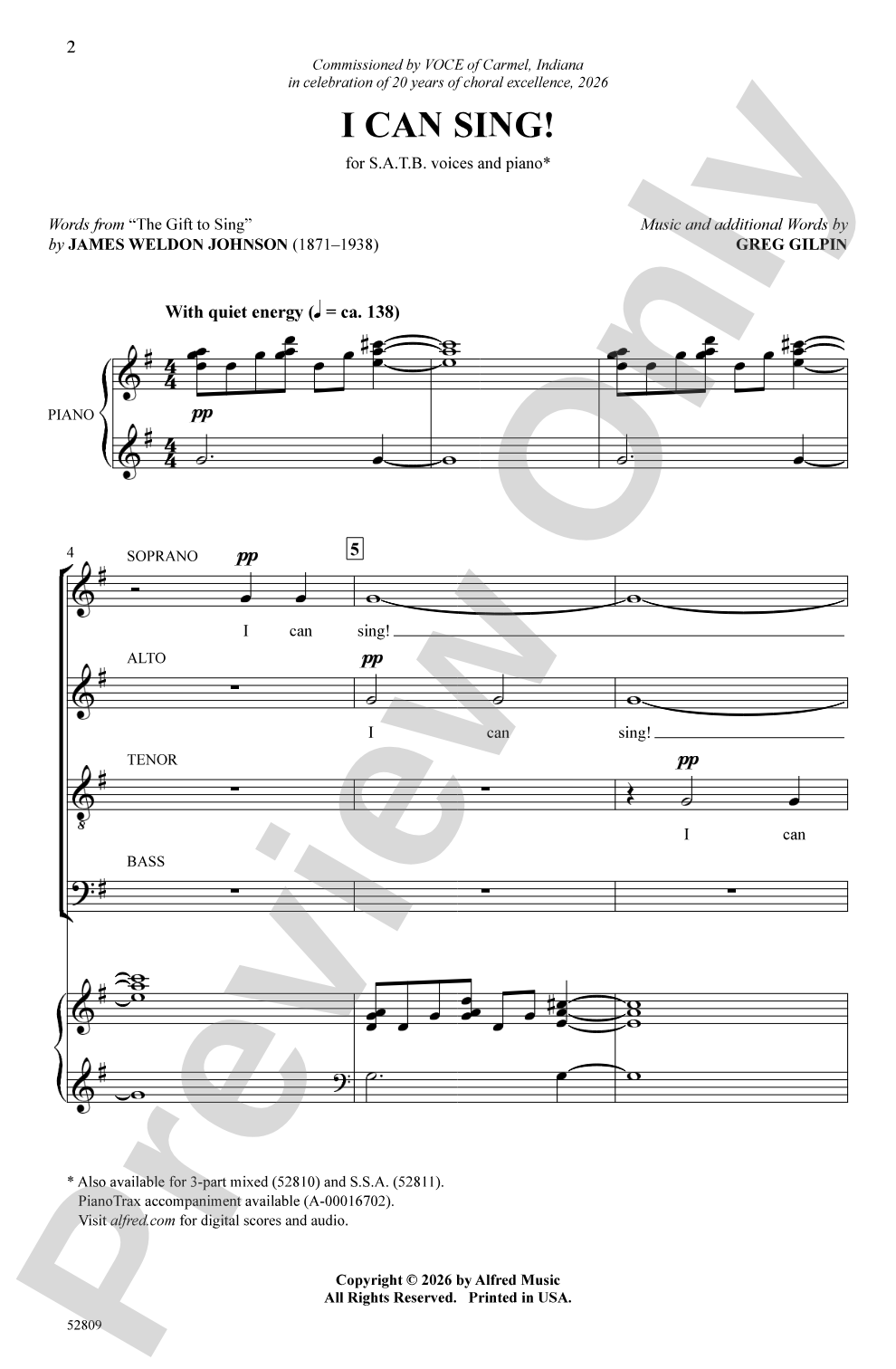
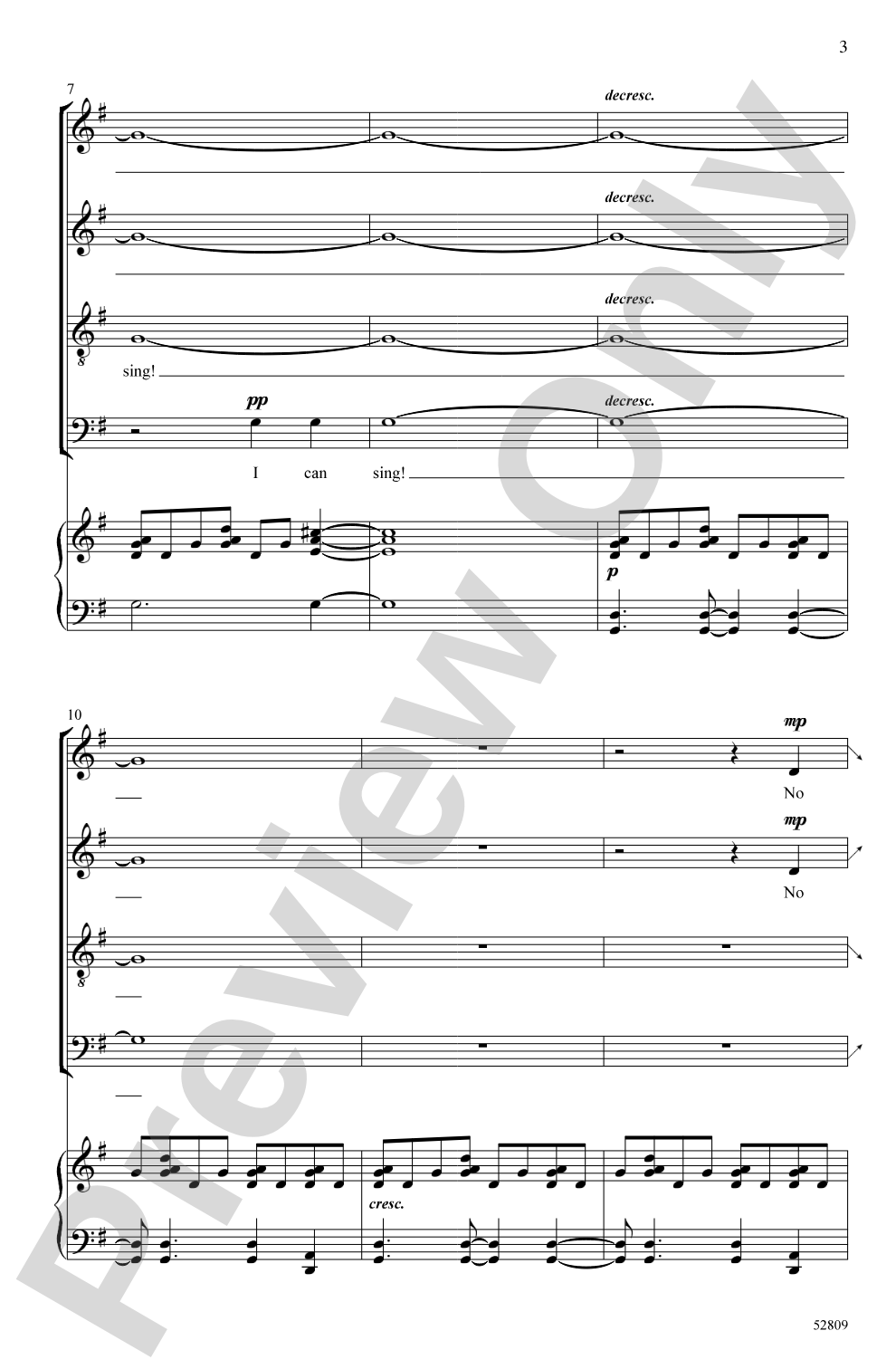
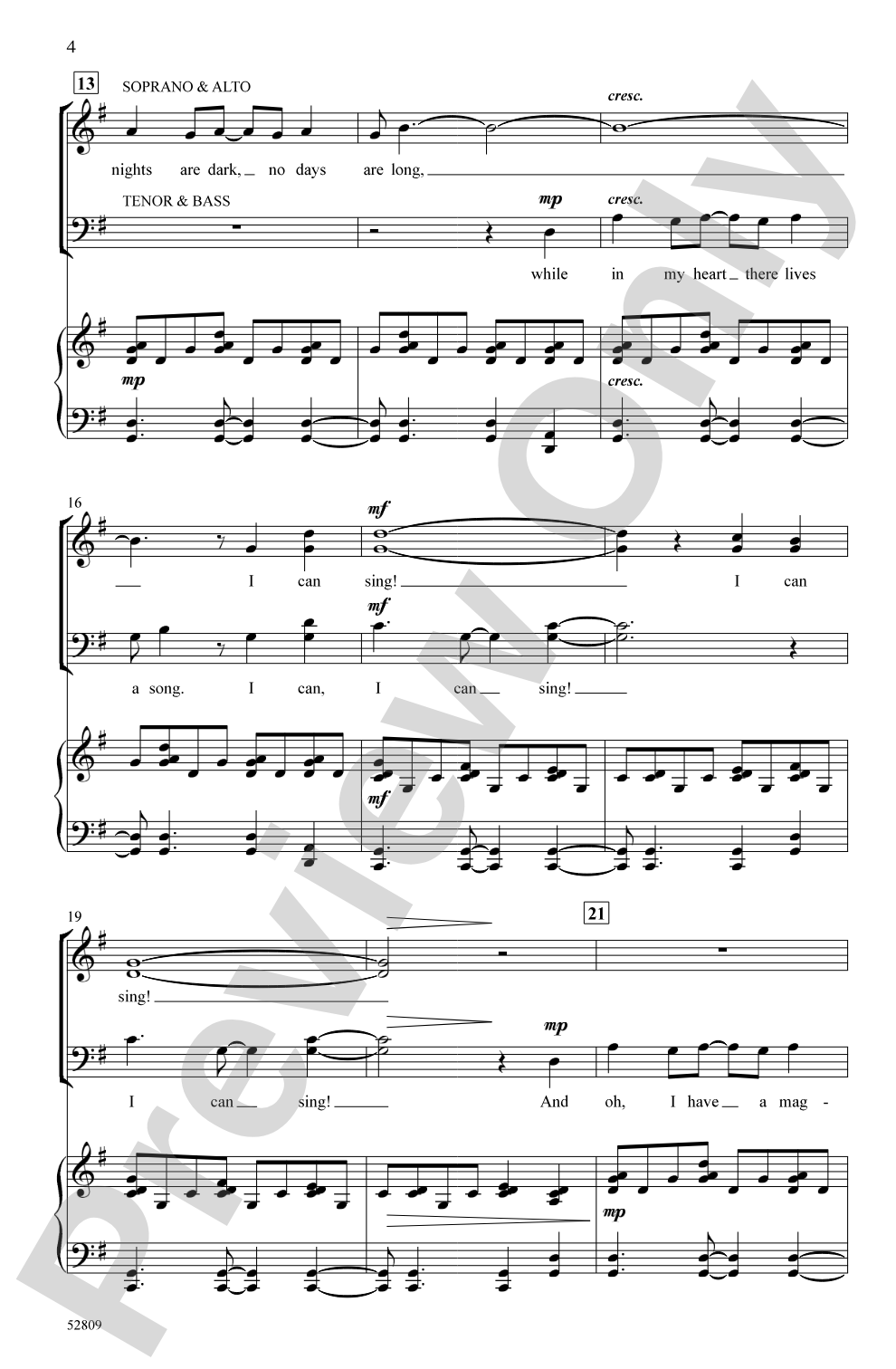
Greg Gilpin captures the uplifting message in James Weldon Johnson's poem: music can carry us through dark nights, long days, life's challenges. Opening with hushed, layered entrances, the piece steadily gathers strength as lightly syncopated phrases pass around the ensemble. The "music is all around me" refrain declares that music itself is where we belong. A joyful reminder of why we sing in the first place.


Discover MakeMusic Cloud: thousands of interactive titles your students can play along with today.
Sample Audio
1
Audio File
--:--
0:00
0:00
Sample Video
Additional Details
Series:
Alfred Choral Designs
Page Count:
16
SKU:
00-PO-0008293
More about this title
About the Composer: Greg Gilpin

Greg Gilpin brings dual expertise as both a celebrated choral composer and an accomplished conductor. His work has taken him across prestigious stages including Carnegie Hall, Lincoln Center, Ryman Auditorium, Sydney Opera House, and Royal Festival Hall. As Director of Educational Choral Publications for Shawnee Press, he shapes choral music for student ensembles while maintaining his own prolific compositional output.
Beyond the concert hall, Gilpin's creative reach extends to film scoring and collaborative projects with professional artists. His versatility reflects a musician who understands the full spectrum of choral music, from educational settings to international performances. He holds membership in ACDA, NAfME, and Phi Mu Alpha Sinfonia, and his ASCAP awards recognize his consistent contributions to the choral art form.
Why we love this
Gilpin's setting honors James Weldon Johnson's text without overshadowing it. The layered entrances and syncopated interplay keep singers engaged throughout, while the piece's arc from introspection to affirmation gives your choir genuine emotional material to explore. It's the kind of selection that reminds singers why they chose to be part of an ensemble.
What to expect
The piece inhabits the space between quiet reflection and quietly powerful declaration. Voices emerge from silence, building momentum through gently syncopated phrases that dance around the ensemble. By the time the refrain arrives, there's a palpable sense of collective joy and belonging.
Who it's for
Any SATB ensemble seeking repertoire that connects to a meaningful text without requiring extensive technical preparation. High school and college choirs will find the piece accessible and rewarding, while community and church choirs appreciate its hopeful message.
How to get the most out of it
- Shape the opening hushed entrances as if each voice is discovering the melody independently. This atmospheric opening sets the stage for everything that follows, so resist the urge to blend immediately.
- Let the syncopated phrases maintain their rhythmic independence as they pass between sections. They should feel conversational rather than locked together.
- Build the dynamic trajectory gradually across the piece rather than saving all your energy for the refrain. The steady gathering of strength is the piece's emotional engine.
- Use the recorded accompaniment to establish the harmonic framework in early rehearsals, then gradually shift to unaccompanied sections so singers own the tonality.
How to use it
Consider opening a concert with this piece when you want to set a contemplative yet ultimately uplifting tone. It pairs well with spirituals or other works exploring themes of resilience, and its moderate length makes it ideal for mid-season programming when your ensemble has developed blend and balance but still has room for interpretive growth.
Skills your students will build
- Layered entrance coordination and staggered voice entries
- Syncopated rhythm recognition and ensemble precision
- Dynamic shaping and phrase trajectory over longer musical spans
- Textual interpretation informed by poetic structure
- Blend and balance in sustained harmonic contexts