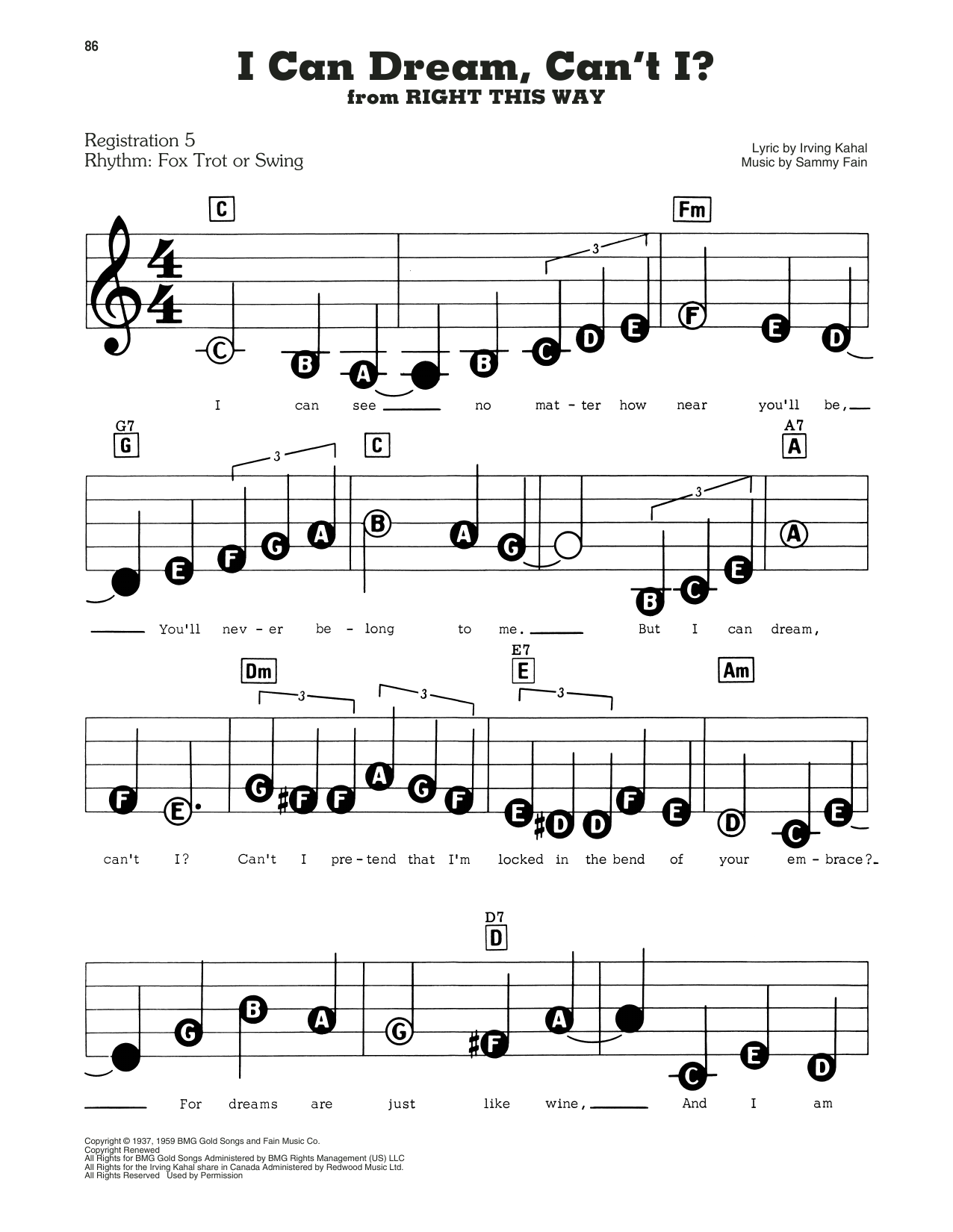
I Can Dream, Can't I? (from Right This Way) Sheet Music Preview

I Can Dream, Can't I? (from Right This Way): E-Z Play Today

As performed by The Andrews Sisters

Item: 35-DS00453518

Digital Download
$4.99
Description

I Can Dream, Can't I? (from Right This Way): E-Z Play Today isn't in MakeMusic Cloud just yet...but it could be. Let us know you'd like to see it, and you'll help shape what comes next. In the meantime, start a free trial and dive into thousands of interactive titles your students can play along with today.

Sample Audio
No sample audio found.
Sample Video
Additional Details
Publisher: Hal Leonard
Page Count: 2
SKU: 35-DS00453518

More about this title

About the Artist: The Andrews Sisters

The Andrews Sisters dominated American popular music from the 1930s through the 1950s, bringing three-part harmony and infectious energy to everything from swing standards to novelty numbers. Their tight vocal blend and impeccable timing made them among the most recorded artists of their era, influencing generations of vocal groups and establishing a blueprint for close harmony that remains relevant in any ensemble setting.

Why we love this

This arrangement captures the warmth and optimism that defined the Andrews Sisters' sound without requiring complex harmonic reading. Piano students get to inhabit a genuine swing era vocal setting, which means building interpretive instincts around phrasing, rhythmic relaxation, and the kind of rubato that makes mid-century popular song breathe.

What to expect

Breezy and romantic without ever becoming sentimental. The song radiates a kind of hopeful lightness, the musical equivalent of an optimist making plans on a sunny afternoon. Underneath the ease sits genuine craft in the harmonic writing.

Who it's for

Intermediate pianists ready to move beyond classical repertoire into the language of American song. This works equally well as a solo performance piece or as accompaniment for a singer exploring the vocal standards tradition.

How to get the most out of it

  • Treat the accompaniment as conversational; these voicings support the melody rather than dominate it, so keep your harmonic movement light and responsive.
  • Lean into the jazz inflections naturally. The notes on the page don't need exaggeration; small tempo pushes and slight harmonic anticipations do the work.
  • Balance between strict time and interpretive flexibility. The Andrews Sisters never sounded metronomic, but they stayed locked; find that middle ground in your touch.

How to use it

Place this alongside other standards from your era if you're building a jazz or American Songbook concert. It also serves as a bridge piece for students transitioning from classical to contemporary repertoire, showing them how to apply technique to a different musical vocabulary.

Skills your students will build

  • Swing rhythm interpretation and jazz phrasing
  • Reading lead sheet style voicings
  • Accompanying singers with appropriate harmonic support
  • Balancing rhythmic precision with interpretive flexibility

You May Also Like