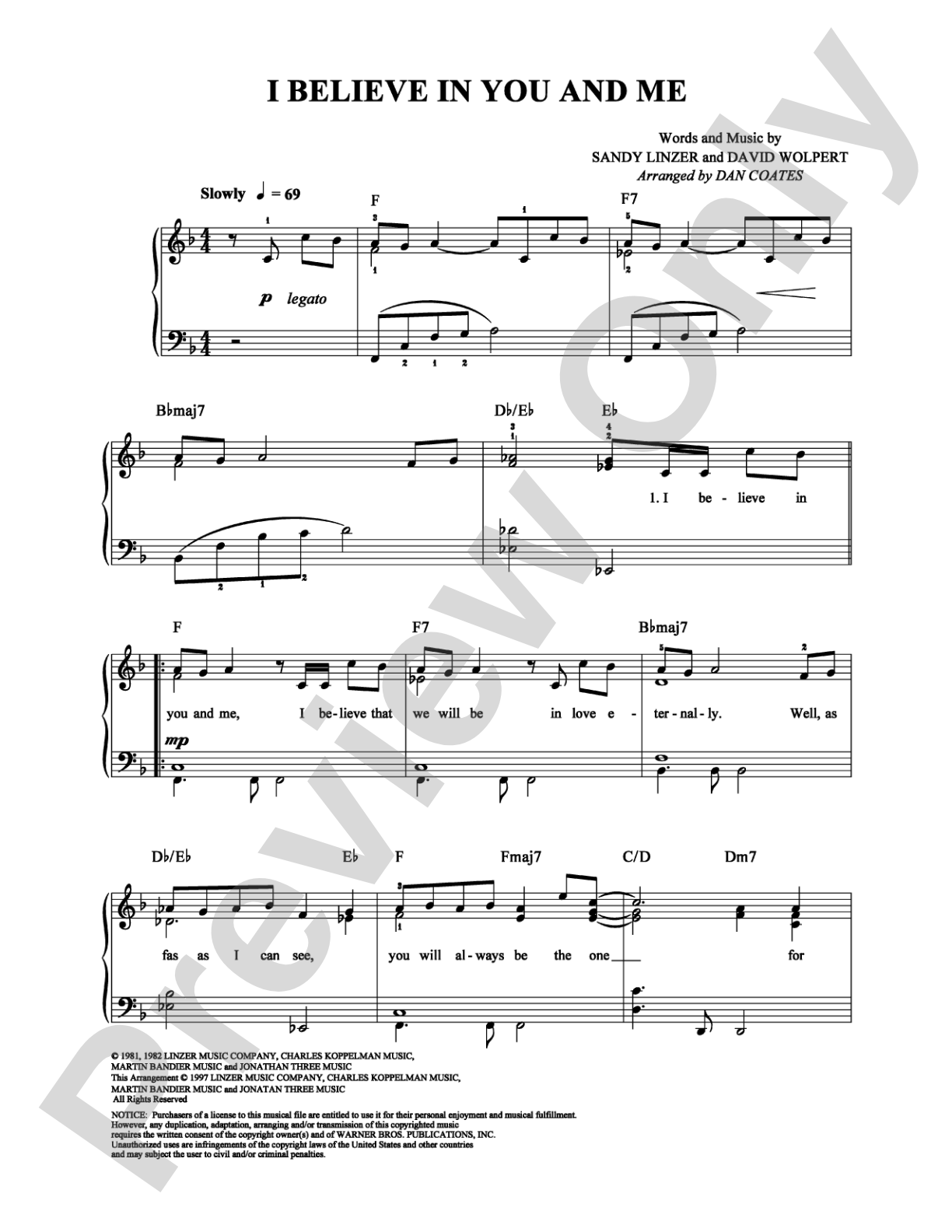
I Believe in You and Me: Easy Piano Digital Sheet Music

I Believe in You and Me: Easy Piano Digital Sheet Music

Sandy Linzer, David Wolfert

Item: 00-PS-0000239

Digital Download
$2.95
Description

I Believe in You and Me: Easy Piano Digital Sheet Music isn't in MakeMusic Cloud just yet...but it could be. Let us know you'd like to see it, and you'll help shape what comes next. In the meantime, start a free trial and dive into thousands of interactive titles your students can play along with today.

Sample Audio
No sample audio found.
Sample Video
Additional Details
SKU: 00-PS-0000239

More about this title

About the Composer: Sandy Linzer

Sandy Linzer is a composer and songwriter whose work spans popular song and theatrical music. His compositions have reached audiences far beyond the concert hall, demonstrating a gift for melody and emotional directness that translates across styles and settings.

Why we love this

This arrangement captures the warmth and accessibility of a beloved song while keeping the piano part achievable for intermediate players. Students get to work with a melody that has real emotional resonance, which makes the practice time feel purposeful rather than mechanical.

What to expect

The piece radiates quiet conviction and warmth. You're accompanying a moment of sincere affection, which means the playing itself should feel unhurried and genuine rather than showy or sentimental.

Who it's for

This easy piano arrangement works well for intermediate pianists building confidence with contemporary material. It's ideal for students who want to play songs they recognize and enjoy, whether for recital, casual performance, or simply the satisfaction of mastering something meaningful.

How to get the most out of it

  • Shape the melody line with intentional phrasing rather than playing each measure as a separate unit. Listen for where the phrases breathe naturally, then match your touch to those contours.
  • Balance the accompaniment so it supports rather than competes with the right-hand melody. The left hand anchors the harmony; the right hand is the voice.
  • Find the tempo that lets you play the sixteenth-note passages (if present) cleanly without rushing. A steadier tempo often sounds better than one that's technically possible but feels pushed.

How to use it

Place this as a contrasting selection on a recital alongside classical or more formal pieces. It also works beautifully as an encore, offering audiences a familiar, emotionally grounded moment to take home with them.

Skills your students will build

  • Accompanying melody with balanced, transparent left-hand voicings
  • Reading and performing contemporary song in a classical piano context
  • Shaping phrases based on lyrical intent rather than harmonic structure alone
  • Maintaining steady tempo across sections with varying rhythmic complexity

You May Also Like