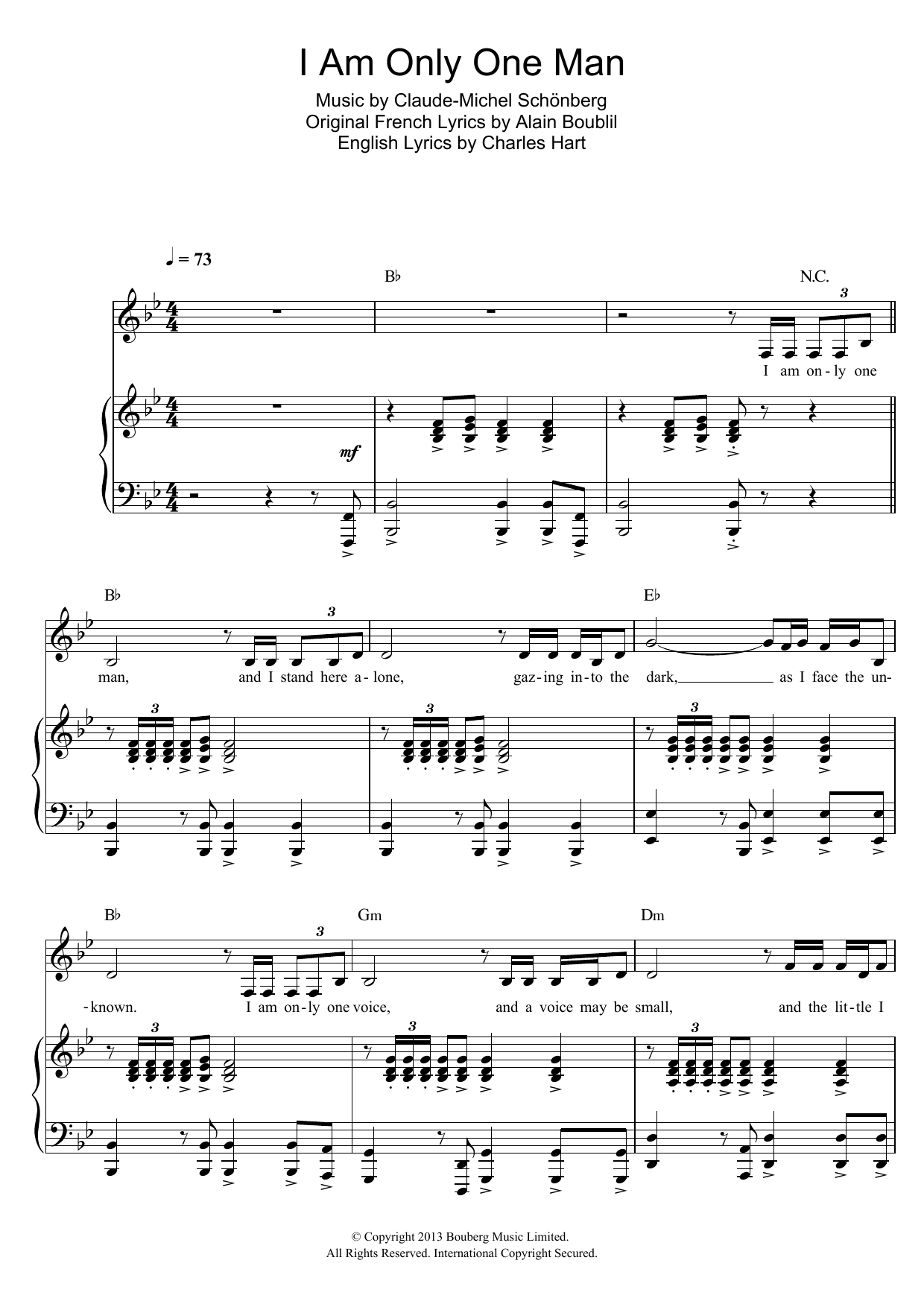
I Am Only One Man (originally from Martin Guerre) Sheet Music Preview

I Am Only One Man (originally from Martin Guerre): Piano Vocal

As performed by Russell Watson

Item: 35-DS00366411

Digital Download
$5.99
Description

I Am Only One Man (originally from Martin Guerre): Piano Vocal isn't in MakeMusic Cloud just yet...but it could be. Let us know you'd like to see it, and you'll help shape what comes next. In the meantime, start a free trial and dive into thousands of interactive titles your students can play along with today.

Sample Audio
No sample audio found.
Sample Video
Additional Details
Publisher: Hal Leonard
Page Count: 7
SKU: 35-DS00366411

More about this title

About the Artist: Russell Watson

Russell Watson is a British tenor known for bridging classical opera and popular music. His career spans performances at major opera houses alongside collaborations in musical theatre and crossover recordings, making him a distinctive voice in contemporary vocal music.

Why we love this

Watson's interpretation of this song from Martin Guerre carries both the dramatic weight of musical theatre and the vocal sophistication you'd expect from a classically trained tenor. The piano part sits in a conversational range with the voice, making it accessible for singers working at intermediate levels while still offering room for expressive interpretation.

What to expect

There's a quiet determination in this piece, tinged with vulnerability. The orchestral grandeur of the Martin Guerre score translates here into intimate honesty, where a single voice confronts both limitation and possibility.

Who it's for

Vocalists preparing audition material or concert repertoire will find this song valuable for demonstrating legit tenor technique alongside musical maturity. It also suits advanced high school singers and college students exploring the intersection of classical and contemporary styles.

How to get the most out of it

  • Shape the melody with clean phrase contours rather than pushing volume; the introspection of the lyric demands restraint and specificity in your line.
  • Balance the vocal melody against the piano accompaniment so both parts maintain clarity. Watson's interpretation suggests a confident but not dominating presence over the instrumental support.
  • Pay attention to the emotional arc across all seven pages. This isn't a song that peaks early; build your intensity gradually through the middle section.

How to use it

Include this in a recital exploring musical theatre composition from the classical tradition, or pair it with other character songs that explore internal conflict and self-awareness. It works particularly well when programming songs about perseverance or personal identity.

Skills your students will build

  • Sustaining lyrical lines over longer phrases
  • Balancing vocal projection with emotional restraint
  • Interpreting text-driven melodic choices specific to dramatic storytelling
  • Collaborating with a pianist to shape both harmonic and melodic elements

You May Also Like